THE WITNESS
Industrial Park Development in Buikwe is dispossessing hundreds of Native Families…
Published
5 years agoon

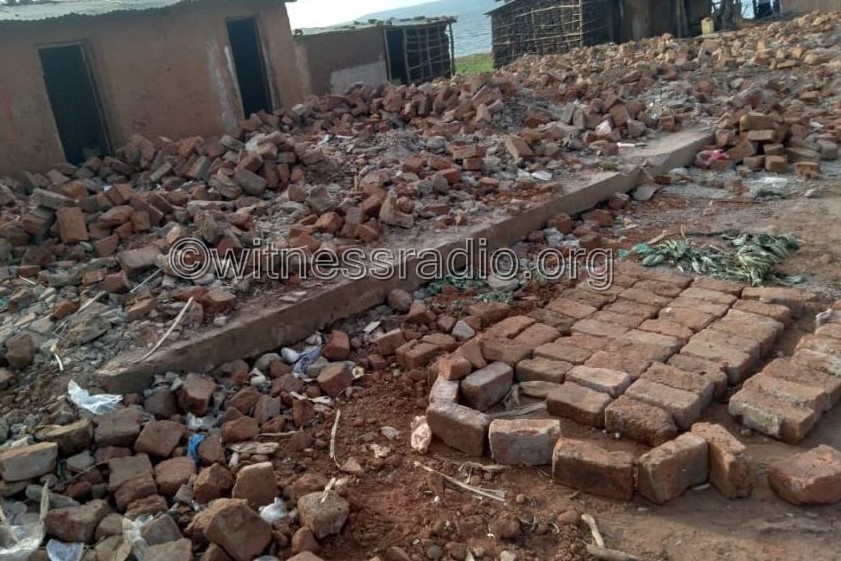
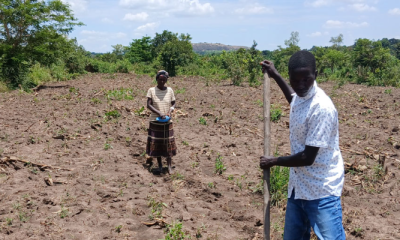
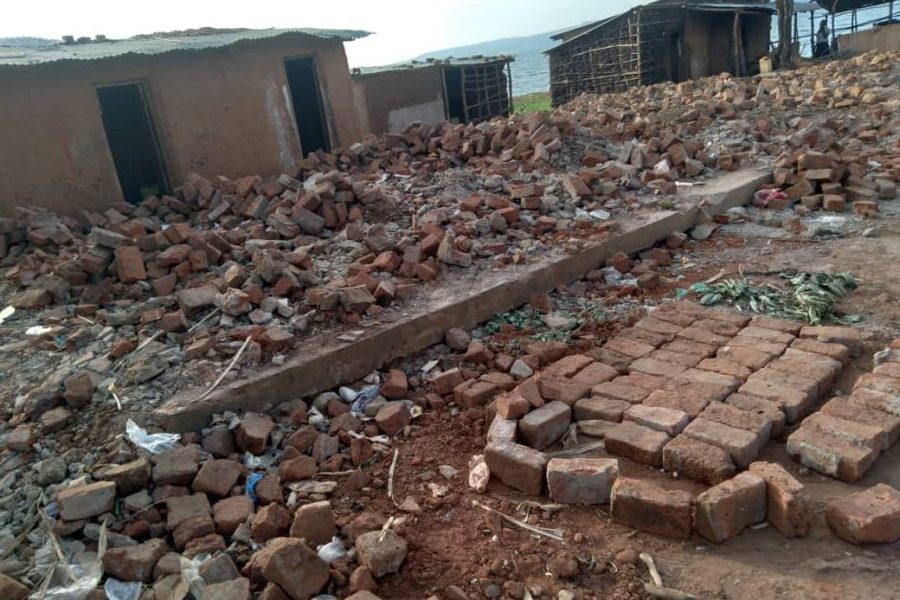
Structures of houses demolished by G.M Sugar in Namabere village, Buikwe District.
By witnessradio.org Team.
Buikwe – Uganda – Close to 1000 families in Namabere landing site, Buikwe District are forcefully being evicted off their land to give way for an industrial park, witnessradio.org has learned.
The industrial park which measures approximately 329.5 Ha, along the shores of Lake Victoria, is the brainchild of Magan Patel, the head of Nile Group of Companies. It is not clear whether the park authorities obtained the social and environmental impact assessment from environmental regulatory bodies as it is adjacent to the lake.
witnessradio.org findings indicate that so far the park has attracted about 26 companies amongst others include; Nile Agro Ltd; Nile Aluminum Ltd; Nile Batteries Ltd; Nile Wheat Ltd; Auro Meera Paper Ltd; Modern Distillers Ltd; Modern Laminates Ltd; Nile GM Plastics Ltd; Modern Rubber Ltd; and Cable Ltd and many others.
According to the affected persons, GM Sugar Company one of the companies targeting their land, since November 2020 with the help of Buikwe police has been forcing natives to receive payment in form of transport on a gunpoint to vacate the land. The payment ranges from 100,000 – 200,000 Ugandan shillings to residents of the area to vacate their land.
“Imagine at a gunpoint, someone is paid Uganda Shillings 100,000, his/her properties get destroyed and your forced to vacate where you earn a living. How do you feel? Do you know how hard this is?” angrily asked a 45-year-old Bayati Kafuuko.
Bayati, a mother of six (6) said that she has nowhere to go and left with nothing to feed her family since all her property was destroyed by the armed men.
“What can that money do, it can’t even meet transport costs,” added Bayati.
Several affected persons revealed that before the eviction, there was neither consultation and concession to the project nor valuation and fair compensation of their property.
“Ever since the attack started we live in fear, we cannot sleep because most of our houses were pulled down. All our fish was taken by soldiers, we have nothing to eat,” said a 58-year-old Francis Obiire.
He added that he cannot accept being illegally evicted on land he has lived on since his birth.
“My father has lived on this land since 1950. I was born here in 1962. With this little money, which land do they expect me to buy,” Obiire added.
The chairman of Namabere village Mr. Ochen Peter said his people are being intimidated without due process is followed. He further said that workers of the investors under the protection of police carry out daily patrolling of the area just to intimidate residents.
When witnessradio.org contacted Ssekamatte Musa, one of the GM Sugar company managers, he declined to speak.
“I am busy, I will call you,” he said.
Related posts:

Agribusiness Company with financial support from UK, US and Netherlands is dispossessing thousands.
Parliament faults both Army and police on dispossessing 600 families
Land wrangle threatens industrial park progress

Signs of harmful projects with financing from development institutions are spotted in Uganda…
You may like
-
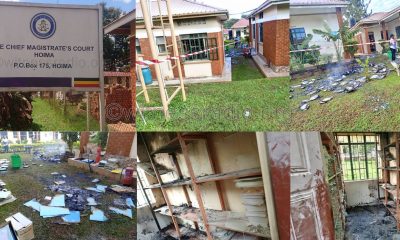
Hoima Court fire: Witness Radio is dreaded as evidence in lawsuits filed against high-profile individuals could have been destroyed.
-
Private prosecution: Army General, police commander, presidential representative and others to be charged with over seven offenses committed while illegally evicting locals to give way to EACOP.
-
The district security committee continues to defy gov’t’s directive to return locals to their land 48 days later.
-
State House Anti-Corruption Unit nets a surveyor implicated in Mubende district land-grabs
-
Kiboga district senior lands officer is arrested and detained over land fraud.
-
Community land rights defenders that have been on trial since 2020; are set to return to court this January.
THE WITNESS
Enemies of the State: Resistance to the EACOP becomes a deadly task
Published
2 years agoon
July 3, 2024
It is no secret: in Uganda it is badly about human rights. With the construction of the East African Crude Oil Pipeline, repression against lawyers, but activists and journalists is taking on new proportions. They are staged as enemies of the state. The human rights organisation Witness Radio reports from Uganda.
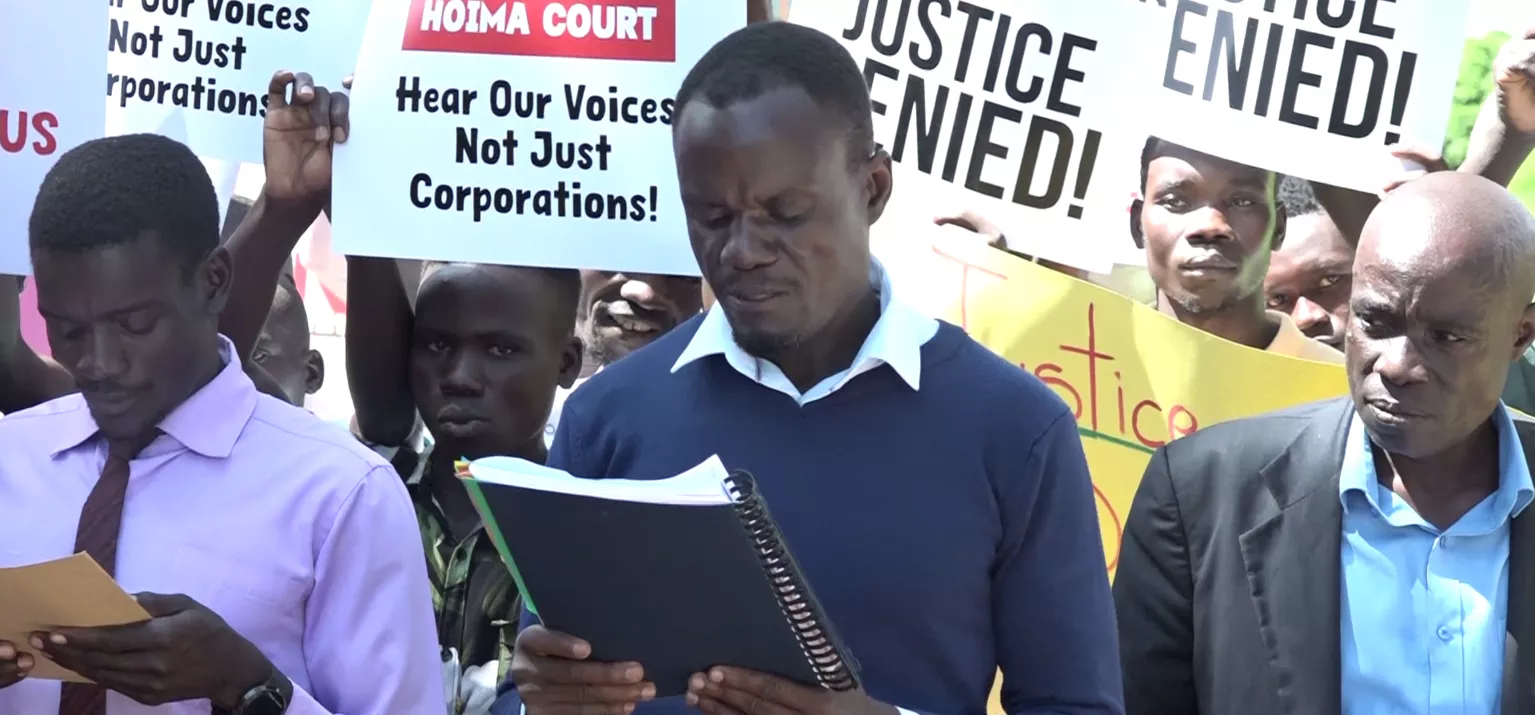
The morning of the 15th April 2024 in the court of the Ugandan city of Hoima did not go as usual: court officials, police officers and passers-by watched helplessly as a crowd led by the activist Fred Mwesigwa read a petition in the Hoima High Court: “We are deeply concerned about the recent court ruling that orders the expulsion of 42 families in the Buliisa district to make room for the Tilga project.” They protested against a court order of December 2023, which gave the government the green light to the community to expel the community for the oil production project. The community had previously refused to accept the government-intended compensation payments for their country, on which they live and from which they live.
The Buliisa case is just the tip of the iceberg of the many communities affected by oil production projects. In Uganda and Tanzania, the rural population in particular has to give way to a 30-metre-wide pipeline corridor, oil production fields, tank farms, infrastructure and safety zones around the East African Crude Oil Pipeline (EACOP). According to a study published in 2022 by the organisation Les Amis de la Terre, up to 118,000 people could be affected by resettlement along the pipeline route, including mainly farming communities.
Low discompensation
In a conversation with Witness Radio, those affected reported that they were no longer in a position to meet their basic needs due to insufficient compensation and inadequate resettlement plans. James 1, who was taken to the Kyakaboga resettlement camp, declared that the inhabitants had been provided with infertile land that was unsuitable for the cultivation of crops. In addition, the camps are overcrowded, which means that the residents are exposed to illness. He stressed that access to health services is particularly challenging. Pregnant women in particular are facing difficulties, as the nearest health centre is eight kilometres away. Tragically, James said, three pregnant womans would have lost their babies on their way to there.
“Their houses were set on fire, their ownness was plundered.”For the East African Crude Oil Pipeline, climate, nature and people need to give way
Uganda’s oil dilemmaControversies about the black gold
Black Gold from East AfricaConstruction of the EACOP crude oil pipeline is imminent
As in the case of the 42 households from Buliisa, who refused compensation from the government, many of the EACOP projects say those affected that the government did not adequately assess their land and property. Nevertheless, they were forced to release their land for the project. They criticised the fact that they were not sufficiently sensitised to the negative effects of the project. Instead, the government and the majority shareholders Totalenergies promised large compensation, prosperity growth and employment opportunities that have not yet occurred.
A study by Inclusive Development International also concludes that, in accordance with international standards, the government and TotalEnergies have systematically failed to involve the people affected by the project and civil society in the planning and providing them with low-threshold information. The study also states that when testing the environmental impact of Tilenga, Kingfisher and EACOP, it was found that the project promoters do not use the “best available techniques” to prevent the impact on the impact of ecosystems. The decision to use low-cost technologies for oil drilling and water-leading areas is therefore a predictable risk to the health and safety of local residents.
Opposition underesired
When the first land survey for the Tilenga project took place in 2020, many families expected to benefit from the project. Later, however, TotalEnergies aimed to acquire their country free of charge. In consultation with some real estate agents, local authorities, police and army, the company distributed almost 20,000 people in Kapapi (Hoima) in February 2023. In the course of this, women were also raped. Before the forced expulsion, the local police, in cooperation with the real estate brokers, had arrested those who criticised the land grab in order to intimidate the other members of the community.
Activists are presented as ‘anti-development’
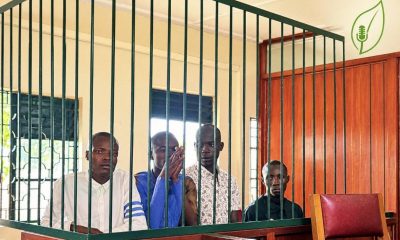
The seven defenders of the plaintive families, Karongo Edward, Mulega Eria, Kataza Samuel, Rangira Stephen, Rubyogo Edward and Mbombo Stephen, were charged with a host of alleged crimes. In June 2023, after three to five months in prison, they were released on bail. However, as part of their bail pads, they must report regularly to the court in Hoima.
The criminalisation of land and environmentalists has become a common tactic by the Ugandan authorities in order to silence opposition and maintain impunity. This tactic does not only exist in Uganda, it is a global problem – especially in the context of large infrastructure projects.
According to the data from Witness Radio, in seven out of ten cases of evictions, defenders are subjected to targeted violence, torture and arbitrary arrests. They are often falsely charged with a large number of crimes ranging from domestic peace and attempted murder. At the end of June 2023, Witness Radio reported that more and more environmental and land-legal defenders who uncover questionable business are targeting state controls. From 2010 to 2023, more than 1,500 people. In connection with the pipeline, Witness Radio has documented 75 cases of arbitrary arrests, detentions and forced disappearances since the first construction work.
Opposition to the EACOP has become a mortal danger. Activists and human rights activists are confronted with hate speech, arrests, torture and death threats and are portrayed as ‘honsensible to development’ – on the grounds that they would promote the interests of Western countries.
The Resistance goes on
Ugandan activist Bob Barigye reports that the state security forces are using “false accusations” to arrest activists. “We are considered enemies of the state,” says Barigye. “The police are now preferting psychological torture because physical torture would create poor publicity for the oil pipeline project, which could deter investors and insurers. The government does not want to be in the international spotlight for the wrong reasons.”
Not only the project opponents, but also journalists in Uganda find it difficult to report on the EACOP projects: Gerald Tenywa is a Ugandan science journalist who has been reporting intensively on environmental protests for decades. In an interview with Drilled Media, he describes the difficulties in reporting on EACOP activists who criticise the construction of the pipeline. He cites the government’s intolerance to protests as a hurdle for journalistic work and stresses that in developing countries “oil and politics have almost always merged”.
“Oil and politics are almost always fused”
Emmanuel Okello works for the Uganda Radio Network in the Ugandan Albertine region. According to him, reporting is also made more difficult by the fact that the government and the companies involved keep the most important information about the oil projects under wraps. “A lot is claimed to promote these projects, including the development of the communities,” says Okello, “but this is not the case on the ground. People do not benefit from the projects, they only destroy their livelihoods. If you ask the government who exactly the beneficiaries they are talking about, there is no clear answer.”
It remains a difficult task to bring the voices of the affected communities into the public and to cope with the associated repression. It is also connected with obstacles to achieving justice through legal route. Thus, the court in Hoima rejected the application for the cessation of the evictions of the 42 families in Buliisa mentioned above.
The presentation of the plight of these communities, the protection of the environment and support for court cases are crucial, especially at a time when the space for civil society and media freedom in Uganda is becoming ever smaller. This requires cooperation with international groups and support for civil societies and media.
Source: www.iz3w.org
Related posts:

The East African Court of Justice fixes the ruling date for a petition challenging the EACOP project.
Put people above profits – Climate Activists urge Total to defund EACOP

Breaking: Criminal trial for seven community defenders opposed to EACOP/Tilenga project forced land eviction has been fixed.

A reference filed by CSOs against the planned construction of the East African Crude Oil Pipeline (EACOP) is set for hearing.
DEFENDING LAND AND ENVIRONMENTAL RIGHTS
Statement: The Energy Sector Strategy 2024–2028 Must Mark the End of the EBRD’s Support to Fossil Fuels
Published
2 years agoon
September 27, 2023
The European Bank for Reconstruction and Development (EBRD) is due to publish a new Energy Sector Strategy before the end of 2023. A total of 130 civil society organizations from over 40 countries have released a statement calling on the EBRD to end finance for all fossil fuels, including gas.
From 2018 to 2021, the EBRD invested EUR 2.9 billion in the fossil energy sector, with the majority of this support going to gas. This makes it the third biggest funder of fossil fuels among all multilateral development banks, behind the World Bank Group and the Islamic Development Bank.
The EBRD has already excluded coal and upstream oil and gas fields from its financing. The draft Energy Sector Strategy further excludes oil transportation and oil-fired electricity generation. However, the draft strategy would continue to allow some investment in new fossil gas pipelines and other transportation infrastructure, as well as gas power generation and heating.
In the statement, the civil society organizations point out that any new support to gas risks locking in outdated energy infrastructure in places that need investments in clean energy the most. At the same time, they highlight, ending support to fossil gas is necessary, not only for climate security, but also for ensuring energy security, since continued investment in gas exposes countries of operation to high and volatile energy prices that can have a severe impact on their ability to reach development targets. Moreover, they underscore that supporting new gas transportation infrastructure is not a solution to the current energy crisis, given that new infrastructure would not come online for several years, well after the crisis has passed.
The signatories of the statement call on the EBRD to amend the Energy Sector Strategy to
- fully exclude new investments in midstream and downstream gas projects;
- avoid loopholes involving the use of unproven or uneconomic technologies, as well as aspirational but meaningless mitigation measures such as “CCS-readiness”; and
- strengthen the requirements for financial intermediaries where the intended nature of the sub-transactions is not known to exclude fossil fuel finance across the entire value chain.
Source: iisd.org
Download the statement: https://www.iisd.org/system/files/2023-09/ngo-statement-on-energy-sector-strategy-2024-2028.pdf
Related posts:

Breaking: over 350,000 acres of land were grabbed during Witness Radio – Uganda’s seven months ban.

EBRD launches new agribusiness strategy

30 civil society organizations have written to the World Bank Group demanding to publicly disclose the Africa Energy Approach paper.

Over 600 million Africans lack electricity despite huge renewable energy potential
DEFENDING LAND AND ENVIRONMENTAL RIGHTS
Breaking: Three community land rights defenders from Kawaala have been arrested.
Published
3 years agoon
July 12, 2022
Breaking: Three community land rights defenders from Kawaala have been arrested.
By Witness Radio team
Police at Old Kampala Regional Police Headquarter have arrested three of the six community land rights defenders from Kawaala Zone II, Kampala suburb, and preferred a fraud charge before being released on bond.
Kasozi Paul, Busobolwa Adam, and Kabugo Micheal got arrested on their arrival before being taken inside interrogation rooms. They were questioned from 11:00 AM – 12:30 PM local time and later recorded their statements.
Section 342 of the Penal Code states that forgery is the making of a false document with the intent to defraud or deceive. It carries a three year imprisonment on conviction.
According to lawyers representing victims, defenders are arrested on the orders of the Deputy Resident City Commissioner (RCC) in charge of Rubaga Division Anderson Burora and accused them of fraud.
Resident City Commissioner is a representative of the president in the Capital City at the division level.
The charges are a result of continued resistance by Kawaala community seeking fair compensation and resettlement before Lubigi drainage channel is constructed. Since the first COVID outbreak in 2020, the victim defenders and others have been leading a pushback campaign to stop forced evictions by a multimillion dollars Kampala Institutional and Infrastructure Development Project (KIIDP-2) funded by World Bank. Kampala Capital City Authority (KCCA) is the implementor of the project.
This project first impacted Kawaala Zone II around 2014, when a channel diversion was constructed. The current planned expansion will widen that channel and require forced evictions across an area at least 70 meters wide and 2.5 km long.
The New Vision, a local daily of June 21st, 2022, quoted Burora accusing Kasozi Paul, one of the community land rights defenders from Kawaala Zone II of being a fraudster.
Witness Radio – Uganda challenges the deputy RCC Burora to produce evidence that pins the defenders on fraud instead of criminalizing the work of defenders.
“We warn Mr. Burora against using police to harass defenders who have openly opposed a project which is causing negative impacts on the community” Adong Sarah, one of the lawyers representing the defenders said.
The defenders got released on police bond as they are expected to report back to the police on Monday, the 18th of July 2022 at 11:00 AM local time.
Related posts:

Kawaala community land rights defenders will report for police bond for the fourth time on 1st August.

Six community land rights defenders from Kawaala have turned up at police for interrogations but, failed to take off

Breaking: Kawaala Community land rights defender has been kidnapped.

Breaking: A Kawaala community land rights defender kidnapped and taken to unknown destinations, others on the run.
COP30 : a further step towards a Just Transition in Africa
‘Food and fossil fuel production causing $5bn of environmental damage an hour’
Four hundred fifty victim families of the Oil Palm project in Buvuma are to receive compensation by this Friday – Witness Radio
Britain, Netherlands withdraw $2.2 billion backing for Total-led Mozambique LNG
Four hundred fifty victim families of the Oil Palm project in Buvuma are to receive compensation by this Friday – Witness Radio
Women’s groups demand equality in land tenure security to boost food production.
Tension as Project-Affected Persons demand to meet Uganda’s President over Oil Palm growing on their grabbed land.
Land commission starts updating govt land countrywide.
Innovative Finance from Canada projects positive impact on local communities.

Over 5000 Indigenous Communities evicted in Kiryandongo District

Petition To Land Inquiry Commission Over Human Rights In Kiryandongo District

Invisible victims of Uganda Land Grabs
Resource Center
- REPARATORY AND CLIMATE JUSTICE MUST BE AT THE CORE OF COP30, SAY GLOBAL LEADERS AND MOVEMENTS
- LAND GRABS AT GUNPOINT REPORT IN KIRYANDONGO DISTRICT
- THOSE OIL LIARS! THEY DESTROYED MY BUSINESS!
- RESEARCH BRIEF -TOURISM POTENTIAL OF GREATER MASAKA -MARCH 2025
- The Mouila Declaration of the Informal Alliance against the Expansion of Industrial Monocultures
- FORCED LAND EVICTIONS IN UGANDA TRENDS RIGHTS OF DEFENDERS IMPACT AND CALL FOR ACTION
- 12 KEY DEMANDS FROM CSOS TO WORLD LEADERS AT THE OPENING OF COP16 IN SAUDI ARABIA
- PRESENDIANTIAL DIRECTIVE BANNING ALL LAND EVICTIONS IN UGANDA