Connect with us

FARM NEWS

Five counties roll out agroecology policies to boost climate resilience

Published

on

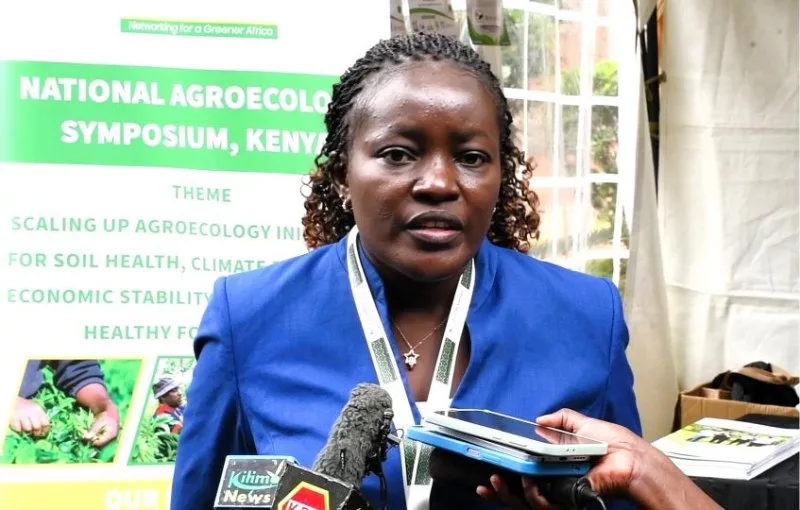
At least five counties have adopted agroecology policies as Kenya accelerates efforts to promote climate-resilient and sustainable farming.

Murang’a, Makueni, Nakuru, West Pokot and Kiambu have already developed county agroecology policies, while Trans Nzoia, Turkana, Laikipia, Kirinyaga and Machakos are drafting similar frameworks.

Stakeholders are urging more devolved governments to fast-track implementation to strengthen food security.

Participatory Ecological Land Use Management (Pelum) Kenya country coordinator Rosinah Mbeya said counties must move beyond policy development by allocating adequate budgets and implementing programmes that directly support farmers. She spoke during the Third Agroecology Symposium.

Mbeya said although agroecology is gaining momentum in Kenya, greater  political commitment, increased financing and faster implementation are needed to help farmers cope with climate change, rising production costs and declining soil health.

Kenya continues to grapple with multiple agricultural challenges, including climate change, emerging crop pests and diseases and increasing input costs driven by global economic disruptions.

“These challenges are making farming increasingly difficult, particularly for smallholder farmers. However, they also present an opportunity to transform our food systems and build farming systems that are more resilient and less dependent on external inputs,” Mbeya said.

Agriculture& Forestry

She described agroecology as an environmentally sustainable approach that restores ecosystems while improving agricultural productivity, conserving biodiversity and protecting human health and the environment.

Mbeya said the focus should now shift from developing strategies to implementing them through adequate funding and practical support for farmers.

“The discussion is no longer about developing strategies. It is now about implementation, budgeting and ensuring these policies benefit farmers on the ground,” she said.

Mbeya said agroecology continues to attract support from development partners, researchers and policymakers.

However, only a small proportion of Kenya’s estimated 7.5 million smallholder farmers practise agroecology through organised networks.

She said Pelum works with about 1.5 million farmers but said wider adoption is needed to transform the country’s food systems.

Farms& Ranches

Agriculture secretary in the State Department for Agriculture Peter Aoko said crop diversification remains one of the government’s key strategies for strengthening climate resilience and improving household nutrition.

“Different crops perform differently under different ecological conditions. Diversification ensures that if one crop fails because of weather or pests, another succeeds while also providing better nutrition,” he said.

Aoko said the government is strengthening farmers’ capacity through agricultural extension services and knowledge sharing while working with county governments to domesticate the National Agroecology Strategy.

He acknowledged that implementation has progressed slowly because agriculture is a devolved function but expressed confidence that momentum would increase as more counties adopt the strategy.

“Agroecology is about producing food sustainably while protecting the environment, particularly soil health. Without healthy soils, agricultural production cannot be sustained over the long term,” he said.

Dr Lisa Fuchs, a scientist with the Alliance of Bioversity International and CIAT, said agroecology extends beyond environmentally friendly farming by integrating ecological sustainability, economic viability and social equity.

She said the approach promotes crop diversity, healthy soils, circular farming systems and locally adapted food production to improve food security and nutrition.

Agriculture& Forestry

Fuchs encouraged farmers to recognise the value of indigenous knowledge and work collectively to develop solutions suited to local conditions.

“Agroecology is a science, a practice and a movement. Farmers should organise, share knowledge, work with their neighbours and partner with government, researchers and other stakeholders to strengthen local food systems,” she said.

She said agricultural research institutions are increasingly embracing participatory approaches that involve farmers and communities in developing, testing and scaling innovations to ensure solutions respond to local needs.

Source: the-star.co.ke/

Continue Reading

FARM NEWS

Africa’s El Niño Economic Impact: $20B at Risk in 2026

Published

on

The Hidden Cost of a Pacific Ocean Anomaly: Why Africa Bears a Disproportionate Climate Burden

Every decade or so, a warming of the central and eastern Pacific Ocean quietly reshapes weather systems across the entire planet. For most advanced economies, the resulting shifts in rainfall and temperature are inconvenient at worst. For large parts of Africa, the same atmospheric disruption can unravel years of economic progress, push tens of millions of people into food insecurity, and force governments into a fiscal spiral that proves far harder to escape than the weather event itself.

This is the structural reality that makes the El Niño economic impact in Africa so consequential, and so poorly understood outside development finance circles. The 2026 episode now taking shape is not a distant weather forecast. It is a measurable, quantifiable economic risk that the African Development Bank (AfDB) has placed at the centre of its near-term policy warnings, with loss estimates ranging from $10 billion to $20 billion across the continent and GDP contractions of 1% to 2% in the hardest-hit nations.

To understand why those numbers carry such outsized consequences, it helps to first understand what makes African economies structurally different from other regions facing the same climatic event.

Why African Economies Convert Weather Into Economic Crises

The Architecture of Vulnerability

Rain-fed agriculture remains the foundation of food production across most of Sub-Saharan Africa. Unlike irrigated farming systems common in parts of Asia and the Americas, rain-fed systems carry no mechanical buffer against rainfall deficits. When rainfall fails, yields collapse almost immediately, and the effects radiate outward through household income, rural consumption, and national output.

The energy dimension adds a second layer of fragility that is often underappreciated. Several of Africa’s largest economies depend on hydropower for the majority of their electricity generation. Zambia, Zimbabwe, Mozambique, Ethiopia, and the Democratic Republic of the Congo each rely heavily on reservoir-based hydroelectric capacity. When drought drains those reservoirs, electricity generation falls, load-shedding intensifies, manufacturing slows, and mining productivity drops.

A rainfall deficit in the Zambezi basin is not simply an agricultural problem. It is an industrial problem, an investment climate problem, and ultimately a fiscal problem. Furthermore, the energy transition challenges facing resource-dependent economies compound these vulnerabilities significantly.

Infrastructure deficits compound both dynamics. Roads, drainage systems, and irrigation networks in many African countries remain inadequate to absorb either prolonged drought or acute flooding. The same infrastructure gap that amplifies drought damage also amplifies flood damage, meaning El Niño’s geographically inverted impacts across the continent both translate into disproportionate economic harm.

El Niño’s Asymmetric Geography Across Africa

A critical but underappreciated feature of El Niño is that it does not impose a uniform shock across Africa. Its effects are almost geographically inverted between the continent’s sub-regions, which complicates both economic forecasting and policy response.

  • Southern Africa experiences drought, harvest contraction, livestock stress, and hydropower shortfalls during El Niño years
  • East Africa typically faces excess rainfall, flooding, infrastructure destruction, and population displacement
  • West Africa and the Sahel face secondary but real exposure through rainfall variability and commodity market disruptions
  • Fragile and conflict-affected states experience the same physical shocks but with far less institutional and fiscal capacity to absorb them

The 2023-2024 El Niño episode illustrated this geographic divergence with unusual severity. Southern African countries reported harvest losses exceeding 50% of annual production in the worst-affected areas, while East Africa simultaneously faced destructive flooding that damaged transport corridors and urban markets. According to the UN’s Office for the Coordination of Humanitarian Affairs, the Southern African impact was characterised as among the most severe in over a century.

Quantifying the 2026 Threat: What the Numbers Actually Mean

AfDB Loss Projections in Context

The AfDB’s estimate of $10 billion to $20 billion in aggregate economic losses deserves careful interpretation rather than simple citation. African economic growth is projected at 4.2% in 2026 and 4.4% in 2027, representing one of the continent’s more promising growth windows in recent years. A climate shock that strips 1% to 2% from the GDP of multiple countries simultaneously does not merely slow growth; it disrupts the compounding dynamic that allows development gains to build on each other over time.

A 2% GDP loss in a high-exposure economy is not a one-year setback. It triggers chain reactions across fiscal balances, debt servicing capacity, and social spending programmes that compress development gains accumulated over several years.

The AfDB has estimated that African agricultural producers could lose approximately $327 million to $330 million in income from the anticipated disruptions. The fisheries sector faces additional pressure, with rising sea temperatures and storm events projected to reduce productivity by 1% to 4%.

Sector Estimated Economic Impact Primary Driver
Agricultural producer income ~$327-$330 million in losses Drought-driven crop failure and flood damage
Maize prices 2%-20% increase in strong El Niño years Supply contraction in Southern Africa
Fisheries productivity 1%-4% reduction Sea temperature rise and storm disruption
GDP contraction (worst-affected countries) 1%-2% Multiple transmission channels
Aggregate continental losses $10B-$20B Combined agricultural, energy, and fiscal impacts

The 2026 Probability Assessment

The World Meteorological Organization (WMO) has assigned an 80% probability to El Niño developing between June and August 2026, with the likelihood of the event persisting through November approaching or exceeding 90%. The anticipated intensity is classified as moderate-to-strong. The WMO has explicitly noted that the term super El Niño, which circulates widely in public discourse, does not represent an official scientific classification and should not be used as a technical benchmark.

A moderate-to-strong event is sufficient to activate the full range of agricultural, hydrological, and fiscal transmission channels documented in previous episodes. The 2023-2024 episode, which serves as the most recent empirical reference point, demonstrated that even a single El Niño cycle can push 61 million people across Southern Africa alone into requiring humanitarian assistance.

The AfDB has scheduled a formal portfolio impact assessment for September 2026 to evaluate exposure across its active investment operations and identify necessary adjustments.

Five Transmission Channels: How Weather Becomes a Fiscal Crisis

Channel 1: Agricultural Output Collapse

Rain-fed farming systems that dominate food production across Sub-Saharan Africa have no mechanical buffer against rainfall deficits. Drought reduces yields, destroys livestock, and eliminates the seasonal income that rural households rely on for a significant portion of their annual consumption. Flooding in East Africa simultaneously destroys standing crops, degrades soil quality, and disrupts planting cycles for subsequent growing seasons.

Channel 2: Food Price Inflation and Urban Purchasing Power Erosion

As agricultural supply contracts, staple food prices rise. This dynamic disproportionately affects urban low-income households that spend the highest share of their income on food. Maize price increases of 2% to 20% in strong El Niño years have been documented across Southern African markets. Food inflation reduces real household incomes, suppresses consumer spending, and can contribute to social instability in urban centres already under economic pressure.

Channel 3: Hydropower Shortages and Industrial Disruption

Drought reduces reservoir levels, cutting electricity generation capacity and forcing load-shedding that affects manufacturing, mining, and services simultaneously. Businesses dependent on continuous power face higher operating costs as they switch to backup generation. The energy transition in mining and related industries is consequently further complicated by climate-driven energy instability. Persistent power instability deters investment and reduces the competitiveness of export-oriented industries.

Channel 4: Infrastructure Damage and Emergency Fiscal Pressure

Flooding in East Africa and storm events along coastal regions damage roads, bridges, drainage infrastructure, and urban markets. Reconstruction costs divert government capital budgets away from planned development expenditure. Emergency response requirements force fiscal reallocation that crowds out health, education, and productive infrastructure investment.

Channel 5: The Climate Finance Trap

Anthony Nyong, Director of the AfDB’s Climate Change and Green Growth Department, has identified a structural dynamic that explains why El Niño’s fiscal consequences often exceed its direct physical damage. When governments are forced to redirect pre-allocated development budgets toward disaster response, they erode the long-term fiscal architecture of planned growth.

Countries without adequate insurance instruments or contingency reserves face the hardest trade-offs between immediate relief and sustained development investment. This pattern compounds across multiple El Niño cycles, progressively narrowing fiscal space.

The Countries Facing the Greatest Exposure

A Regional Risk Framework

Southern Africa: Drought, Harvest Collapse, and Energy Shortfalls

Zambia, Zimbabwe, Mozambique, Malawi, and Madagascar face the most consistent drought exposure during El Niño years. Hydropower dependency amplifies the economic impact beyond agriculture into energy and industrial sectors. The 2023-2024 episode produced harvest losses exceeding 50% of annual production in the worst-affected areas.

East Africa: Flooding, Infrastructure Destruction, and MSME Disruption

Kenya, Tanzania, Ethiopia, Somalia, and Uganda face elevated flood risk during El Niño years. Flooding damages transport networks, disrupts urban commerce, and creates displacement that reduces labour market participation. Micro, small, and medium enterprises, which form the backbone of urban economic activity across East Africa, face acute disruption from flooding and market closures.

Fragile and Conflict-Affected States: Compounded Vulnerability

The AfDB has specifically identified Sudan, South Sudan, the Democratic Republic of the Congo, Mali, Burundi, and Nigeria as among the countries most exposed to the anticipated impacts. In fragile states, climate shocks interact with pre-existing governance deficits, displacement crises, and food insecurity to produce disproportionately severe outcomes. These countries also have the least fiscal capacity to self-finance recovery and the most constrained access to international capital markets.

Africa’s Climate Finance Gap: A Structural Inequity

The Numbers That Reveal a Systemic Failure

Financing Metric Figure
UN estimated annual climate finance need for developing countries by 2035 ~$365 billion
International public climate adaptation finance delivered in 2023 ~$26 billion
AfDB estimate of Africa’s climate financing need in 2026 ~$100 billion
Previous AfDB climate financing estimates for Africa ~$50 billion
UN CERF preventive mobilisation for highest-risk countries Up to $100 million

The gap between what is needed and what is being delivered is not a marginal shortfall. International public adaptation finance of $26 billion delivered in 2023 represents less than 7% of the $365 billion annual requirement projected for 2035. Africa’s estimated 2026 climate financing need of $100 billion represents a doubling of previous estimates, reflecting both escalating climate risk and the accumulated deficit of underinvestment in adaptation infrastructure.

Why Adaptation Financing Consistently Lags Behind Mitigation

A less commonly understood dynamic within climate finance is the persistent structural imbalance between mitigation spending and adaptation spending. Global climate finance flows have historically favoured mitigation projects, which reduce greenhouse gas emissions, over adaptation projects, which build resilience to the climate change already locked in.

The reasons are partly financial. Mitigation projects such as solar farms and wind energy installations generate revenue streams, attract private co-investment, and can be structured for commercial returns. Adaptation investments such as flood barriers, drought-resistant crop varieties, and early warning systems generate economic value by preventing losses rather than creating new income streams.

This distinction makes adaptation harder to monetise and less attractive to private capital. However, the El Niño economic impact in Africa demonstrates precisely why sustained adaptation investment is essential. For a continent that contributes a small fraction of global emissions yet absorbs a disproportionate share of climate impacts, this imbalance represents a fundamental equity failure in the international climate finance architecture.

In addition, the growing importance of critical minerals and energy security means that climate disruptions increasingly threaten strategic supply chains that extend well beyond Africa’s own borders. Furthermore, renewable energy solutions designed to reduce hydropower dependency are increasingly being considered as a structural hedge against El Niño-driven energy instability.

Mechanisms Being Mobilised Ahead of the 2026 Peak

The AfDB is facilitating access to several international financing instruments for affected member states:

  1. Green Climate Fund targeting both adaptation and mitigation in vulnerable developing nations
  2. Adaptation Fund focused specifically on countries with the least capacity to self-finance resilience building
  3. Climate Investment Funds providing multi-donor capital for low-carbon and climate-resilient development
  4. Loss and Damage Mechanisms offering compensation for climate impacts beyond adaptive capacity
  5. UN Central Emergency Response Fund (CERF) mobilising up to $100 million for preventive measures in the highest-risk countries

Embedding Climate Risk Into African Development Planning

The Case for Treating El Niño as a Fiscal Variable, Not an Exceptional Event

One of the least-discussed but most consequential shifts in African public finance management concerns how climate risk is categorised within government planning frameworks. Treating El Niño as a recurring fiscal variable rather than an unpredictable exceptional event changes everything from budget reserve requirements to debt sustainability assessments.

Countries that establish contingency reserves, parametric insurance instruments, and pre-arranged emergency credit lines are measurably better positioned to absorb climate shocks without derailing multi-year development trajectories. Parametric insurance, which triggers automatic payouts when pre-defined weather thresholds are crossed rather than requiring lengthy loss assessments, is particularly relevant for African economies because it delivers capital precisely when it is needed most.

Preparedness Investment as a Fiscal Efficiency Measure

Evidence from disaster risk economics consistently demonstrates that pre-event investment in preparedness generates substantially higher returns than post-event reconstruction spending. Irrigation infrastructure, drought-resistant crop varieties, early warning systems, and flood-resilient road construction each reduce the economic cost of El Niño events in ways that reconstruction spending cannot replicate after the fact.

For African governments, the structural challenge is financing preparedness during periods of fiscal constraint. This is precisely the window before an El Niño peak when investment would generate the greatest returns. Bridging this timing gap requires concessional pre-event financing that existing multilateral instruments have not consistently delivered at scale.

Research on El Niño’s economic devastation further confirms that the El Niño economic impact in Africa is not simply a humanitarian concern but a macroeconomic one, with effects that reverberate through fiscal systems for years after the weather event subsides. Consequently, the critical minerals demand picture is also affected, as climate disruptions to mining and energy infrastructure interrupt the supply of materials essential to the global clean energy transition.

The AfDB’s planned September 2026 portfolio review signals an institutional shift toward treating climate risk as a standing variable in development finance planning, rather than a one-off emergency to be managed after impact.

Key Statistics at a Glance

  • $10B-$20B in projected aggregate economic losses across Africa
  • 1%-2% GDP contraction in the hardest-hit countries, against a continental growth projection of 4.2% for 2026
  • $327-$330 million in estimated agricultural income losses for African producers
  • 61 million people required humanitarian assistance during the 2023-2024 El Niño across Southern Africa
  • 80% probability assigned by the WMO to El Niño developing between June and August 2026
  • $26 billion in international public adaptation finance delivered in 2023, against a $365 billion annual need by 2035
  • $100 billion in climate financing estimated as Africa’s requirement for 2026, double previous estimates
  • Up to $100 million being mobilised through the UN CERF for preventive measures in the highest-risk countries

Disclaimer: All loss projections, GDP impact estimates, and probability assessments referenced in this article reflect forward-looking forecasts from multilateral institutions including the AfDB and WMO. Actual outcomes will depend on the intensity, duration, and geographic distribution of any El Niño event, as well as the policy and financing responses mobilised before and during the episode. This article does not constitute financial or investment advice.

Want to Identify the ASX Mineral Discoveries Most Exposed to Shifting Commodity Dynamics?

Climate disruptions like El Niño directly affect the supply of critical minerals and energy resources that underpin global markets, making real-time discovery intelligence more valuable than ever. Discovery Alert’s proprietary Discovery IQ model instantly identifies significant ASX mineral discoveries, translating complex data into actionable insights — explore the historic returns major discoveries have generated and begin your 14-day free trial to stay ahead of market-moving announcements.

Source: discoveryalert.com.au

Continue Reading

FARM NEWS

200 farmers demonstrate at parliament, worried about new seed monopoly

Published

on

About 200 individuals consisting of rice farmers, small farmers, environmental activists and NGO representatives gathered in front of the parliament building in Kuala Lumpur to urge the government to cancel Malaysia’s participation in the 1991 UPOV convention.

The gathering aimed to submit two memorandums demanding the defense of the rights of small farmers who are alleged to be at risk if the amendment to the Protection of New Plant Varieties Act 2004 is continued.

Assembly spokesman Abdul Rashid Yob claimed that the Ministry of Agriculture and Food Security (KPKM) submitted a draft amendment to the act to the UPOV Secretariat in Geneva last September.

“The involvement of foreign bodies in the formation of national laws without comprehensive consultation with stakeholders, including the governments of Sabah and Sarawak, is seen as a form of violation of national sovereignty.

“This amendment will revoke the traditional rights of small farmers to exchange and sell seeds, as well as limit the right to save seeds for the next breeding season,” he told reporters after handing over the memorandum.

The government has so far neither confirmed nor denied the allegations of submitting the draft act to the UPOV Secretariat.

Malaysiakini is trying to obtain clarification from Agriculture and Food Security Minister Mohamad Sabu and his officials regarding this allegation and issue. 

Today’s gathering was organised by the Malaysian Food Sovereignty Forum (FKMM) and was also attended by representatives from the Malaysian Socialist Party (PSM) and the Mandiri student group.

The attendees carried various placards with slogans such as “Lift Farmers’ Rights”, “Students with Farmers”, “Farmers are not lazy” and “Reject Upov”.

Also on display was a large sketch of Mohamad showing the “good” finger gesture.

More than 50 uniformed police were present to control the rally, which proceeded without any disturbances.

Earlier, a memorandum was also given to Deputy Minister of Agriculture and Rural Development Chan Foong Hin, PN Chief Whip Takiyuddin and Gopeng MP Tan Kar Hing representing the Agriculture and Domestic Trade Special Select Committee (PAC).

All parties that received the memorandum promised to bring the issue to parliament.

Seed supply monopoly

Meanwhile, the coalition claims that the 1991 UPOV will only strengthen the monopoly of large companies on seed supply, thus eliminating traditional practices that have long been the backbone of local farmers’ survival.

“The existing PNPV Act 2004 is sufficiently balanced in protecting the rights of breeders and farmers, as well as safeguarding the interests of Indigenous communities and local biodiversity.

“Deleting the section relating to the prevention of biopiracy and the obligation to supply seeds at reasonable prices will only place the country’s seed policy under the influence of foreign powers,” he said.

Apart from the seed issue, rice farmers also raised the cost of living crisis which is becoming increasingly pressing due to the increasing cost of agricultural inputs and pressure on paddy prices in the market.

Among their main demands is a call for the government to set the maximum paddy grading rate at 20 percent to avoid losses for the farmers.

They also demanded that the government revise the price of paddy to RM1,800 per metric ton and make immediate improvements to the agricultural subsidy system.

They also complained about delays in fertilizer distribution, weak water management, and bureaucratic red tape in the disaster takaful scheme that made it difficult for them to receive compensation.

“The government needs to address the issue of leakages and weak governance in relevant agencies which have been alleged to be affecting the country’s rice production chain.

“If these demands are ignored, the country’s food sovereignty will continue to be threatened and dependence on imported seeds will increase dramatically,” he added.

Abdul Rashid added that UPOV 1991 is an international agreement that gives plant breeders intellectual property protection rights for new plant varieties they produce.

However, it became controversial after allegations that farmers were not free to store, exchange or resell protected seeds, unless permitted by national law.

Small-scale farmers do not agree with this agreement because it is seen as potentially detrimental to small farmers and only benefits large seed companies, as well as potentially threatening food sovereignty.

Source: malaysiakini.com

Continue Reading

FARM NEWS

Farmers count losses as maize prices drop

Published

on

Farmers in the greater Kibaale area, covering Kagadi, Kakumiro, and Kibaale districts are counting losses after maize prices dropped sharply during the peak harvest season.

Many farmers said they had invested a lot of money, hoping for better profits, but the market prices let them down. They blamed the low prices on the high supply of maize, saying many people planted the crop after making good profits in the previous season.

Last season, a kilogramme of maize was sold between Shs900 and Shs1,000, but this season the price has fallen to between Shs500 and Shs700.

Farmers said the sharp drop has left them without profits, with only middlemen and casual workers benefiting.

Mr Dezii Katongore, a large-scale farmer in Kitonya Village, Bubango Sub-County in Kibaale District, said he spent more than Shs2m on pesticides, labour, and renting land to grow maize, expecting to earn more than Shs4m. He planned to harvest 90 sacks but only got 52 because of a long dry spell after planting.

“To my dismay, I sold at Shs750 per kilogramme instead of Shs1,000 as I had anticipated. Losses start even before the market stage. I had nowhere to store the maize. If I had kept it, it would have spoiled. I don’t know if I will farm maize again next season,” he said in an interview on September 8.

Similarly, Katangwe Birungi, a small-scale farmer from Kataara Village in Kibaale District, said he invested more than Shs1m in his four-acre maize farm at the start of the season.

He harvested 28 sacks, earning about Shs1.26 million instead of the more than Shs3 million he had expected. Mr Birungi said he was unable to raise enough money to pay school fees for his children. He now plans to switch to beans, saying their prices are more stable.

Mr Businge Byamukama, a resident of Kijungu Village in Kagadi District, shared a similar experience. He spent nearly Shs900,000 on labour and farm inputs for his two-acre maize garden but harvested only 27 sacks.

Mr Byamukama was forced to sell each kilogramme at Shs250, far below what he had hoped, earning just Shs1 million. He said from the little he earned, he had to clear a Shs300,000 loan, pay Shs200,000 in school fees, and settle hospital bills of Shs100,000.

What remained, he said, was hardly enough to take care of his family.

“I was forced to sell because I couldn’t afford storage. I am now planning to intercrop next season because relying on just one crop isn’t sustainable. I want to switch to beans,” he explained.

Mr Zimwanguhiiza Byaruhanga, a farmer from Kibaale District, said he invested about Shs800,000 in labour, pesticides, fertilisers, and seeds for his two-acre garden. He had expected at least 20 sacks but ended up with only 16.

“What we put in doesn’t match what we got out. We’ve been neglected, yet agriculture is a major contributor to the country’s economy. Why doesn’t the government set regulations to fix prices for farmers? We’re making losses on some of the money we invest, including bank and Sacco loans, and now we’re finding it hard to pay them back,” he said.

He said he had hoped to sell his maize at Shs1,000 per kilogramme, but the market only offered Shs500. Mr Byaruhanga accused middlemen of exploiting farmers by setting unfair prices during harvest time and urged government to step in and regulate the market. ‘

“Even after harvest, the middlemen manipulate measuring tapes to cheat us. But we have no choice—we must sell to support our families, pay loans, and school fees,” he said.

Source: Monitor

Continue Reading

Resource Center

Legal Framework

READ BY CATEGORY

Facebook

Newsletter

Subscribe to Witness Radio's news and report updates


Trending

Subscribe to Witness Radio's news and report updates