
NGO WORK
Documenting killings and disappearances of land and environmental defenders

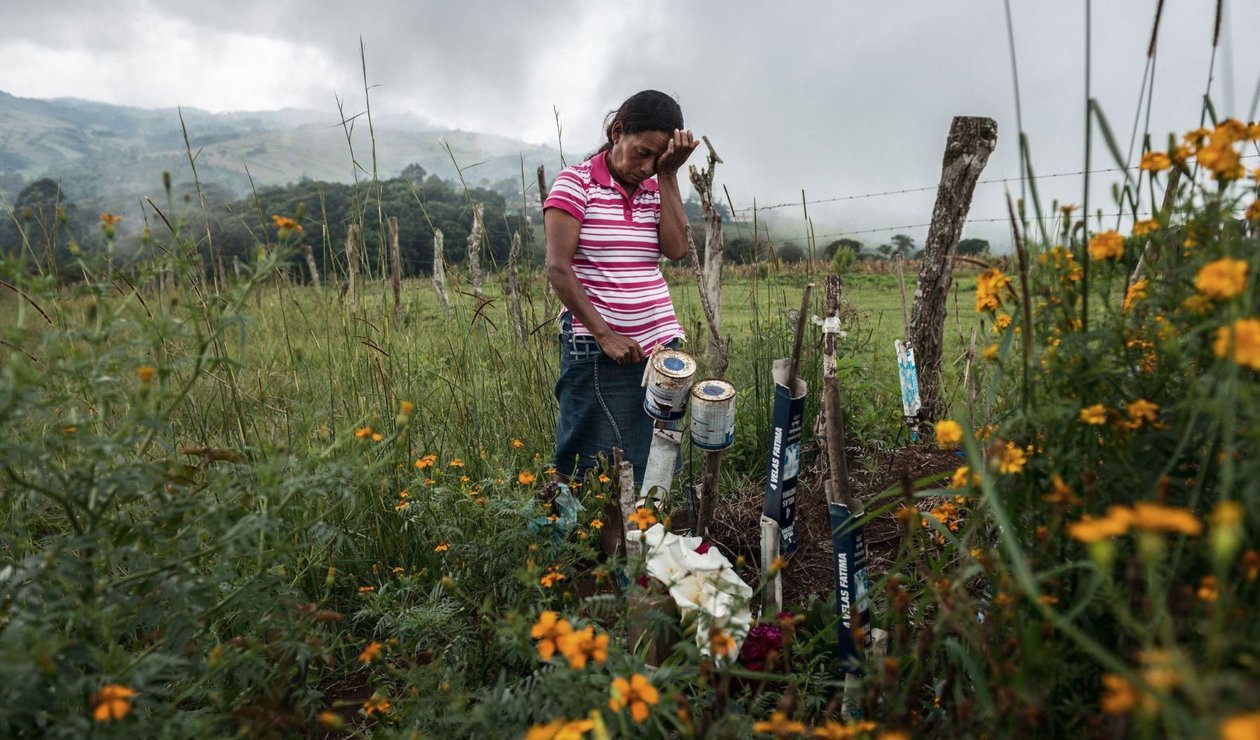
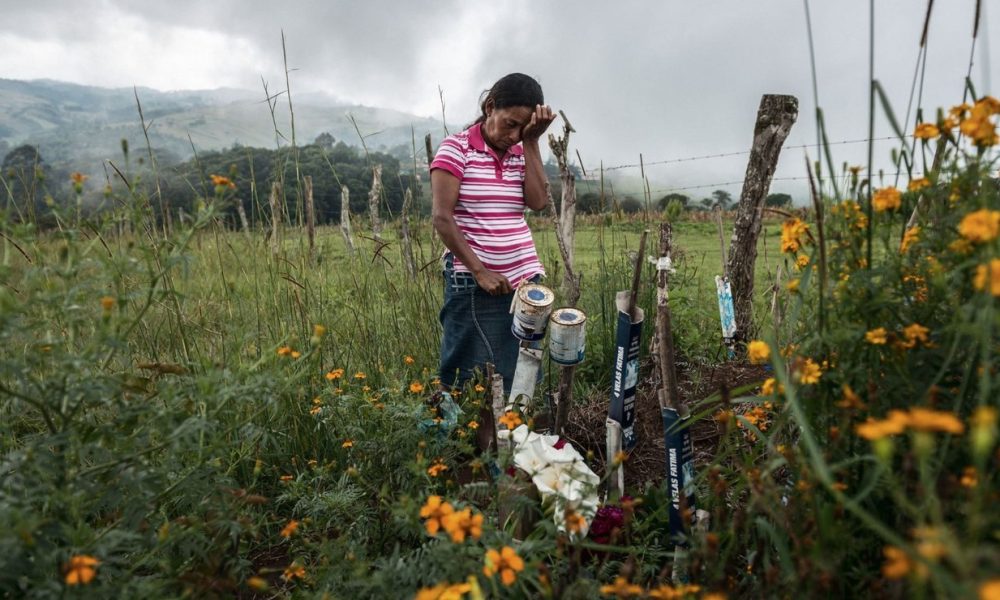
Julia Francisco Martínez stands at the graveside of her husband Juan, a Honduran Indigenous defender who was found murdered in 2015. Giles Clarke / Global Witness
Every year, Global Witness works with partners to gather evidence, verify and document every time a land and environmental defender is killed or disappeared. Our methodology follows robust criteria, yet undocumented cases pose challenges when it comes to analysing data
Global Witness documents killings and long-term disappearances of land and environmental defenders globally. In partnership with over 30 local, national and regional organisations in more than 20 countries, we produce an annual report containing these figures, and we have done so since 2012.
Our methodology involves a year-long process of cross-referencing data from different sources to ensure its credibility. Over 2,200 killings or long-term disappearances of defenders appear in our database since 2012 – with 146 cases documented in 2024.
Every year, we maintain a database to keep a record of these crimes and create a comprehensive global picture of the systematic violence defenders face.
The data provides a snapshot of the underlying drivers behind reprisals and indicates how some defenders and their communities face increased risks. Exposing these trends is the first of many steps to ensure that defenders and their communities are protected and can exercise their rights without fearing for their lives.
Killings and disappearances documented between 2012 and 2024
-
2,253
defenders have been killed or disappeared since 2012
Global Witness
-
146
of these attacks occurred in 2024
Global Witness
Classifying defenders’ cases
Most of the cases recorded in our database are killings – including assassinations by illicit actors, state murder and death in detention.
Our database also includes disappearances of defenders, where the individual has been missing for six months or more.
All reports prior to 2025 have combined killings and long-term disappearances into one single headline figure. For greater clarity, our latest report indicates a distinction between these two types of attack, and our reports will continue to make this distinction in future.

Lissette Chuñil makes a offering to honour her grandmother – a Mapuche woman and president of the Indigenous community of Máfil, who was disappeared in November 2024. Tamara Merino / Global Witness
Cases from prior years or those already included in our database are not continuously monitored. Where we receive updated information on an attack, we may retrospectively include or remove cases.
We document the killing or disappearance of a defender when there is a reasonable and suspected link to an individual’s activism or where the individual played a role in defence of the land or the environment.
As well as individuals directly involved in activism, we also document tangential violence against families, community members or others caught up in attacks.
Our definition covers a broad range of people and encompasses different types of land and environmental leadership. Crucially, this involves people who work in any capacity to protect rights linked to the exploitation of land or the environment.
How we define land and environmental defenders
Land and environmental defenders are a specific type of human rights defender – individuals or groups of people who act to promote, protect or strive for the realisation of human rights through peaceful action.
Their role as human rights protectors is recognised by the UN Declaration on Human Rights Defenders, principles also enshrined in other legally binding international instruments. This includes those working to protect human rights relating to the environment, including water, air, land, flora and fauna.
We define defenders as people who take peaceful action against the unjust, discriminatory, corrupt or damaging exploitation of natural resources or the environment.
Land and environmental struggles take different forms and are shaped by local contexts. For example, in every region of the world, communities strive against systematic land dispossession and environmental destruction from extractive industries.
For some the threat to territories is intimately connected to the degeneration of their sovereignty, culture, livelihoods and homes. Others are caught in wider conflicts which exacerbate land, environmental and climate injustices.
Defenders often live in communities whose land, health and livelihoods are threatened by the operations of mining, logging, agribusiness or other industries.
Some defend our biodiverse environment, while others support such efforts through their roles as lawyers, politicians, park rangers, journalists, or members of campaigns or civil society organisations.
Others are holders of traditional or Indigenous knowledge, working as Indigenous guards or community knowledge keepers.

Family members sift through photographs of Ricardo Arturo Lagunes Gasca, a human rights lawyer who disappeared with Indigenous leader Antonio Díaz Valencia after attending a community meeting in San Miguel de Aquila, Mexico. Luis Rojas / Global Witness
Identifying and documenting cases
We learn of killings and disappearances through reliable sources of online reporting, tip-offs and wider documentation efforts from civil society organisations.
We set up search engine alerts using keywords and conduct other searches online to identify relevant cases. We also share information with international and national organisations who report on attacks against human rights defenders.
We then research each case to assess whether the person killed or disappeared was a land and environmental defender, according to our definition.
Desk-based research has its limitations. Many attacks on land and environmental defenders receive little or no media attention, due to the remote location of attacks, stigmatisation by investigating authorities, or widespread government repression of the media.
In most instances, we supplement identified cases with additional research. This includes working closely to share information with trusted civil society organisations and communities who have gathered evidence through their own investigations.

Communities affected by the East African Oil Pipeline report receiving threats after refusing to leave their homes without adequate compensation. Jjumba Martin / Global Witness
Verifying information
We work closely with in-country partners to verify whether there is a reasonable and suspected link between the killing or disappearance and the person’s activism.
Testimony from families, communities and organisations working with targeted defenders often provides key information. Sometimes we review official documentation, including police reports or legal documents. This information is documented by Global Witness and not made public.
Navigating toxic narratives
Year after year, we are confronted with cases where the very nature of what it means to be a land and environmental defender is questioned.
Often governments, corporations and media outlets propagate a narrow view of land and environmental activism, excluding individuals and communities whose role defending land or environmental rights is less recognisable.
Across the world, defenders and their communities are often labelled as “criminals”, “agitators” or “communists”. These toxic terms are sometimes employed by the institutions and authorities that claim to uphold people’s rights.
Media can often repeat damaging narratives or even simply ignore reporting on these cases, making it difficult to verify whether an attack could be linked to a persons’ activism.
In these situations, we work closely with local organisations to clarify the contexts in which defenders work, and the patterns of stigmatisation they face, and gather more evidence of the role they played in environmental and land rights protection.

An Indigenous activist holds smoke bombs, tear gas canisters and other projectiles used by Guatemalan state authorities to prevent peaceful protest against a hydro-electric project. James Rodriguez / Global Witness
We also work alongside other organisations gathering national, regional and international reprisal-related data. This includes official UN sources of data collection as well as civil society initiatives.
Every data collection project has its own definitions and methodologies, which create challenges in collating this data into a global dataset on attacks against defenders. Some existing datasets overlap with ours, but often do not fully coincide.
For every case documented, we research and evaluate whether it fits our definition of a land and environmental defender.
Often, public reporting on attacks is circumstantial or lacks information. In some cases, attacks go unreported, particularly in rural areas and in certain countries.
In these cases, countries with restricted civic space – where civil society organisations, NGOs and other groups that monitor the work of defenders are less present, for example – are not able to fill the reporting gap.
This is further exacerbated by repression of the media, authoritarian governments and active political conflicts. Documenting massacres or reprisals in active conflict zones, areas under occupation or where organised crime groups have social or territorial control is also challenging.
These contextual challenges mean that our data is likely to underreport killings and disappearances in certain countries and regions of the world – particularly in areas of Asia, Africa and the Middle East.
Spotlighting our criteria
To meet our criteria, a case must be supported by the following available information:
- Credible sources of information. This can include online publications, official documentation on a case or collating information from families, colleagues and civil society organisations linked to a case.
- Details about the type of act and method of violence, including the date and location.
- Name and biographical information about the victim.
- Clear, proximate and documented connections to the protection and defence of environmental and land rights. This includes evaluating the various roles of defenders play and the wider contexts and underlying conflicts that affect them.

Many of the defenders working to protect land and environment also speak out against the harmful impacts of the climate crisis either because of the direct impact on their livelihoods and communities or in their role as lawyers, journalists or members of civil society organisations. Matheus Alves / Sumauma / Global Witness
Analysing the data
We seek to understand the most dangerous repercussions defenders face in the context of the territorial and environmental disputes taking place in their countries.
We also look to understand the characteristics of defenders and their communities – who they are as people and whether some face greater, more targeted risks.
Focusing on the most serious harms (killings and disappearances) enables us to confidently verify the threats defenders face and allows us to analyse geographical trends at regional, country and local level – though with recognised limitations.
We record whether a defender belongs to a marginalised group – Indigenous Peoples, Afro-descendants or rural communities – or if they act as a defender in their role as lawyers, journalists or members of civil society organisations. This enables us to understand more about the characteristics of defenders working to protect land and the environment.
We try to gather information on the rights defenders are striving to protect, such as whether they are engaged in a territorial dispute or preventing environmental damage.

Violence is often connected to wider territorial disputes linked to the expansion of extractive projects, devastating the homes and livelihoods of families and communities. Andrew Ball / Panos / Global Witness
We also aim to identify the underlying driver of the harms that led to their acts of protest – for instance, land disputes or industries linked to destructive practices or rights infringements.
Where possible, we record the alleged perpetrator of the crime – both the direct offender and the suspected intellectual authors.
Our dataset is reviewed and updated annually. Before we publish our data, documented cases from the previous year go through a rigorous fact-checking process to ensure confidence in the veracity of our data.
We do not proactively review historic cases in our database. If there are changes in the status of a case or if more information about an individual defender comes to light, we revise and amend our database accordingly.
In the weeks before the publication of our Annual Defenders Report, we temporarily halt the inclusion of new cases – any new cases or information received are kept on file and later added to the database.
Despite efforts to overcome the data access and verification challenges outlined above, our data is likely incomplete. The figures presented in Global Witness reports are therefore probably an underestimate and should be considered as only a partial picture of the extent of killings and disappearances of land and environmental defenders.
Read full article: globalwitness.org
Related posts:

 Human rights defenders show remarkable courage in the face of attacks and killings – new report
 #COP27: HUMAN RIGHTS ADVOCATES URGE PARTIES TO INCREASE RECOGNITION AND PROTECTION OF ENVIRONMENTAL AND LAND DEFENDERS.
 Toxic platforms, broken planet: How online abuse of land and environmental defenders harms climate action
 Defending tomorrow: The climate crisis and threats against land and environmental defenders

Related posts:
 The Great “Green” Heist: When Artificial Intelligence and Arms Dealers Seize the Minerals of the South
 Human rights defenders & business in 2022: People challenging corporate power to protect our planet.
 U.S. Peace Efforts in the DRC: Protecting Communities or Minerals?
 Peruvian communities have launched a global petition to halt a mining project they say threatens the water supply of over 10 million people.
NGO WORK
The Great “Green” Heist: When Artificial Intelligence and Arms Dealers Seize the Minerals of the South
By Franck Zongwe Lukama, Congolese journalist and researcher, leads the independent media KilaloPress in DRC.
We were sold a simple equation: to save the planet, we must dig. Dig faster, deeper, extracting from the earth the cobalt, lithium, or copper needed for solar panels and electric vehicles. Yet, this climate rescue rhetoric conceals a staggering statistical deception. Today, 70% of global demand for critical minerals does absolutely nothing to support the energy transition. These resources end up in aerospace, communication technologies, and, above all, weaponry. Sectors that, ironically, exacerbate the global ecological crisis. The green revolution has become the perfect smokescreen, the moral veneer for a very different kind of war.
Far from the promises of sustainable development touted by the World Bank, the current scramble is driven by a strict logic of geopolitical power. A damning report from the California-based Oakland Institute exposes this global scheme. The report reveals an unprecedented and formidable convergence of interests between the American military-industrial complex and the giants of Silicon Valley. With the Pentagon openly pivoting toward a combat strategy focused on artificial intelligence (AI), securing supply chains is no longer a matter of ecology, but a question of survival in the face of Chinese influence. The United States is not seeking to reduce carbon emissions; it is seeking to guarantee its technological and military supremacy.

The real winners of this frantic race wear suits far removed from environmental activism. Trillions of dollars are flowing into new alliances that intertwine AI-driven mining companies, like KoBold Metals—backed by billionaires such as Bill Gates—and companies specializing in cutting-edge defense technologies, like Palantir and Anduril, not to mention the networks of influence close to the Trump family. For these players, the discourse of climate emergency acts as a powerful public relations tool. It justifies massive and accelerated extraction that would otherwise provoke international outrage.
Local communities and Indigenous populations find themselves on the frontlines, forced to resist an extraction machine that has the audacity to justify their suffering by claiming it is necessary to save the world.
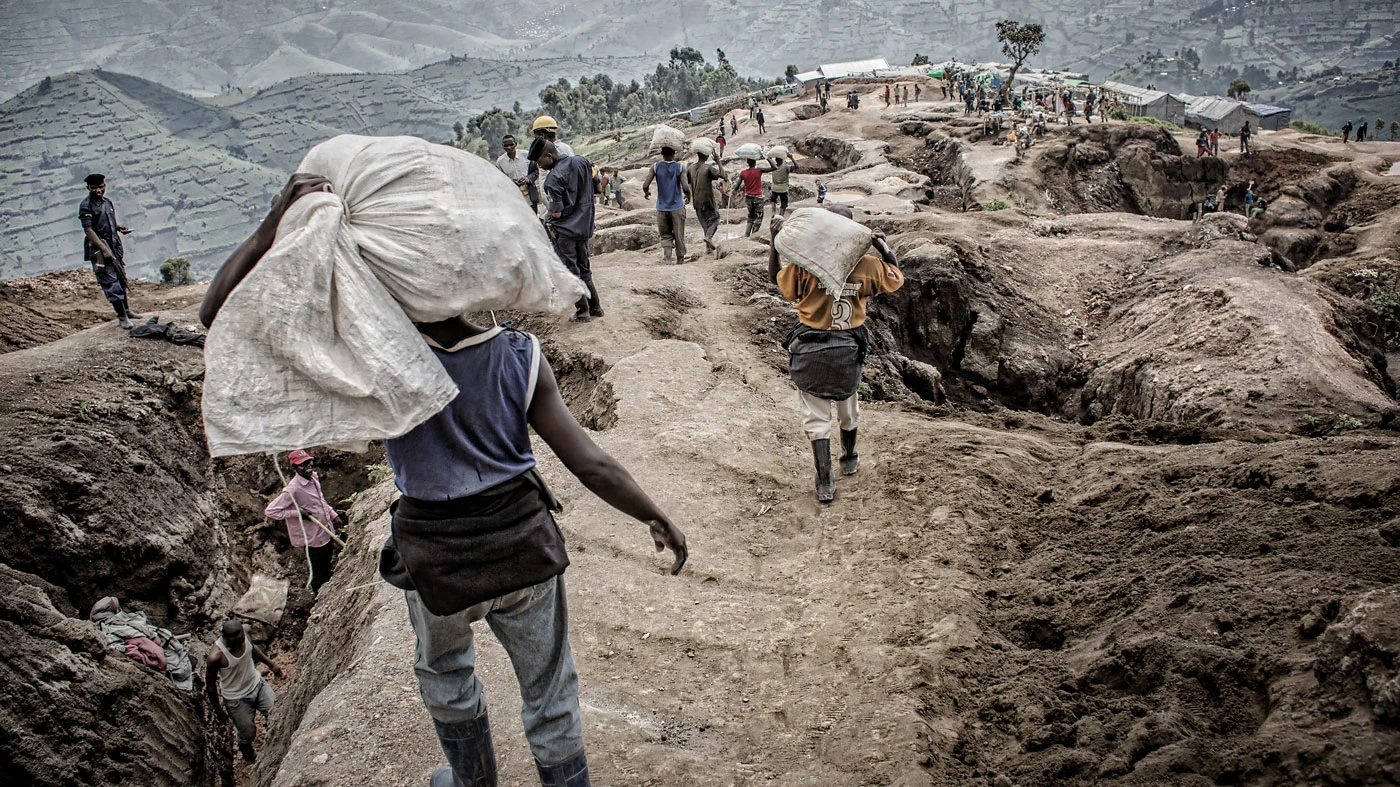
And the price of this hypocrisy is being paid in full throughout the Global South. In the Rubaya hills, in the Kolwezi copper belt, as in the Indigenous territories of Latin America and Asia, the promise of “prosperity” translates into a terrifyingly familiar tragedy. Land grabbing, forced displacement, devastating groundwater pollution: the plundering of ecosystems and human lives is accelerating. Local communities and Indigenous populations find themselves on the frontlines, forced to resist an extraction machine that has the audacity to justify their suffering by claiming it is necessary to save the world. Today, opposing the destruction of one’s village by a multinational mining company risks being accused of hindering the fight against climate change. The rhetorical trap is devastatingly effective.

The long-term consequences of this diversion are alarming. The exponential surge in demand generated by future AI data centers, mass surveillance, and global rearmament will mathematically deplete available reserves. Every ton of copper, nickel, or cobalt consumed by combat drones or algorithmic data processing servers is a ton diverted from the production of renewable energy infrastructure. We are not equipping the energy transition; we are cannibalizing it to militarize our future.
We are not equipping the energy transition; we are cannibalizing it to militarize our future.
If no strict regulations are put in place to curb this rampant mining frenzy, hundreds of new mines will spring up in the coming years, causing irreversible damage on an unprecedented scale. The question facing citizens today, from Kinshasa to Washington, is no longer whether we will have enough minerals to save our atmosphere. It is why we are willing to sacrifice millions of lives and destroy our lands to fuel next-generation algorithms and weapons. In ten years, when the Global South is nothing more than a vast crater serving a militarized hyper-technology, it will be too late to realize that the planet was never the priority.
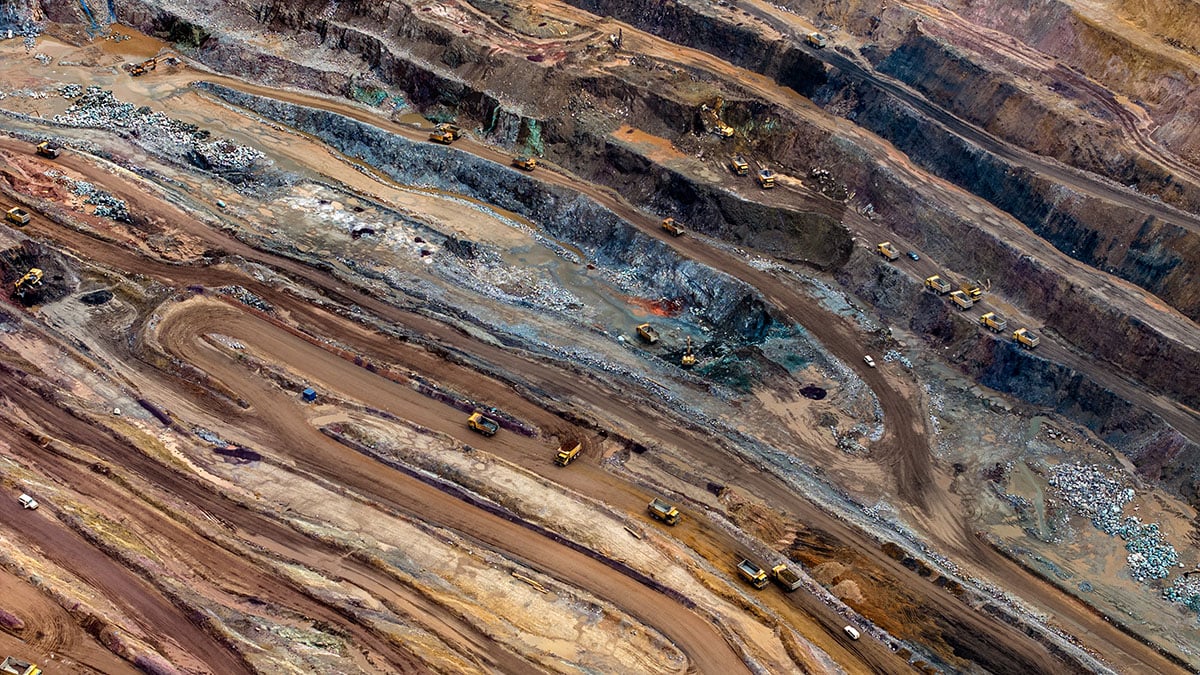
Photos: Artisanal Coltan – manganese – cobalt mining in Mudere mine under control of Nyatura militia, town of Rubaya, North Kivu region (Democratic Republic of Congo, Africa). Erberto Zani – stock.adobe.com
Source: oaklandinstitute.org/
Related posts:
 Experts warn that without Africa’s control over resources and climate financing, the continent faces the risk of entering a new era of “green colonialism”.
 30 civil society organizations have written to the World Bank Group demanding to publicly disclose the Africa Energy Approach paper.
 Africa Climate Summit 2023 Set to Surrender the Continent to Green Colonialism
 The mothers and daughters of the global south cannot celebrate the World Bank’s 80-year legacy of harm.
Related posts:
 The 4th African Forum on Business and Human Rights: The African continent is lagging, with only a few member states having adopted the National Action Plan (NAP) on Business and Human Rights.
 La Via Campesina calls on States to exit the WTO and to create a new framework based on food sovereignty
 World Bank Halts New Lending to Uganda Over Anti-LGBTQ Law
 La Via Campesina Call to Action for the 27th UN Climate COP

Six other Anti-EACOP Activists remanded to Luzira over alleged unlawful assembly.

Wakiso LCs warned against using official stamps to facilitate land grabbing

Ten out of sixteen Rooted in Resistance activists now face charges and have been sent to Luzira Prison after standing up against Uganda’s oil development.

Civil society organizations are rallying for a robust grievance mechanism in the EAC Seed and Plant Varieties Bill.

Breaking: Sixteen Rooted in Resistance activists arrested and detained as they boldly protested Uganda’s oil ambitions.

Minister Nabakooba wants special land title issuance halted

Rising demand for cow dung pushes prices up

Thirteen years after the Karuma Hydropower Project broke ground, countless people forced from their homes are still waiting for the compensation and resettlement they were promised.

Innovative Finance from Canada projects positive impact on local communities.
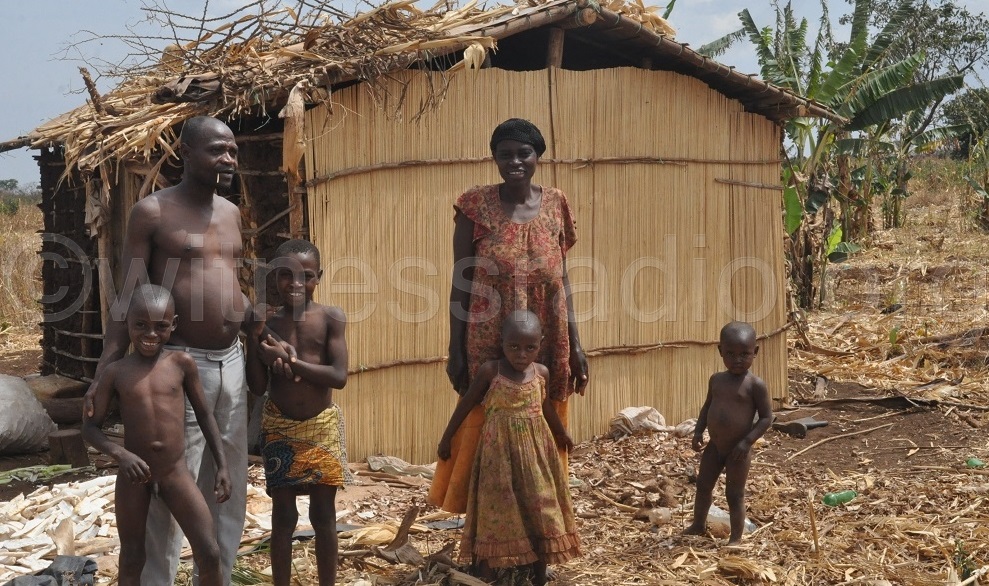
Over 5000 Indigenous Communities evicted in Kiryandongo District
Petition To Land Inquiry Commission Over Human Rights In Kiryandongo District

Invisible victims of Uganda Land Grabs
-
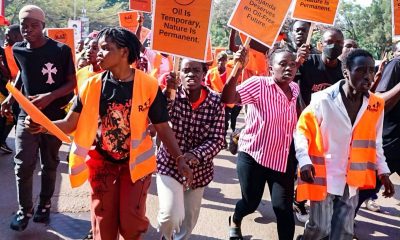 MEDIA FOR CHANGE NETWORK5 days ago
Breaking: Sixteen Rooted in Resistance activists arrested and detained as they boldly protested Uganda’s oil ambitions.
-
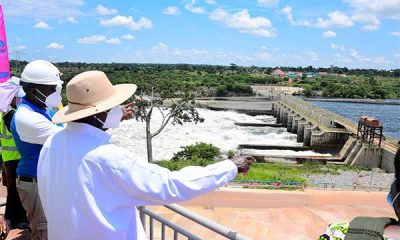 MEDIA FOR CHANGE NETWORK1 week ago
Thirteen years after the Karuma Hydropower Project broke ground, countless people forced from their homes are still waiting for the compensation and resettlement they were promised.
-
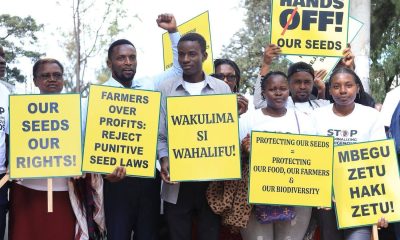
 MEDIA FOR CHANGE NETWORK2 weeks ago
Civil society organizations across East Africa have revived their campaign against the EAC Seed and Plant Varieties Bill 2025, just as the regional parliament opens the floor to public consultations.
-
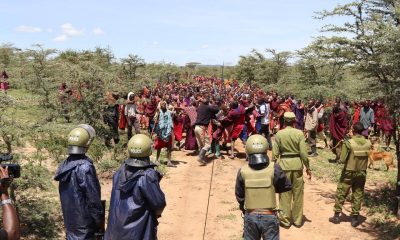
 MEDIA FOR CHANGE NETWORK5 days ago
Tanzania’s surge in conservation investments is under the UN spotlight, as allegations of indigenous land rights violations prompt an urgent call for the government to stop the evictions at once.
-
 MEDIA FOR CHANGE NETWORK1 week ago
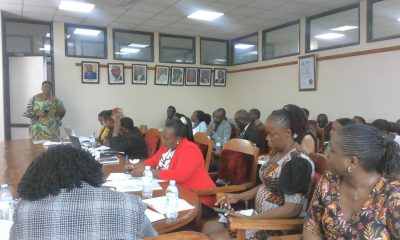
East African Community member states launched public hearings this week for the Seed and Plant Variety Bill 2025, marking a significant step in shaping the region’s agricultural future.
-
 MEDIA FOR CHANGE NETWORK1 week ago
AGRA at 20: New report reignites debate over Africa’s farm model
-
 WITNESS RADIO MILESTONES1 week ago
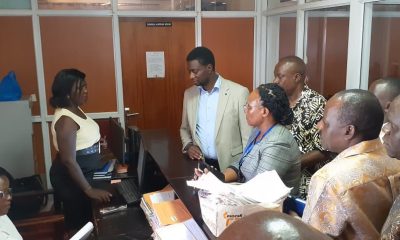
MPs recover hundreds of land files hidden near Mukono land office
-
 MEDIA FOR CHANGE NETWORK2 weeks ago
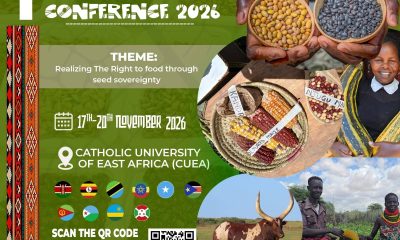
Smallholder farmers and civil society organizations have launched a dynamic media campaign for the inaugural Eastern Africa Indigenous Seed Conference, inviting more smallholder farmers to join the agroecology movement.