
NGO WORK
Documenting killings and disappearances of land and environmental defenders

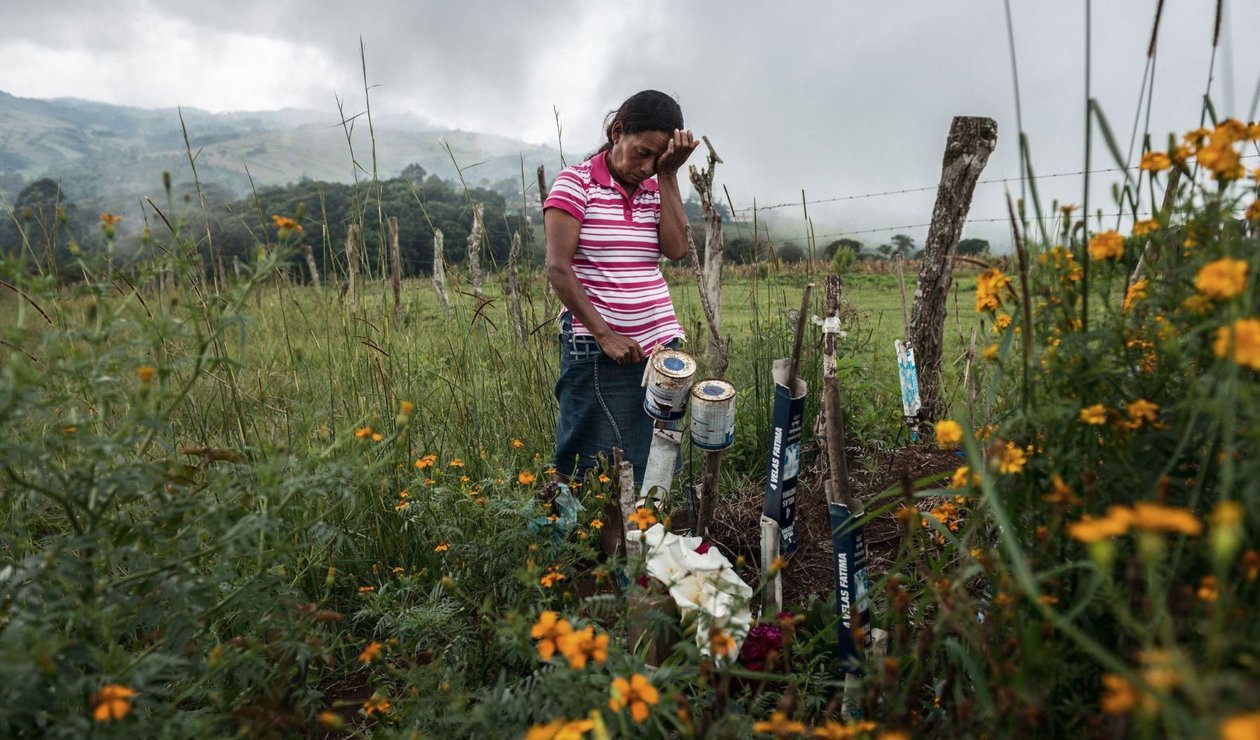
Julia Francisco Martínez stands at the graveside of her husband Juan, a Honduran Indigenous defender who was found murdered in 2015. Giles Clarke / Global Witness
Every year, Global Witness works with partners to gather evidence, verify and document every time a land and environmental defender is killed or disappeared. Our methodology follows robust criteria, yet undocumented cases pose challenges when it comes to analysing data
Global Witness documents killings and long-term disappearances of land and environmental defenders globally. In partnership with over 30 local, national and regional organisations in more than 20 countries, we produce an annual report containing these figures, and we have done so since 2012.
Our methodology involves a year-long process of cross-referencing data from different sources to ensure its credibility. Over 2,200 killings or long-term disappearances of defenders appear in our database since 2012 – with 146 cases documented in 2024.
Every year, we maintain a database to keep a record of these crimes and create a comprehensive global picture of the systematic violence defenders face.
The data provides a snapshot of the underlying drivers behind reprisals and indicates how some defenders and their communities face increased risks. Exposing these trends is the first of many steps to ensure that defenders and their communities are protected and can exercise their rights without fearing for their lives.
Killings and disappearances documented between 2012 and 2024
-
2,253
defenders have been killed or disappeared since 2012
Global Witness
-
146
of these attacks occurred in 2024
Global Witness
Classifying defenders’ cases
Most of the cases recorded in our database are killings – including assassinations by illicit actors, state murder and death in detention.
Our database also includes disappearances of defenders, where the individual has been missing for six months or more.
All reports prior to 2025 have combined killings and long-term disappearances into one single headline figure. For greater clarity, our latest report indicates a distinction between these two types of attack, and our reports will continue to make this distinction in future.

Lissette Chuñil makes a offering to honour her grandmother – a Mapuche woman and president of the Indigenous community of Máfil, who was disappeared in November 2024. Tamara Merino / Global Witness
Cases from prior years or those already included in our database are not continuously monitored. Where we receive updated information on an attack, we may retrospectively include or remove cases.
We document the killing or disappearance of a defender when there is a reasonable and suspected link to an individual’s activism or where the individual played a role in defence of the land or the environment.
As well as individuals directly involved in activism, we also document tangential violence against families, community members or others caught up in attacks.
Our definition covers a broad range of people and encompasses different types of land and environmental leadership. Crucially, this involves people who work in any capacity to protect rights linked to the exploitation of land or the environment.
How we define land and environmental defenders
Land and environmental defenders are a specific type of human rights defender – individuals or groups of people who act to promote, protect or strive for the realisation of human rights through peaceful action.
Their role as human rights protectors is recognised by the UN Declaration on Human Rights Defenders, principles also enshrined in other legally binding international instruments. This includes those working to protect human rights relating to the environment, including water, air, land, flora and fauna.
We define defenders as people who take peaceful action against the unjust, discriminatory, corrupt or damaging exploitation of natural resources or the environment.
Land and environmental struggles take different forms and are shaped by local contexts. For example, in every region of the world, communities strive against systematic land dispossession and environmental destruction from extractive industries.
For some the threat to territories is intimately connected to the degeneration of their sovereignty, culture, livelihoods and homes. Others are caught in wider conflicts which exacerbate land, environmental and climate injustices.
Defenders often live in communities whose land, health and livelihoods are threatened by the operations of mining, logging, agribusiness or other industries.
Some defend our biodiverse environment, while others support such efforts through their roles as lawyers, politicians, park rangers, journalists, or members of campaigns or civil society organisations.
Others are holders of traditional or Indigenous knowledge, working as Indigenous guards or community knowledge keepers.

Family members sift through photographs of Ricardo Arturo Lagunes Gasca, a human rights lawyer who disappeared with Indigenous leader Antonio Díaz Valencia after attending a community meeting in San Miguel de Aquila, Mexico. Luis Rojas / Global Witness
Identifying and documenting cases
We learn of killings and disappearances through reliable sources of online reporting, tip-offs and wider documentation efforts from civil society organisations.
We set up search engine alerts using keywords and conduct other searches online to identify relevant cases. We also share information with international and national organisations who report on attacks against human rights defenders.
We then research each case to assess whether the person killed or disappeared was a land and environmental defender, according to our definition.
Desk-based research has its limitations. Many attacks on land and environmental defenders receive little or no media attention, due to the remote location of attacks, stigmatisation by investigating authorities, or widespread government repression of the media.
In most instances, we supplement identified cases with additional research. This includes working closely to share information with trusted civil society organisations and communities who have gathered evidence through their own investigations.

Communities affected by the East African Oil Pipeline report receiving threats after refusing to leave their homes without adequate compensation. Jjumba Martin / Global Witness
Verifying information
We work closely with in-country partners to verify whether there is a reasonable and suspected link between the killing or disappearance and the person’s activism.
Testimony from families, communities and organisations working with targeted defenders often provides key information. Sometimes we review official documentation, including police reports or legal documents. This information is documented by Global Witness and not made public.
Navigating toxic narratives
Year after year, we are confronted with cases where the very nature of what it means to be a land and environmental defender is questioned.
Often governments, corporations and media outlets propagate a narrow view of land and environmental activism, excluding individuals and communities whose role defending land or environmental rights is less recognisable.
Across the world, defenders and their communities are often labelled as “criminals”, “agitators” or “communists”. These toxic terms are sometimes employed by the institutions and authorities that claim to uphold people’s rights.
Media can often repeat damaging narratives or even simply ignore reporting on these cases, making it difficult to verify whether an attack could be linked to a persons’ activism.
In these situations, we work closely with local organisations to clarify the contexts in which defenders work, and the patterns of stigmatisation they face, and gather more evidence of the role they played in environmental and land rights protection.

An Indigenous activist holds smoke bombs, tear gas canisters and other projectiles used by Guatemalan state authorities to prevent peaceful protest against a hydro-electric project. James Rodriguez / Global Witness
We also work alongside other organisations gathering national, regional and international reprisal-related data. This includes official UN sources of data collection as well as civil society initiatives.
Every data collection project has its own definitions and methodologies, which create challenges in collating this data into a global dataset on attacks against defenders. Some existing datasets overlap with ours, but often do not fully coincide.
For every case documented, we research and evaluate whether it fits our definition of a land and environmental defender.
Often, public reporting on attacks is circumstantial or lacks information. In some cases, attacks go unreported, particularly in rural areas and in certain countries.
In these cases, countries with restricted civic space – where civil society organisations, NGOs and other groups that monitor the work of defenders are less present, for example – are not able to fill the reporting gap.
This is further exacerbated by repression of the media, authoritarian governments and active political conflicts. Documenting massacres or reprisals in active conflict zones, areas under occupation or where organised crime groups have social or territorial control is also challenging.
These contextual challenges mean that our data is likely to underreport killings and disappearances in certain countries and regions of the world – particularly in areas of Asia, Africa and the Middle East.
Spotlighting our criteria
To meet our criteria, a case must be supported by the following available information:
- Credible sources of information. This can include online publications, official documentation on a case or collating information from families, colleagues and civil society organisations linked to a case.
- Details about the type of act and method of violence, including the date and location.
- Name and biographical information about the victim.
- Clear, proximate and documented connections to the protection and defence of environmental and land rights. This includes evaluating the various roles of defenders play and the wider contexts and underlying conflicts that affect them.

Many of the defenders working to protect land and environment also speak out against the harmful impacts of the climate crisis either because of the direct impact on their livelihoods and communities or in their role as lawyers, journalists or members of civil society organisations. Matheus Alves / Sumauma / Global Witness
Analysing the data
We seek to understand the most dangerous repercussions defenders face in the context of the territorial and environmental disputes taking place in their countries.
We also look to understand the characteristics of defenders and their communities – who they are as people and whether some face greater, more targeted risks.
Focusing on the most serious harms (killings and disappearances) enables us to confidently verify the threats defenders face and allows us to analyse geographical trends at regional, country and local level – though with recognised limitations.
We record whether a defender belongs to a marginalised group – Indigenous Peoples, Afro-descendants or rural communities – or if they act as a defender in their role as lawyers, journalists or members of civil society organisations. This enables us to understand more about the characteristics of defenders working to protect land and the environment.
We try to gather information on the rights defenders are striving to protect, such as whether they are engaged in a territorial dispute or preventing environmental damage.

Violence is often connected to wider territorial disputes linked to the expansion of extractive projects, devastating the homes and livelihoods of families and communities. Andrew Ball / Panos / Global Witness
We also aim to identify the underlying driver of the harms that led to their acts of protest – for instance, land disputes or industries linked to destructive practices or rights infringements.
Where possible, we record the alleged perpetrator of the crime – both the direct offender and the suspected intellectual authors.
Our dataset is reviewed and updated annually. Before we publish our data, documented cases from the previous year go through a rigorous fact-checking process to ensure confidence in the veracity of our data.
We do not proactively review historic cases in our database. If there are changes in the status of a case or if more information about an individual defender comes to light, we revise and amend our database accordingly.
In the weeks before the publication of our Annual Defenders Report, we temporarily halt the inclusion of new cases – any new cases or information received are kept on file and later added to the database.
Despite efforts to overcome the data access and verification challenges outlined above, our data is likely incomplete. The figures presented in Global Witness reports are therefore probably an underestimate and should be considered as only a partial picture of the extent of killings and disappearances of land and environmental defenders.
Read full article: globalwitness.org
Related posts:

 Human rights defenders show remarkable courage in the face of attacks and killings – new report
 #COP27: HUMAN RIGHTS ADVOCATES URGE PARTIES TO INCREASE RECOGNITION AND PROTECTION OF ENVIRONMENTAL AND LAND DEFENDERS.
 Toxic platforms, broken planet: How online abuse of land and environmental defenders harms climate action
 Defending tomorrow: The climate crisis and threats against land and environmental defenders

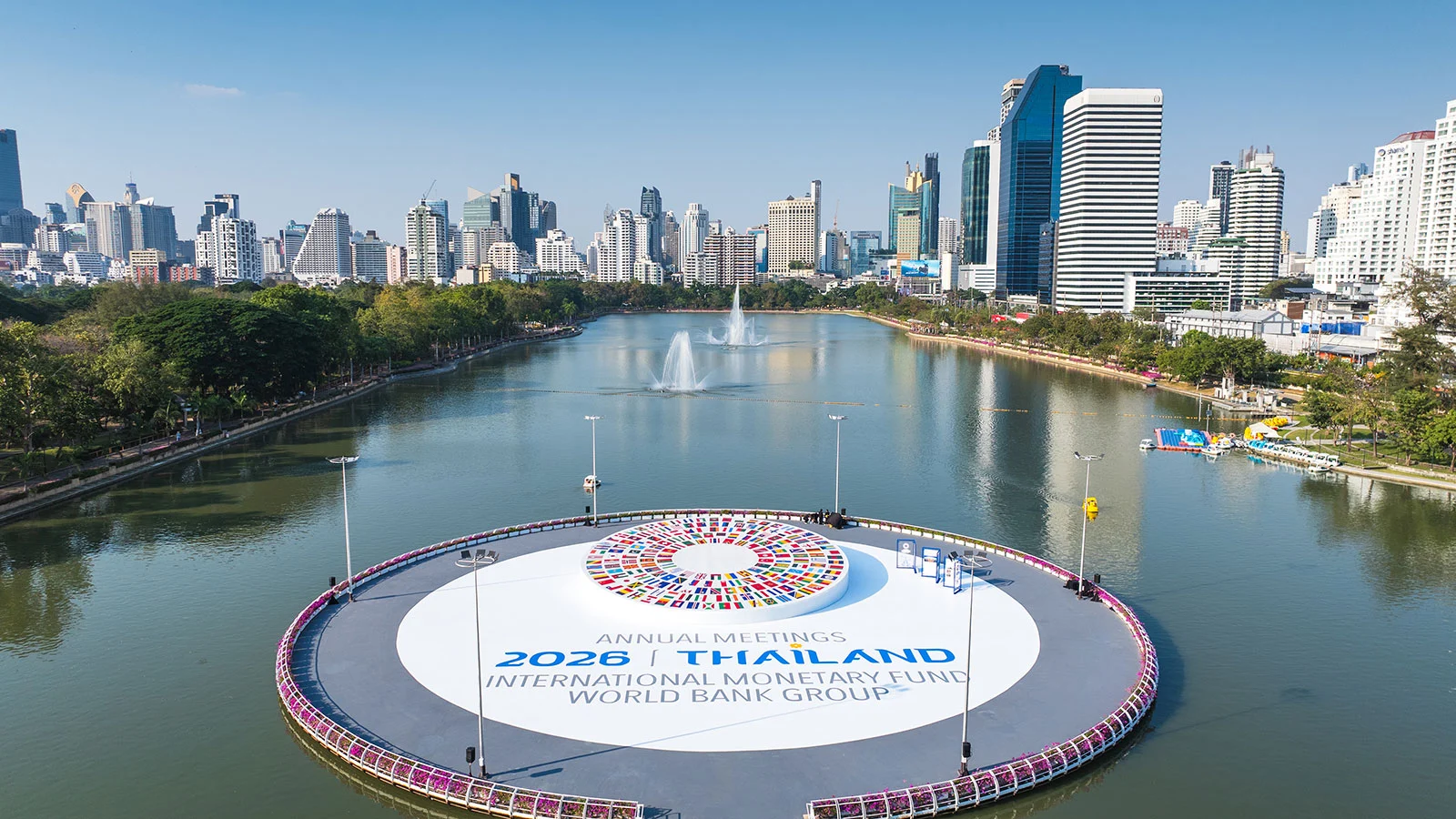
Oakland, CA – As the World Bank convenes its Annual Meetings in Thailand this week, the accountability of the institution is entirely omitted from the agenda. Yet, its lack of accountability to the millions of people displaced or harmed by its programs around the world has never been more appalling.
The Bank claims that recent 2026 reforms would strengthen its accountability mechanism, but the facts show a total disregard for the devastation it has caused. In Tanzania, it has failed to act on damning findings from its own Inspection Panel – whose investigation detailed systemic violations of its own Operating Procedures and a “critical failure” in project planning and supervision, leaving local villagers to continue bearing the brunt of harsh, unmitigated serious harms.
Between 2017-2024, the World Bank poured over US$100 million into REGROW, doubling the size of Ruaha National Park in Southern Tanzania and funding the paramilitary park rangers (TANAPA) implicated in egregious human rights abuses – including killings and forced disappearances. Following an independent investigation, the project was officially cancelled.
“The park expansion effectively criminalized over 84,000 people on their own land, stripping them of their livelihoods by barring essential farming and grazing. The Bank’s REGROW initiative turned poor villagers into targets for park rangers. Despite clear evidence that the devastation it unleashed continues today, the Bank has completely failed to provide redress, compensate or support the communities whose lives it upended,” said Anuradha Mittal, Executive Director of the Oakland Institute, who represented villagers in their complaint to the Inspection panel.

In April 2025, ignoring community demands for reparations and the return of land, the Board approved a largely insufficient and inadequate Management Action Plan (MAP). On September 4, 2026, the Bank officially “closed” the REGROW case after deeming all actions in the MAP had been completed.
“The World Bank has destroyed our lives. Since the project started, rangers have killed or disappeared 18 of us. We are banned from farming our lands and grazing our livestock. Thousands of our cattle were confiscated. We are still waiting for justice and reparations for our losses. How can the World Bank walk away after being found responsible for this catastrophe?” said a local villager who filed the initial complaint.
Today, despite the Bank’s assertions that livelihoods could resume, many farmers remain barred from their fields, and pastoralists face continuous threats and fines for grazing cattle. The international spotlight that the Institute put on the dire situation has brought a halt to fatal shootings by TANAPA rangers since May 2025 – a grim baseline for “progress” from a paramilitary force that has terrorized communities since the Bank bolstered their capacity. The families of those murdered by TANAPA, including 27-year-old Hamprey Mhaki and 20-year-old Kulwa Igembe, continue to be denied justice.
“The Inspection Panel presented undeniable evidence of the Bank’s wrongdoings, yet the Bank’s Board and senior management refused to take responsibility. Affected communities took monumental personal and collective risks to expose these abuses, offering the Bank every opportunity to correct course. Instead, management turned its back on the very people it harmed – leaving a permanent stain on the institution’s credibility. The Oakland Institute will continue to stand with communities in their fight for justice,” concluded Mittal.
The World Bank’s expanding accountability crisis is further deepened by its decision to join the Trump-established Board of Peace (BoP) for Gaza, proactively enabling impunity for crimes against humanity and genocide. By joining the BoP, the Bank directly violates its own mandate and policies, international humanitarian law and decades of UN General Assembly Resolutions. Furthermore, the move defies provisional orders and advisory opinions from the International Court of Justice (ICJ) and rulings from the International Criminal Court (ICC).
Source: oaklandinstitute.org
Related posts:
 World Bank Fails to Remedy Harms it Caused in Tanzania, Despite a Scathing Investigation by its Inspection Panel
 Communities Under Siege: New Report Reveals World Bank Failures in Safeguard Compliance and Human Rights Oversight in Tanzania
 The World Bank Must Be Held Accountable for Harm Inflicted on Tanzanian Communities by Tourism Project
 Campaign Victory: World Bank Suspends Funding for REGROW, a Conservation Project Responsible for Evictions & Human Rights Abuses in Tanzania
NGO WORK
Tanzanian Government Abducts Maasai Villagers in an Unconscionable Attack on Indigenous Land Defenders
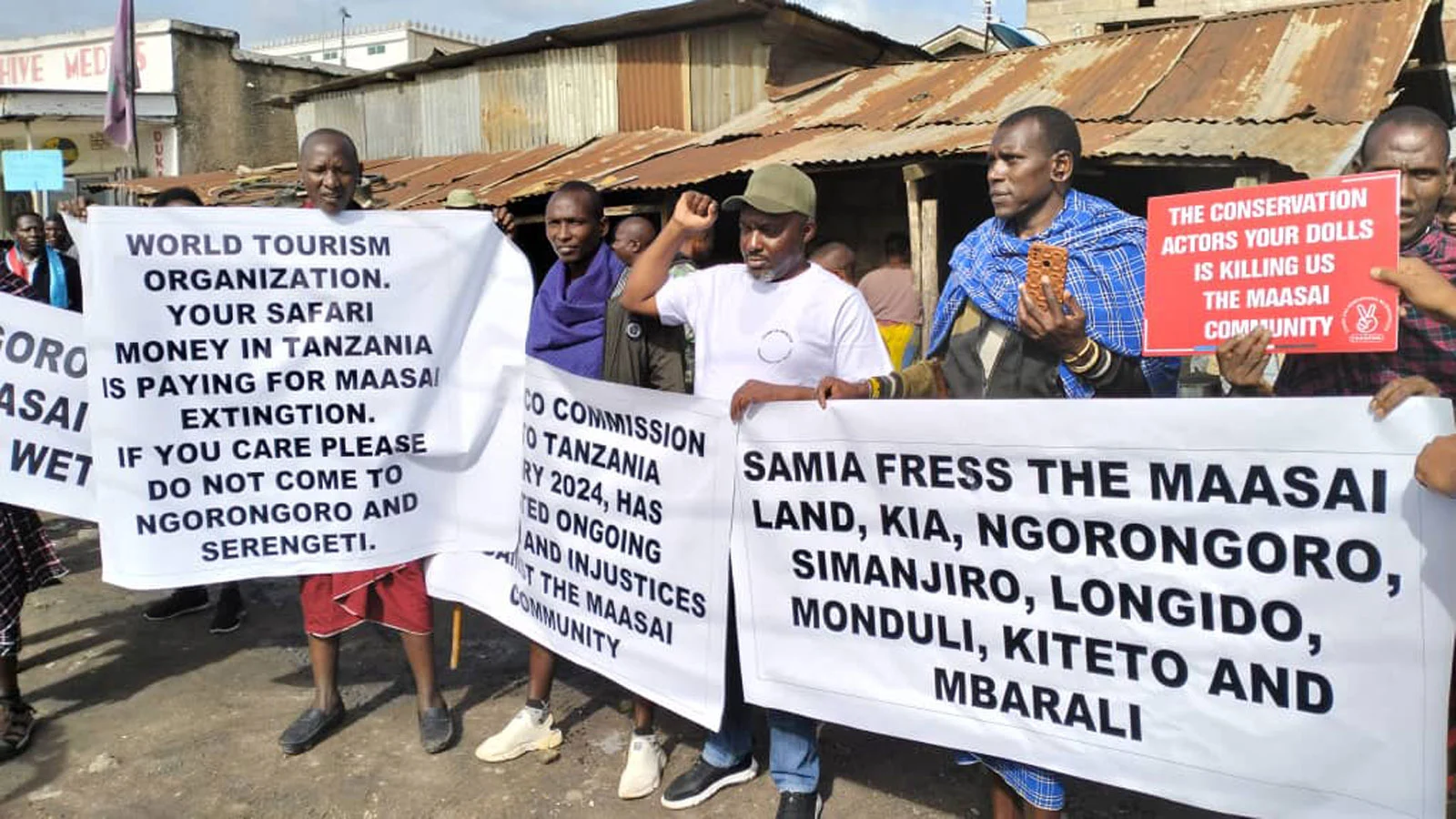
- Human rights conditions in northern Tanzania have deteriorated sharply since August, as the Tanzanian government carries out a coordinated campaign of violence and arrests against the Indigenous Maasai.
- In Ngorongoro, five Maasai were arrested last week; Over 30 community members have been arrested over the last two months; In neighboring Loliondo, thousands of livestock have been confiscated.
- The government is pressuring Maasai to leave the area to reach its goal of expanding the number of safari tourists and trophy hunters to eight million by 2030.
- The last arbitrary arrests unfolded in Arusha as Tanzania hosted the 153rd Assembly of the Inter-Parliamentary Union, centered on the theme of “enhancing good governance and empowering communities through inclusivity, trust and opportunities for all.”
Oakland, CA – On the night of October 6, the Tanzanian government forcefully abducted five Maasai men, Nangei Meitaya, Salangat Makko, Ezekiel Kishau, Dickson and Thadeus Clamian, holding them under arbitrary detention at the Arusha Central Police Station. While the individuals were released the following night, these targeted arrests are a dangerous escalation in the government’s systemic oppression of the Indigenous Maasai people.
Since August, human rights conditions in northern Tanzania have worsened sharply as the state carries out a wave of coordinated violence and arrests against the Maasai. In the Ngorongoro Division, authorities have detained more than 30 community members, while confiscations of livestock have intensified in neighboring Loliondo. Local advocates state these actions are part of a systemic campaign to suppress peaceful dissent and dismantle civil society, through economic restrictions, intimidation, and unlawful incarceration of Maasai pastoralists.
“Far from being an isolated incident, this is a calculated campaign of intimidation. Driven by its goal to attract eight million safari tourists by 2030, the Tanzanian government is escalating pressure to evict the Maasai from their ancestral lands. As a result, community leaders have been driven into hiding once again, describing a rapidly deteriorating situation across the region,” said Anuradha Mittal, Executive Director of the Oakland Institute.
While detained, the victims were deprived access to their families or legal counsel. Four of those arrested are employees of the Pastoral Women’s Council (PWC), a local NGO dedicated to the “sustainable empowerment of Indigenous pastoralist women and girls in northern Tanzania.” Furthermore, authorities searched the homes of other staff members without due process.
“The abduction and subsequent detention of our community members is one of the many incidents of lawless targeting of the Maasai people in Ngorongoro – a deliberate campaign to instill fear and censorship, designed to make state dispossession and displacement easy. When a regime normalizes abductions and uses public hospitals as hunting grounds, it reveals a complete breakdown of common sense and basic humanity,” said Joseph Moses Oleshangay, a prominent Maasai human rights lawyer and activist from the Ngorongoro District in Tanzania.

The arbitrary arrests unfolded in Arusha as Tanzania hosted the 153rd Assembly of the Inter-Parliamentary Union, centered on the theme of “enhancing good governance and empowering communities through inclusivity, trust and opportunities for all.” This international gathering of parliamentarians from around the world comes a year after the rigged October 2025 national elections, during which the security forces violently suppressed pro-democracy demonstrations and killed thousands of civilians. Meanwhile, in March 2026, President Hassan accepted recommendations from sham land commissions advocating for the widespread eviction of Maasai communities from their ancestral lands in the Ngorongoro Conservation Area (NCA) and Loliondo.
The government plans to drastically reduce Maasai presence in the NCA to expand safari tourism and trophy hunting. To pressure residents to leave, the government has stopped basic medical, education, and water services while restricting access to grazing land for pastoralists. Massive mobilizations by the Maasai against this forced resettlement have exposed the government’s lie that people are leaving willingly.
“As international visitors plan safari tours to Tanzania, they must recognize that tourism revenues are inadvertently financing the government’s violent attack on Maasai communities whose ancestral lands are being stolen in plain sight,” concluded Mittal.
Source: oaklandinstitute.org
Related posts:
 Tanzanian Government Continues Violent Repression of the Maasai in Loliondo Despite Worldwide Condemnation
 Justice Denied: East African Court of Justice Grants Tanzanian Government Impunity to Trample Human Rights of the Maasai
 Tanzanian Government’s Sustained Campaign Against the Maasai in Loliondo and the Ngorongoro Conservation Area
 Call to Sever Ties with Tanzanian Government Over Latest Human Rights Abuses Against the Maasai
Related posts:
 The Great “Green” Heist: When Artificial Intelligence and Arms Dealers Seize the Minerals of the South
 Human rights defenders & business in 2022: People challenging corporate power to protect our planet.
 U.S. Peace Efforts in the DRC: Protecting Communities or Minerals?
 Peruvian communities have launched a global petition to halt a mining project they say threatens the water supply of over 10 million people.

World Food Day 2026: Building healthy diets means reimagining how we grow, share, and enjoy our food.

International Day of Rural Women : Rural women farmers deserve not only equal rights and access to resources, but also the strength and voice to safeguard Mother Nature.

ODPP Staff Equipped With New Skills on Land Crimes, Witness Protection and Victims Rights

As World Bank Holds Annual Meetings, 84,000 Tanzanians Call for Justice

While hunger continues to grip the world, a new report highlights forests and forest foods as a hidden treasure trove of nourishment.

Five years after Uganda’s National Action Plan on Business and Human Rights, are local communities hosting land-based investment projects seeing change?

Lango ex-combatants count losses after dry spell destroys maize harvest

Alert: Land degradation is emerging as a pressing threat to global security.

Innovative Finance from Canada projects positive impact on local communities.

Over 5000 Indigenous Communities evicted in Kiryandongo District

Petition To Land Inquiry Commission Over Human Rights In Kiryandongo District

Invisible victims of Uganda Land Grabs
-
 MEDIA FOR CHANGE NETWORK2 weeks ago
Sweeping investments are fueling widespread land grabbing and deepening rights violations across Uganda – Report.
-
 MEDIA FOR CHANGE NETWORK2 weeks ago
Across Africa, the push for a greener future is putting new pressure on local communities, as recent ILC case studies highlight.
-
 MEDIA FOR CHANGE NETWORK4 days ago
Court remands 10 anti-oil activists as suspect collapses in dock
-
 MEDIA FOR CHANGE NETWORK2 weeks ago
Who will shape the future of East Africa’s seeds? Youth and civil society are sounding the alarm over a proposed regional law.
-
 NGO WORK4 days ago
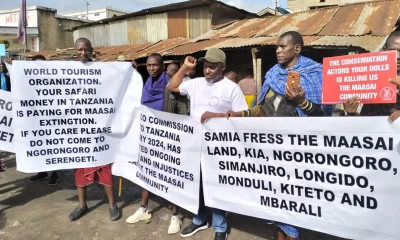
Tanzanian Government Abducts Maasai Villagers in an Unconscionable Attack on Indigenous Land Defenders
-
 FARM NEWS2 weeks ago
Govt pushes natural regeneration to restore 8.4 million hectares
-
 FARM NEWS2 weeks ago
Can Agroecology Improve the Resilience of African Smallholder Farmers?
-

 MEDIA FOR CHANGE NETWORK2 weeks ago
Death Of Witnesses Cited Among Causes Of Land Case Backlog