Connect with us

MEDIA FOR CHANGE NETWORK

Carbon Markets Are Not the Solution: The Failed Relaunch of Emission Trading and the Clean Development Mechanism

Published

on

In light of the growing number of cold and hot wars around the world, attention to climate issues has noticeably declined, at least in Germany. Meanwhile, supposed solutions, such as carbon emission trading and the Clean Development Mechanism, continue to be promoted. As Maria Neuhauss argues, this is a bluff with far-reaching consequences.

There was more bad news in January 2025: The European Earth observation program Copernicus and the World Meteorological Organization reported that the global average temperature in 2024 was 1.6 degrees Celsius above pre-industrial levels. This marked the first time the average global temperature exceeded the 1.5-degree target established in the Paris Climate Agreement.

In light of the growing number of crises and conflict hotspots around the world, attention to climate issues has noticeably declined, at least in Germany. While 1.4 million people demonstrated for more climate protection in Germany in September 2019, according to Fridays for Future, it is now almost impossible to speak of a climate movement. The catalyst for the third German ‘movement cycle’ was undoubtedly the rebranding of Last Generation in December 2024. The group had been decimated by state repression and media agitation in the preceding months. The U.S. withdrawal from the Paris Climate Agreement at the beginning of this year made it clear that defenders of the fossil fuel status quo have gained momentum and intend to achieve their goals without compromise. However, as global greenhouse gas emissions continue to rise and the material world follows its own rules, the problem of global warming will likely resurface in the collective consciousness in the foreseeable future. Whether through heat waves, extreme weather events, water shortages, or forest fires. The question is whether and what new answers and approaches a reinvigorated climate movement will develop if it does not limit itself to ‘solidarity prepping’ and actually wants to influence the course of events.

Central to this is not only resolute resistance against fossil inertia forces, but also testing the actions of liberal actors. Although they acknowledge the problem of climate change and claim to want to solve it, the measures they take are inadequate at best or, at worst, create new profit opportunities for the industries that must be phased out. This is far from a comprehensive solution to the ecological crisis, which encompasses more than just climate change. Emission trading and the associated offset mechanisms that are part of the international climate negotiations are one example that illustrates this well.

‘Climate math’ of flexible mechanisms

Emission trading is based on the idea that greenhouse gas emissions are still possible but must be justified with corresponding ‘pollution rights.’ The number of certificates is limited and should decrease over time to reduce greenhouse gas emissions. Emission trading provides fundamental flexibility by allowing certificates to be bought and sold. Ultimately, this is intended to achieve the most cost-efficient climate protection possible because emission-reducing measures are expected to be implemented first where they can be done quickly and cheaply. This allows one to profit from selling unused emission allowances to other actors who initially shy away from such measures. These actors must buy the allowances until the increased prices resulting from the shortage make emission-reducing measures unavoidable. At least, that’s the theory.

Emission trading is closely linked to the concept of climate neutrality, which plays a central role in climate policy. Greenhouse gas emissions are offset by preventing emissions, using natural carbon sinks, or removing CO2 from the atmosphere. The trick to this ‘climate math’ is that, as long as emissions are compensated for, they do not count, even if greenhouse gases continue to be released into the air. These compensation measures are called ‘offsets.’

The idea that not all emissions must be reduced but can, in principle, be bought out of this obligation is based on the global inequalities that have developed historically and that fundamentally structured the first global climate agreement, the Kyoto Protocol of 1997. In line with the ‘common but differentiated responsibilities’ approach, the protocol only required industrialized countries to reduce emissions because they were mainly responsible for the high concentration of greenhouse gases in the atmosphere. However, under the Clean Development Mechanism (CDM), industrialized countries could partially buy their way out of this responsibility by financing emissions-reduction measures in developing and emerging countries. The CDM has therefore been described as a modern “indulgence trade” (Altvater & Brunnengräber, 2008). This allowed industrialized countries to reconcile their energy production methods with the need for climate protection while outsourcing conflicts over the energy transition, such as land use, to the Global South (Bauriedl, 2016).

Social and environmental shortcomings of the CDM

From a climate protection perspective, however, it only makes sense to include emission reductions in developing and emerging countries in the emissions balance of industrialized countries if the investments actually help reduce emissions – that is, if the projects would not have been realized without investments from the Global North. Conversely, if projects under the CDM are not additional, such as if a dam would have been built without investments from the Global North, companies in industrialized countries can claim emission credits without actually helping to reduce emissions. This is because the emissions would have been avoided anyway. This would result in an overall increase in emissions.

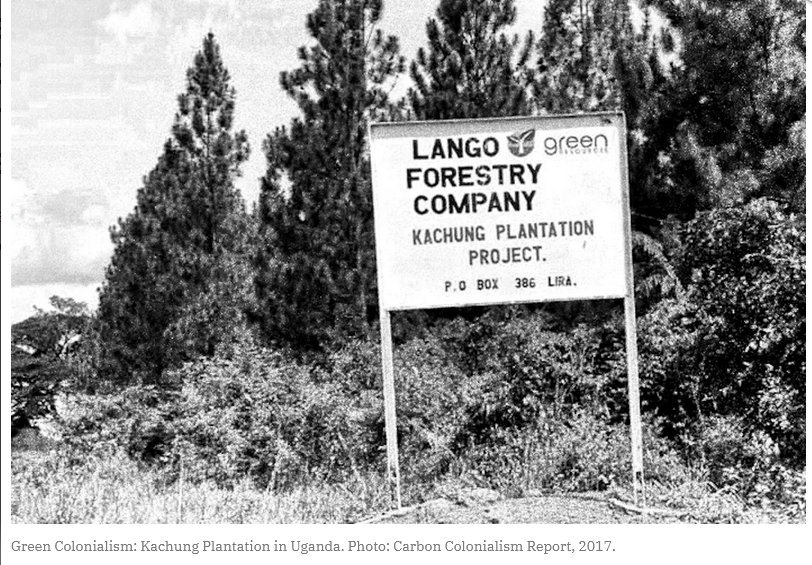
In fact, the additionality of many projects financed under the CDM has been questioned over the years (Öko-Institut, 2016). However, less attention has been paid to the fact that CDM projects have repeatedly led to the displacement of local people and land grabbing. For example, a reforestation project in the Kachung Central Forest Reserve in Uganda displaced many neighboring villagers who used to farm and graze their cattle there. Plagued by food insecurity, hunger, and poverty, the population was denied access to the land when CDM-approved plantations were established, further worsening their situation. The monoculture plantations also had negative ecological consequences (Carbon Market Watch, 2018). Thus, the CDM perpetuated colonial conditions on several levels. The mechanism ended with the expiration of the Kyoto Protocol in 2020. However, credits issued beforehand can still be used under the Paris Climate Agreement.

Price incentives instead of bans

A critical review of emission trading is also urgently needed. It is failing as a suitable means of climate protection on several levels. For example, in the case of the European Emissions Trading System (EU ETS), the continued generous allocation of free certificates, particularly to energy-intensive industries, protects those responsible for high CO₂ emissions from strict requirements. Additionally, the emission trading approach suffers from the fact that it is unclear whether, or to what extent, the price of emissions certificates influences investment decisions in favor of climate protection. According to various studies, the price would need to be between EUR 140 and 6,000 per ton of CO₂ to achieve the 1.5-degree target (IPCC, 2018).

However, local industry is already complaining about excessively high electricity prices (the average certificate price in 2024 was €65 per ton of CO₂), causing the government to worry about the location’s attractiveness. Given this, can we really expect politicians to force energy-intensive industries to do more to protect the climate with much higher certificate prices? Ultimately, this reveals a fundamental flaw in emission trading: its indirect effect. Instead of using targets and bans, the idea is to persuade companies to cut emissions through price incentives. However, this approach puts climate protection in the hands of actors who primarily follow the profit motive and do not necessarily translate the price signal into climate protection measures. This explains why companies enrich themselves from emission trading and the Clean Development Mechanism wherever possible (CE Delft, 2021).

For those who design and control emission trading systems, the aforementioned criticisms are merely one reason to continue supporting and refining the chosen method. This is also true for the EU, which, after a period during which emission trading was considered ineffective due to low prices, reinvigorated the system at the end of the 2010s. For instance, the EU introduced the market stability reserve. The goal is to maintain public confidence in the effectiveness of this instrument because it is the global climate protection tool. However, evaluations of its effectiveness are rare and provide little cause for optimism. According to an evaluation of various studies, the EU ETS achieves only 0 to 1.5% emission reductions per year (Green, 2021).

History and responsibility are being erased

This makes the ongoing negotiations at UN climate conferences concerning the implementation of global emission trading and a new Clean Development Mechanism all the more critical. In addition to the question of how financially weak countries will be compensated for climate-related damage and losses, the annual COPs primarily address Article 6 of the Paris Climate Agreement. Article 6 regulates international cooperation, i.e., the extent to which a country can count mitigation measures or emission avoidance elsewhere in its climate balance. Last year’s COP29 in Baku further advanced the operationalization of this article. Based on this, old CDM projects can now be transferred to the new Sustainable Development Mechanism under certain conditions. However, the first project to clear this hurdle reportedly reported emission reductions up to 26 times higher than expected based on scientific evaluation (Mulder, 2025).

Despite urgent warnings, world climate conferences seem determined to repeat past mistakes. The focus is on profit. As Tamra Gilbertson summed up in an interview with Chris Lang, the climate is the last priority. After all, trade processes will incur deductions in the future that will flow into the international adaptation fund. However, according to Gilbertson, this is also due to the fact that the climate conferences have failed to reach viable agreements on financing climate damage and adaptation measures in poorer countries thus far. Instead, emission trading is expected to deliver the necessary funds. “This is where common but differentiated responsibilities are eradicated. History and responsibility are erased, and capitalism in the form of carbon markets takes its place” (Lang, 2024).

While these processes are difficult for the public to understand, the escalating climate crisis requires critical attention more than ever. The problems associated with emission trading and the Clean Development Mechanism urgently need to be exposed as distractions from the real task at hand: rapidly phasing out fossil fuels.


Continue Reading

MEDIA FOR CHANGE NETWORK

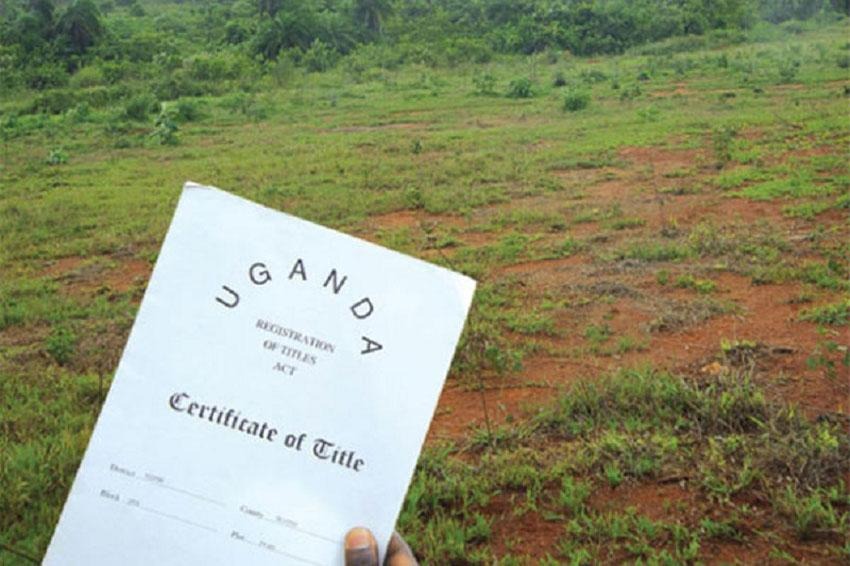
Why govt is launching a comprehensive digital land registry

Published

on

RDC Fatumah Ndisaba making enquiries at the MZO-Mukono’s registry desk in 2024. Govt is launching a comprehensive digital land registry

COMMENT | DAVID MUWONGE |  Land has historically symbolized wealth and power. In the past, kingdoms expanded their influence by acquiring new territories.

This pursuit continued into the colonial era, spanning the 15th to the 20th centuries, with European powers scrambling for control over Africa. They were driven by a desire not just for human labour but also for large amounts of agricultural land, political power, and the raw materials needed to fuel the Industrial Revolution in the West. As a result, the distribution and management of land became increasingly complex.

In Uganda, the colonial era ushered in the 1900 Buganda Agreement, a turning point in the nation’s land history. Among its key provisions was land reform. It introduced the mailo system at the center of it all. Under this agreement, large estates were divided. About 8,000 square miles were granted to roughly 1,000 chiefs and landowners, establishing a unique land tenure system. These changes have had lasting effects on Uganda’s approach to land ownership and governance.

Over time, this structure evolved into the four land tenure systems recognized by the 1995 Uganda Constitution: customary (traditional communal or family-based ownership), freehold (absolute ownership), mailo (a system with distinct rights for owners and tenants), and leasehold (land held for a fixed term under a lease agreement, often with rent payments).

However, even as the land tenure system evolved by law to include leasehold, controversy persisted, especially regarding government land. This ongoing tension highlights the need to address historical challenges while adapting to modern realities.

This is partly because there is no comprehensive, up-to-date inventory of government land, and the Uganda Land Commission’s limited district presence. Thus, significant tests in managing and protecting government land, making it vulnerable to mismanagement and encroachment.

Recognizing these challenges, the Government of Uganda is now taking decisive steps to modernize land management systems and restore confidence in public land administration. The government is launching a digital land inventory through the Uganda Land Commission, aiming to secure, monitor, and ensure transparent management of all state-owned land.

The Uganda Land Commission (ULC), established under Article 238 of the Constitution, is tasked with holding and managing all land in Uganda vested in or acquired by the state, ensuring it is protected, put to proper use, and fully accounted for.

According to Tom John Fisher Kasenge, a commissioner at Uganda Land Commission, much of the government land has been encroached upon. Government land includes all property managed or held by ministries, departments and agencies (MDAs), government schools, health centres, hospitals, police stations, prisons, offices, farms, and army barracks. It also covers land under the National Forestry Authority. ULC is the custodian of this land and holds the titles on behalf of all MDAs.

“This inventory will also go a long way in helping to solve land disputes, wrangles and conflicts that are over land management and ownership in the country,” Kasenge remarked.

“There is a big problem now, as we talk, in distinguishing between land owned by the government and managed by the Commission; land under the Buganda Land Board; and land under the authorities, like the local governments and the cities,” Kasenge added.

“Because of that lack of accuracy in the boundaries and extent of the land and the jurisdiction of each of these bodies.”

The Land Commission’s priority is to create a digitized, accurate inventory of all government land to close information gaps. By bridging the current information divide, this initiative seeks to support proper planning, protect against encroachment, and encourage investment in projects, recognizing land as a vital national resource.

“So, planning for this land becomes very crucial at the moment that the NRM government has attracted a lot of investors, and every now and then, these investors would like to put their projects in various places around the country,” Kasenge observed. This further emphasizes the importance of reliable land records for national development.

With updated digital land records, the Commission expects to resolve disputes, reduce misallocation, and ensure efficient use of public land. These improvements are expected to build greater transparency and accountability in land administration.

Revenue Collection

Many occupants of government land are not paying ground rent largely due to limited awareness and the absence of formalized tenure, a situation that continues to affect national revenue, Kasenge revealed.

He explained that to address this gap, the Uganda Land Commission (ULC) is rolling out a new system that will regularly remind lessees of their ground rent obligations and notify them ahead of lease expiry dates, a move aimed at improving compliance.

Kasenge further noted that correcting erroneous freehold titles will allow affected lessees to regularize their tenure. This will also enable the government to collect due ground rent. He emphasizes that stronger land administration and improved revenue collection are critical to better service delivery and to ensuring government land benefits both the state and citizens.

Currently, ULC has a Financial Year revenue target of UGX 7 billion from ground rent and leases on government land. After the digitized, GIS-enabled (Geographic Information System) inventory is fully rolled out, the Commission expects collections to rise to about Shs12 billion in the first three years. Revenues are projected to gradually increase to as much as Shs40 billion in the long term.

Local governments and technical officers are playing a key role in supporting the nationwide exercise through boundary verification, data sharing and identification of government land. Their contributions include providing physical planning and land-use guidance, protecting environmentally sensitive areas, and engaging communities to raise awareness and build cooperation.

The Land Commission assures the public and current lessees that the inventory exercise is not intended to trigger evictions but is focused on documentation, compliance and improved land governance. Addressing public concerns remains central to the Commission’s approach, with an emphasis on fairness and openness throughout the process.

Uganda Land Commission has formally written to all ministries, departments and agencies (MDAs), requesting details of land under their custody and the nomination of focal persons to work with the Commission in developing a comprehensive inventory, a request that has received positive responses.

In addition, the Commission has engaged 16 town clerks from cities and municipalities. It has reviewed its own records and those of the National Land Information System (NLIS), a centralized digital platform for managing national land records, to verify government land details. The Commission has also partnered with the Ministry of Lands, Housing and Urban Development (MLHUD) to support the exercise through surveying, valuation, and titling. These collaborative efforts highlight the collective responsibility needed to address longstanding land challenges and a need to strengthen accountability, improve compliance, and enhance management of government land across the country.

As the digital registry project continues, ongoing collaboration among government agencies, local authorities, and the public will be crucial to its success. Sustained commitment and transparent communication will ensure that the benefits of improved land management are realized for all Ugandans.

Source: independent.co.ug

Continue Reading

MEDIA FOR CHANGE NETWORK

Witness Radio and Seed Savers Network are partnering to produce radio content to save indigenous seeds in Africa.

Published

on

By Witness Radio team.

Across Africa, indigenous seeds are vital, climate-resilient, and culturally significant resources that smallholder farmers deeply value for biodiversity and food sovereignty.

Today, however, these traditional seed systems face threats from commercial seed interests, restrictive laws, and policies that may impact farmers’ rights. Addressing these concerns directly can help farmers understand how the program supports their legal and cultural rights.

In response to this growing challenge, Witness Radio Uganda, in partnership with the Seed Savers Network (SSN) in Kenya, is launching a radio broadcast titled “The Struggle to Save Cultural Seeds in Africa.”

Witness Radio and Seed Savers in Africa aim to use the radio as a tool to organize, mobilize, and empower smallholder farmers across Africa and beyond.

Food production and consumption patterns in Africa have changed significantly since the pre-colonial era. The gradual introduction of exotic crops, the establishment of settler farms on land seized from local communities, and the shift from agroecological practices to agrochemical-dependent and mechanized agriculture have disrupted indigenous food systems.

While agribusinesses continue to generate profits, research by civil society organizations shows that these models have contributed to soil degradation, biodiversity loss, widening inequalities through land grabbing, and increased vulnerability among smallholder farmers. These historical disruptions have laid the groundwork for modern policies that further marginalize farmer-managed seed systems.

The struggle to save indigenous seeds affirms farmers’ rights to control their seeds and farming knowledge, empowering smallholder farmers to protect their food security and cultural heritage.

In 2025, the East African Community (EAC) Seed and Plant Varieties Draft Bill threatened farmers’ rights by criminalizing traditional seed practices and favoring multinational companies. This situation should motivate policymakers and community leaders to stand for farmers’ rights and food sovereignty.

In response to this emergency, it is critical to close this gap by placing smallholder farmers, Africa’s largest food producers, at the center of seed and food systems. This radio program draws inspiration from the 2025 Seed Savers Boot Camp organized by the Seed Savers Network Kenya. Held in Gilgil, Nakuru County, from the last week of October to the first week of November last year, the boot camp brought together farmers and civil society leaders from across Africa for hands-on training and learning exchanges.

Participants explored seed conservation methods and shared knowledge, fostering a movement that builds community resilience and revives traditional farming systems.

Witness Radio participated in this gathering alongside farmers, reinforcing a shared commitment to strengthening community resilience and farmer-led food systems across Africa.

This broadcast launches a new series from Witness Radio and the Seed Savers Network to raise awareness of seed saving and food sovereignty, offering practical tips and resources for farmers to actively participate in safeguarding farmer-managed seeds.

The live program will feature voices from across the continent, including Atim Robert Anaab from Trax Ghana and The Beela Project, who works to strengthen indigenous seed systems in Ghana’s Upper East and North East Regions. Other guests include June Bartuin, Executive Director of Indigenous Peoples for Peace and Climate Justice in Kenya, and Priscilla Nakato, Chairperson of the Informal Alliance for Communities Affected by Irresponsible Land-Based Investments in Uganda.

Together, the speakers will reflect on what motivated them to join the Seed Savers Boot Camp, what they learned, the current state of seed sovereignty in their countries, and how they are applying this knowledge within their communities.

The goal is to show how insights from the Seed Savers Boot Camp translate into tangible actions, inspiring farmers and policymakers to protect indigenous seeds for food sovereignty and climate resilience.

The program will air live on Witness Radio tomorrow, Thursday at 3:00 pm EAT, accessible via the Witness Radio App or online via www.witnessradio.org or https://radio.witnessradio.org/. to maximize reach and participation.

Continue Reading

MEDIA FOR CHANGE NETWORK

Evicted from their land to host Refugees: A case of Uganda’s Kyangwali refugee settlement expansion, which left host communities landless.

Published

on

By Witness Radio team.

As Uganda continues to host more refugees than almost any other country in Africa, displaced residents in Kikuube are still waiting for accountability, restitution, and the chance to live with dignity once again. This ongoing struggle should stir feelings of compassion and urgency in the audience.

More than 60,000 people occupying 9323.96 hectares (36 square miles) were displaced from villages, including Bukinda A and B, Bukinda II, Kavule, Bwizibwera A and B, Kyeya A and B, Nyaruhanga, Kabirizi, Nyamigisa A and B, Katoma, and others in Kasonga parish, Kyangwali sub-county.

The violent forced land evictions in Kyangwali date back more than a decade. Beginning in September 2013, masterminded by officials from the Office of the Prime Minister (OPM), led by the Principal Resettlement Officer Charles Bafaki, backed by the Uganda Police Force and the Uganda People’s Defence Forces (UPDF). The OPM office claimed that the contested land had been gazetted for refugee settlement, a claim former refugee host communities refute, saying they are bona fide landowners.

According to evidence seen by the Witness Radio team, most of the evictees were born on the land from the 1950s to the date they were illegally evicted.

According to Uganda’s Land Act, a bona fide occupant is a person who, before the 1995 Constitution, had occupied land unchallenged for 12 years or more, or was settled by the government. Clarifying these legal standards can help the public and policymakers understand the legal basis of land claims and potential violations.

According to the UN Refugee Agency, by the end of 2024, Uganda was hosting approximately 1.8 million refugees and asylum-seekers – the largest refugee population in Africa – reflecting a 10% increase from the previous year. The majority were from South Sudan (57%) and DRC (31%), with smaller populations from Somalia, Burundi, Eritrea, Rwanda, Sudan, and Ethiopia. Women and children made up 80% of the refugee population.

In Butyamba village, along the Hoima-Kagadi Road in Kikuube District in Western Uganda, is an informal settlement of fragile, makeshift houses that stretches across a single acre of land. It hosts over 500 people, including evictees. It’s packed tightly together, their shelters built from tarpaulins, scrap wood, and other grass thatched.

The residents, who have camped in the area since 2023, were once landowners in Bukinda and Katikala. Now, they are landless and struggling after an illegal land eviction for the expansion of the Kyangwali refugee settlement, one of Uganda’s largest refugee-hosting areas.

For many here, life changed abruptly in 2013, followed by another series of forced land evictions in 2020, at the height of the COVID-19 pandemic.

“I became a refugee in my own country,” an elderly Kabulala Oliver struggles to hold back tears as she recalls the forced land eviction that shattered her life and the lives of other members of her family.

Kabulala is among the over 60,000 people evicted from 30 villages in Bukinda, Kyangwali Sub-county. We found her together with others at the informal camp.

“When we were evicted from our land, we camped at the Kikuube Resident District Commissioner (RDC)’s premises, but this was short-lived, and we were chased away. Later, we were given this small piece of land by an area member of parliament, Hon. Natumanya,” she says.

What pains her most, she says, is that she was displaced to make room for refugees, only to become displaced herself. 

“I am a Munyoro. I had lived on my land for decades. “Why should I be evicted because the government wants land for refugees? This is total impunity where the poor are not counted as humans.” Kabulala asks?

She now lives in a small makeshift shelter with a family of 13. With no land to cultivate, survival has become a daily struggle.

“My land was taken. We have nowhere to farm. We are starving every day. Children ask for food, and I don’t know where to get it. We drink dirty water,” she says. 

Kabulala belongs to the Bunyoro tribe, which is constitutionally recognised as one of Uganda’s 56 indigenous communities.

The affected communities say they were never notified about the eviction or given meaningful consultation. According to Ahumuza and other witnesses, armed security personnel arrived in trucks, firing bullets, beating residents, and demolishing homes.

“In August 2013, OPM officials came and told us we had three hours to leave the land, which people had lived on for decades. They treated us like rebels. They beat people and destroyed all properties worth billions of Shillings, which forced people to scatter in all directions. After three days, refugees were ferried in and settled in our gardens where food was still growing.”

Ahumuza Businge, chairperson of the Internally Displaced Youth in Bukinda and Katikala. recalls 

After the eviction, many families fled to Kyangwali sub-county headquarters, seeking refuge. Others later settled in an Internally Displaced Persons (IDP) camp in Butyamba, near Kiziranfumbi town, an area with no permanent services, such as water, toilets, and other essentials.
“You can also see how people are suffering. When our loved ones die, we have nowhere to bury them. Children don’t go to school. People die every day because there is no food, there is no water, and our temporary toilets are almost full,” Mbambali Fred, a former resident of Bukinda, whose land was also taken despite having a lease title, told Witness Radio. 

Mbambali says his land was grabbed at gunpoint and misused. “I had a land title, but my land was forcefully taken and used to settle people who are not even refugees. Part of it is hired out for maize farming while I, the land owner, suffer.” He added.

In 2020, during the COVID-19 lockdown, the same government security forces forcefully evicted another group of more than 20,000 people from 1812.99 hectares (7 square miles) of land. Victims revealed that security forces sealed off their area under the pretext of a disease outbreak. Journalists and political leaders were barred, and evictions resumed quietly.

According to the ministry responsible for lands, housing, and urban development’s then guidelines, during COVID-19, no land evictions were to take place. On April 16th, 2020, the government of Uganda, through the Ministry of Lands, ordered a halt to all land evictions during the ongoing COVID-19 pandemic. The same ministry directed all local governments and security agencies to enforce the order, but the OPM disregarded it. 

Today, many of the evictees live in IDPs who are framed as encroachers on their land, landless, impoverished, and dependent on casual labor. Unable to farm, families struggle to feed themselves, educate their children, or rebuild their lives.

Thirteen years after the first eviction, the affected communities say they have reached out to all concerned offices, including the president’s office, for justice, but in vain.

“The land was our life. Without it, we are nothing.” Mbambali reacts

Continue Reading

Resource Center

Legal Framework

READ BY CATEGORY

Facebook

Newsletter

Subscribe to Witness Radio's newsletter


Trending

Subscribe to Witness Radio's newsletter