Connect with us

MEDIA FOR CHANGE NETWORK

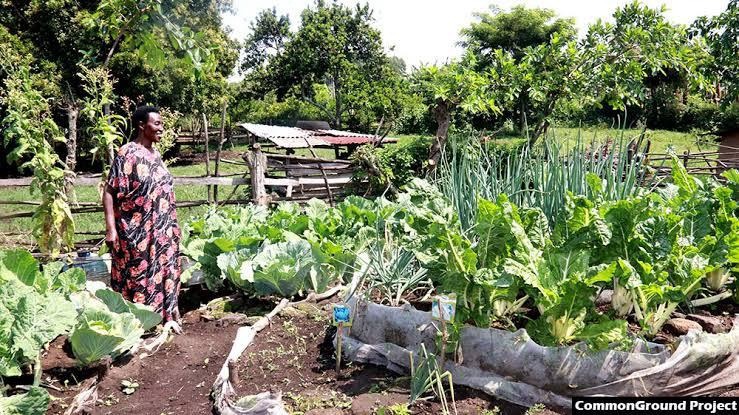
Agroecological Entrepreneurship: African farmers are redefining agriculture by building agroecological businesses that challenge industrial models.

Published

on

By the Witness Radio team.

In rural Senegal, women’s groups use roasting, grinding, and mixing equipment to turn local beans, spices, and traditional ingredients into a natural product called Sumpak. This product is offered as an alternative to the industrial bouillon cubes common in West African kitchens. Sumpak is marketed as a locally sourced option rooted in agroecological farming and traditional food knowledge.

For its creators, Sumpak symbolizes a continent-wide movement where small-scale farmers and grassroots groups create businesses that embody self-reliance, sustainability, and a shift away from dependence on industrial agribusiness.

In Uganda, Senegal, Cameroon, and other African countries, farmer groups are trying local food processing, seed systems, ecological farming, and direct markets. They want to change how healthy food is produced, processed, and sold. Their efforts are not just for the environment. They are also driven by economic survival, food sovereignty, and frustration with systems that depend on imported inputs, foreign-controlled supply chains, and industrial food products.

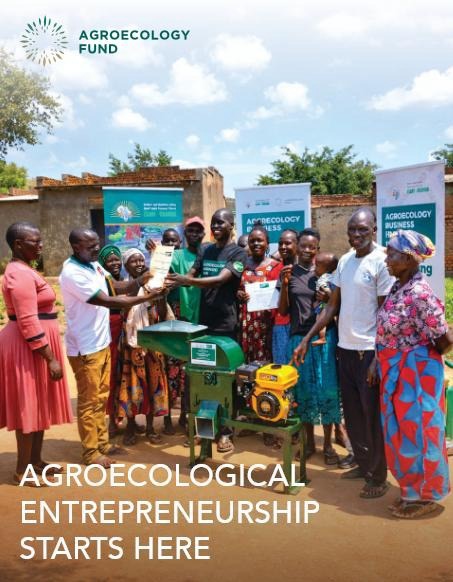
Highlighting these grassroots efforts, the initiatives were recently discussed during a webinar organized by the Agroecology Fund to launch a report documenting grassroots agroecological enterprises across the continent.

“We asked ourselves what would happen if we combined the creativity and power of social movements. This was an effort to provide support to networks and organizations within the Agroecology movements that are also working to support the agroecology enterprises,” Daniel Moss, co-director of the fund, said during the online report launch.

The report, Agroecological Entrepreneurship Starts Here, draws from business planning grants awarded to 15 organizations across Africa. The projects supported by the grants ranged from cassava flour processing in Uganda to local bread-making flour initiatives in Cameroon and women-led food processing enterprises in Senegal, among others.

The report contends that agroecology represents both an environmental practice and a strategic pathway for building locally controlled, sustainable economies.

For decades, the agricultural industry in Africa and globally has favored industrial systems. These rely on hybrid seeds, chemical fertilizers, and export crops. Big agribusinesses and commercial farms often get grants, subsidies, financing, and policy support. Meanwhile, small-scale agroecological enterprises struggle to access even modest capital.

The report launch noted that many grassroots agricultural businesses need $10,000 to $250,000. They require funds to expand production, improve packaging, or buy processing equipment. However, the findings show that most lenders and investors focus on much larger commercial projects.

“There’s a huge finance gap,” Jennifer Astone, a co-author of the report, revealed, adding that “Smallholder farmers, cooperatives and agroecological entrepreneurs are systematically excluded from finance and policy support that fuels conventional industrial agribusiness.”

In Uganda, the Eastern and Southern Africa Small Scale Farmers Forum (ESAFF) worked with farmer groups producing okra powder, cassava flour, pineapple products, and biomass briquettes.

According to ESAFF, some groups received grinding machines and value-addition equipment, while others were trained in packaging, branding, and marketing. Several enterprises, with the support of the grant, later registered formally as businesses after seeing growth opportunities emerge.

Nancy Mugimba, coordinator of ESAFF, said the grants helped transform loosely organized farmer activities into more structured enterprises.

“One of the things we discovered is that these businesses can actually work. The farmers became more organized and innovative.” Nancy said.

According to Nancy, one women’s group producing cassava flour improved its drying and processing methods to target health-conscious consumers, including people managing diabetes, while another youth group shifted from chemically grown pineapples to organic production after discovering growing demand for sweeter agroecological fruit.

“Farmers were trained on how to handle their products for their target markets. As a result, they are now producing higher-quality products than before and have successfully introduced them to the market,” she added.

In Senegal, the women-led movement, Nous Sommes la Solution, focused on replacing industrial bouillon cubes with natural products made from local ingredients.

The movement joins more than 500 rural women’s associations and 175,000 members across West Africa. It claims that more processed food additives have raised health concerns such as hypertension and kidney disease.

This bouillon uses low-cost beans and several prep steps: pre-cook, peel, wash, then ferment the beans. The beans are then processed into a powder. We rely on local skills and local produce. We also aim to promote high-nutritive value products, said Mariama Sonko during the report launch. She added that women can make something local, providing income to support a healthy lifestyle.

Their product, Sumpak, uses fermented local beans, spices, and traditional knowledge. With support from the grants, the women obtained food safety certification, trademark registration, and improved packaging.

This grant lets us focus on administrative tasks for production and sales. We received Food Safety Certification in Senegal. We can now produce and sell Sumpak, Sonko said. She noted that demand has grown faster than expected, making producers consider expanding storage and processing.

In Cameroon, another agroecological initiative focused on the problem of dependence on imported wheat, which has affected many African countries. The West African country imports significant amounts of wheat for bread production, exposing local food systems to global market disruptions and price shocks.

Global disruptions, such as the Russia-Ukraine war and COVID-19, worsened these vulnerabilities. This led to soaring prices. Data from the National Shippers’ Council of Cameroon shows that the country imported 278,408 tons of wheat in Q2 2025, at a cost of over CFA45 billion.

According to the report, the Cameroonian organization Service d’Appui aux Initiatives Locales de Développement (SAILD) responded by promoting bread and pastries made partly from locally produced cassava and sweet potato flour.

The project brought together flour processors, bakers, regulators, and financial institutions to explore how local alternatives could replace imported wheat.

“We realized that dependence on imports weakens local economies. We need local production and local consumption systems.” Mr.  Rodrigue Kouang, Coordinator of SAILD’s agroecology program, mentioned.

The report urges policies and networks that empower agroecological entrepreneurship and recommends practical support for farmer organizations.

Continue Reading

MEDIA FOR CHANGE NETWORK

Accountability in Crisis: Development banks, while funding Asia’s energy transition, are accused of silencing Asian local and Indigenous communities, highlighting the central tension between a clean-energy push and the repression of those most affected.

Published

on

By the Witness Radio Team.

As the world races to abandon fossil fuels and embrace renewable energy to avert climate catastrophe, development banks, governments, and corporations promote this transition as a global priority. In Asia, this transition, presented as a path to a clean-energy future, is shadowed by serious concerns about who bears its costs.

However, for many Indigenous peoples, farmers, fisherfolk, and urban poor living on lands targeted by these projects, the energy transition has led to displacement, repression, and the loss of livelihoods.

This alternative reality is documented in a new regional report, Financing the Transition, Silencing Defenders. The report details how communities raising concerns about renewable energy projects across seven Asian countries have faced reprisals ranging from harassment and arrests to military occupation and killings.

The report challenges the region’s energy transition. It argues that renewable energy projects use vast resources, burdening Indigenous and local communities who have contributed little to the climate crisis. The report documents how these projects cause displacement, loss of cultural identity, ecological disruption, health risks, and increased debt.

Security forces were often reported to have carried out reprisals. Police and the military were frequently deployed to sites. Communities described beatings, arrests, and intimidation during consultations, compensation, and construction.

Rather than providing security, the report concludes that “in most contexts, their presence does not make communities feel secure, but rather threatened and silenced.”

The report goes on to describe how, in several documented cases, security personnel forcibly entered villages, dismantled community barricades, demolished homes, and stopped peaceful protests. According to the report, these confrontations often escalated tensions and contributed to the criminalization of local resistance.

The report underscores a central argument: when communities raise concerns, their voices are systematically silenced through SLAPPs, attacks, criminalization, intimidation, and discrimination—primarily by local authorities and security forces. These practices form a system of control involving governments, security forces, corporations, and development banks to repress dissent and maintain project momentum.

The 44-page report examined 12 renewable energy and energy-transition projects across seven Asian countries—India, Indonesia, Pakistan, the Philippines, Tajikistan, Thailand, and the Maldives. It was produced by the Coalition for Rights in Development, a global network representing over 100 social movements, civil society organizations, grassroots groups, and partners.

Despite variations in scale and technology among these projects, affected communities across these countries consistently reported being excluded from decision-making processes.

Many projects moved forward without real consultation or Free, Prior, and Informed Consent (FPIC) of Indigenous Peoples. Communities said they were told about decisions after the fact, kept from key project details, or pressured to accept compensation.

As the report notes, when projects exclude rights holders from decision-making, it often leads to protests, legal challenges, and revoked permits. These outcomes raise costs and cause delays. More importantly, leaving out affected communities creates mistrust toward specific projects and the broader energy transition narrative that justifies them.

In Assam, India, Indigenous Karbi, Naga, and Adivasi communities oppose a solar project projected to affect more than 20,000 people. Community representatives report that consultations were held in only 9 of the 23 impacted villages, leaving thousands excluded from the process. They claim the project threatens livelihoods, land rights, biodiversity, bamboo forests, and elephant habitats.

“The project was approved without ensuring the communities’ Free, Prior, and Informed Consent (FPIC). Consultations were held in only 9 out of 23 impacted villages, thus excluding thousands from the process,” the report states.

Researchers found that when communities attempt to challenge the harmful impacts of these projects, they are often labeled anti-development, extremists, or threats to national interests. In response, authorities, corporations, and local officials have reportedly targeted outspoken community leaders and sought to isolate them.

According to the report, “government authorities, private companies, and other actors who have a vested interest in the projects identify the most vocal community members and human rights defenders who are raising concerns and stigmatize them.”

In another case, in Pakistan, activists opposing hydropower projects reported receiving threats from authorities. They have also been accused of working against national development goals. The Madyan Hydropower Project is funded by the World Bank. The Torwali Indigenous community worries about their land, culture, and future.

Similarly, in the Philippines, environmental defenders and Indigenous leaders who oppose dam projects have faced “red-tagging.” This is a tactic that labels activists as communist sympathizers or security threats. The report says these tactics have created fear and deterred people from participating in public consultations.

Poorly planned projects imposed without meaningful consent harm communities, and those voicing concerns face intimidation and reprisals.

Many projects are led by major public development finance institutions. These include the Asian Development Bank, the World Bank, and the Asian Infrastructure Investment Bank. These institutions are directly implicated in reported abuses and the silencing of communities.

The findings directly challenge development banks: they must choose either to fund actors implicated in human rights violations or to actively leverage their influence to uphold community rights and genuine participation in Asia’s energy transition.

“Banks can either look the other way and continue funding government and corporate entities that have historically disregarded human rights and environmental sustainability, or they can use their influence to ensure that the highest standards and safeguards are upheld. The report states that development banks have responsibilities regarding both the prevention of and response to reprisals,” the report states.

The report calls on development banks to improve environmental and social safeguards. Banks should conduct thorough risk assessments and implement measures to ensure safe, meaningful engagement with affected communities. This should happen throughout the energy transition.

Development banks invoke the push to abandon fossil fuels to underscore urgency, but the report warns that this urgency is sometimes misused to accelerate approvals, rush assessments, and limit community consultation—thereby undermining both human rights and the legitimacy of the transition.

Continue Reading

MEDIA FOR CHANGE NETWORK

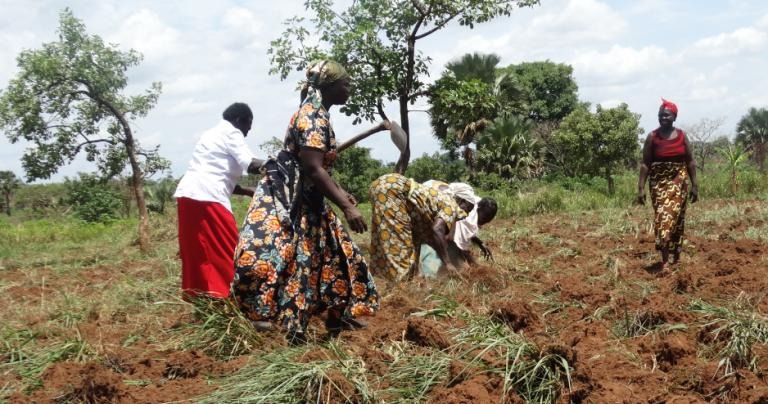
Buvuma residents drove off surveyors as they resisted the surveying of their land targeted for palm oil tree planting.

Published

on

By the Witness Radio team.

In Buvuma District, a group of Bibanja holders drove away surveyors and protested what they regarded as land-grabbing for palm oil cultivation. Residents state they have lawfully occupied the land for over seven decades. In Uganda, a Kibanja holder is a tenant who uses land without an official, registered title.

Under the 1995 Constitution of Uganda and the Land Act (Cap 227), Kibanja holders are legally recognized as lawful or bona fide occupants. This grants them significant security of tenure and protects them from arbitrary or illegal evictions.

According to sources, surveyors reportedly supported by the Resident District Commissioner (RDC) attempted land demarcation, mapping, and surveying without following due process. The RDC represents the president’s office at the district level.

The land is being claimed by Mutamba Berna, Bagagga Ali, and Nalugo Swabulah, who, according to residents, began forcibly opening boundaries in May.

More than 30 Bibanja holders report that individuals described as land grabbers are using the Resident District Commissioner’s office to conduct surveys and demarcate land without their consent.

“We have lived on this land all our lives, and now people we have never known are appearing and using the office of the RDC as a cover. They have started forceful land measurements,” Ambrose told Witness Radio.

Residents say over 45 hectares in Kigobero Village, Bukinarwa Parish, Buwooya Sub-county are threatened.

Ambrose Wazaabwe, 76, who was born and raised on the disputed land, never expected strangers to challenge the ownership his family has depended on for generations.

“I only heard rumors that landlords would take our land. Later, they started boundary surveys without our consent,” he said.

Ambrose, a farmer, relies on his five-acre plot for his family’s survival and says he is unsure how they will survive if evicted.

“I mainly farm cassava, bananas, and sweet potatoes. I also keep animals and use the income to support my family of seven,” he added.

Ambrose is among more than 30 Bibanja holders facing threats of a land eviction by a group of individuals identified as Mutamba Berna, Bagagga Ali, and Nalugo Swabulah, who have recently surfaced and are claiming ownership of the land.

Witness Radio investigations reveal that the disputed land is registered under mailo, one of Uganda’s tenure systems. Originally, Plot 1, Block 34, was registered in the name of Mulinya Yokaana (deceased), who acquired it in 1936. Since then, the land has changed hands several times, with recent claimants appearing after a 2016 transfer.

Land documents seen by Witness Radio show that in 2016, Nalugo, Lugoloobi Ibrahim, Bagagga Ali, and Babirye Aidah acquired the land, reportedly without informing Bibanja holders. In 2024, the title changed and is now under Mutamba Berna, Bagaga Ali, and Nalugo Swabulah. Witness Radio cannot verify the authenticity of these documents or whether proper notification or procedures were followed during the transfers.

When contacted, Nalugo Swabulah, one of the landlords, asserted that they are the late Yokaana’s grandchildren and rightful landowners.

The individuals allegedly sought the RDC’s help to claim the land earlier.

Isaac Kizito, another affected resident, first met the alleged landlords at the RDC’s office.

“The RDC called us to meet alleged landowners. We’d never seen them, and they didn’t seem to know each other. Next, boundaries were marked,” he said.

Ambrose says the alleged grabbers never provide documents authorizing them to survey.

“They act illegally and bring no orders. Sometimes they come at night. If right, why hide? Worst, government offices support them,” he added.

Mr. Aisu Charles, former Buwooya chairperson, doubts Swabulah’s group owns the land and suggests their documents may be forged.

“During my term, some claimed to be Yokaana’s grandchildren. When Swabulah’s group came, we found their claims lacking detail and consistency. We asked for more proof, which they never gave,” he said.

Witness Radio contacted RDC Hawah Namugenyi, who is alleged to support the claimed landlords; she declined to comment.

Per President Museveni’s directives, no evictions occur without a District Security Committee meeting led by the RDC and with the Ministry of Lands.

Nalugo Swabulah maintained that she has ownership rights over the land, insisting she holds a valid land title registered in her name and those of her relatives.

“It is not true that I am an absentee landlord. I have documents that prove our ownership of the land. Let those who claim ownership also present their documents,” she said.

Musagala Atanansi, land rights defender and Buwooya Sub-county chairperson, said Buvuma has long faced illegal land evictions by absent landlords.

“Some land grabbers seize land fraudulently. I have never seen Nalugo and her group as locals. They now market the land for sale. We, as leaders, ask—what’s the rush?” he said.


Continue Reading

MEDIA FOR CHANGE NETWORK

World Environment Day 2026: Environmental Advocates warn of rising ecological costs arising from Uganda’s land-based investments.

Published

on

By the Witness Radio team

As Uganda faces mounting environmental pressures, environmental advocates warn that the country’s rapid surge in land-based investments is driving ecological destruction and increasing rural communities’ vulnerability.

Among the most controversial of these investments is the East African Crude Oil Pipeline (EACOP), which environmentalists, human rights defenders, and affected communities say is intensifying ecological risks while triggering a wave of repression against those who oppose it.

The $5 billion EACOP project, led by TotalEnergies and partners, spans 1,444 kilometers from Hoima to Tanga. It passes through diverse ecosystems and has affected thousands through land acquisition. Experts warn that the pipeline threatens sensitive environments and may increase carbon emissions.

There has been a price to pay for opposing the project. More than 150 environmental and human rights activists have reportedly been arrested and charged in Uganda for protesting EACOP and related oil developments for their negative impacts. Michel Forst, the United Nations Special Rapporteur on Environmental Defenders, last year criticizedcriticized TotalEnergies for “continually failing to protect environmental defenders adequately” and expressed concern about the project.

For many advocates, EACOP is more than just a controversial oil pipeline. This represents a new development model in Uganda in which large-scale land investments are being prioritized over environmental protection, community rights, and long-term climate resilience.

As Uganda joins the rest of the world to mark World Environment Day 2026, organizations such as Witness Radio Uganda warn that poorly planned and poorly regulated land-based investments threaten to worsen the country’s ongoing ecological crisis.

From commercial agriculture and industrial tree plantations to carbon offset projects, mining operations, and large-scale infrastructure developments, forests, wetlands, and customary lands are being transformed into investment zones at unprecedented rates. While these projects are often promoted as engines of economic growth or climate solutions, environmental defenders argue that they are accelerating deforestation, biodiversity loss, land dispossession, and climate vulnerability.

According to the Land Matrix Initiative, more than 370,000 hectares of land in Uganda have been acquired through large-scale land deals in recent years, reflecting a broader trend of intensifying pressure on land and natural resources. Although these investments are often framed as pathways to modernization, critics argue that they are reshaping land use in ways that undermine ecological stability and local food systems.

The organization cited several examples of investments whose activities raise environmental concerns. In districts such as Mubende, the Namwasa Forest Reserve has been converted into industrial tree plantations dominated by eucalyptus and pine species. Communities and environmental researchers warn that such monoculture plantations reduce biodiversity, alter water cycles, and degrade soil quality over time.

Similar patterns are emerging in other parts of the country. In Kiryandongo District, for instance, commercial agriculture has expanded into previously forested and communal lands, accelerating land degradation and restricting community access to resources on which many households depend for survival.

At the same time, carbon offset and so-called “climate-smart” agriculture projects have proliferated in Uganda in recent years. They are often promoted as the solution to climate change. However, critics say they are changing land use from food production to monoculture plantations or to carbon markets controlled from outside. Smallholder farmers often sign contracts without understanding the long-term implications, sparking concerns about land control, benefit sharing, and food sovereignty.

Witness Radio Uganda warns that unless urgent action is taken, the country risks locking itself into a development pathway that deepens both ecological breakdown and social inequality.

“Uganda is facing a silent but accelerating ecological emergency,” says Jeff Wokulira Ssebaggala, Executive Director of Witness Radio Uganda, adding that “What is being promoted as development is too often the systematic conversion of forests, wetlands, and community lands into investment zones that weaken both people and nature. If we continue on this path, we are not just losing biodiversity but also undermining the very foundation of rural survival and climate resilience.”

On World Environment Day 2026, Witness Radio is calling for urgent structural reforms, including an immediate halt to the allocation of forests, wetlands, and ecologically sensitive ecosystems to private investors; stronger independent environmental governance; recognition and enforcement of customary land rights; full implementation of Free, Prior and Informed Consent (FPIC); and an end to the criminalization of environmental and land rights defenders.

Continue Reading

Resource Center

Legal Framework

READ BY CATEGORY

Facebook

Newsletter

Subscribe to Witness Radio's newsletter


Trending

Subscribe to Witness Radio's newsletter