Connect with us

MEDIA FOR CHANGE NETWORK

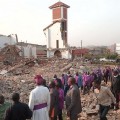
DR Congo crisis: Washington’s brokered peace agreement is rendered useless as fighting, forced land displacement, and mineral exploitation persist…

Published

on

By the Witness Radio team.

After the signing of the Washington Accords, a peace and prosperity deal between the Democratic Republic of the Congo and Rwanda brokered by the United States, many Congolese hoped the agreement would finally bring stability to the country’s long-troubled eastern region.

Instead, persistent violence has continued, raising questions among civil society groups and citizens about whether the agreements can truly deliver peace.

According to the US State Department, the Washington Accords were intended to reaffirm both countries’ commitment to implementing the peace agreement signed in Washington, D.C., on June 27, 2025. The deal was also intended to advance a vision of regional cooperation through a Regional Economic Integration Framework (REIF), which aims to promote peace, security, and economic growth in the Great Lakes region.

Fighting continues in eastern Congo, involving the March 23 Movement (M23) and Congolese government forces (FARDC), with Rwanda and the DRC government each accusing the other of supporting violations of existing agreements.

Authorities in the Democratic Republic of Congo (DRC) have long accused Rwanda of backing the March 23 Movement (M23) rebel group, allegations that Rwanda initially denied for decades. However, according to a January 24 article by The Rwandan, an online news platform based in Rwanda, a high-ranking Rwandan official later acknowledged security coordination with M23/AFC rebels.

Now, Congolese civil society organizations reveal that the Washington Accords are failing to address issues of justice or Rwanda’s responsibility in the war of aggression, invasion, and occupation of eastern DRC.

The Mobilization to Safeguard Congolese Sovereignty and Autonomy (MOSSAC), an ad hoc coalition of 81 Congolese civil society groups, formed to voice concerns about the occupation and to demand a lasting peace grounded in security, accountability, sovereignty, and justice in the DRC revealed in an interview with Witness Radio that these accords are taking Congolese back to the days of King Leopold, where a colonial resource grab is imposed, and might makes right.

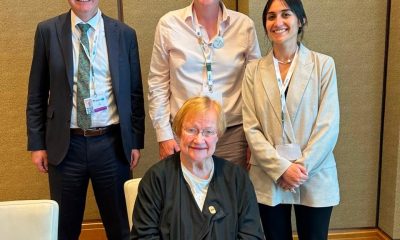
“These agreements, pushed on the DRC by the Trump administration during the ongoing violent incursion, represent the results of a negotiation at gunpoint. It’s all about how they’re going to take the minerals and have all these business deals. There’s nothing in there that gives any detail on what they’re going to do to create peace.” MOSSAC International outreach coordinator, Dr. Deborah S. Rogers, told Witness Radio.

The Washington Accords consist of three separate agreements. The first is a peace agreement signed by both Congo and Rwanda, calling for a ceasefire and improved relations. The second establishes the Regional Economic Integration Framework, which promotes joint economic cooperation and allows for collaboration in exploiting regional resources. The third agreement, the Strategic Partnership Agreement, was signed by the Congolese government and the United States to strengthen cooperation on economic development and resource security.

But critics argue that, taken together, these agreements resemble what some observers have described as a “peace for minerals” arrangement, as both the United States and Rwanda see the DRC as a key hub for strategic minerals.

“Each of these three agreements has its own challenges. When viewed together, however, they are often framed as part of what is called the “Peace for Minerals” agreement. They are only targeting DRC’s resources, including land and minerals,” Dr. Deborah added.

Conflict in eastern Congo has persisted for decades and is deeply intertwined with regional politics and competition for natural resources.

The conflict dates back to the aftermath of the 1994 genocide in Rwanda, when nearly two million Hutu refugees fled into eastern Congo. Some extremist groups formed armed militias there, leading to escalating tensions with Tutsi groups and drawing neighboring countries into the conflict.

The resulting violence sparked the First Congo War (1996–1997) and subsequent conflicts that have devastated the region. Since 1996, the wars in eastern Congo are estimated to have contributed to the deaths of roughly six million people and the displacement of people.

Civil society groups say the violence has destroyed infrastructure, displaced millions, and caused widespread human rights abuses, including rape, targeting them to drive them off resource-rich land.

Eastern Congo is rich in natural resources, including gold, copper, diamonds, and coltan, minerals essential for global industries ranging from electronics to renewable energy.

Observers say the region’s mineral wealth has long fueled both local and international interests.

“We view this as a reward for Rwanda for having invaded and occupied these lands and seized the mine sites. They are being granted through an agreement what they initially took by force, effectively legalizing and normalizing the ongoing plundering of DRC’s minerals and their transfer to Rwanda. Rwanda seeks land because it is a small country with a growing population, and in the territories,  it controls, it uses terror to drive people out,” she added.

Shockingly, civil society officials say that lands belonging to displaced Congolese are being taken over by Rwandan settlers. Families returning to their homes after temporary lulls in the violence often find their land and houses already occupied.

“Meanwhile, the people from Rwanda are coming in and settling on those farms and in those homes. So, when people come back, they discover that their lands and their homes have been taken over.” Dr. Deborah further revealed

These deals have drawn a lot of criticism from both international and National organizations, including civil societies. The Oakland Institute described the deals as ‘the latest US maneuver to control Congolese critical minerals” in its report, shafted: The Scramble for Critical Minerals in the DRC, published last year.

“US involvement in Congolese affairs has always been unequivocally tied to the goal of securing access to critical minerals. “The ‘peace’ deal comes after decades of US training, advising, and sponsoring foreign armies and rebel movements, and at a time when Rwanda and its proxy M23 have expanded territorial control in eastern DRC. This is a win-lose deal that serves US mining interests and rewards Rwanda for decades of pillaging Congolese resources,” Mr. Frédéric Mousseau, report co-author and Policy Director at the Oakland Institute, revealed.

MOSSAC also observes that the agreements do not address issues of justice or the culpability of Rwanda in the war of aggression, invasion, and occupation of eastern DRC, but instead reward Rwanda by presenting it a pathway to normalize and make legal its pillaging of Congolese land and resources.

“How can this be a proper agreement when people are being killed during the negotiation process? There’s no justice, no accountability for decades of invasion and resource theft. Lasting peace cannot happen without justice first.” Another Mossac representative told Witness Radio.

Despite the promises of peace and economic integration, violence continues in eastern Congo.

Civil society groups say M23 forces have expanded their territorial control in several provinces, including North Kivu, South Kivu, Ituri, and Maniema. They argue that ongoing attacks undermine the credibility of the agreements. “Every day since the accords were signed, there have been violations,” Dr. Deborah maintained

Efforts by Witness Radio to obtain a comment from the Congolese government were unsuccessful. Officials from the Ministry responsible for internal affairs did not respond to our calls/emails.

Continue Reading

MEDIA FOR CHANGE NETWORK

The global race for clean energy minerals is leaving communities grappling with conflicts and human rights abuses, a new report reveals.
Published

on

By the Witness Radio Team

The global rush to secure minerals for the clean-energy transition is exposing local and indigenous communities to land dispossession, conflicts, human rights abuses or violations, and attacks on those who challenge mining projects, according to a new report by the Business & Human Rights Resource Center (BHRRC).

The report, Mining for the Future, Undermining Trust: Participation Deficit at the Heart of the Energy Transition, warns that growing demand for minerals like copper, lithium, nickel, and other transition minerals is advancing faster than mechanisms to ensure affected communities have a meaningful say in decisions about mining projects on their land.

Tanzania is among the African countries positioning itself as a future supplier of minerals needed for the global energy transition. The country has significant potential for graphite, nickel and rare earth elements, while investor interest is growing in minerals used in batteries and renewable-energy technologies.

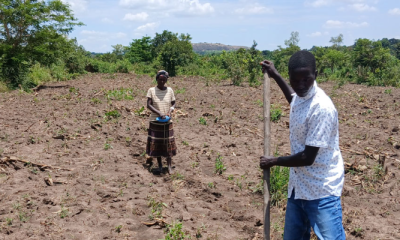
In Kandaskira, a village in Simanjiro District, the drive to extract these minerals raises deep worries about land loss, water scarcity, forced displacement, and exclusion from decisions shaping their future.

Indigenous rights organization PINGO’s Forum has documented land conflicts, fears of forced displacement, risks of water contamination, and exclusion of communities from negotiations with mining companies around graphite projects. It also recorded unfulfilled corporate social responsibility promises, violence against community members resisting mining projects, and gender-based violence.

Rombo Ole, chairman of Kandaskira, said communities need clear information about the opportunities and potential impacts of the energy transition. He also called for transparent laws, procedures, and fair compensation for people whose land, livelihoods, or resources are affected.

“A just energy transition is important because energy is about people and communities. The transition must put people at the center and ensure no community is left behind or unfairly affected,” Rombo said.

Kandaskira’s story echoes a broader struggle faced by communities living near transition-mineral projects worldwide.

According to the BHRRC report, the resulting “participation deficit” risks undermining public trust and could fuel conflicts, lawsuits, and delays to projects supporting the global transition away from fossil fuels.

“The energy transition cannot be built on the silencing or exclusion of the people and communities who bear its costs,” the report argues.

The findings come as demand for transition minerals is projected to rise sharply in coming decades. The report estimates that by 2040, the share of global mineral demand for the energy transition could rise from 20% to 45% for copper, 38% to 92% for lithium, and below 10% to 54% for nickel.

As demand surges, so do the dangers for those who challenge mining projects.

The report documents over 1,880 attacks against critics of the mining sector in 11 years, highlighting a shrinking civic space around mining activities.

It identifies 1,226 allegations of abuse connected to transition-mineral mining since 2010. About one in six involved attacks on human-rights defenders, while 25 cases involved strategic lawsuits against public participation, known as SLAPPs.

The report says more than a third of human-rights defenders murdered over the past decade were raising concerns about mining, while close to 40% were Indigenous defenders.

The findings come against a broader deterioration in civic space globally. According to the report, only seven percent of the world’s population currently live in countries where civic space is considered free or relatively open.

The report says restrictions on civic freedoms make it harder for communities, journalists, environmental defenders, and human-rights organizations to scrutinize mining projects or challenge decisions affecting their land and livelihoods.

The report recorded at least 173 cases in 2024 and 2025 where communities or workers pushed back against abuses linked to the energy transition.

It identified 125 legal cases brought by people affected by abusive energy-transition projects. Eighty-nine involved transition-mineral mining, while 71 lawsuits targeted states for authorizing business activities.

The report calls on governments to protect civic freedoms and human-rights defenders, strengthen Indigenous rights and free, prior and informed consent, improve transparency around mining contracts and licenses, and ensure that affected communities have meaningful influence over decisions.

It also calls on mining companies and investors to conduct human-rights due diligence, establish effective grievance mechanisms, disclose project information, provide fair compensation and benefit-sharing, and commit to zero tolerance for attacks against human-rights defenders.

The report warns that unless communities have a meaningful role in mining decisions, the rush to build a clean-energy future could deepen the very conflicts and inequalities the transition is meant to address.

Continue Reading

MEDIA FOR CHANGE NETWORK

3 Division Commander Warns Communities Against Land Wrangles

Published

on

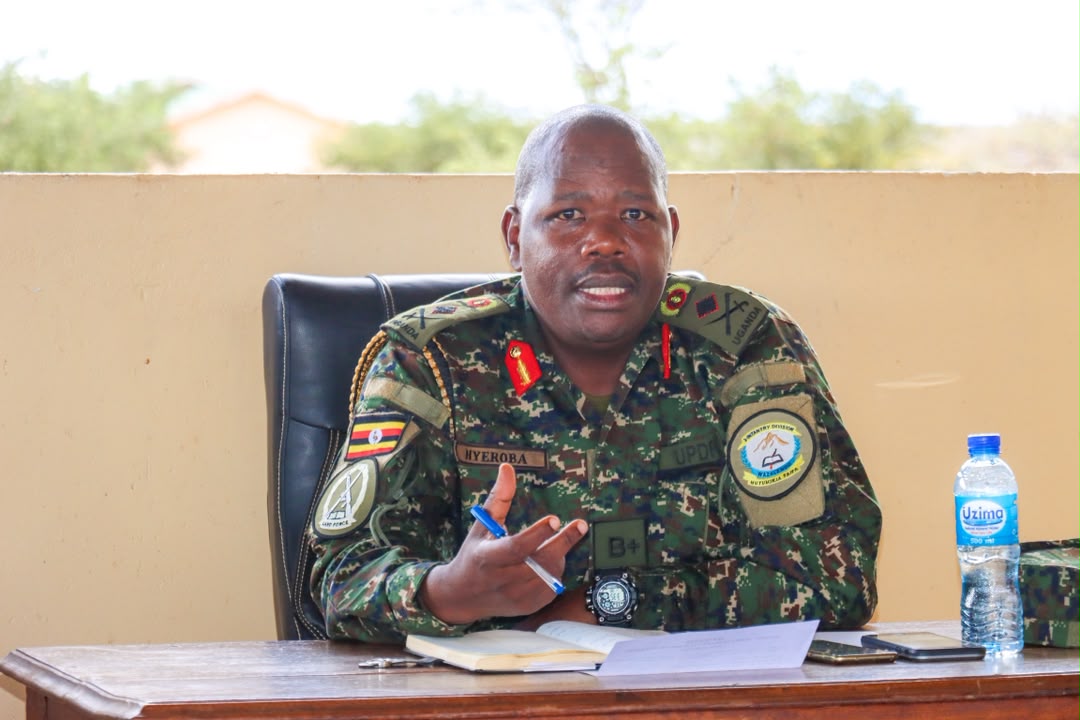
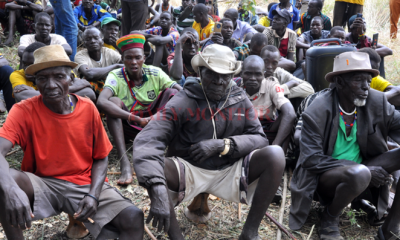
The Commander of the 3 Infantry Division, Brig Gen Michael Hyeroba Wakala, has warned communities in the Karamoja and Teso sub-regions against escalating communal land conflicts, saying the disputes pose a threat to peace, security and socio-economic development.

Brig Gen Hyeroba made the remarks during a joint regional security meeting at the 403 Brigade Headquarters in Matany, Napak District, where security leaders reviewed persistent land disputes in Abim, Napak and Kapelebyong districts.

He said the Uganda Peoples’ Defence Forces (UPDF) would not tolerate violence, incitement or illegal occupation arising from land disputes.

“Land conflicts are now a major security threat. I direct all commanders under 3 Division to take firm action against anyone who takes the law into their own hands. No community has the right to evict, attack or destroy property of another under the guise of land ownership. We shall enforce peace and protect every Ugandan,” Brig Gen Hyeroba said.

He said disputes involving gazetted land, communal grazing corridors and inter-district boundaries had been exploited to fuel violence, and tasked the joint security committee with conducting a comprehensive verification of gazetted land ownership and submitting recommendations to the Government.

“This committee must address the historical and administrative gaps. We need to know what is gazetted, what is communal, and what belongs to the local government. Without clarity, criminals will continue to hide behind land conflicts,” he added.

The Resident District Commissioner of Napak, Mr Milton Odongo, called for closer cooperation between security agencies and local leaders, saying isolated interventions had failed to deliver lasting solutions.

“We are moving from talking to action. We have resolved to deploy joint security teams in all hotspots across the three districts to stop violence, prevent illegal demarcations and protect lives and property. Any local leader who incites communities over land will be held personally accountable,” Odongo said.

He said the conflicts had outgrown local council mechanisms and now required a coordinated, multi-agency response.

“Land conflict is no longer a mere community disagreement; it is a security matter. We shall not allow it to reverse the peace we have achieved in Karamoja and Teso,” he said.

Mr. Odongo also said he would engage the Minister of Karamoja Affairs to facilitate the involvement of the Ministry of Lands, Housing and Urban Development and the Ministry of Local Government in developing a lasting policy solution.

The Deputy RDC of Abim District, Mr Gilbert Okwir, called for unity among communities and closer coordination among security agencies.

“The people of Abim, Napak and Kapelebyong are one. We cannot afford to fight over boundaries. I appeal to all security agencies to speak with one voice and find a lasting solution,” Okwir said.

He commended the UPDF, Uganda Police Force and Anti-Stock Theft Unit (ASTU) for joint operations that he said had helped curb cattle raids, which had contributed to tensions over land.

The Deputy Commander of the 5 Infantry Division, Col Gai Fraser Mpadwa, urged field commanders to strengthen intelligence sharing and community engagement to prevent land disputes from escalating into violence.

The meeting brought together the Commander of 3 Infantry Division, Brig Gen Michael Hyeroba Wakala; Deputy Commander of 5 Infantry Division, Col Gai Fraser Mpadwa; brigade commanders; ASTU commanders; District Internal Security Officers; intelligence officers; and Resident District Commissioners from the affected districts.

Source:  chimpreports.com

Continue Reading

MEDIA FOR CHANGE NETWORK

Uganda urged to drop charges against 11 environmental defenders after 17 months without witnesses
Published

on

Climate Rights International says the 11 defenders have faced repeated court delays since their arrest over a peaceful petition to KCB concerning EACOP financing.

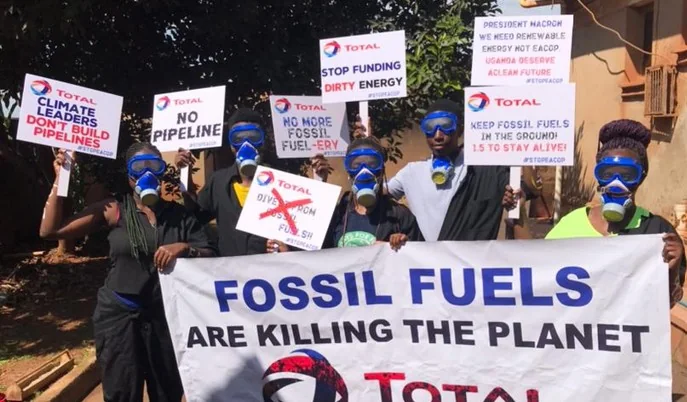
Eleven Ugandan environmental defenders have spent more than 17 months facing criminal trespass charges without a single prosecution witness testifying, prompting calls for the case to be dropped.

According to Climate Rights International, the group, known as the KCB11, was arrested on April 23, 2025, after going to the Kenya Commercial Bank (KCB) headquarters in Kampala to peacefully deliver a letter urging the bank to end its financial support for the East African Crude Oil Pipeline (EACOP).

The organisation said the defenders were instead taken to the bank’s basement by a KCB official under the pretext of arranging a meeting, where police and security personnel were waiting for them.

Climate Rights International has urged Ugandan authorities to immediately withdraw the charges, saying the case has been repeatedly delayed since the 11 were arrested.

“The case has dragged on for more than 17 months with repeated delays, without a single prosecution witness testifying,” the organisation said in a statement on Monday.

At a hearing on September 8, the court adjourned the case until September 29 and gave prosecutors what it described as a final opportunity to present their witnesses. The court indicated that it could dismiss the case if the prosecution failed to proceed again.

The 11 were charged with criminal trespass on April 25, 2025, and taken to Luzira prison, which Climate Rights International said has a history of torture and poor detention conditions.

The organisation first called for their immediate release and dismissal of the charges on June 30, 2025. The KCB11 were eventually granted bail on July 17 after spending 85 days in prison and were released the following day.

Since then, they have repeatedly returned to court while the charges have remained pending.

“The fact that 11 people were arrested and held for 85 days in a horrible prison for delivering a letter is a travesty,” Brad Adams, Executive Director at Climate Rights International said.

“The government has compounded this by holding a ridiculous prosecution over their heads for the past 17 months. This is punishment by process, and the charges should be dropped immediately.”

Climate Rights International said KCB Group had been identified as one of five financial institutions providing an initial tranche of financing for EACOP.

On September 14, the organisation wrote to KCB Group seeking information about the role of its personnel in the arrests and whether the bank had asked Ugandan authorities to withdraw the charges.

No response had been received from KCB Group at the time of publication.

EACOP is a 1,443-kilometre heated pipeline designed to transport oil from the Tilenga and Kingfisher oilfields in western Uganda to the port of Tanga on Tanzania’s coast.

Climate Rights International said more than 100,000 people in Uganda and Tanzania will permanently lose land for the pipeline and the Tilenga development.

Families affected by the projects have reported inadequate compensation, food insecurity, lost income and difficulties paying school fees.

The wider project is estimated to generate 379 million tonnes of carbon dioxide-equivalent emissions over 25 years.

In August 2026, EACOP Ltd.’s deputy managing director said construction of the pipeline was 91 per cent complete, bringing the project closer to operation despite continued human rights, environmental and climate concerns.

Climate Rights International also raised concerns about the effects of the oilfields that will supply the pipeline.

Research into the TotalEnergies-operated Tilenga project found that delays in compensation, inadequate payments and the loss of productive land had left many families poorer and harmed their livelihoods.

At the CNOOC-operated Kingfisher project, a Climate Rights International investigation documented forced evictions, violence and intimidation by the military, destruction of fishing boats, sexual and gender-based violence and labour abuses.

The organisation said the lengthy KCB11 proceedings form part of a wider pattern involving people who oppose EACOP and other oil projects.

A May 2026 review by the American Bar Association of more than 25 criminal cases involving opponents of EACOP and other oil projects found what it described as systematic repression, including mass arrests, vague charges linked to peaceful activities, prolonged pretrial detention and cases that were repeatedly adjourned before being dismissed for lack of prosecution.

A 2023 investigation by Human Rights Watch also documented arbitrary arrests, threats, office raids and intimidation against environmental defenders raising concerns about Uganda’s oil developments.

Climate Rights International further raised concerns over judicial independence following remarks reportedly made by Uganda’s Chief Justice Flavian Zeija on August 7.

According to the organisation, Zeija stated, “It would be equivalent to treason for a judicial officer to put an injunction stopping the progress of an oil project because of any dispute,” and urged judicial officers to “be an aid to oil development rather than stepping on it.”

The organisation said the remarks by Uganda’s highest-ranking judicial officer warning judges against particular outcomes raise concerns about pressure on judges and interference with judicial independence.

“The Chief Justice should be defending the independence of judges, not warning them against decisions that could affect favoured oil projects,” Adams said.

“His remarks could reasonably make environmental defenders fear that courts will treat opposition to oil development as disloyal or criminal before their cases are even heard.”

Uganda’s Constitution protects freedom of expression and peaceful assembly and guarantees every person a “fair, speedy and public hearing” within a reasonable time before an independent and impartial court.

The International Covenant on Civil and Political Rights and the African Charter on Human and Peoples’ Rights also provide similar protections, including the right to be tried without undue delay.

Climate Rights International said peacefully approaching a bank to deliver a letter concerning a project of major public importance amounts to protected civic participation and should not lead to criminal prosecution.

The organisation also said pressure on independent civil society in Uganda has increased.

On May 17, President Yoweri Museveni signed the Protection of Sovereignty Act, which Climate Rights International said uses broad and unclear language to criminalise promoting foreign interests over Uganda’s interests and restrict certain activities supported by foreign organisations.

Advertisement

The organisation said the new law, together with repeated prosecutions and statements portraying opposition to oil development as a threat to the state, risks further limiting independent voices.

Climate Rights International has called on Ugandan prosecutors to immediately withdraw the charges against all 11 defenders.

It also wants courts to review other pending protest-related cases and dismiss charges based solely on peaceful expression or assembly.

KCB Bank Uganda has been urged to clarify its role in the arrests and publicly call for the charges to be dropped, while KCB Group has been asked to commit to receiving peaceful petitions without retaliation or criminalisation.

The organisation has also called on TotalEnergies, CNOOC, EACOP Ltd., the Uganda National Oil Company and the Tanzania Petroleum Development Corporation to use their influence to oppose reprisals against peaceful critics of the projects.

“The KCB11 and other environmental defenders are doing what responsible citizens should do: raise concerns about decisions that will shape their communities and country for decades,” Adams said.

“Uganda should listen to them, not imprison them or keep them trapped in an endless court case.”

Source: eastleighvoice.co.ke

Continue Reading

Resource Center

Legal Framework

READ BY CATEGORY

Facebook

Newsletter

Subscribe to Witness Radio's news and report updates


Trending

Subscribe to Witness Radio's news and report updates