
MEDIA FOR CHANGE NETWORK
Public development banks are a disaster to the Global Development Agendas – activists and CSOs.

By Witness Radio team.
September is traditionally a busy time in Uganda’s farming calendar. Farmers are busy weeding their plantations, and cattle keepers rejoice as their grasslands thrive, providing abundant feed for their livestock.
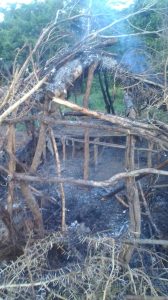
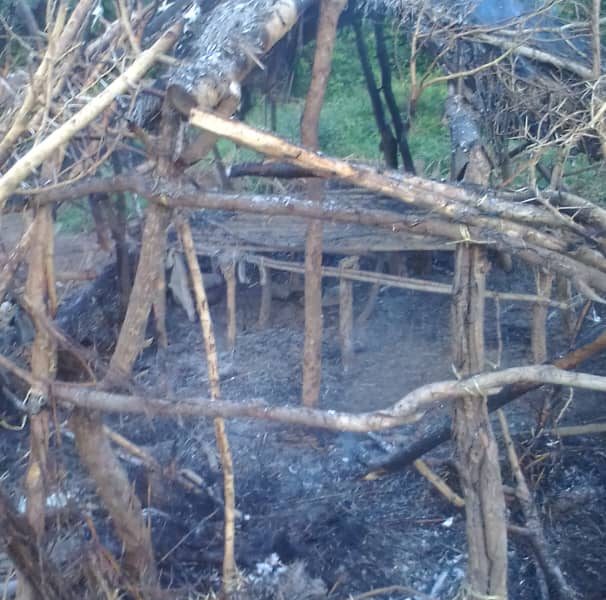
A photo of a burnt grass-thatched house belonging to a community defender in Kiryandongo District.
However, this is different for the community land rights defender Kaliisa Joseph. Instead of enjoying the fruits of his labor, he is now in distress. On September 5th, 2024, Kaliisa’s home was set ablaze, and household items worth more than 1.5 million Ugandan shillings were destroyed. His kraal, which housed over 60 cattle, was also demolished by workers from Agilis Partners, a U.S.-based multinational grain development company in Kiryandongo District.
Joseph Kaliisa, a community land rights in the Kiryandongo district, has been actively engaged in mobilizing his community of more than 3000 residents to push back Agilis Company’s illegal land eviction in the Kiryandondongo district. His home has been repeatedly raided, his crops destroyed, and his animals impounded by the multinational company, which accuses Kaliisa and the people he defends of occupying the land illegally. However, information from Witness Radio indicates that the communities have legal rights to the land.
According to eyewitnesses, these events occurred on Thursday, September 5th, 2024, while Kalisa and his family were away grazing their cattle. Kalisa, who should have been reaping the benefits of his land, now finds himself unable to cultivate or graze freely.
“I can’t use my land as I used to,” Kalisa said. “Whenever I take my cows for grazing, they are seized by the company, and I have to pay 50,000 Ugandan shillings for each cow seized to get it back. Last week, they came and destroyed everything.”
Agilis Partners Limited is receiving multiple financing from different public development banks (PDBs). It has used these funds to displace local communities.
However, whenever the company receives these funds, there is usually a sharp increase in violent land evictions and cattle seizures in Kiryandongo, alongside widespread human rights violations/abuses.
Agilis Partners, owned by U.S. twin brothers Phillip and Benjamin Prinz, has continued to benefit from other funding sources, including the Dutch Oak Tree Foundation, DOB Equity, the United Nations Common Fund for Commodities, the U.K.’s DFID-funded Food Trade Programme, and Vested World.
Kalisa is just one of the millions affected by these public development banks’ (PDBs) funding for companies like Agilis. These communities face illegal evictions, escalating violence, and environmental degradation, all supported by PDBs.
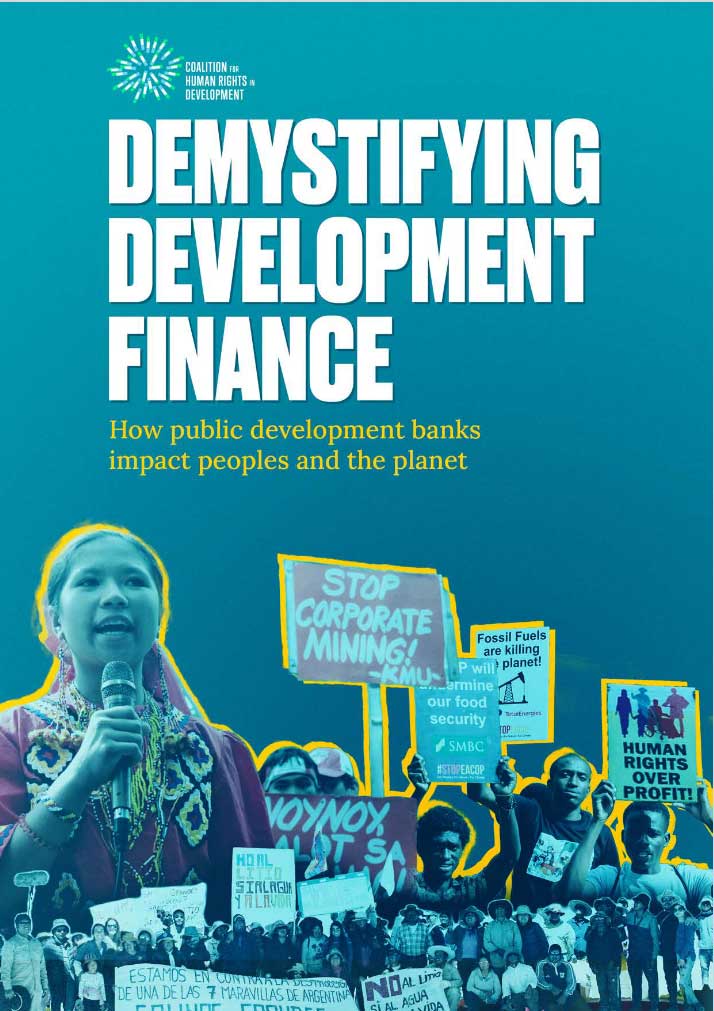
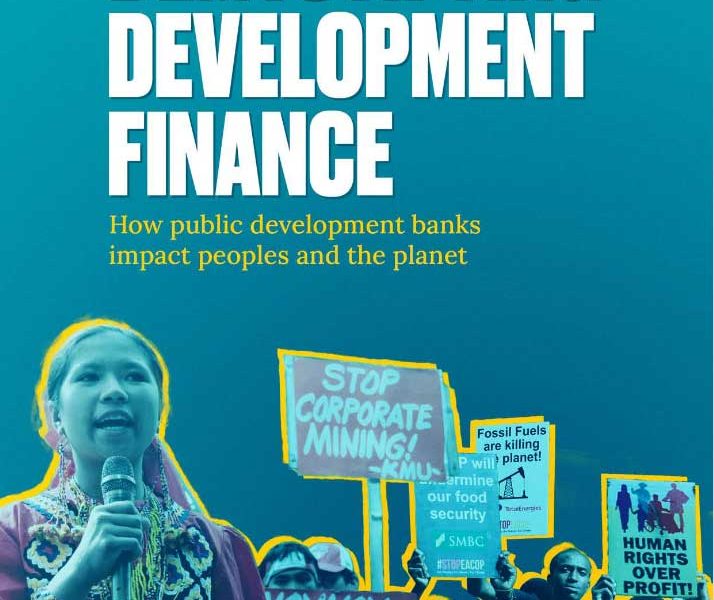
A recent report titled Demystifying Development Finance by 100 Global South activists and civil society experts reveals how PDBs fuel human rights violations, environmental destruction, inequality, and debt in the name of development.
The 52-page report highlights how PDBs, including the World Bank, the Asian Development Bank (ADB), and the Inter-American Development Bank, are driving projects that harm people and the planet and are said to be holding a massive amount of countries’ debt based on a series of eye-opening case studies, data, and critical trend analyses.
According to the report, the available official statistics show that the most significant percentage of PDB financing currently goes to financial services, public administration, trade, energy, transportation, and infrastructure. A significantly lower but significant percentage goes to investment in social sectors such as health, education, housing, water and sanitation, and agriculture.
While some PDBs offer grant-based assistance, most financing comes through loans, often at high interest rates. Like Chinese PDBs, these loans sometimes come with shorter repayment periods. Even institutions like the World Bank’s International Development Association (IDA), which offers concessional loans to the lowest-income countries, are criticized for contributing to debt crises in the Global South.
In 2023, during the Finance in Common Summit (FICS), over 35 civil society activists from more than 20 countries came together to challenge the claims of the world’s largest development banks. These banks present themselves as champions in the fight against climate change and poverty, but activists argue that their projects often exacerbate the problems they claim to solve.
“Development banks are advocating for a bigger role in the global economy,” said Ivahanna Larrosa, Regional Coordinator for Latin America at the Coalition for Human Rights in Development. “But are they truly fit for this purpose? Unfortunately, the stories of communities worldwide show us that development banks are failing to address the root causes of the problems they claim to solve. We need to hold them accountable for this.”
The IFC’s involvement in projects like the Sal de Vida lithium mine in Argentina further demonstrates the problem. In the name of renewable energy, the project is displacing Indigenous communities and destroying fragile ecosystems. At the same time, local authorities, including the police and officials, align with the company to silence dissent by threatening and criminalizing local community leaders and the families living near the construction site.
The negative impacts of PDBs extend across the globe. In Kenya, PDBs have pushed for increased health sector privatization, leading to a divide between those who can afford care and those who cannot. Out-of-pocket healthcare spending in Kenya rose by 53% per capita between 2013 and 2018, deepening inequalities and hampering the country’s progress toward universal health coverage.
Related posts:
 Witness Radio, private companies, CSOs and local government officials are meeting to discuss alternative remedies to salvage the appalling land and environmental rights situation in Kiryandongo district.
 CSOs to African Development Bank: Don’t fund EACOP
 Over 30 CSOs petition US over firm accused of evicting Kiryandongo locals
 CSOs urge banks and other IFIs not to finance E.Africa oil pipeline project…


MEDIA FOR CHANGE NETWORK
World Food Day 2026: Building healthy diets means reimagining how we grow, share, and enjoy our food.
Related posts:

 Global hunger falls, but millions in Africa still go without food, says UN
 While hunger continues to grip the world, a new report highlights forests and forest foods as a hidden treasure trove of nourishment.
 Agroecological Entrepreneurship: African farmers are redefining agriculture by building agroecological businesses that challenge industrial models.
 Wars are disrupting food systems, and ending world hunger requires urgent global action, experts say.
MEDIA FOR CHANGE NETWORK
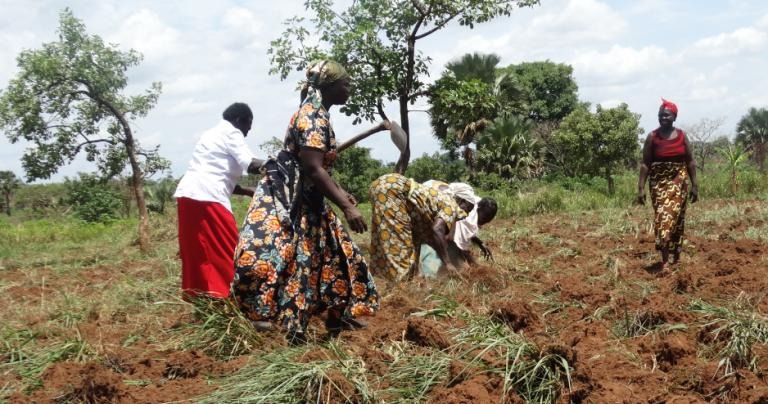
International Day of Rural Women : Rural women farmers deserve not only equal rights and access to resources, but also the strength and voice to safeguard Mother Nature.
Related posts:

 How unequal access to land by women endangers Uganda’s food security
 Women’s groups demand equality in land tenure security to boost food production.
 Rights and Resources Initiative (RRI) launched a new report looking at 80 legal frameworks
 Smallholder Farmers Can Now Access Agricultural Credit Facility Without Collateral
MEDIA FOR CHANGE NETWORK
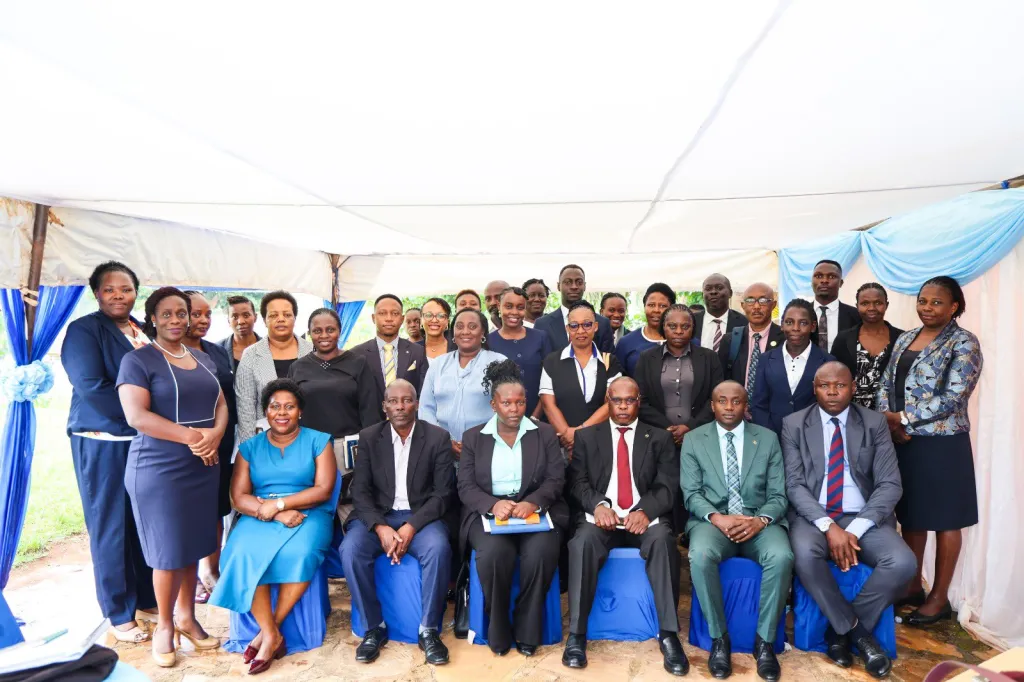
ODPP Staff Equipped With New Skills on Land Crimes, Witness Protection and Victims Rights
Related posts:

 Witness Radio Petitions ODPP urgently to review and withdraw criminal charges against Buvuma Community Land Defenders.
 Witness Radio petitions chief prosecutor: Want 34 community land rights defenders and activists released from prison.
 Mubende district police are aiding land grabbing and committing crimes against locals they are obliged to protect.
 Uganda: the number of community environmental and land rights defenders targeted for challenging irresponsible business practices has reached more than 1500 victims as of June 31st, 2023.

World Food Day 2026: Building healthy diets means reimagining how we grow, share, and enjoy our food.

International Day of Rural Women : Rural women farmers deserve not only equal rights and access to resources, but also the strength and voice to safeguard Mother Nature.

ODPP Staff Equipped With New Skills on Land Crimes, Witness Protection and Victims Rights

As World Bank Holds Annual Meetings, 84,000 Tanzanians Call for Justice

Lango ex-combatants count losses after dry spell destroys maize harvest

Five years after Uganda’s National Action Plan on Business and Human Rights, are local communities hosting land-based investment projects seeing change?

Alert: Land degradation is emerging as a pressing threat to global security.

The global race for clean energy minerals is leaving communities grappling with conflicts and human rights abuses, a new report reveals.

Innovative Finance from Canada projects positive impact on local communities.

Over 5000 Indigenous Communities evicted in Kiryandongo District

Petition To Land Inquiry Commission Over Human Rights In Kiryandongo District

Invisible victims of Uganda Land Grabs
-
 MEDIA FOR CHANGE NETWORK2 weeks ago
Sweeping investments are fueling widespread land grabbing and deepening rights violations across Uganda – Report.
-
 NGO WORK6 days ago
Tanzanian Government Abducts Maasai Villagers in an Unconscionable Attack on Indigenous Land Defenders
-
 MEDIA FOR CHANGE NETWORK2 weeks ago
Across Africa, the push for a greener future is putting new pressure on local communities, as recent ILC case studies highlight.
-
 MEDIA FOR CHANGE NETWORK6 days ago
Court remands 10 anti-oil activists as suspect collapses in dock
-
 MEDIA FOR CHANGE NETWORK2 weeks ago
Who will shape the future of East Africa’s seeds? Youth and civil society are sounding the alarm over a proposed regional law.
-
 MEDIA FOR CHANGE NETWORK3 days ago
World Food Day 2026: Building healthy diets means reimagining how we grow, share, and enjoy our food.
-
 FARM NEWS2 weeks ago
Can Agroecology Improve the Resilience of African Smallholder Farmers?
-
 MEDIA FOR CHANGE NETWORK5 days ago
As waves of investment sweep across Uganda, countless women rise to defend their land, safeguard their traditions, and claim their right to be heard.