MEDIA FOR CHANGE NETWORK
A 29th Insurance Company withdraws support for controversial EACOP Project.
Published
3 years agoon

By Witness Radio team
In another positive development for climate activists fighting against the financing of the controversial East African Crude Oil Pipeline (EACOP) due to its environmental impacts and human rights violations, Witness Radio has learned that a 29th insurance bank has withdrawn its funding from the project.
On 4th March 2024, major insurer Probitas1492 confirmed that it won’t insure a major ‘carbon bomb’ project – the East African Crude Oil Pipeline.
Probitas’s Chief Executive Officer, Ash Bathia, has publicly pledged that his company will never insure in the project. Speaking to Extinction Rebellion, a non-partisan movement advocating for action on the Climate and Ecological Emergency through non-violent direct action and civil disobedience, Bathia confirmed that Probitas currently does not provide any insurance support for the East African Crude Oil Pipeline and has no intention of doing so in the future.
Critics of the project have been advocating for the cessation of funding and support to the EACOP project due to its significant climate impacts, large-scale displacement of communities, and grave risks to protected environments, water sources, and wetlands associated with the project and would transport oil generating over 34 million extra tons of carbon emissions each year.
“Underwriting these projects would not be following our ESG policy. We would like to clarify that our stance on the above was already a matter of company policy and has not changed following the recent protests and criminal damage caused during the XR protests.” Bathia maintained.
Shortly after Probitas declared its withdrawal from funding the EACOP project, the #StopEACOP global campaign swiftly responded on its X account, “We want to congratulate Probitas on choosing not to insure the East African Crude Oil Pipeline. This pipeline, if it goes ahead, will devastate local habitats and create highly dangerous levels of carbon pollution.
Probitas becomes the 29th insurance company to rule out EACOP and the 6th insurance company to do so in the same project in this year 2024. In January 2024, leading (re)insurance companies SiriusPoint, Riverstone International, Enstar Group, and specialty insurers Blenheim and SA Meacock; officially ruled out involvement in the controversial East African Crude Oil Pipeline (EACOP) project citing, pollution and human rights risks it poses.
The EACOP project has triggered significant concerns among communities and civil society groups due to its detrimental impacts on thousands of individuals in Uganda and Tanzania. The most affected have been the Project Affected Persons (PAPs) and human rights activists who stand against the project.
Reports have highlighted numerous cases of land grabbing, the displacement of host communities, inadequate compensation, poor resettlements, and the troubling trend of harassing and arresting community leaders and rights activists.
The East African crude oil pipeline (EACOP) runs 1,443km from Kabaale, Hoima district in Uganda, to the Chongoleani Peninsula near Tanga Port in Tanzania. The main backers of the multibillion-dollar project are the French oil company TotalEnergies and the China National Offshore Oil Corporation (CNOOC).
Related posts:

The East African Court of Justice fixes the ruling date for a petition challenging the EACOP project.
Appellate Division of the East African Court of Justice (EACJ) to hear an Appeal filed by CSOs which seeks to reinstate a petition against the construction of the EACOP project tomorrow.
The East Africa regional court dismisses a case challenging the construction of the EACOP project.
Breaking: Complaint filed with US NCP against insurance broker Marsh over East African pipeline.
You may like
MEDIA FOR CHANGE NETWORK
Kiryandongo district, a notorious hotspot for land grabs in Uganda: A bitter land dispute spanning 22 years has left residents landless and food-insecure, while the investor anxiously guards his investment.
Published
7 hours agoon
November 2, 2026
Special report by Witness Radio Team
In Uganda’s Kiryandongo district, a simmering land dispute has forced residents into a relentless struggle to reclaim ancestral land. They insist their family roots run deep in this soil, now swallowed by a vast agricultural estate purchased by an investor.
But the owners of Kisirizi Excellence Center (EA) Ltd, whose agricultural venture sprawls across 751 hectares, reject the residents’ claims. Renewed calls to return the land have stirred anxiety about the safety of their investment and the well-being of their farm workers.
“We fear violence. We fear for our investment and the lives of the workers on the farm,” Patrick Byabakama Kaberenge, the company’s managing director, told Witness Radio.
Kiryandongo District, nestled in Uganda’s midwest, has become a battleground for land disputes fueled by large-scale agricultural investments. In 2020, Witness Radio and its partners revealed that these projects had uprooted over 35,000 people from their land. The investigation spotlighted Kiryandongo Sugar Limited and Great Seasons SMC Limited, while in 2023, Somdiam joined the list of companies embroiled in controversial land takeovers for sugarcane cultivation.
Drawn by the district’s fertile soil, major agricultural projects have flocked to Kiryandongo, while oil development has only intensified the scramble for land. Against this backdrop, the Buhomoozi Parish dispute raises urgent questions: How are residents’ land rights safeguarded when new owners take over?
In Buhomoozi Parish, Kigumba Sub-county, the land dispute has ignited passionate demands from residents who say their families have called this land home for generations. Meanwhile, the investor now farming the contested property is seeking government protection for what he believes is rightfully his.
At the heart of the conflict are land deals involving businessman Mutebi Amans Kibibi and Byabakama with his partners. Residents allege these transactions triggered the eviction of over 500 people from their homes.
Documents seen by Witness Radio confirm that Byabakama holds a registered title to the property he claims to have bought from Mutebi. Yet residents challenge the registration’s legitimacy, arguing it now covers land their families have lived on for decades.
Asiimwe Moses Mwendwa, representing some affected residents, told Witness Radio that shifting land ownership and altered mapping have tangled claims and erased cherished community land.
Asiimwe maintained that the Church of God of East Africa and a property associated with Captain Omar Muhammed occupied separate parcels, with community land lying between them.
“We cannot now trace our origin. Our land was not titled, but it existed. People were living on it. When the rich men came in 2004, they evicted us and took it,” he said.
Asiimwe described the disputed land as a 500-acre stretch nestled between two registered properties: Plot 30 at Kisirizi Mixed Farm, owned by Captain Omar Muhammed, and a parcel at Kinyoga-Kaduku under the Church of God of East Africa.
Asiimwe recounted that the trouble began when Mutebi Kibibi acquired two titled properties that flanked land occupied by residents without formal titles. Rather than leaving the community land intact, Mutebi allegedly forced out the residents in 2014 and absorbed their land into a single, consolidated property.
Residents say this process wiped away the boundaries of land their families had known for generations, leaving them homeless and dispossessed. They allege that Byabakama and his partners later took over the property, insisting they bought a single registered parcel from Mutebi.
“Some people had occupied the land since the 1930s. It was terrible. People were evicted, some were beaten, and others lost their lives,” he told Witness Radio.
These allegations raise urgent questions about protecting customary land rights, the murky circumstances of land transfers, and the ethical duties of businesses acquiring contested property.
Uganda’s Constitution protects property rights and prohibits torture and cruel, inhuman or degrading treatment. The Land Act, 1998, also recognizes customary tenure, including rights that may arise from family and communal land arrangements. The application of these protections to the disputed property depends on the facts and the relevant legal records.
At the international level, the United Nations Guiding Principles on Business and Human Rights establish that businesses have a responsibility to respect human rights, avoid causing or contributing to adverse impacts and address harms in which they are involved. The principles also emphasize access to effective remedies for people whose rights have been violated.
Desperate for justice, the affected residents petitioned the State House Lands Unit, urging the government to step in and resolve the dispute.
The State House Lands Unit, which handles land matters, became the residents’ last hope. They hoped this intervention would untangle the competing claims and determine whether the investor’s title truly covered their ancestral land.
Mr. Osaja Peter, a 61-year-old community leader and land defender who says he was born on the disputed land, told Witness Radio that a State House team conducted a site visit and made a decision concerning the dispute.
“A locus visit was done by State House and led by counsel Susan Abbo, and the ruling was that Byabakama should go back on the land that he bought,” Osaja said.
Yet the details and current status of the alleged ruling remain unclear.
Peter recalled that his grandfather settled in Kaduku II, Kigumba, back in the late 1930s. He claims his family lost nearly 70 acres in the turmoil of the disputed takeover.
“At that time, over 500 people were evicted from our land, which covered the three villages of Nyama I, Kaduku II and Kinyonga II. We just saw the bullets, and when people see bullets, they run away. Some have remained lame, while others died because of injuries. Many are struggling to rebuild their lives,” he said.
Mr. Byabakama, now 70 and once the acting deputy governor of the Bank of Uganda, said he and 30 partners founded Kisirizi Excellence Center (EA) Ltd with a vision for commercial farming, focusing on animal husbandry.
“We wanted to do commercial farming,” he told Witness Radio.
In 2006, Byabakama and his partners purchased land at Kisirizi, Plot 80, Block 9, measuring about 751 hectares, from Mutebi Kibibi.
According to documents reviewed by Witness Radio, Omari Mohamed had previously mortgaged the land, but allegedly failed to meet the loan obligations. Uganda Development Bank subsequently exercised its powers under the mortgage arrangement and sold the property to Mutebi Kibibi.
Before sealing the deal, Byabakama said he and his partners conducted thorough due diligence, inspected the land, and confirmed its boundaries with local leaders and community members.
“We spent around three days inspecting the land. Apart from the seller, Mr Mutebi, there was no other person occupying the said land,” he said.
Byabakama said an independent surveyor, Angellus Mawa of Geomaps, opened the boundaries in the presence of community members and local leaders, including then Kigumba Sub-county LC III chairperson Mary Matunda and other officials.
He explained that this careful inspection, combined with checks at the land office, reassured the partners that the property was safe to buy.
“Upon confirming that there were no registered encumbrances on the land at the land office, we agreed to buy the land from Mutebi,” he said.
Yet the residents tell a different story. They allege their land once lay between two registered properties, but was swept up into the land Mutebi acquired and eventually passed to Byabakama.
The affected families formally brought the dispute to the State House Lands Unit’s attention.
In a letter dated July 2023, Susan Obbo, Senior Private Secretary to the President in Charge of Land Matters, invited Byabakama to a meeting on allegations that residents occupied land between two registered properties.
The letter identified one property as Plot 30 at Kisirizi Mixed Farm, associated with Omar Mohammed, and the other as Plot 66, Block 9, at Kinyogonya-Kaduku, registered in the name of the Church of God of East Africa.
According to the letter, the petitioners alleged that Mutebi and Byabakama had acquired the two properties, Kisirizi Mixed Farm and the Church of God of East Africa, and incorporated the intervening land occupied by residents, despite the community’s claims that the land had previously existed as a separate area with identifiable boundaries.
The letter further stated that the petitioners did not object to the purchase of the two registered properties but alleged that the intervening community land had been incorporated into them, resulting in the eviction of residents.
In response to the State House letter, Byabakama disputed the allegation that he had acquired multiple parcels or participated in an amalgamation of community land.
In a response submitted on behalf of the investor, his representatives, H&G Advocates, said their client acquired a single registered parcel identified as LRV 1759, Folio 15, Plot 80, Kibanda Block 9, at Kisirizi, along Masindi Port Road.
“Our client does not know about the alleged amalgamation of two land parcels mentioned in your letter or the persons who allegedly occupied an untitled parcel of land between two alleged titled parcels. Our client bought a single parcel of land comprised in LRV 1759, Folio 15, Plot 80, Kibanda Block 9, at Kisirizi, Masindi Port Road, Masindi. This can be verified from the land office,” the response stated.
Byabakama also said that after the company began commercial farming, nine people complained that a previous owner had given them extremely short notice to vacate their homes before the 2006 purchase.
He said the company asked why the complainants had not pursued the previous owner in court but agreed to help them maintain peaceful relations with neighboring communities.
According to the company’s response to State House, the partners agreed between 2006 and 2009 to provide the nine complainants with household resources and some land for cultivation, with the assistance of local leaders. The company said it believed it had no legal obligation to settle the claims.
But this response left the residents’ deeper grievances unresolved, especially their claims about lost boundaries and the absorption of their land into the registered property.
A State House official, who spoke to Witness Radio on condition of anonymity, said the matter remained under investigation.
“People are saying the land had two titles initially, and that Byabakama’s title overlapped with the others. They have no problem with Byabakama; rather, they have an issue with Mutebi, who sold the land to Byabakama. The land in the middle was also titled with the larger part and also got taken,” the official said.
The official explained that authorities plan to retrace the boundaries of the old properties and compare them with the land now under Byabakama’s title.
“We are going to open the boundaries of the former titles and compare them with his title to find out the truth. We will inform you once the investigations are complete,” the official said.
Former Kigumba Sub-county LC III chairperson Mary Matunda, meanwhile, told Witness Radio that the alleged evictions and burning of houses occurred before Byabakama acquired the property.
She said local leaders knew the incidents happened when Mutebi owned the land and argued that Byabakama and its partners should not be blamed for actions that allegedly took place before their purchase.
Byabakama said the company coexisted peacefully with neighboring communities until residents reignited their demands to return the disputed land.
For the families caught in the dispute, this is about far more than lines on a map. It is about ancestral land, lost homes, shattered livelihoods, and community bonds built over generations that are unraveling.
“What we have suffered is enough. Let the injustices that occurred be solved,” the residents said, vowing to continue pursuing their claims.
For Byabakama and his partners, the dispute casts a shadow over an agricultural investment they insist was acquired lawfully and with careful due diligence.
Now, the fate of the land hangs on the State House Land Unit’s findings from its investigation into the tangled history of transfers and boundaries.
Until those questions are resolved, the residents’ demands and the investor’s defense remain in conflict, leaving the future of the disputed land uncertain.

Related posts:

Lira siblings reclaim father’s land after bitter family dispute

Government orders arrest of notorious land grabber in Mubende district.

Land grabs at gunpoint in Kiryandongo district – Uganda – New report

State House Anti-Corruption Unit nets a surveyor implicated in Mubende district land-grabs
MEDIA FOR CHANGE NETWORK
Govt tightens human rights protections in extractive industry
Published
11 hours agoon
November 2, 2026
The proposed mechanism is expected to provide a formal and accessible avenue for individuals and communities to seek redress when their rights are violated by business operations, including corruption, gender-based violence, child labour, labour rights violations, unfair compensation and other business-related grievances.
Bernard Mujuni, the commissioner for equity and rights at the Ministry of Gender, Labour and Social Development, said the initiative is intended to bridge existing gaps in access to justice, particularly for vulnerable communities affected by large-scale investments in oil and gas and mineral extraction in many parts of the country.
The Ugandan government is developing a national grievance redress and accountability mechanism to enable communities affected by business activities to report human rights violations, unfair compensation, corruption and other abuses, in the extractives sector.
The proposed mechanism is expected to provide a formal and accessible avenue for individuals and communities to seek redress when their rights are violated by business operations, including corruption, gender-based violence, child labour, labour rights violations, unfair compensation and other business-related grievances.
Bernard Mujuni, the commissioner for equity and rights at the Ministry of Gender, Labour and Social Development, said the initiative is intended to bridge existing gaps in access to justice, particularly for vulnerable communities affected by large-scale investments in oil and gas and mineral extraction in many parts of the country.
He made the remarks on Friday (October 23) at the Uganda Media Centre while announcing the Seventh National Forum on Business and Human Rights, which will take place from October 26 to 28 at the Sheraton Kampala Hotel.
The Government is encouraging businesses to integrate human rights considerations into their operations, especially in sectors involving land acquisition, natural resources, large-scale infrastructure projects and extractive industries
“An individual should be able to access remedies when a violation takes place in business operations,” said Mujuni.
He said some communities affected by development projects often lose out during compensation processes, with intermediaries allegedly taking substantial portions of money intended for project-affected persons, leaving them with little recourse.
It is hoped the new grievance mechanism will strengthen accountability by providing a recognised platform through which such concerns can be reported, investigated and resolved.
Oil pipeline
Mujuni pointed to Uganda’s oil pipeline project as an example of growing efforts to integrate human rights considerations into major investments, particularly in relation to land rights, compensation and community engagement
“This is a milestone for this country,” he said, while commending President Yoweri Museveni for supporting Uganda’s business and human rights agenda.
Mujuni stressed that investors must engage meaningfully with affected communities and respect their rights to land, livelihoods and other resources.
He cautioned against the appropriation of community-owned resources without adequate consultation and compensation, warning that failure to address legitimate grievances could spark disputes, delay projects and increase operational costs.
“Human rights concerns should be dealt with before they escalate into conflict, litigation or disruptions that can ultimately affect investment outcomes.”
The extractives sector will be a key area of discussion at the upcoming forum, with participants expected to examine the human rights implications of resource exploitation, protection of affected communities and the role of environmental and human rights defenders.
Abuses in sugar plantations
Beyond the extractives sector, concerns were raised about persistent labour rights violations in large-scale agricultural enterprises, particularly sugarcane plantations.
Child labour, sexual harassment, workplace exploitation and violence against women and girls were cited as some of the challenges identified during inspections conducted by the gender ministry in districts such as Mayuge and Hoima
Working alongside labour officers, community development officers and other stakeholders, the ministry has undertaken a series of human rights inspections aimed at ensuring compliance with labour standards.
Mujuni said such abuses not only undermine workers’ dignity and wellbeing but can also disrupt business operations and damage investor reputations.
The initiative, dubbed Advancing Respect for Human Rights by Businesses in Uganda, is being implemented by the ministry in partnership with Enabel, the Belgian Agency for International Cooperation, with support from the European Union.
Sector-based minimum wage
It is understood the Government is reviewing several labour-related issues, including minimum wages, workers’ compensation and protections for domestic workers
Ongoing research and consultations are intended to guide future policy proposals following a directive from President Museveni that a comprehensive study be undertaken before the Government adopts a minimum wage framework.
Rather than introducing a blanket minimum wage across all sectors, the Government is exploring the possibility of sector-specific wage structures that consider the unique circumstances of different industries.
Human rights forum
The Seventh National Forum on Business and Human Rights will be held under the theme: “Reflecting on Progress and Strengthening Commitment: The Journey of Uganda’s National Action Plan on Business and Human Rights.”
Discussions will focus on labour rights and decent work, land and natural resources, environmental protection and climate justice, access to remedies, consumer protection, corporate accountability, as well as technology, digital rights and data protection.
Mujuni urged workers to report cases of intimidation, mistreatment and sexual harassment through established workplace channels, including human resource departments and sexual harassment committees.
He revealed that the SAUTI reporting mechanism receives about 200 cases daily, which are processed and referred to relevant authorities for action
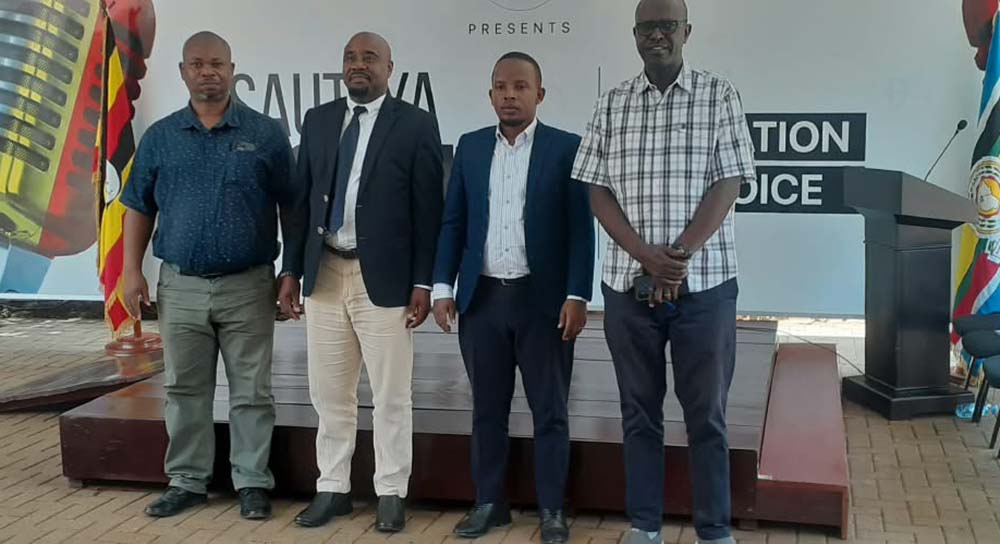
The SAUTI 116 toll-free platform brings together multiple institutions capable of investigating complaints and ensuring victims receive appropriate support and justice.
Related posts:

Land and environmental rights defenders, CSOs, scholars, and government to meet in Kampala to assess Uganda’s performance on the implementation of the UN Guiding principles on Business and Human Rights in Uganda.

A multisectoral meeting has kicked off in Kampala to discuss progress in implementing the UN Guiding Principles on Business and Human Rights and other related standards and principles.

Five years after Uganda’s National Action Plan on Business and Human Rights, are local communities hosting land-based investment projects seeing change?

UN Human Rights Chief urges EU leaders to approve key business and human rights legislation
MEDIA FOR CHANGE NETWORK
African faith leaders are raising their voices for reparations as AGRA’s 20-year legacy faces intense scrutiny.
Published
3 days agoon
October 30, 2026
By the Witness Radio team.
Africa grapples with some of the world’s most severe food security challenges. Today, 309 million people go hungry—outnumbering even Asia’s 292 million. The continent pours between US$70 billion and US$100 billion annually into food imports.
Despite decades of effort by governments, development partners, and countless organizations to improve agriculture and uplift smallholder farmers, these challenges remain. A flagship initiative, the Alliance for a Green Revolution in Africa (AGRA), launched in 2006 with backing from the Bill & Melinda Gates Foundation and the Rockefeller Foundation, now marks two decades of striving to transform African agriculture.
In a statement marking its 20th anniversary this year, the organization described the milestone as an opportunity to reflect on two decades of working with governments, farmers, research institutions, the private sector and development partners to strengthen Africa’s food systems.
Yet African faith leaders argue the initiative has fallen short of its promise to reduce hunger and improve food security. They are now demanding that the Gates Foundation be held accountable for the consequences of the agricultural model it has championed.
On Thursday, October 29, 2026, faith leaders from more than 20 African countries held an online press conference after delivering an open letter to the Gates Foundation on October 28.
The letter, titled African Faith Leaders Demand Reparations from the Gates Foundation and signed by 625 faith leaders with backing from 360 organizations and partners, urges the Foundation to provide reparations and shift its funding toward smallholder farmers, indigenous seeds, healthy soils, and agroecological farming systems.
The leaders contend that AGRA’s Green Revolution approach has failed to tackle hunger and, worse, has eroded food sovereignty and weakened communities’ control over their own food systems.
They add that AGRA has received more than US$1.5 billion since its establishment, with approximately two-thirds of the funding coming from the Gates Foundation.
“The Green Revolution promised to halve hunger. Instead, 55 million more people in AGRA’s focus countries are going hungry today than when it began,” said Ms. Francesca de Gasparis, Executive Director of the Southern African Faith Communities’ Environment Institute (SAFCEI).
“When a strategy fails this badly, for this long, continuing to fund it perpetuates harm. We are calling on the Gates Foundation to take the independent research seriously and change its approach,” Ms. de Gasparis added.
The leaders’ concerns are informed by research from Tufts University and the Alliance for Food Sovereignty in Africa (AFSA), which found that the number of undernourished people in AGRA’s 13 focus countries increased by 58% between 2004–2006 and 2022–2024.
AGRA has pushed back against these findings, challenging both the research and its methodology. This debate has reignited doubts about whether two decades of investment have truly improved livelihoods and food security for Africa’s smallholder farmers.
In the online discussions that followed the letter’s launch, faith leaders urged the Gates Foundation, AGRA, African governments, and development partners to place the sovereignty and well-being of African people at the heart of all agricultural investments.
“African people must be the architects of their own agricultural future. The church does not oppose science but demands science that saves lives,” said Rev. Dr. Tolbert Thomas Jallah, a faith leader from Liberia.
Rev. Dr. Jallah said science must serve humanity, innovation must serve the public good, and technology should strengthen communities’ ability to feed themselves.
The faith leaders said they had previously raised similar concerns with the Gates Foundation. In 2021, they wrote to the Foundation asking it to stop funding Green Revolution programs. SAFCEI said it later met with Foundation representatives, but those engagements did not result in a meaningful response to their concerns.
The press conference brought together representatives from Liberia, Kenya, Botswana, Namibia, Malawi, Zimbabwe and South Africa, while the letter’s signatories came from more than 20 countries across West, East and Southern Africa.
The faith leaders also voiced concerns about how corporate-driven agriculture affects women, who are the backbone of food production and household food security throughout Africa.
Ms. Josephina Ngishoono, representing the Namibia Council of Churches, emphasized that women shoulder much of the burden when agricultural systems put commercial interests ahead of the needs of farming communities.
She pointed out that while women are major contributors to food production, they still face unequal access to land, resources, agricultural knowledge, and decision-making power.
“Corporate-led agriculture that prioritizes patented seeds, chemical inputs, as well as monoculture, risks undermining the women’s traditional knowledge systems, the agroecological practices that have been passed down from generations,” Ms. Ngishoono said.
She warned that when women lose control over seeds and farming decisions, their financial independence and their power to choose what and how to grow food for their families are put at risk.
She called for women to be recognized as agricultural leaders in their own right, not just as passive beneficiaries of development programs.
She further urged the Gates Foundation to champion community seed banks, indigenous seeds, community-managed seed systems, composting, soil restoration, and research led by local communities in agroecology.
“There is a need to protect farmers’ rights and their seed sovereignty and to prioritize public health, environmental health, and long-term food security,” she said.
Ms. Gorata Ramokgothwane of the Botswana Council of Churches highlighted how climate change relentlessly undermines food sovereignty and food security throughout sub-Saharan Africa.
She voiced alarm over the push for farming systems that rely heavily on chemical inputs, cautioning that these methods could damage fragile ecosystems and erode traditional farming practices.
Speaking for women faith leaders, Ms. Ramokgothwane called for a powerful regional movement to advance community-led agroecology throughout Southern Africa.
“As councils of churches in the region, we must identify and intensify our efforts in resource mobilization towards grassroots solidarity in advancing indigenous or traditional preservation,” she said.
She pointed to communities in Botswana that use leadwood ash to preserve seeds for beans, millet, and sorghum, showcasing these traditions as vital knowledge that can fortify local food systems.
“Some communities have resorted to seed banks dedicated to preserving native staples, such as millet, sorghum, beans, and some traditional vegetables,” she added.
Ms. Ramokgothwane said these methods could empower communities to break free from costly agricultural inputs, safeguard indigenous foods, and sustain ecological balance.
She also cautioned that women smallholder farmers are especially at risk when input prices soar or harvests fall short of covering costs. She added that restrictive seed laws can further limit farmers’ ability to save and share traditional seeds.
“As women of faith and leaders in our communities, we know that the Gates Foundation has the moral obligation to independently analyze the needs of smallholder farmers and support the seed-saving practices in irrigation for smallholder farmers,” she said.
Muslim faith leaders in Africa were also represented at the discussions by Dr Sheik Hassan Kenyamari, Chairman of Muslim Provinces in Africa.
Dr Kenyamari voiced unease about the direction, priorities, and lasting consequences of agricultural innovations backed by the Gates Foundation, especially through its partnership with AGRA.
He insisted that Africa’s agricultural transformation must put farmers, communities, ecological integrity, and the right to food above narrow productivity goals and commercial interests.
AGRA, however, rejects claims that its agricultural model has failed, arguing that its progress over the past 20 years should be assessed against the broader challenges facing African food systems.
In its August 2026 Impact, Learning and Foresight Report, the organization says agricultural output across Africa has roughly doubled in real terms since 2005, while cereal yields have increased by about 40%.
It also points to the growth of local seed companies, agricultural input distribution networks and community extension services as evidence of progress.
Related posts:

Failed Green Revolution: African Leaders Demand Reparations from Gates Foundation.
African Food Systems Summit 2024: Do not use it to promote failed agricultural models – African Faith Leaders.
A coalition of 625 African faith leaders will gather, united in their call for reparations in response to what they describe as the failure of a Gates-backed agricultural model.

AGRA’s Silent Takeover: The Hidden Impact on Africa’s Agricultural Policies.
Kiryandongo district, a notorious hotspot for land grabs in Uganda: A bitter land dispute spanning 22 years has left residents landless and food-insecure, while the investor anxiously guards his investment.
Govt tightens human rights protections in extractive industry
African faith leaders are raising their voices for reparations as AGRA’s 20-year legacy faces intense scrutiny.
149 CSOs and groups demand answers from banks over $3.7bn in EACOP financing
Tanzanian Government Abducts Maasai Villagers in an Unconscionable Attack on Indigenous Land Defenders
Environmental and human rights advocates are urging the world to hold global investors accountable for their actions.
World Food Day 2026: Building healthy diets means reimagining how we grow, share, and enjoy our food.
Sweeping investments are fueling widespread land grabbing and deepening rights violations across Uganda – Report.
Innovative Finance from Canada projects positive impact on local communities.
Over 5000 Indigenous Communities evicted in Kiryandongo District
Petition To Land Inquiry Commission Over Human Rights In Kiryandongo District
Invisible victims of Uganda Land Grabs
Resource Center
- CAN AFRICAN FOOD SYSTEMS THRIVE WITHOUT CHEMICAL FERTILISERS
- Land And Environment Rights In Uganda Experiences From Karamoja And Mid Western Sub Regions
- REPARATORY AND CLIMATE JUSTICE MUST BE AT THE CORE OF COP30, SAY GLOBAL LEADERS AND MOVEMENTS
- LAND GRABS AT GUNPOINT REPORT IN KIRYANDONGO DISTRICT
- THOSE OIL LIARS! THEY DESTROYED MY BUSINESS!
- RESEARCH BRIEF -TOURISM POTENTIAL OF GREATER MASAKA -MARCH 2025
- The Mouila Declaration of the Informal Alliance against the Expansion of Industrial Monocultures
- FORCED LAND EVICTIONS IN UGANDA TRENDS RIGHTS OF DEFENDERS IMPACT AND CALL FOR ACTION
Legal Framework
READ BY CATEGORY
Newsletter
Trending
-
MEDIA FOR CHANGE NETWORK2 weeks agoEnvironmental and human rights advocates are urging the world to hold global investors accountable for their actions.
-
MEDIA FOR CHANGE NETWORK2 weeks agoWhy are secure land rights key to Africa’s climate resilience and the protection of its natural treasures?
-
MEDIA FOR CHANGE NETWORK1 week agoA coalition of 625 African faith leaders will gather, united in their call for reparations in response to what they describe as the failure of a Gates-backed agricultural model.
-
MEDIA FOR CHANGE NETWORK1 week agoHigh land title costs, bureaucracy, and distance leave women struggling to secure land rights in Africa.
-
MEDIA FOR CHANGE NETWORK1 week agoFrom grassroots action to policy transformation: How local environmental solutions spark enduring change.
-
MEDIA FOR CHANGE NETWORK2 weeks agoBiodiversity Goals: The world has no time to meet its 2030 goals.
-
FARM NEWS2 weeks agoUganda Leads Africa in Certified Organic Farmland Ahead of First Organic, Nature Expo
-
MEDIA FOR CHANGE NETWORK2 weeks agoLands Ministry tightens rules for replacing lost titles, gives landowners 30 days to object