MEDIA FOR CHANGE NETWORK
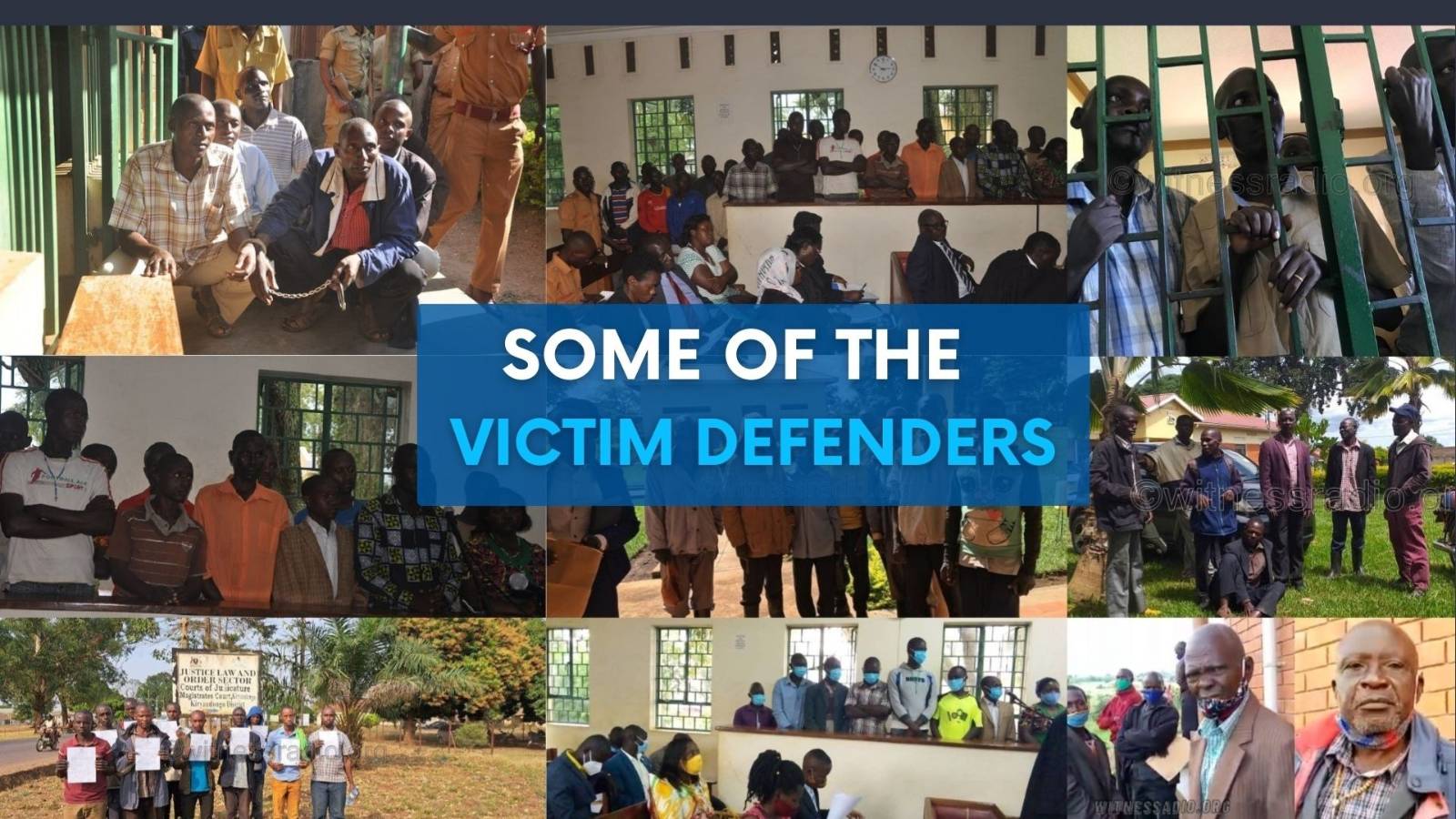
Uganda: the number of community environmental and land rights defenders targeted for challenging irresponsible business practices has reached more than 1500 victims as of June 31st, 2023.
Published
3 years agoon

A mid-year update report by Witness Radio – Uganda
From the day the Kampala government embarked on a mission to make Uganda a middle-income nation by 2020 and passed a national policy on industrialization in 2018, land became a commercialized product. For years, there’s been a notable influx of ‘investors’ with different interests in mining, oil, and gas, carbon offset tree projects, industrial farming, infrastructure, energy, and others.
The increased use of land as a commodity and the increasing demand for land has resulted in more forced land evictions. In a week, through the land eviction portal, Witness Radio – Uganda, monitors and documents between 3 to 5 cases.
In every forced land eviction case documented, the majority of investors are against people raising concerns about their blatant disregard for land acquisition procedures as prescribed by the law, and respect for land rights, the environment, and the planet, thus subjecting activists and defenders to a range of attacks, such as threats, smear campaigns, arbitrary arrest, and targeting them with Strategic Lawsuits Against Public Participation (SLAPPs).
According to Witness Radio – Uganda data, in 7 out of 10 cases of forced evictions, there are incidents where community activists and community environmental and land rights defenders are targeted with arbitrarily arrested and detention, falsely charged with limitless criminal offenses, and imprisoned.
These charges range from criminal trespass, inciting violence, threatening violence, aggravated robbery, and attempted murder to theft and others just because defenders and activists are speaking against practices that undermine the respect for human rights and projects that do not protect the environment and the planet.
Our data further reveal many incidences of judicial harassment through unfavorable bail conditions, pro-longed trials, and imprisonments that have pushed many defenders and activists to total silence.
In the Bukaleba sub-county where Green Resources established the Bukaleba forest reserve, communities reported that the project which grabbed their land is constantly causing arrests accusing them of trespass, theft, and others.
“I am right now from police to bargain the release of two of my community members. They have not been released because the police demanded some money that we did not have at the time. I feel this is too much because almost every day, police on behalf of the forest company arrest members of my community.” The Bukatube Sub-county Local Council III Chairman William Otube told our researchers in February this year.
Similarly, in the Nyairongo sub-county in Kikube district, a camp of over 100 community members reported that more than 30 community members have been arbitrarily arrested by Uganda People’s Defense Force Soldiers guarding Hoima Sugar Company, and the area police denying them access to their land and arresting whoever is founding cultivating their land. By 9 am, everyone was still in their makeshift houses.
“We cannot tend to our gardens because when you are found there, you are beaten and arrested. And to release you, the police demand huge sums of money which we don’t have, currently, we have some of us that have not been released yet.” One of the victims reported.
In Kiryandongo district, community land rights defender Fred Mwawula is one of those that have ta sted the wrath of multinational companies. He reveals that he has been arbitrarily arrested and imprisoned over 7 seven times, and slapped with different criminal charges by police on behalf of Great Seasons SMC Limited, one of the Multinational companies that have forcefully grabbed community land in Kiryandongo district.
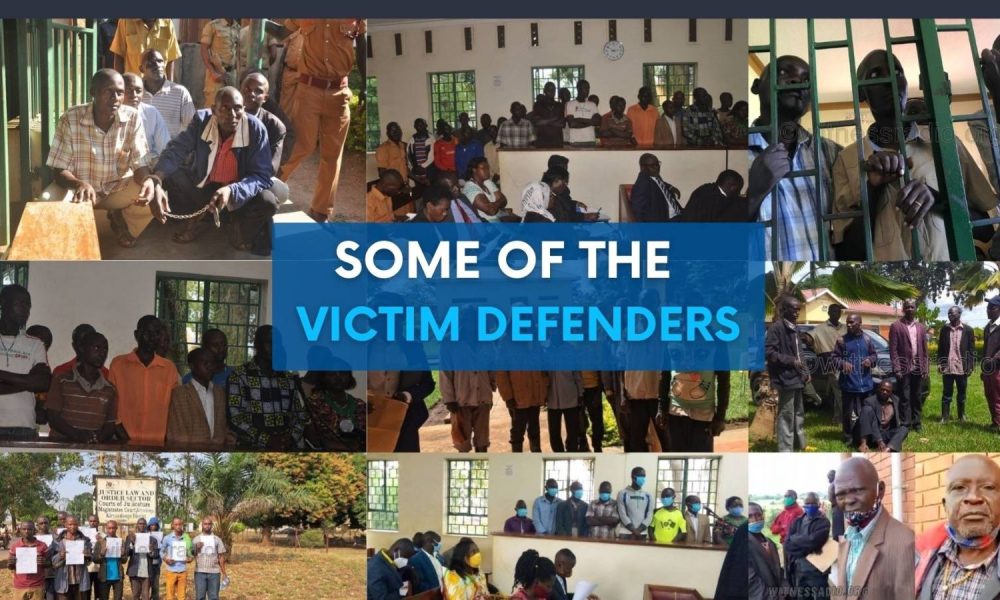
Among the cases documented by Witness Radio include the 28 community land rights defenders in the Mubende district. Grace Nantubiro, Ronald Mugwabya, focus Mugisha, Sekamana Kalori, Mwikirize Keleti, and Sewanyana Kiiza John among others were arrested on 28th August 2017. The 28 were framed, arrested, and jailed because of their stiff resistance against an illegal and forceful eviction of over 3000 inhabitants off their 322.5-hectare piece of land in Mubende Municipality, Mubende district by one Kaweesi George.
Others are Atyaluk David Richard, Akiteng Stella, Sipiriano Baluma, Mwawula Fred, Ndahimana Ramu, Kusiima Samuel, Martin Munyansia and many others have faced multiple charges orchestrated by multinational companies in Kiryandongo district.
Environmental defenders include Sandra Atusinguza, Venex Watebawa, Joshua Mutale, Sam Kayiwa, Vincent Sekitto, Ismail Kashokwa, Joseph Mujuni, Moses Mukiibi, John Kibego. The 9 defenders were challenging the giveaway of Bugoma forest for sugarcane plantation.
In Kapapi and Kiganja sub-counties in Hoima district, 14 community environmental and land rights defenders were arbitrarily arrested, charged with multiple offenses, and imprisoned and other incidents.
Torture and kidnaps:
As the struggle to protect communities’ land, environment, and the planet continues, frontline community defenders in Uganda have tasted the wrath of people and institutions that are supposed to protect them just because of raising concerns about land grabbing. For many years, the portal has documented incidences where government soldiers and police officers raiding defenders’ homes in the wee hours severely beaten, kidnapped, and detained incommunicado and tortured.
Tears streamed and streaked Mr. Mbambali Fred, a community land rights defender and a landlord in Hoima district while narrating his ordeal. With an agonizing look, he revealed that he had repeatedly been arrested and tortured for defending his land.
On one of the arrests, Mbambali narrated that he was brutally arrested at noon, on 26th December 2015 by a group of 30 Katonga police officers and Uganda People’s Defense Forces soldiers allegedly accusing him and others of refusing to leave their land. These were acting on orders of senior officers from the office of the Prime Minister in the Kampala government.
The angry and armed officers with guns and batons came on 3 government cars, and a police patrol, they found him with some village mates at Katoma Center and rounded up the whole group of 36 people.
According to Mbambali, while the rest were being loaded into the police patrol, he was first held separately and severely beaten for almost thirty minutes, he was named as a land grabber who is resisting vacating government land before tightly holding him, forcing him to fit in the already waiting full police patrol.
Profusely bleeding, he revealed that he and others were driven to Katonga police where they recorded statements before later being transferred to Kikuube police station where they were locked up in a filthy, foul-smelling small room.
“All of us the 36, were locked in a cell meant to accommodate a maximum of 10 people, and sadly during the night, our torturers brought a big group of men which was used to beat and torture us.” He revealed, adding that in a blink of an eye, the officers closed the windows that could let air into the cell with old iron sheets, making it difficult for them to breathe.
“Many of us collapsed and remained half dead. Now like me, I needed to have treatment but this was not possible until I was again transferred to another torture chamber. I was tortured and my leg and an arm got broken. My entire body and the head were severely wounded,” the defender added while displaying to us torture marks and borne fractures damaged by agents of the evictors during the scuffles.
Getting off the hook;
Despite the challenging situations and hardships; community defenders and activists have registered some achievements in their efforts to defend their land, and protect the environment and the planet.
In mid of 2023, the eight land rights defenders, Mwawula Fred, Ramu Ndahimana, Samuel Kusiima, Martin Munyansia, Martin Haweka, Amos Wafula, Eliot Talemwa, and George Rwakabisha of Kiryandongo district were set free by Kiryandongo Magistrate court. This was after their case was dismissed for want of prosecution. They were facing a charge of threatening violence after being arrested on orders on Great Seasons SMC Limited, a Kiryandongo-based multinational company growing maize and soya beans.
Other cases include Otyaluk David Richard’s case, which was dismissed in August 2022 for want of prosecution among others. These successes have been possible due to the tireless efforts of Witness Radio’s legal team that have provided criminal defense without discrimination.
“We are concerned about the high level of impunity and failure of the criminal justice systems in Uganda to detect and accept to criminalize land matters which are supposed to be of a civil nature. This method will not deal with or solve the question of land injustices instead the situation with worsen, and people will continue to lose trust in state systems which is likely to breed insecurity or lawlessness.” Jeff Wokulira Ssebaggala, the team leader at Witness Radio – Uganda.
Related posts:

Community land rights defenders that have been on trial since 2020; are set to return to court this January.
The criminal trial of two community land rights defenders and eight farmers kicks off tomorrow.
Court charges and remands two community land rights defenders and eight farmers to prison

A self-claimed landlord who masterminded the imprisonment of six community land rights defenders for three years has been arrested.
You may like
MEDIA FOR CHANGE NETWORK
Why govt is launching a comprehensive digital land registry
Published
1 day agoon
January 31, 2026
COMMENT | DAVID MUWONGE | Land has historically symbolized wealth and power. In the past, kingdoms expanded their influence by acquiring new territories.
This pursuit continued into the colonial era, spanning the 15th to the 20th centuries, with European powers scrambling for control over Africa. They were driven by a desire not just for human labour but also for large amounts of agricultural land, political power, and the raw materials needed to fuel the Industrial Revolution in the West. As a result, the distribution and management of land became increasingly complex.
In Uganda, the colonial era ushered in the 1900 Buganda Agreement, a turning point in the nation’s land history. Among its key provisions was land reform. It introduced the mailo system at the center of it all. Under this agreement, large estates were divided. About 8,000 square miles were granted to roughly 1,000 chiefs and landowners, establishing a unique land tenure system. These changes have had lasting effects on Uganda’s approach to land ownership and governance.
Over time, this structure evolved into the four land tenure systems recognized by the 1995 Uganda Constitution: customary (traditional communal or family-based ownership), freehold (absolute ownership), mailo (a system with distinct rights for owners and tenants), and leasehold (land held for a fixed term under a lease agreement, often with rent payments).
However, even as the land tenure system evolved by law to include leasehold, controversy persisted, especially regarding government land. This ongoing tension highlights the need to address historical challenges while adapting to modern realities.
This is partly because there is no comprehensive, up-to-date inventory of government land, and the Uganda Land Commission’s limited district presence. Thus, significant tests in managing and protecting government land, making it vulnerable to mismanagement and encroachment.
Recognizing these challenges, the Government of Uganda is now taking decisive steps to modernize land management systems and restore confidence in public land administration. The government is launching a digital land inventory through the Uganda Land Commission, aiming to secure, monitor, and ensure transparent management of all state-owned land.
The Uganda Land Commission (ULC), established under Article 238 of the Constitution, is tasked with holding and managing all land in Uganda vested in or acquired by the state, ensuring it is protected, put to proper use, and fully accounted for.
According to Tom John Fisher Kasenge, a commissioner at Uganda Land Commission, much of the government land has been encroached upon. Government land includes all property managed or held by ministries, departments and agencies (MDAs), government schools, health centres, hospitals, police stations, prisons, offices, farms, and army barracks. It also covers land under the National Forestry Authority. ULC is the custodian of this land and holds the titles on behalf of all MDAs.
“This inventory will also go a long way in helping to solve land disputes, wrangles and conflicts that are over land management and ownership in the country,” Kasenge remarked.
“There is a big problem now, as we talk, in distinguishing between land owned by the government and managed by the Commission; land under the Buganda Land Board; and land under the authorities, like the local governments and the cities,” Kasenge added.
“Because of that lack of accuracy in the boundaries and extent of the land and the jurisdiction of each of these bodies.”
The Land Commission’s priority is to create a digitized, accurate inventory of all government land to close information gaps. By bridging the current information divide, this initiative seeks to support proper planning, protect against encroachment, and encourage investment in projects, recognizing land as a vital national resource.
“So, planning for this land becomes very crucial at the moment that the NRM government has attracted a lot of investors, and every now and then, these investors would like to put their projects in various places around the country,” Kasenge observed. This further emphasizes the importance of reliable land records for national development.
With updated digital land records, the Commission expects to resolve disputes, reduce misallocation, and ensure efficient use of public land. These improvements are expected to build greater transparency and accountability in land administration.
Revenue Collection
Many occupants of government land are not paying ground rent largely due to limited awareness and the absence of formalized tenure, a situation that continues to affect national revenue, Kasenge revealed.
He explained that to address this gap, the Uganda Land Commission (ULC) is rolling out a new system that will regularly remind lessees of their ground rent obligations and notify them ahead of lease expiry dates, a move aimed at improving compliance.
Kasenge further noted that correcting erroneous freehold titles will allow affected lessees to regularize their tenure. This will also enable the government to collect due ground rent. He emphasizes that stronger land administration and improved revenue collection are critical to better service delivery and to ensuring government land benefits both the state and citizens.
Currently, ULC has a Financial Year revenue target of UGX 7 billion from ground rent and leases on government land. After the digitized, GIS-enabled (Geographic Information System) inventory is fully rolled out, the Commission expects collections to rise to about Shs12 billion in the first three years. Revenues are projected to gradually increase to as much as Shs40 billion in the long term.
Local governments and technical officers are playing a key role in supporting the nationwide exercise through boundary verification, data sharing and identification of government land. Their contributions include providing physical planning and land-use guidance, protecting environmentally sensitive areas, and engaging communities to raise awareness and build cooperation.
The Land Commission assures the public and current lessees that the inventory exercise is not intended to trigger evictions but is focused on documentation, compliance and improved land governance. Addressing public concerns remains central to the Commission’s approach, with an emphasis on fairness and openness throughout the process.
Uganda Land Commission has formally written to all ministries, departments and agencies (MDAs), requesting details of land under their custody and the nomination of focal persons to work with the Commission in developing a comprehensive inventory, a request that has received positive responses.
In addition, the Commission has engaged 16 town clerks from cities and municipalities. It has reviewed its own records and those of the National Land Information System (NLIS), a centralized digital platform for managing national land records, to verify government land details. The Commission has also partnered with the Ministry of Lands, Housing and Urban Development (MLHUD) to support the exercise through surveying, valuation, and titling. These collaborative efforts highlight the collective responsibility needed to address longstanding land challenges and a need to strengthen accountability, improve compliance, and enhance management of government land across the country.
As the digital registry project continues, ongoing collaboration among government agencies, local authorities, and the public will be crucial to its success. Sustained commitment and transparent communication will ensure that the benefits of improved land management are realized for all Ugandans.
Source: independent.co.ug
Related posts:

Uganda’s president stops plans seeking to review and amend the Land Act CAP 227 that sought to curb widespread illegal land evictions.
Govt launches Central Account for Busuulu to protect tenants from evictions
Govt resurrects emotive Land Acquisition Bill.
New digital tool to empower farmers to access extension services
MEDIA FOR CHANGE NETWORK
Witness Radio and Seed Savers Network are partnering to produce radio content to save indigenous seeds in Africa.
Published
4 days agoon
January 28, 2026
By Witness Radio team.
Across Africa, indigenous seeds are vital, climate-resilient, and culturally significant resources that smallholder farmers deeply value for biodiversity and food sovereignty.
Today, however, these traditional seed systems face threats from commercial seed interests, restrictive laws, and policies that may impact farmers’ rights. Addressing these concerns directly can help farmers understand how the program supports their legal and cultural rights.
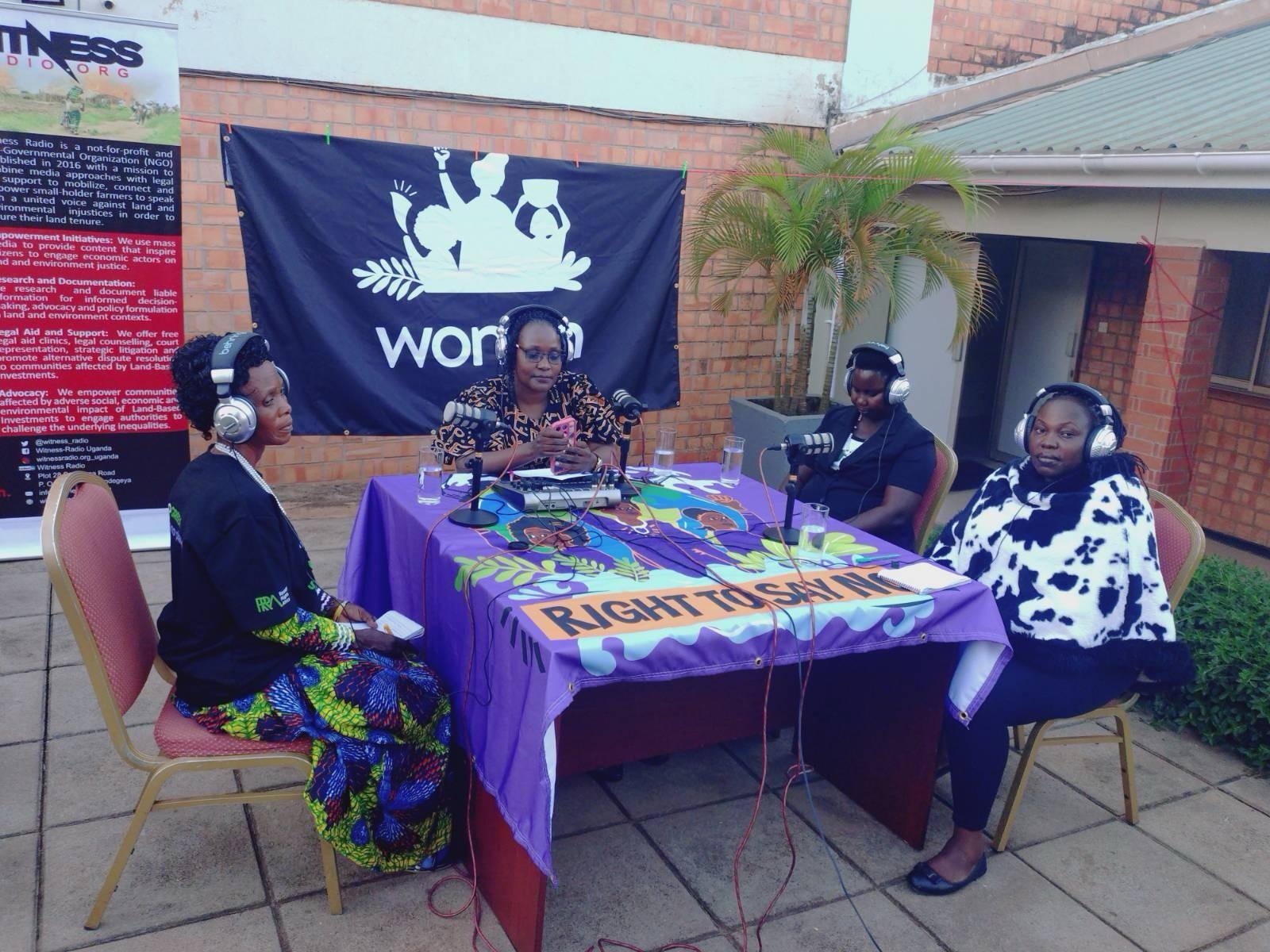
In response to this growing challenge, Witness Radio Uganda, in partnership with the Seed Savers Network (SSN) in Kenya, is launching a radio broadcast titled “The Struggle to Save Cultural Seeds in Africa.”
Witness Radio and Seed Savers in Africa aim to use the radio as a tool to organize, mobilize, and empower smallholder farmers across Africa and beyond.
Food production and consumption patterns in Africa have changed significantly since the pre-colonial era. The gradual introduction of exotic crops, the establishment of settler farms on land seized from local communities, and the shift from agroecological practices to agrochemical-dependent and mechanized agriculture have disrupted indigenous food systems.
While agribusinesses continue to generate profits, research by civil society organizations shows that these models have contributed to soil degradation, biodiversity loss, widening inequalities through land grabbing, and increased vulnerability among smallholder farmers. These historical disruptions have laid the groundwork for modern policies that further marginalize farmer-managed seed systems.
The struggle to save indigenous seeds affirms farmers’ rights to control their seeds and farming knowledge, empowering smallholder farmers to protect their food security and cultural heritage.
In 2025, the East African Community (EAC) Seed and Plant Varieties Draft Bill threatened farmers’ rights by criminalizing traditional seed practices and favoring multinational companies. This situation should motivate policymakers and community leaders to stand for farmers’ rights and food sovereignty.
In response to this emergency, it is critical to close this gap by placing smallholder farmers, Africa’s largest food producers, at the center of seed and food systems. This radio program draws inspiration from the 2025 Seed Savers Boot Camp organized by the Seed Savers Network Kenya. Held in Gilgil, Nakuru County, from the last week of October to the first week of November last year, the boot camp brought together farmers and civil society leaders from across Africa for hands-on training and learning exchanges.
Participants explored seed conservation methods and shared knowledge, fostering a movement that builds community resilience and revives traditional farming systems.
Witness Radio participated in this gathering alongside farmers, reinforcing a shared commitment to strengthening community resilience and farmer-led food systems across Africa.
This broadcast launches a new series from Witness Radio and the Seed Savers Network to raise awareness of seed saving and food sovereignty, offering practical tips and resources for farmers to actively participate in safeguarding farmer-managed seeds.
The live program will feature voices from across the continent, including Atim Robert Anaab from Trax Ghana and The Beela Project, who works to strengthen indigenous seed systems in Ghana’s Upper East and North East Regions. Other guests include June Bartuin, Executive Director of Indigenous Peoples for Peace and Climate Justice in Kenya, and Priscilla Nakato, Chairperson of the Informal Alliance for Communities Affected by Irresponsible Land-Based Investments in Uganda.
Together, the speakers will reflect on what motivated them to join the Seed Savers Boot Camp, what they learned, the current state of seed sovereignty in their countries, and how they are applying this knowledge within their communities.
The goal is to show how insights from the Seed Savers Boot Camp translate into tangible actions, inspiring farmers and policymakers to protect indigenous seeds for food sovereignty and climate resilience.
The program will air live on Witness Radio tomorrow, Thursday at 3:00 pm EAT, accessible via the Witness Radio App or online via www.witnessradio.org or https://radio.witnessradio.org/. to maximize reach and participation.
Related posts:

Seed Sovereignty: Most existing and emerging laws and policies on seeds are endangering seed saving and conservation on the African continent.
The EAC Seed and Plant Varieties Bill 2025 targets organic seeds, aiming to replace them with modified seeds, say smallholder farmers.
Happening shortly! Kenya’s upcoming court ruling on the Seed Law could have a significant impact on farmers’ rights, food sovereignty, and the country’s food system.
Know Your Land rights and environmental protection laws: a case of a refreshed radio program transferring legal knowledge to local and indigenous communities to protect their land and the environment at Witness Radio.
MEDIA FOR CHANGE NETWORK
Evicted from their land to host Refugees: A case of Uganda’s Kyangwali refugee settlement expansion, which left host communities landless.
Published
4 days agoon
January 28, 2026
By Witness Radio team.
As Uganda continues to host more refugees than almost any other country in Africa, displaced residents in Kikuube are still waiting for accountability, restitution, and the chance to live with dignity once again. This ongoing struggle should stir feelings of compassion and urgency in the audience.
More than 60,000 people occupying 9323.96 hectares (36 square miles) were displaced from villages, including Bukinda A and B, Bukinda II, Kavule, Bwizibwera A and B, Kyeya A and B, Nyaruhanga, Kabirizi, Nyamigisa A and B, Katoma, and others in Kasonga parish, Kyangwali sub-county.
The violent forced land evictions in Kyangwali date back more than a decade. Beginning in September 2013, masterminded by officials from the Office of the Prime Minister (OPM), led by the Principal Resettlement Officer Charles Bafaki, backed by the Uganda Police Force and the Uganda People’s Defence Forces (UPDF). The OPM office claimed that the contested land had been gazetted for refugee settlement, a claim former refugee host communities refute, saying they are bona fide landowners.
According to evidence seen by the Witness Radio team, most of the evictees were born on the land from the 1950s to the date they were illegally evicted.
According to Uganda’s Land Act, a bona fide occupant is a person who, before the 1995 Constitution, had occupied land unchallenged for 12 years or more, or was settled by the government. Clarifying these legal standards can help the public and policymakers understand the legal basis of land claims and potential violations.
According to the UN Refugee Agency, by the end of 2024, Uganda was hosting approximately 1.8 million refugees and asylum-seekers – the largest refugee population in Africa – reflecting a 10% increase from the previous year. The majority were from South Sudan (57%) and DRC (31%), with smaller populations from Somalia, Burundi, Eritrea, Rwanda, Sudan, and Ethiopia. Women and children made up 80% of the refugee population.
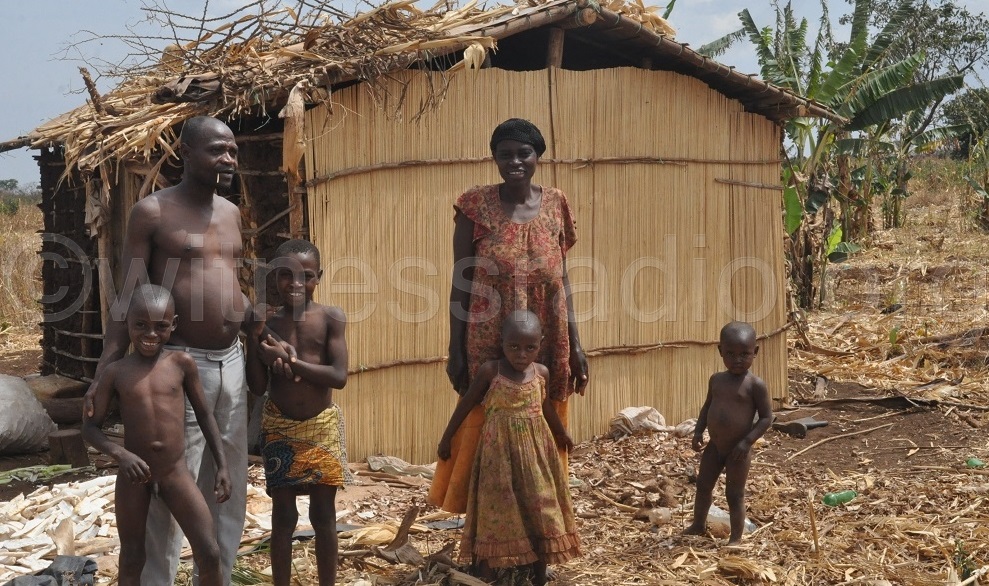
In Butyamba village, along the Hoima-Kagadi Road in Kikuube District in Western Uganda, is an informal settlement of fragile, makeshift houses that stretches across a single acre of land. It hosts over 500 people, including evictees. It’s packed tightly together, their shelters built from tarpaulins, scrap wood, and other grass thatched.
The residents, who have camped in the area since 2023, were once landowners in Bukinda and Katikala. Now, they are landless and struggling after an illegal land eviction for the expansion of the Kyangwali refugee settlement, one of Uganda’s largest refugee-hosting areas.
For many here, life changed abruptly in 2013, followed by another series of forced land evictions in 2020, at the height of the COVID-19 pandemic.
“I became a refugee in my own country,” an elderly Kabulala Oliver struggles to hold back tears as she recalls the forced land eviction that shattered her life and the lives of other members of her family.
Kabulala is among the over 60,000 people evicted from 30 villages in Bukinda, Kyangwali Sub-county. We found her together with others at the informal camp.
“When we were evicted from our land, we camped at the Kikuube Resident District Commissioner (RDC)’s premises, but this was short-lived, and we were chased away. Later, we were given this small piece of land by an area member of parliament, Hon. Natumanya,” she says.
What pains her most, she says, is that she was displaced to make room for refugees, only to become displaced herself.
“I am a Munyoro. I had lived on my land for decades. “Why should I be evicted because the government wants land for refugees? This is total impunity where the poor are not counted as humans.” Kabulala asks?
She now lives in a small makeshift shelter with a family of 13. With no land to cultivate, survival has become a daily struggle.
“My land was taken. We have nowhere to farm. We are starving every day. Children ask for food, and I don’t know where to get it. We drink dirty water,” she says.
Kabulala belongs to the Bunyoro tribe, which is constitutionally recognised as one of Uganda’s 56 indigenous communities.
The affected communities say they were never notified about the eviction or given meaningful consultation. According to Ahumuza and other witnesses, armed security personnel arrived in trucks, firing bullets, beating residents, and demolishing homes.
“In August 2013, OPM officials came and told us we had three hours to leave the land, which people had lived on for decades. They treated us like rebels. They beat people and destroyed all properties worth billions of Shillings, which forced people to scatter in all directions. After three days, refugees were ferried in and settled in our gardens where food was still growing.”
Ahumuza Businge, chairperson of the Internally Displaced Youth in Bukinda and Katikala. recalls
After the eviction, many families fled to Kyangwali sub-county headquarters, seeking refuge. Others later settled in an Internally Displaced Persons (IDP) camp in Butyamba, near Kiziranfumbi town, an area with no permanent services, such as water, toilets, and other essentials.
“You can also see how people are suffering. When our loved ones die, we have nowhere to bury them. Children don’t go to school. People die every day because there is no food, there is no water, and our temporary toilets are almost full,” Mbambali Fred, a former resident of Bukinda, whose land was also taken despite having a lease title, told Witness Radio.
Mbambali says his land was grabbed at gunpoint and misused. “I had a land title, but my land was forcefully taken and used to settle people who are not even refugees. Part of it is hired out for maize farming while I, the land owner, suffer.” He added.
In 2020, during the COVID-19 lockdown, the same government security forces forcefully evicted another group of more than 20,000 people from 1812.99 hectares (7 square miles) of land. Victims revealed that security forces sealed off their area under the pretext of a disease outbreak. Journalists and political leaders were barred, and evictions resumed quietly.
According to the ministry responsible for lands, housing, and urban development’s then guidelines, during COVID-19, no land evictions were to take place. On April 16th, 2020, the government of Uganda, through the Ministry of Lands, ordered a halt to all land evictions during the ongoing COVID-19 pandemic. The same ministry directed all local governments and security agencies to enforce the order, but the OPM disregarded it.
Today, many of the evictees live in IDPs who are framed as encroachers on their land, landless, impoverished, and dependent on casual labor. Unable to farm, families struggle to feed themselves, educate their children, or rebuild their lives.
Thirteen years after the first eviction, the affected communities say they have reached out to all concerned offices, including the president’s office, for justice, but in vain.
“The land was our life. Without it, we are nothing.” Mbambali reacts
Related posts:

MPs investigating possession of Kyangwali refugee land titles by individuals
Museveni grants avocado growing investor 5 square miles of refugee camp land
Indigenous communities lost over 9 square miles; coerced to accommodate refugees
Adjumani officials worry as refugees strip the land bare
Why govt is launching a comprehensive digital land registry
Witness Radio and Seed Savers Network are partnering to produce radio content to save indigenous seeds in Africa.
Evicted from their land to host Refugees: A case of Uganda’s Kyangwali refugee settlement expansion, which left host communities landless.
Women environmental rights defenders in Africa are at the most significant risk of threats and attacks – ALLIED New report
Will Uganda’s next government break the land-grabbing cycle?
Women environmental rights defenders in Africa are at the most significant risk of threats and attacks – ALLIED New report
Swedish pension fund drops TotalEnergies amid rising EACOP risks
Land tenure security as an electoral issue: Museveni warns Kayunga land grabbers, reaffirms protection of sitting tenants.
Innovative Finance from Canada projects positive impact on local communities.
Over 5000 Indigenous Communities evicted in Kiryandongo District
Petition To Land Inquiry Commission Over Human Rights In Kiryandongo District
Invisible victims of Uganda Land Grabs
Resource Center
- Land And Environment Rights In Uganda Experiences From Karamoja And Mid Western Sub Regions
- REPARATORY AND CLIMATE JUSTICE MUST BE AT THE CORE OF COP30, SAY GLOBAL LEADERS AND MOVEMENTS
- LAND GRABS AT GUNPOINT REPORT IN KIRYANDONGO DISTRICT
- THOSE OIL LIARS! THEY DESTROYED MY BUSINESS!
- RESEARCH BRIEF -TOURISM POTENTIAL OF GREATER MASAKA -MARCH 2025
- The Mouila Declaration of the Informal Alliance against the Expansion of Industrial Monocultures
- FORCED LAND EVICTIONS IN UGANDA TRENDS RIGHTS OF DEFENDERS IMPACT AND CALL FOR ACTION
- 12 KEY DEMANDS FROM CSOS TO WORLD LEADERS AT THE OPENING OF COP16 IN SAUDI ARABIA
Legal Framework
READ BY CATEGORY
Newsletter
Trending
-
MEDIA FOR CHANGE NETWORK1 week agoWomen environmental rights defenders in Africa are at the most significant risk of threats and attacks – ALLIED New report
-
MEDIA FOR CHANGE NETWORK2 weeks agoUganda moves toward a Bamboo Policy to boost environmental conservation and green growth.
-
FARM NEWS1 week ago200 farmers demonstrate at parliament, worried about new seed monopoly
-
MEDIA FOR CHANGE NETWORK4 days agoEvicted from their land to host Refugees: A case of Uganda’s Kyangwali refugee settlement expansion, which left host communities landless.
-
MEDIA FOR CHANGE NETWORK4 days agoWitness Radio and Seed Savers Network are partnering to produce radio content to save indigenous seeds in Africa.
-
MEDIA FOR CHANGE NETWORK1 day agoWhy govt is launching a comprehensive digital land registry