
MEDIA FOR CHANGE NETWORK
Insights for African countries from the latest climate change projections

Related posts:

 Climate change has reduced agricultural productivity by 34 percent in Africa
 Africa warming faster than rest of world: IPCC Sixth Assessment Report
 Africa must unlock the power of its women to save climate change
 African women unite on the frontlines of the Climate Crisis












MEDIA FOR CHANGE NETWORK
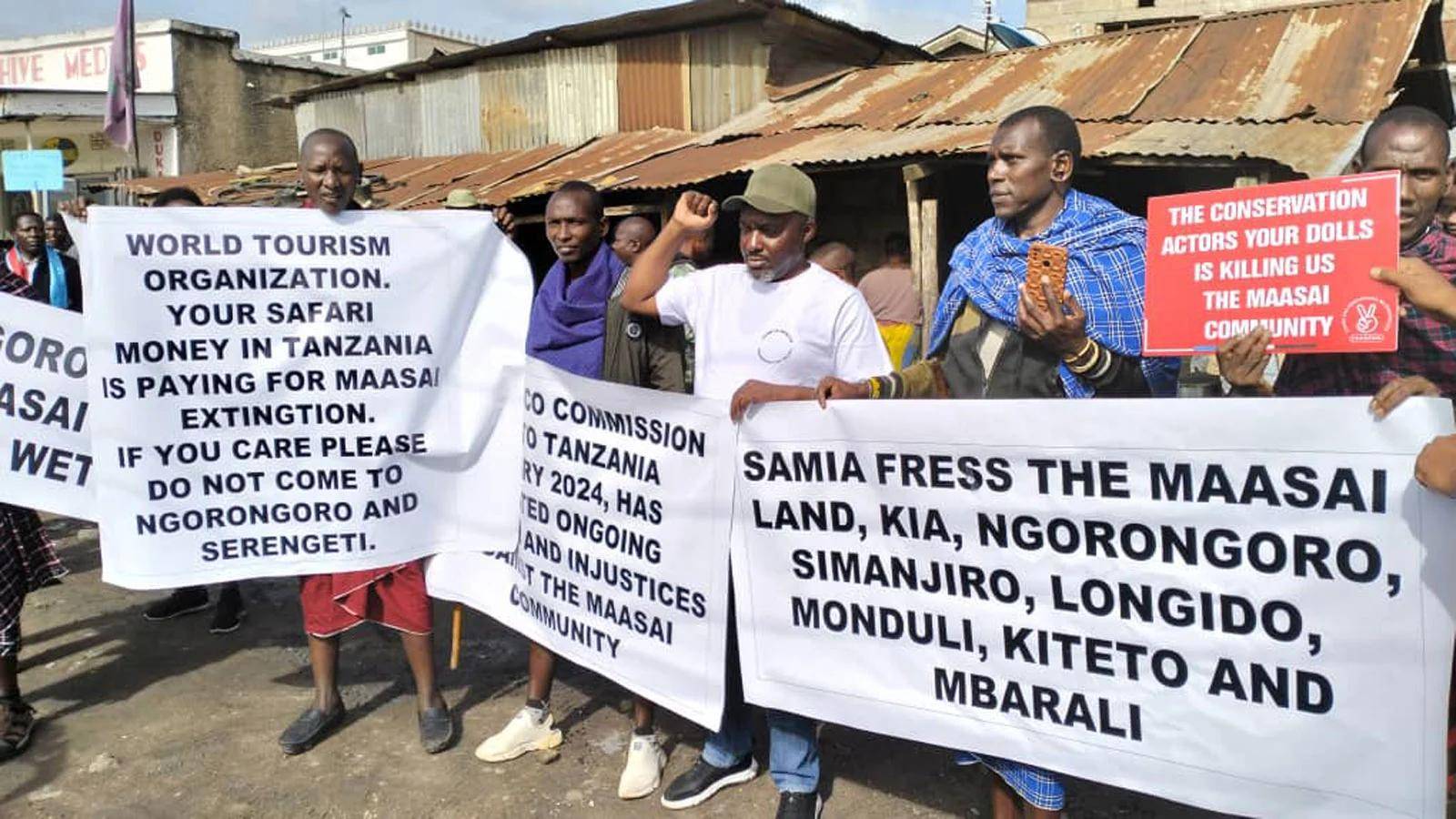
Defending ancestral land comes at a steep price as Maasai communities in Tanzania face relentless, mounting pressure.
Related posts:
 Maasai protest evictions from Ngorongoro as UN experts warn conservation must respect rights
 Tanzania: Commissions call for mass eviction of Indigenous Maasai from world-famous tourist destinations.
 More than 17,000 people in the Philippines face eviction from their ancestral land for a multimillion-dollar energy project.
 Tanzanian Government Abducts Maasai Villagers in an Unconscionable Attack on Indigenous Land Defenders
MEDIA FOR CHANGE NETWORK
As waves of investment sweep across Uganda, countless women rise to defend their land, safeguard their traditions, and claim their right to be heard.
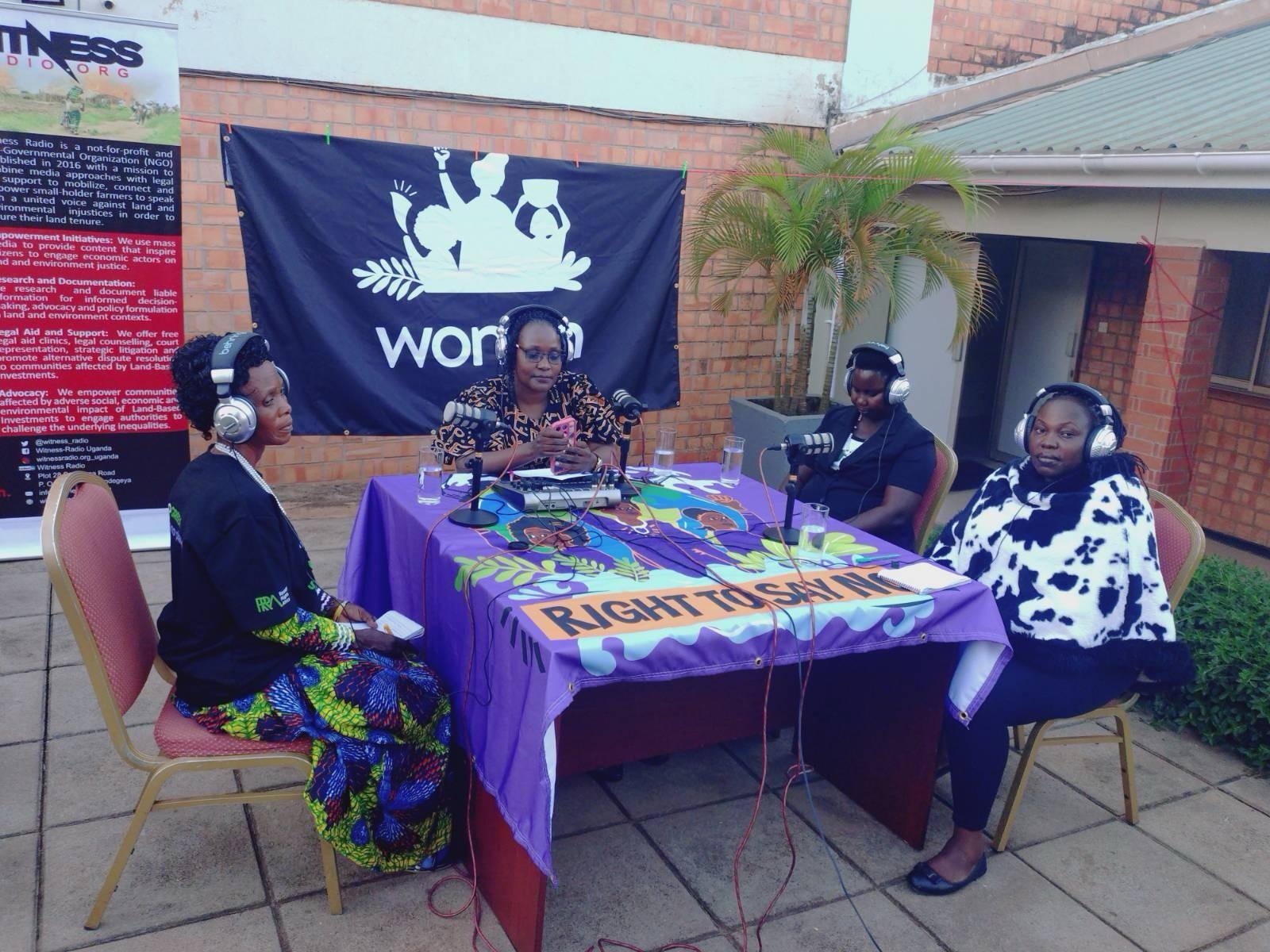
Related posts:

 In memory of land and investment women victims in Uganda on the International Women’s Day 2021
 Women’s Climate Assembly, 2024: African women vow to protect human and environmental rights amidst an influx of destructive land-based investments on the continent.
 Thirteen years after the Karuma Hydropower Project broke ground, countless people forced from their homes are still waiting for the compensation and resettlement they were promised.
 Land as a security issue: endless forced land evictions and impunity threaten Uganda’s peace, lawlessness on the rise.
POKHARA, Nepal — Before Binita Bishwokaarma understood Nepal’s property laws, she understood the work required to sustain a farm.
Growing up in the village of Sindhupalchok, east of the capital, Kathmandu, she spent much of her time helping her mother around the house and in the fields while her father worked in the city. It’s a common scenario in Nepal, where gendered divisions of agricultural labor are widespread.
For Bishwokaarma, that meant she and her mother grew maize, potatoes, garlic and other vegetables. She participated in the entire agricultural cycle, from preparing fields and planting crops to harvesting them. She enjoyed plowing the most, but it was physically demanding because the family lacked modern machinery.
“We didn’t have tractors,” she said. “So, everything, start to ending, we had to do with our own hands. It was really hard.”
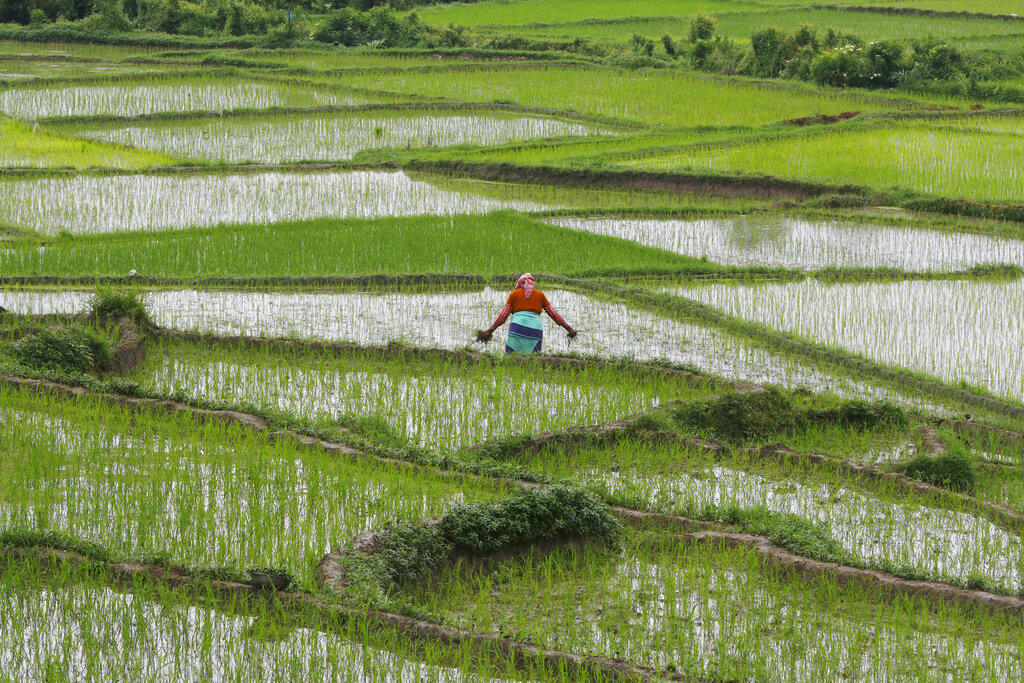
It’s what many women and girls experience. And yet, their prospects for owning the land they tend are slim: Despite gender equality under the law, in Nepal, property rights rest mostly with men.
Still, it’s women — accounting for nearly 70% of the country’s farming population — whom Bishwokaarma credits most with caring for the land. Throughout her childhood, she saw how dedicated women were to conserving their environment. She explained that many women learn from childhood how to keep the soil healthy and reduce pests naturally through mixed cropping, crop rotation and intercropping.

But these aren’t the only techniques women in Nepal use to take care of the land they use. Bishwokaarma said women use farmyard manure made from cow or buffalo dung, compost from kitchen waste and plant residues instead of chemical fertilizer. They even use natural pesticides made from neem leaves, garlic, chiles, ash, cow urine or local herbs to reduce insect damage. Around the fields, they plant flowers and local plants that attract bees, butterflies and other pollinators to help increase crop production as well.
To Bishwokaarma, women play a vital role in protecting land through agricultural practices.
“The men don’t know the exact process of farming,” she said. “Women dedicate their life to the land, and I have seen that my mother, aunts, my friends, were all experts in every agriculture process—yet all of the property, our house, our land, everything is in my father’s name.”
The imbalance Bishwokaarma describes extends well beyond her family.
The National Agricultural Census of 2021-22 found that just 20.8% of adult women involved in farming in Nepal have secure ownership rights to agricultural land, compared with 42.9% of men. Traditional gender-based divisions in agricultural work are also still common, although widespread male out-migration has forced a shift in these roles, often increasing the physical burden on women.
The inequalities in land tenure are not unique to Nepal, and they reflect a broader pattern that extends beyond the country’s borders.

Global gender imbalance
Across the Global South, women play a central role in agriculture while continuing to face unequal access to land and property rights. Globally, women account for less than 20% of landholders, and only 37% of countries guarantee equal land rights for women and men, according to U.N. figures.
Yet studies show that women’s access to secure land tenure is linked to higher agricultural productivity, lower food insecurity, reduced poverty and slower environmental degradation. A 2024 global evidence review by the nonprofit Landesa revealed growing evidence that secure land rights also help women adapt to climate change while supporting sustainable forest management and conservation.
George Washington University has reported similar findings. An international law and policy brief covering Ecuador, Mexico, Nepal and Peru stated that secure land ownership is associated with lower deforestation and more successful reforestation. In Uganda and Ethiopia, researchers found landholders with secure tenure were more likely to invest in soil conservation and climate resilience.
Plus, the benefits of land ownership go beyond individual women. “When women have access and rights to land, the economic benefits extend to their households and their communities,” the World Resources Institute reported, pointing to research showing women contribute more of their income to the household than men do, thereby improving education, health and food security for children.
Despite all this, land ownership remains dominated by men, even nonagricultural land. When it comes to Nepal, men are roughly twice as likely to own property, with only about 11% of women owning land overall.
“Even now, the modern law and Constitution give full rights to women, but it’s not implemented properly,” said Tanuja Pariyar, project coordinator in Pokhara, Kaski district, for the Feminist Dalit Organization (FEDO), an NGO dedicated to fighting caste- and gender-based discrimination.

Nepal has introduced a series of legal reforms over the past two decades to reduce gender disparities in land ownership. In 2002, the 11th amendment to the civil code granted daughters a share of ancestral property by birth, but women still lost those rights upon marriage. That was changed in 2017, when legal gender-based discrimination in property inheritance was eliminated.
However, these legal reforms haven’t changed social norms that continue to shape who controls land and who benefits from it. By 2011, about 19% of households reported women owning land or property, but many women remained excluded from key decisions.
“For property decisions from taking a loan to selling something, most of the time the decisions are taken by the man,” Pariyar said.
Pariyar’s comment is bolstered by research that shows gender imbalances in decision-making powers within farming regions can harm not only women — but the community as a whole. “When women lack the tools, information and decision-making authority needed to implement adaptive strategies, the resilience of entire farming systems is compromised,” according to a 2025 study in Frontiers in Sustainable Food Systems.
“Nepal is a patriarchal system because it’s a historical system,” Pariyar said. “This is a male-dominated society, and they don’t want to give power to women because they don’t trust it. That is the first issue.”
Patriarchal expectations
For women like Bishwokaarma, who is now a law student, those norms were learned early.
Although she worked closely with the land, she and many other women were taught from a young age that neither the family home nor the land belonged to them. Instead, all of the property belonged to the men in the family. Since she was raised in a patriarchal household where most major decisions were made by her father, she grew up surrounded by traditional beliefs and social norms that shaped expectations about ownership. Even though women are not legally barred from owning land today, these expectations often discouraged them from pursuing ownership.
As she grew older, Bishwokaarma began to see how those expectations affected her own mother. She said her mother often expressed frustration that despite years of laboring for the family, she remained dependent on her husband because she lacked property and financial security of her own that restricted her from making important financial decisions.
“It’s human nature because when you do lots of hard work and you never get appreciated for that work, obviously you get frustrated,” Bishwokaarma said. “That’s why she told me to get an education and become independent on my own.”
For advocates working on women’s rights in Nepal, that kind of independence begins with schooling.
Rabina G. Rasaily, FEDO executive director, says educating women is important when it comes to land ownership and its benefits. In her view, ownership is about more than legal rights. It can influence access to resources, decision-making power and economic security. Rasaily said that when women gain access to land, the benefits can positively affect future generations through improvements in health, an increase in educational opportunities and an increase in investments in homes and businesses.
These benefits also extend into conservation in Nepal. WRI research shows that in Banpale Community Forest, where women are guaranteed rights to the communal land, women have been inspired to actively participate in sustainable forestry and engage in climate adaptation training. These trainings include forest fire management, water conservation, landslide and soil erosion preventions and human-wildlife conflict avoidance strategies.

Understanding their rights
Realizing those benefits often depends on women understanding the rights available to them — yet many women do not, Rasaily said.
“There were some times when we’d have conversations and they would say, ‘Oh really? We can even own land, or property or a building?’” Rasaily said. “It’s beyond their thinking sometimes.”
However, the lack of individual ownership is not always viewed as a problem by women living within the system. For some, security comes through the family rather than personal ownership, which was the case for 28-year-old Mamta Kaushal.
Kaushal grew up with her two sisters and brother in the rural village of Tadapani in Nepal’s Annapurna region. She married at 18 and moved 50 kilometers (30 miles) to Pokhara city, to live on her husband’s property. The house and land where she now lives are ancestral property that have been passed down through generations. Although the property is not registered in her name, Kaushal said she doesn’t see it as a bad thing — she views it as a shared resource.
“It doesn’t matter, the name or register in which family member it is in,” she said. “Because we are in the same family.”
Kaushal works the family’s land. She grows plants like maize, wheat and potatoes throughout the seasons when the soil isn’t resting from the last crop and raises buffaloes on parts of their land. Kaushal sees her work as her duty to contribute to the family’s financial stability, provide food security to her family and keep the land productive through cultivation in order to preserve it for future generations.
For women who do want to acquire their own property, Kaushal expressed how access to property is less of a concern than it once was. She said she has not personally seen many women struggle to acquire property on their own because women can now earn income through wage labor or selling produce, textiles and clothing.

Kaushal also said women have greater opportunities to purchase land independently through a reduction in property registration fees the Nepal government offers for land registered in a woman’s name. Through this discount, women get 25-50% off fees associated with land purchases or transfers, rather than reducing annual property taxes. The rebate aims to empower women by incentivizing them to hold land ownership.
For Bishwokaarma, however, the issue is not whether women can own land, but whether they are encouraged and supported in doing so.
“Personally, I hope that more women in Nepal will not only have legal rights to property but will feel confident enough to claim and use those rights,” Bishwokaarma said. “I think education, legal awareness and economic opportunities are important in helping bridge the gap in land ownership.”
While Nepal’s laws have improved, Bishwokaarma said social attitudes and family practices must also change if women are to fully benefit from them. In her view, land ownership can provide security, promote independence and give women a stronger voice in family and community decisions.
“When a woman owns land or property, she often has more control over her future and has greater economic stability,” Bishwokaarma said.
Because of that, she said Nepal’s challenge is no longer expanding legal protections, but ensuring existing laws are effectively implemented and understood by the women they are intended to serve. Looking ahead, she said future governments should focus on increasing awareness of property rights, improving access to information and creating greater economic opportunities for women.
“If those areas are improved, the ownership gap may gradually become smaller,” Bishwokaarma said. “But I think social change is often slower than political change, so it may take time to see the full impact.”
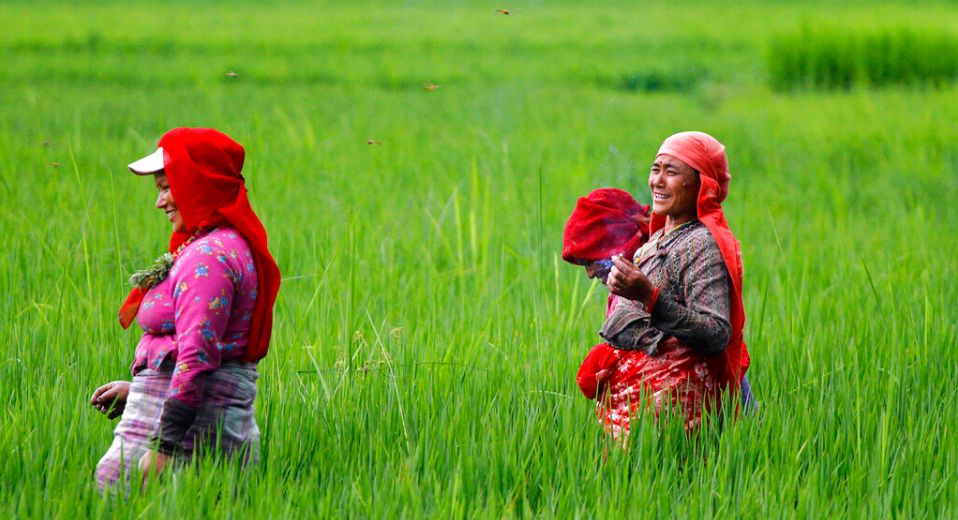
Banner image: Women work in a paddy field at Uttarbahini village, on the outskirts of Kathmandu, Nepal. Although many women work in agriculture, land ownership is largely held by men in Nepal. Image by AP Photo/Niranjan Shrestha.
This story is published through a collaboration between Mongabay and the University of Montana’s School of Journalism. Students traveled to Nepal in May 2026 to report on wildlife, conservation and other environmental issues. You can read more about the program here.
Source: mongabay.com
Related posts:
 Indigenous communities in Eastern Nepal accuse the World Bank’s Linked Cable Car Project of rights violations.
 Women’s groups demand equality in land tenure security to boost food production.
Statement by Witness Radio- Legal Aid Clinic on International Women’s Day 2026; Scaling Up Investment to Accelerate Access to Justice for Women and Girls Defending Land and Environmental Rights
Women’s groups demand equality in land tenure security to boost food production.
Statement by Witness Radio- Legal Aid Clinic on International Women’s Day 2026; Scaling Up Investment to Accelerate Access to Justice for Women and Girls Defending Land and Environmental Rights
 Upholding Women’s Land Rights in the implementation of development projects will accelerate progress.

As World Bank Holds Annual Meetings, 84,000 Tanzanians Call for Justice

Teso farmers revamp grapefruit growing

Defending ancestral land comes at a steep price as Maasai communities in Tanzania face relentless, mounting pressure.

As waves of investment sweep across Uganda, countless women rise to defend their land, safeguard their traditions, and claim their right to be heard.

While hunger continues to grip the world, a new report highlights forests and forest foods as a hidden treasure trove of nourishment.

Five years after Uganda’s National Action Plan on Business and Human Rights, are local communities hosting land-based investment projects seeing change?

Lango ex-combatants count losses after dry spell destroys maize harvest

Alert: Land degradation is emerging as a pressing threat to global security.

Innovative Finance from Canada projects positive impact on local communities.
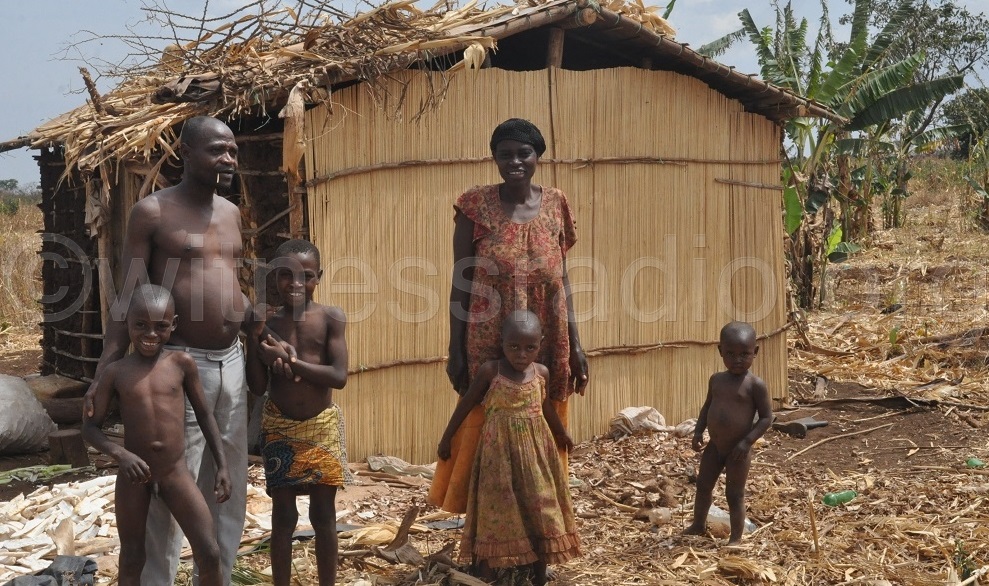
Over 5000 Indigenous Communities evicted in Kiryandongo District

Petition To Land Inquiry Commission Over Human Rights In Kiryandongo District

Invisible victims of Uganda Land Grabs
-
 MEDIA FOR CHANGE NETWORK2 weeks ago
The global race for clean energy minerals is leaving communities grappling with conflicts and human rights abuses, a new report reveals.
-

 MEDIA FOR CHANGE NETWORK1 week ago
Across Africa, the push for a greener future is putting new pressure on local communities, as recent ILC case studies highlight.
-

 MEDIA FOR CHANGE NETWORK1 week ago
Sweeping investments are fueling widespread land grabbing and deepening rights violations across Uganda – Report.
-
 MEDIA FOR CHANGE NETWORK1 week ago
Who will shape the future of East Africa’s seeds? Youth and civil society are sounding the alarm over a proposed regional law.
-
 FARM NEWS2 weeks ago
Govt pushes natural regeneration to restore 8.4 million hectares
-
 MEDIA FOR CHANGE NETWORK2 days ago
Court remands 10 anti-oil activists as suspect collapses in dock
-
 NGO WORK2 days ago
Tanzanian Government Abducts Maasai Villagers in an Unconscionable Attack on Indigenous Land Defenders
-
 FARM NEWS1 week ago
Can Agroecology Improve the Resilience of African Smallholder Farmers?