Connect with us

MEDIA FOR CHANGE NETWORK

Uganda’s president stops plans seeking to review and amend the Land Act CAP 227 that sought to curb widespread illegal land evictions.

Published

on

By Witness Radio team.

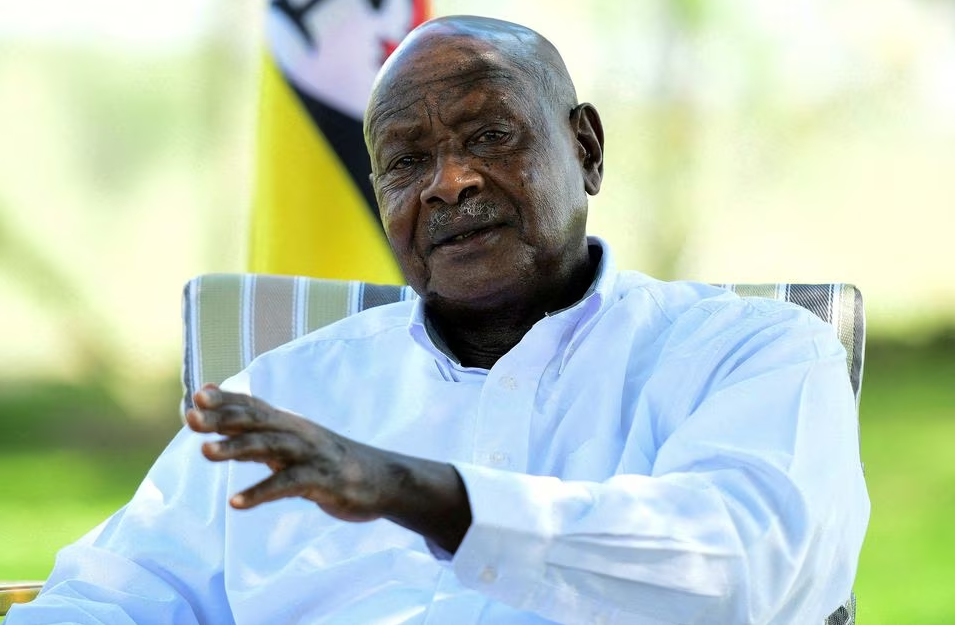
President Yoweri Kaguta Museveni Tibuhaburwa has halted the tabling of land act reforms, saying Uganda has more serious problems to deal with than those issues arising from the current land law.

Earlier this year (2023), the Ministry of Lands, Housing and Urban Development announced plans to amend the act to strengthen the rights and obligations of Lawful and Bonafide Occupants on registered land to curb illegal land evictions.

The ministry wanted the Act to provide for; where to deposit nominal ground rent (Busuulu) in instances where the landlord is absent; rejects the ground rent; and where landlord cannot be found; the registration of landlords and their respective tenants through a register that shall be kept at the Sub-County level; Establishment of Mediation Committees in Landlord-tenant areas to mediate disputes; the mandatory visiting of locus by judicial officers in all cases before an order of eviction is granted and; reviewing the provisions on ground rent to provide for economic rent in urban areas as opposed to nominal rent in rural areas.

The second area the ministry wanted to focus on in the amendment process, was to amend the Land Act to streamline the functionality of Land Management institutions namely; District Land Boards, City Land Boards, Areas Land Committees, District Land offices, and traditional land management institutions in respect to; Inspection, allocation and management of land in districts and cities; reviewing membership and qualifications for members of Land Management Institutions taking into account the new administrative boundaries of cities and districts; establishing City Land Boards and their membership; providing for approval of District/ City Land Boards by the Minister responsible for Lands upon appointment by District Councils. (In the printing of the Land Act Section 58(1) was inadvertently omitted yet it was passed by parliament); reviewing the qualifications, roles, and responsibilities of the Secretary to the District/City Land Board; and Providing for the Role of Chief Administrative Officer/Town clerk in the management of Land under their jurisdiction as provided for under the Public Finance Management Act, 2015 among others.

In other areas, the ministry wanted to amend the Act to provide for the establishment of a Customary land register and create the proposed Customary Certificate of Title in the National Land Policy 2013 as a form of registration for land held under Customary Tenure; and provide for the management, allocation, renewal, surrender, and variation of leases under the Management of Uganda Land Commission, District Land Boards and City Land Boards among other issues.

The proposed reforms had brought some relief across the land justice actors with hopes that serious gaps, which have been used to illegally evict local communities off their bibanja or land will be bridged. With the above interests, many civil society groups embarked on national consultative processes to collect views and comments to contribute to the amendment process.

According to Witness Radio – Uganda’s data, many bibanja holders have been illegally evicted by their landlords on the grounds of not paying a nominal ground rate. Many victims accuse landlords of deliberately refusing the nominal ground rate while others hide in order not to be paid.

According to local media, while addressing the Cabinet meeting last week, President Museveni halted all reforms in the land Act land saying, the cabinet should focus on the Parish Development Model (PDM).

PDM is a Government strategy or approach for organizing and delivering public and private sector interventions for wealth creation and employment generation at the parish level as the lowest economic planning unit.

Museveni is counting on PDM to reduce poverty in households.

Uganda remains one of the poorest countries in the world. In 2019/2020, 12.3 million people (30.1% of the population) lived below the poverty line of U.S. $1.77 per person per day (Uganda Bureau of Statistics, 2021).

Continue Reading

MEDIA FOR CHANGE NETWORK

StopEACOP raises alarm over €1.5bn back door funding for TotalEnergies

Published

on

  • StopEACOP coalition says €1.5bn bond creates “back door” funding channel for EACOP and Mozambique LNG.
  • Over 40 global banks previously declined direct EACOP financing on ESG and climate grounds.
  • Coalition calls for shift from project exclusions to client based exclusions.

The StopEACOP coalition has raised alarm over a €1.5bn bond issued by TotalEnergies this week, arguing that the transaction exposes a critical gap in global banks’ ESG and climate commitments.

According to the coalition, several international banks that had publicly distanced themselves from the controversial East African Crude Oil Pipeline project participated in underwriting the bond. While more than 40 global banks have declined to directly finance EACOP, campaigners argue that facilitating corporate bond issuances for TotalEnergies effectively provides the company with unrestricted capital that can be allocated to any of its projects.

These include both EACOP and the Mozambique LNG development in Mozambique, another project facing sustained international scrutiny.

Among the banks that had previously announced they would not support EACOP are Société Générale in 2021, followed in 2022 by HSBC, Intesa Sanpaolo, J.P. Morgan and Mizuho. BBVA made a similar announcement in 2025.

Campaigners argue that although these institutions avoided direct project finance exposure, their participation in corporate level fundraising undermines the intent of those commitments. Bond proceeds are typically unrestricted, enabling companies to allocate capital internally, including to subsidiaries such as EACOP Ltd.

Zaki Mamdoo, StopEACOP Campaign Coordinator, said banks were seeking reputational protection while maintaining financial relationships that sustain fossil fuel expansion. He argued that bond underwriting allows lenders to benefit from fees and returns while distancing themselves from direct project finance scrutiny.

The coalition maintains that the €1.5bn raised strengthens TotalEnergies’ ability to internally finance projects that have struggled to attract external lenders due to environmental and social risk concerns. Recent risk briefings from BankTrack noted that public pressure has made it increasingly difficult for EACOP sponsors to secure conventional project finance.

EACOP, a planned 1 443 km heated crude oil pipeline linking oilfields in western Uganda to the Tanzanian coast, has faced sustained opposition over land acquisition, biodiversity risks and human rights concerns. Project affected communities in Uganda have reported land disputes and delayed compensation, while activists allege judicial and security pressures against opponents of the development.

Rachael Tugume, a project affected person from Hoima, said that once TotalEnergies channels internal funding to EACOP Ltd, the capital raised through bonds becomes directly linked to on the ground impacts, including land loss and livelihood disruption.

The coalition has called on banks to move beyond project specific exclusions and adopt client based exclusions. Under such a framework, financial institutions would decline to finance companies pursuing projects deemed incompatible with climate and human rights commitments, rather than simply avoiding individual transactions.

As TotalEnergies, alongside project partners including CNOOC and host governments in Uganda and Tanzania, continues to target first oil by July 2026, the financing structure behind the project is drawing renewed scrutiny from civil society.

Diana Nabiruma of the Africa Institute for Energy Governance said banks must align their financing practices with stated commitments to human rights, biodiversity protection and climate leadership. She argued that continued capital market support for companies expanding fossil fuel infrastructure erodes public confidence in ESG frameworks.

The controversy highlights a broader debate within global finance over the effectiveness of project level exclusions in driving climate aligned capital allocation. For African energy markets seeking to balance development priorities with environmental safeguards, the outcome of this debate will carry significant implications for future upstream oil and gas financing across the continent.

Source: greenbuildingafrica.co.za

Continue Reading

MEDIA FOR CHANGE NETWORK

85-year-old widow recovers her grabbed land after daughter-in-law convicted

Published

on

By Witness Radio Team

Epronanci Eden’s prayers have finally been answered after her daughter-in-law was arrested and arraigned before the Chief Magistrate’s Court in Oyam District for assaulting her over land.

The court convicted and sentenced Joy Amolo to a caution, but the real victory for the 85-year-old widow was the return of her grabbed land.

The widow, the sole surviving child of her late father Okello Adong, had inherited a 50-acre large piece of land in Adebe Cell, Western Ward, Kamdini Town Council in Oyam District along the Gulu-Kampala Highway.

Blessed with 15 children, the mother had given portions of the land to her six surviving children, including five girls and one boy. However, the third last born child named Lawrence Opio, had become greedy and grabbed part of the land, thinking his mother was too old to fight back.

“I inherited a large piece of land in Kamdini Town Council along Gulu-Kampala Highway. Of course, I got married and produced 15 children, including eight boys and seven girls. When my husband, who was a soldier called Charles Edonga died several years ago, I decided to return to my father’s land,” says Eden.

Eden’s children grew up in Kamdini and the widow had given them portions of land where they could survive.

“But as they grew and became adults, my only surviving son became big-headed and he wanted now to own everything seeing that I’m already too old to face him,” says the widow, adding that she went through a lot of violence which was being perpetrated by both her son and the daughter-in-law.

With the help of the local leaders, the widow lodged a complaint at Kamdini Police Station in July 2024.

In August 2024, police leadership in Kamdini then referred the case to Redeem International, a nonprofit organisation that partners with local law enforcement to prevent violence and exploitation against widows, widowers and orphans.

“When we accepted the case in March this year and took it over, we supported the police in their investigations and in the process of the investigations, we found that the widow was assaulted by her daughter-in-law. Her son also took some pieces of land that belonged to the widow and he also started the process of titling the land in his name,” says Counsel Prossy Akello, an attorney working with Redeem International.

“So, when the mother objected, that is when now the son’s wife – the daughter-in-law – ended up beating her (Eden).”

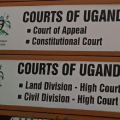
In September 2025, Eden’s daughter-in-law was arrested for assault and occasioning bodily harm. She was arraigned before the Chief Magistrate’s Court in Oyam where she pleaded guilty as charged.

But then the clan leaders requested the trial magistrate to allow them first to mediate the matter since it was coming out as a result of a land dispute.

Counsel Akello says the parties were referred for mediation.  “On October 13, 2025, we came on the ground. We called the children of the widow plus the widow; the clan leaders were there. So, during the mediation, they agreed that yes, the widow was assaulted and the daughter-in-law actually asked for forgiveness,” said the lawyer.

The widow said she forgave her daughter-in-law. “I asked her to give me Shs300,000 UGX about 83.46 USD which I had spent on medical bills and she accepted. My son also agreed to return the three and half acres of land that he had earlier grabbed from me,” said the widow.

At this point, a team of lawyers at Redeem International, Lira Field Office, wrote to the Lira Zonal Lands office to stop the process of titling the land in Opio’s name.

“So, when we went back to court on December 10, 2025, of course, the daughter-in-law pleaded guilty and then she was convicted on her own plea and sentenced to a caution,” Counsel Akello says.

She adds: “And of course, she was cautioned not to come back and again disturb the mother-in-law and on December 18, 2025, we restored her back to the land.”

The widow is now overjoyed, grateful for the justice served and the return of her rightful property.

Nonetheless, the incident highlights the challenges faced by elderly parents in Uganda, who are often vulnerable to land grabbing by their own children. The widow’s courage in seeking justice and the swift action by the authorities have sent a strong message that such injustices will not be tolerated. The widow can now live out her remaining years in peace, knowing her land is secure.

Continue Reading

MEDIA FOR CHANGE NETWORK

CSOs push for reforms at the KFW Accountability Mechanism after experts discovered that it has weak remedies in addressing grievous harms caused by its investments.

Published

on

By Witness Radio Team

Germany’s state-owned development bank, KfW, is facing renewed scrutiny as Civil Society Organizations (CSOs) issue detailed recommendations to reform its Complaint Mechanism, citing systemic failures to prevent harm, address reprisals, and ensure accountability in projects it finances across developing countries.

The recommendations follow the release of “Irresponsible Banking”, a report by the Coalition for Human Rights in Development launched in September 2025, which documented alleged links between KfW-backed projects and land dispossession, environmental degradation, and threats against human rights defenders (HRDs).

The report documented cases in Indonesia, Mexico, and Tanzania in which affected communities claimed to have faced intimidation, livelihood losses, and violations of their right to Free, Prior, and Informed Consent (FPIC) by KFW-backed projects.

In response, a coalition of organizations, including Asia Indigenous Peoples Network on Extractive Industries and Energy (AIPNEE), Community Empowerment and Social Justice Network (CEMSOJ), Defenders in Development Campaign (DiD), and Protection International, has submitted over 20 detailed recommendations aimed at fundamentally strengthening the independence, transparency, and effectiveness of KfW’s Complaint Mechanism.

Some of the key recommendations include a call for structural independence, a separate budget for the mechanism established and managed independently of the management of the KFW Bank, taking into consideration reprisals suffered by project-affected people, and mentioning that the Complaints Office will commit to implementing a more comprehensive approach, looking beyond individual complainants, among others.

These proposals stem from documented concerns that communities affected by KfW-funded projects struggle to access meaningful remedies.

According to the KFW irresponsible banking report, projects branded as sustainable and pro-development have, in several cases, been linked with forced displacement, inadequate consultation, and reprisals against those who speak out.

“KfW calls it ‘responsible banking’, but it’s using German taxpayers’ money to bankroll projects that displace Indigenous Peoples, destroy ecosystems, and endanger human rights defenders. If KfW wants to demonstrate real responsibility, it needs to listen to local communities and ensure their voices are not silenced.” Dalile Antunez, collaborative researcher at the Coalition for Human Rights in Development.

Being fully owned by the German government, CSOs emphasize that its operations must align with the United Nations Guiding Principles on Business and Human Rights and Germany’s Supply Chain Due Diligence Act.

According to the United Nations Guiding Principles on Business and Human Rights, business enterprises are expected to respect human rights, meaning they should avoid infringing on others’ human rights and address adverse human rights impacts with which they are involved. This is in addition to Germany’s Supply Chain Due Diligence Act, which requires enforcement of corporate accountability for human rights and environmental standards across global operations.

But such standards have never been adhered to by development projects such as KFW-funded projects.

KfW bank is further urged to adopt a comprehensive anti-reprisals framework, including concrete measures such as suspending project disbursements where threats persist, documenting all reported reprisals in a public registry, providing emergency assistance where needed, and communicating incidents to oversight bodies such as the German Institute for Human Rights.

Civil society groups argue that these recommendations demonstrate the need not only for stronger safeguards but also for genuine participation by affected communities in remedial processes.

The recommendations, therefore, propose that complainants have the authority to choose whether their case proceeds through dispute resolution, prior resolution, or compliance review.

They also call for guaranteed access to all information used in decision-making, publication of both admissible and inadmissible complaints, and extended deadlines for filing complaints to account for delayed discovery of harm.

Additionally, CSOs advocate for a simplified complaint process that allows grievances to be submitted orally or through accessible channels, recognizing the barriers faced by remote or marginalized communities.

“Many Indigenous communities in remote areas may face barriers such as limited access to technical support or a lack of experience in preparing formal written complaints, particularly in the absence of supporting NGOs. So, they should be able to file complaints verbally or in other forms and through various channels. The current system is overly complex, creating barriers for communities to submit grievances independently without supporting NGOs,” reads part of the recommendations.

CSOs argue that unless KfW Bank strengthens the independence of its Complaint Mechanism and adopts enforceable protections against reprisals, its sustainability commitments risk remaining utopian rather than realistic and transformative.

Continue Reading

Resource Center

Legal Framework

READ BY CATEGORY

Facebook

Newsletter

Subscribe to Witness Radio's newsletter


Trending

Subscribe to Witness Radio's newsletter