
NGO WORK
Toxic platforms, broken planet: How online abuse of land and environmental defenders harms climate action


Land and environmental defenders risk their lives advocating for their communities’ rights against destructive industries. Often, they serve as the planet’s last line of defence, sounding the alarm about existential threats to humanity.
Their efforts frequently expose them to dangers to their safety and wellbeing. Every year, Global Witness documents these harms. In our 2024 report, we found that 196 people were murdered for defending their land and homes. Many more were abducted, criminalised and silenced by threats.
Defenders often rely on digital platforms to organise, share information and campaign. In recent years, these online spaces have become many defenders’ main channels for communication with key audiences, and are frequently relied upon for community organising. However, we now know that they suffer significant harms in these online spaces, from trolling, to doxxing, to cyberattacks.

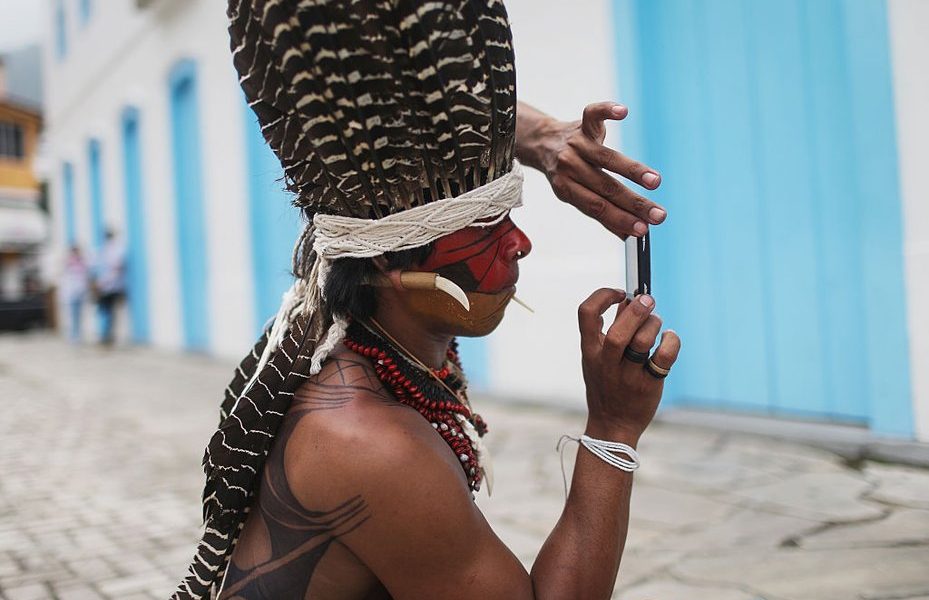
An Indigenous activist photographs another community member after a protest march for Indigenous land rights in Brazil. Land and environmental defenders often rely on digital platforms to spread awareness about their campaigns. Mario Tama / Getty Images
Global Witness conducted a global survey – the first of its kind – to understand defenders’ experiences online. We found that online abuse is very common among defenders who responded to the survey, and frequently translates into offline harm, including harassment, violence and arrests.
This not only hurts defenders’ wellbeing but also has a chilling effect on the climate movement, with many defenders reporting a loss of productivity and, in one case, even ending all their activism due to the abuse.
Our survey shows the challenges defenders face on social media.
The situation is so dire that 91% of the defenders who responded to our survey said that they believe digital platforms should do more to keep them and their communities safe.
It doesn’t need to be this way. Social media companies’ business models prioritise profit over user safety. They can and must do more to help protect these individuals by properly investing in algorithmic transparency, content moderation, and safety and integrity resourcing.
Improving these measures will not only keep defenders safe online but will also benefit all users everywhere.

An Indigenous person documents the Acampamento Terra Livre (Free Land Camp) on a smartphone in Brasília, Brazil. Cícero Pedrosa Neto / Global Witness
A note on sampling: Surveying land and environmental defenders
Land and environmental defenders are a difficult group to reach en masse. Many such individuals have very real and immediate security concerns that require them to be highly careful about how they discuss their activism. No professional survey company has a panel of defenders available for polling.
We therefore had to manually contact defenders’ organisations by a variety of means and do our best to ensure that we had as many people as possible from as many different places respond to our survey.
We acknowledge that our survey sample is therefore not representative of all defenders and, given the nature of the survey, we have not sought to verify the accuracy of their statements.
This report is the first of its kind focusing specifically on the digital threats faced by land and environmental defenders, and the role that social media platforms play in this. We have built on our existing networks to reach hundreds of defenders globally.
This report is a crucial effort to uncover the nature of online harm faced by those on the frontlines of the climate movement and another puzzle piece in understanding what it means to stand in the way of climate breakdown.
These shocking and previously untold stories must prompt real action from social media platforms, who have often failed to act on reports of abuse.
Widespread online attacks
Many land and environmental defenders experience abuse
92% of the land and environmental defenders who responded to our survey say that they have experienced some form of online abuse or harassment as a result of their work.
The online harms that these defenders report being subjected to range from public attacks on social media, to doxxing, to cyberattacks.
Doxxing
Doxxing (short for dropping docs) is the act of publicly revealing someone’s private or personally identifiable information without their consent, typically with malicious intent. This information can include real names, addresses, phone numbers, workplace details, financial information and even family members’ details.
Doxxing can be used as a form of harassment and intimidation of defenders, and it can lead to serious consequences like stalking, identity theft, swatting (making a false emergency call to send police to someone’s home) or physical harm. It is generally considered unethical and is illegal in many jurisdictions.
Cyberattacks
Cyberattacks are malicious attempts to disrupt, damage, or gain unauthorised access to computer systems, networks, or data. These attacks can take many forms, including:
- Phishing (tricking someone into giving up sensitive information)
- Malware (malicious software like viruses or spyware)
- Hacking and data breaches (gaining unauthorised access to steal, alter or destroy information)
The impact of this abuse is significant, with high numbers of defenders reporting feelings of fear and anxiety for themselves and their communities. Almost two-thirds of the defenders who responded to our question on the impact of the abuse they suffered say that they have feared for their safety and almost half report a loss of productivity.
This means that there is a real risk that this online abuse is impacting defenders’ campaigning, which impedes progress on climate action and solutions.
Something clearly needs to change, and the platforms on which a lot of this abuse occurs must bear some of the responsibility.
When we dig a little deeper into the data from the survey responses, some disturbing trends emerge.

Activists from Extinction Rebellion march through Berlin dressed as billionaires, including Big Tech CEOs Elon Musk and Mark Zuckerberg. Sean Gallup / Getty Images
A Facebook problem
Defenders say they receive abuse on Facebook more than any other platform
Globally, Facebook is the platform that the highest number of defenders say they have suffered abuse on. The next most cited platforms for abuse are X and WhatsApp. Instagram is the fourth most common platform on which abuse has occurred.
Facebook, WhatsApp and Instagram are all owned by Meta.
These results may in part reflect the popularity of Facebook overall as a platform (it has over 3 billion monthly active users, making it the largest social networking site globally).
Nevertheless, our survey has revealed that 82% of defenders who say they have suffered abuse online say that they have been abused on at least one of Meta’s three platforms.
Based on this data, Meta therefore holds a huge amount of responsibility when it comes to finding ways to address online harms to defenders.
The results shift slightly when comparing responses from different regions. For example, among defenders in Europe almost the same number reported experiencing abuse on X as on Facebook.
According to this survey, X therefore also holds a level of responsibility when it comes to addressing online harms to defenders.
We set out below a selection of first-hand accounts of defenders who agreed to speak with us after completing our survey. These accounts reflect the defenders’ personal experience and are given in the defenders’ own words.
Read the full report at: Global Witness
Related posts:

 Ruling party leaders want social media platforms indefinitely closed.
 Human Rights Defenders not safe in Uganda – Unwanted Witness report
 Criminalization of planet, land, and environmental defenders in Uganda is on the increase as 2023 recorded the soaring number of attacks.
 A people-centered call to action: Promoting secure tenure rights for inclusive land governance, climate resilience, and conflict resolution



Minority Rights Group welcomes today’s decision by the African Court on Human and Peoples’ Rights in the case of Ogiek people v. Government of Kenya. The decision reiterates previous findings of more than a decade of unremedied violations against the indigenous Ogiek people, centred on forced evictions from their ancestral lands in the Mau forest.
The Court showed clear impatience concerning Kenya’s failure to implement two landmark rulings in favour of the indigenous Ogiek people: in a 2017 judgment, that their human rights had been violated by Kenya’s denial of access to their land, and in a 2022 judgment, which ordered Kenya to pay nearly 160 million Kenyan shillings (about 1.3 million USD) in compensation and to restitute their ancestral lands, enabling them to enjoy the human rights that have been denied them.
Despite tireless activism from the community and the historic nature of both judgments, Kenya has not implemented any part of either decision. The community remains socioeconomically marginalized as a result of their eviction and dispossession. Evictions have continued, notably in 2023 with 700 community members made homeless and their property destroyed, and in 2020 evicting about 600, destroying their homes in the midst of the Covid-19 pandemic.
Daniel Kobei, Executive Director of the Ogiek Peoples’ Development Program stated, ‘We have been at the African Court six times to fight for our rights to live on our lands as an indigenous people – rights which our government has denied us and continues to violate, compounding our plights and marginalization, despite clear orders from the African Court for our government to remedy the violations. This is the seventh time, and we were hopeful that the Court would be more strict to the government of Kenya in ensuring that a workable roadmap be followed in implementation of the two judgments.’

Kenya has repeatedly justified the eviction of Ogiek as necessary for conservation, although the forest has seen significant harm since evictions began. Many in the community see a connection between their eviction and Kenya’s participation in lucrative carbon credit schemes.
‘The Court’s decision underscores the importance of timely and full implementation of measures imposed on a state which has been found to be in breach of their internationally agreed obligations. Kenya must now repay its debt to the indigenous Ogiek by restituting their land and making reparations, among other remedies ordered by the Court’, said Samuel Ade Ndasi, African Union Advocacy and Litigation Officer at Minority Rights Group.
The decision states, ‘the court orders the respondent state to immediately take all necessary steps, be they legislative or administrative or otherwise, to remedy all the violations established in the judgment on merits.’ The court also reaffirmed that no state can invoke domestic laws to justifiy a breach of international obligations.
Both of the original judgments were historic precedents, breaking new ground on the issue of restitution and compensation for collective violations experienced by indigenous peoples and confirming the vital role of indigenous peoples in safeguarding ecosystems, that states must respect and protect their land rights, that lands appropriated from them in the name of conservation without free, prior and informed consent must be returned, and their right to be the ultimate decision makers about what happens on their lands. Today’s decision adds to this tally of precedents as it is the first decision of the African Court on Human and Peoples’ Rights concerning the record of a state in implementing a binding decision.
The case
In October 2009, the Kenyan government, through the Kenya Forestry Service, issued a 30-day eviction notice to the Ogiek and other settlers of the Mau Forest, demanding that they leave the forest. Concerned that this was a perpetuation of the historical land injustices already suffered, and having failed to resolve these injustices through repeated national litigation and advocacy efforts, the Ogiek decided to lodge a case against their government before the African Commission on Human and Peoples’ Rights with the assistance of Minority Rights Group, the Ogiek Peoples’ Development Program and the Centre for Minority Rights Development. The African Commission issued interim measures, which were flouted by the Government of Kenya and thereafter referred the case to the African Court based on the complementarity relationship between the African Commission and the African Court on Human and Peoples’ Rights and on the grounds that there was evidence of serious or massive human rights violations.
On 26 May 2017, after years of litigation, a failed attempt at amicable settlement and an oral hearing on the merits, the African Court on Human and Peoples’ Rights rendered a merits judgment in favour of the Ogiek people. It held that the government had violated the Ogiek’s rights to communal ownership of their ancestral lands, to culture, development and use of natural resources, as well as to be free from discrimination and practise their religion or belief. On 23 June 2022, the Court rejected Kenya’s objections and set out the reparations owed for the violations established in the 2017 judgment.
Source: minorityrights.org
Related posts:
 Trauma and Land Loss: New Study Focuses on Mental Health of Evicted Indigenous People
 Justice Denied: East African Court of Justice Grants Tanzanian Government Impunity to Trample Human Rights of the Maasai
 EACOP: East African Court of Justice will hear arguments on court’s jurisdiction
 Tanzanian High Court Tramples Rights of Indigenous Maasai Pastoralists to Boost Tourism Revenues
Related posts:

 30 civil society organizations have written to the World Bank Group demanding to publicly disclose the Africa Energy Approach paper.
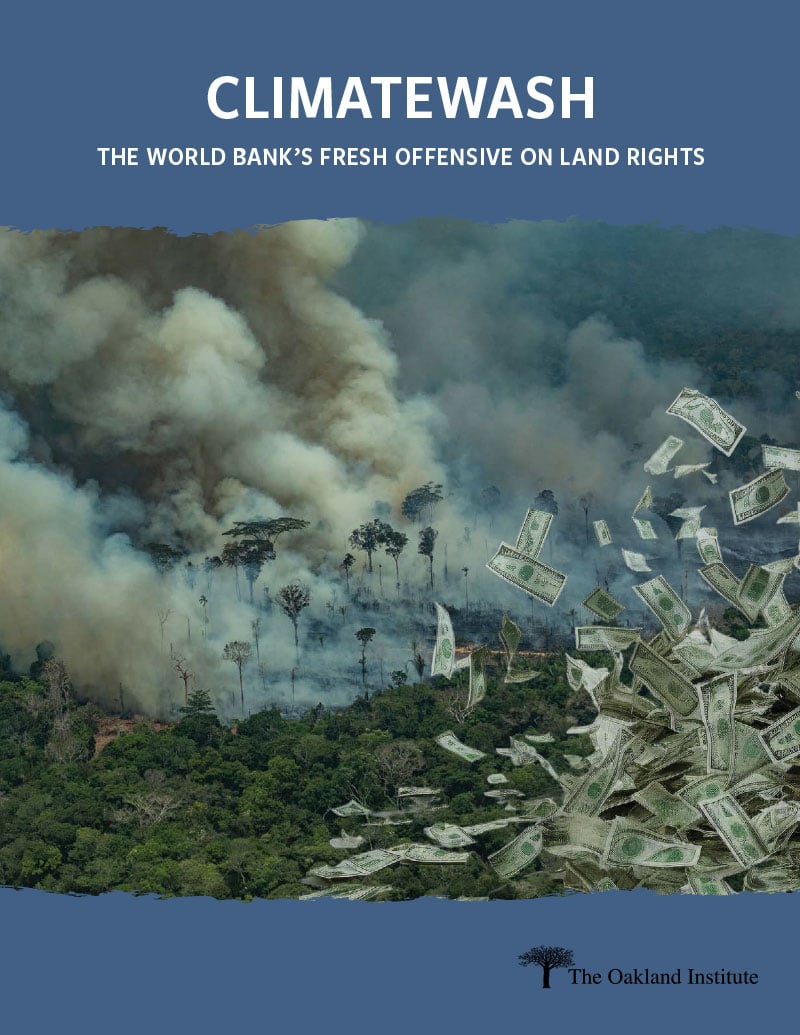
 World Bank’s new scheme to privatize land in the developing world exposed
 World Bank is backing dozens of new coal projects, despite climate pledges
 Communities Under Siege: New Report Reveals World Bank Failures in Safeguard Compliance and Human Rights Oversight in Tanzania
NGO WORK
Africa’s Land Is Not Empty: New Report Debunks the Myth of “Unused Land” and Calls for a Just Future for the Continent’s Farmland
Related posts:
 Financial Institutions from Africa have made a monumental commitment of $100 billion to Africa’s green industrialization, a decision of immense significance that has the potential to shape Africa’s future.
 Africa adopts the Africa Climate Innovation Compact (ACIC) Declaration to drive the continent towards innovative climate solutions.
 One in three people sleeps on an empty stomach – World Bank Report.
 Transforming Africa’s livestock sector is key to food security-Report

Why govt is launching a comprehensive digital land registry

Witness Radio and Seed Savers Network are partnering to produce radio content to save indigenous seeds in Africa.

Evicted from their land to host Refugees: A case of Uganda’s Kyangwali refugee settlement expansion, which left host communities landless.

Women environmental rights defenders in Africa are at the most significant risk of threats and attacks – ALLIED New report

Will Uganda’s next government break the land-grabbing cycle?
Women environmental rights defenders in Africa are at the most significant risk of threats and attacks – ALLIED New report

Swedish pension fund drops TotalEnergies amid rising EACOP risks

Land tenure security as an electoral issue: Museveni warns Kayunga land grabbers, reaffirms protection of sitting tenants.

Innovative Finance from Canada projects positive impact on local communities.
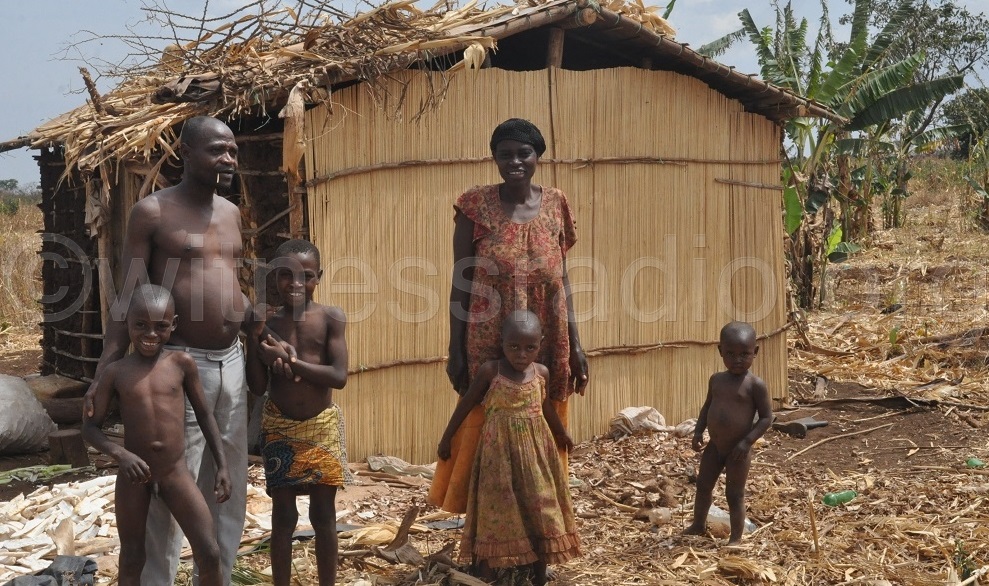
Over 5000 Indigenous Communities evicted in Kiryandongo District
Petition To Land Inquiry Commission Over Human Rights In Kiryandongo District

Invisible victims of Uganda Land Grabs
-
 MEDIA FOR CHANGE NETWORK1 week ago
Women environmental rights defenders in Africa are at the most significant risk of threats and attacks – ALLIED New report
-
 MEDIA FOR CHANGE NETWORK2 weeks ago
Uganda moves toward a Bamboo Policy to boost environmental conservation and green growth.
-
 FARM NEWS1 week ago
200 farmers demonstrate at parliament, worried about new seed monopoly
-
 MEDIA FOR CHANGE NETWORK4 days ago
Evicted from their land to host Refugees: A case of Uganda’s Kyangwali refugee settlement expansion, which left host communities landless.
-
 MEDIA FOR CHANGE NETWORK4 days ago
Witness Radio and Seed Savers Network are partnering to produce radio content to save indigenous seeds in Africa.
-
 MEDIA FOR CHANGE NETWORK2 days ago
Why govt is launching a comprehensive digital land registry