Connect with us

MEDIA FOR CHANGE NETWORK

The East Africa regional court dismisses a case challenging the construction of the EACOP project.


Published

on

By Witness Radio team

The East African Court of Justice (EACJ) has dismissed a case challenging the construction of the East African Crude Oil Pipeline (EACOP) filed by four East African NGOs in 2020 against Total Energies, China National Offshore Oil Corporation (CNOOC), and governments of both Uganda and Tanzania.

In its ruling today, the 29th of November, 2023, the EACJ relied on the preliminary objection raised by the Tanzanian and Ugandan governments regarding the timeframe within which the petition was filed at the EACJ.

The EACJ ruled that the applicants filed the petition out of time, thus saying that the petitioners should have filed the petition as early as 2017, instead of 2020.

“As a result, the court does not have jurisdiction to hear the matter”, said the judges in their unanimous decision.

On 6th November 2020, Natural Justice, Africa Institute for Energy Governance (AFIEGO), Centre for Strategic Litigation and the Centre for Food and Adequate Living Rights (CEFROHT) Limited filed a petition against the governments of Uganda and Tanzania and the Secretary General of the East African Community (EAC) challenging the construction of the EACOP project.

The Applicants’ petition rested on the assertion that the EACOP project violates multiple provisions of the Treaty of the Establishment of East African Community. The project further violates the Protocol for the Sustainable Management of the Lake Victoria Basin, the African Charter on Human and People’s Rights, the African Convention on Conservation of Natural Resources, the post–2020 Convention on Biological Diversity, and the Paris Climate Accords.

Furthermore, the Applicants argued that the entities backing the EACOP project, such as Total Energies, Chinese National Offshore Oil Corporation, and the Governments of Uganda and Tanzania, failed to carry out thorough and meaningful public engagement and consultation processes. Additionally, they contend that they did not conduct comprehensive assessments on both human rights and climate impacts before initiating the EACOP project.

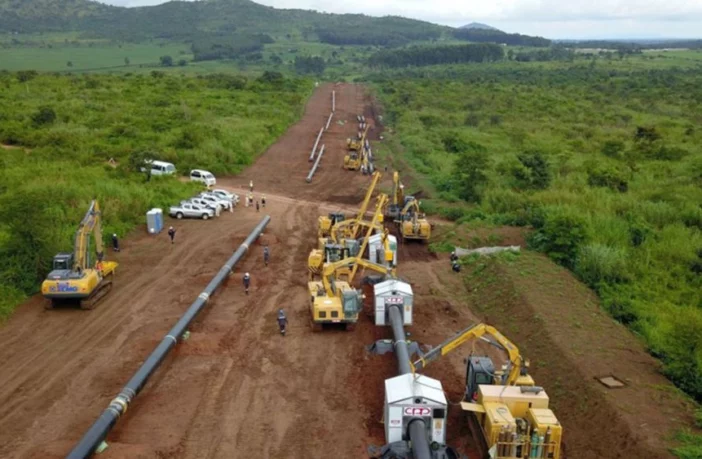
The EACOP connects the Tilenga and Kingfisher oilfields in western Uganda with the port of Tanga in eastern Tanzania. Upon completion, the project will be the longest heated crude oil pipeline in the entire world. The $5 billion EACOP project will cover a distance of 1,443 kilometers.

The applicants further contend that pivotal facts necessary for presenting the merits of the petition before the EACJ were disregarded in the judgment, therefore, they intend to file an appeal.

After receiving the ruling, Lucien Limacher, Head of Defending Rights and Litigation at Natural Justice, said that the Court of First Instance for the East African Court of Justice failed to provide civil society with the chance to argue their case.

He adds, “This judgment marks a continuation of how the global north and various government institutions in Africa, are blind to the destruction of the environment and the impact oil and gas have on the climate. Profits are valued above livelihoods and the environment. We will evaluate the judgment in detail and make the necessary actions to ensure we continue to protect the environment and the people who live in it”.

The Chief Executive Officer of AFIEGO, Mr. Dickens Kamugisha, expressed that it was a disappointing day for millions of East Africans who had hoped the court would consider evidence related to the environmental, social, and economic risks of the EACOP project and decide based on the case’s merits.

Mugisha adds that, despite the setback faced, the applicants remain determined and are prepared to appeal this unjust ruling, firmly believing that the dangers posed by EACOP can and will be stopped.

Continue Reading

MEDIA FOR CHANGE NETWORK

StopEACOP Coalition demands disclosure of US$3.7 billion in pipeline financing
Published

on

  • A coalition of 149 organisations has called on eight African and Middle Eastern financial institutions to disclose their involvement in the East African Crude Oil Pipeline.
  • New analysis by Reclaim Finance identified approximately US$3.7 billion in project lending linked to the pipeline between 2025 and 2026, with several lenders yet to publicly disclose their exposure.
  • The coalition is demanding greater transparency, a commitment to stop further funding for oil expansion and financial support for communities affected by the project.

The StopEACOP coalition has sent an open letter to eight African and Middle Eastern financial institutions, demanding full disclosure of their financial involvement in the East African Crude Oil Pipeline (EACOP) project and greater accountability for its environmental and social impacts.

Signed by 149 organisations, including representatives of communities affected by the pipeline, the letter follows new analysis by Reclaim Finance that identified approximately US$3.7 billion in project lending linked to EACOP between 2025 and 2026.

The institutions linked to the financing include Afreximbank, KCB Group and KCB Bank Uganda, the Islamic Development Bank Group and the Islamic Corporation for the Development of the Private Sector, NMB Bank Tanzania, Qatar National Bank, Standard Bank Group and Stanbic Bank Uganda, and Uganda Development Bank.

The coalition says the financing has largely come from African and Gulf lenders after more than 40 banks and 30 insurance companies declined to support EACOP or introduced policies restricting their involvement.

Although EACOP Ltd has publicly confirmed some financing involving Afreximbank, Standard Bank, Stanbic Bank Uganda, KCB Bank Uganda and the Islamic Corporation for the Development of the Private Sector, it has not disclosed the amounts involved. The terms and extent of exposure among other institutions, including NMB Bank Tanzania, Qatar National Bank and Uganda Development Bank, also remain undisclosed.
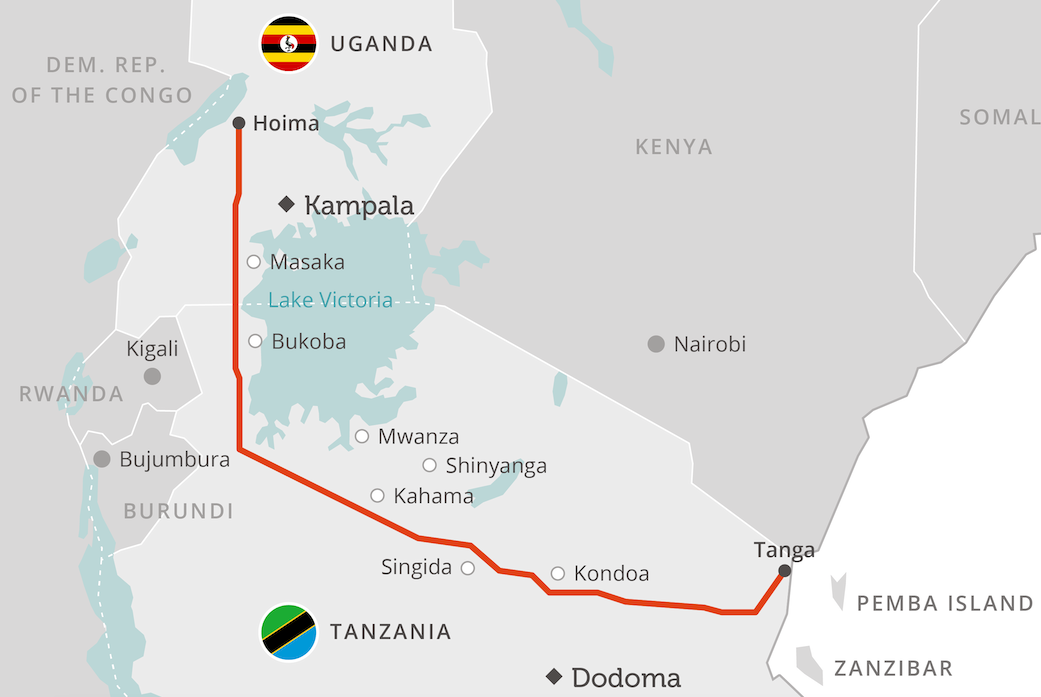
East African Crude Oil Pipeline map. Image credit: EACOP

The demand for transparency comes as the project faces further delays to its expected start of oil production. At African Energy Week, held from 12 to 16 October, Uganda National Oil Company officials said commercial production was now targeted for June 2027. Previous targets had included 2025, June 2026 and July 2026.

Tanzania’s state petroleum company has separately indicated that crude oil could reach Tanga by February 2027, with the first tanker loading expected in March.

EACOP is designed to transport crude oil from Uganda’s oil fields to the Tanzanian coast for export. The project has faced sustained opposition from environmental organisations and community groups concerned about its climate impact, land acquisition, compensation, biodiversity and human rights implications.

In its letter, the StopEACOP coalition is calling on each financial institution to disclose the full scope, structure and terms of its support, including exposure through bonds, guarantees and advisory roles.

The coalition also wants the institutions to commit to providing no further funding for EACOP expansion or related oil and gas development in Uganda’s Albertine Graben region or elsewhere.

A third demand calls for financial contributions towards remedying harm suffered by affected communities. The proposed mechanism would be independent and community led, providing compensation, restoring livelihoods and funding environmental clean up. The coalition says EACOP Ltd and its financial backers should contribute according to their respective roles in the project.

“First oil does not mark an end to the harm caused by EACOP. It escalates and entrenches it,” said Zaki Mamdoo, StopEACOP campaign coordinator.

Mamdoo said financial institutions that had provided billions of dollars to the project must publicly account for their decisions and take responsibility for addressing the damage associated with their investments.

For communities affected by land acquisition and construction, the consequences of the project are already being felt.

“When they took our land, we lost more than the land itself. We lost the means to support our families. Compensation was supposed to help us rebuild our lives, but for some of us, that has not happened,” said Rachael Tugume, an EACOP project affected person.

She questioned whether the banks financing the pipeline understood the impact on the people whose land had made the project possible.

Antoine Bouhey, Defund TotalEnergies campaign coordinator at Reclaim Finance, said financial institutions that had agreed to finance EACOP should be held accountable for the project’s impacts.

He said lenders should contribute to reparative justice for affected communities and commit to excluding new financing for oil and gas expansion in Uganda and elsewhere.

The coalition has also raised concerns about land acquisition and compensation failures, the loss of livelihoods, militarisation and environmental damage along the pipeline route and at the Chongoleani terminal in Tanga, Tanzania. It warns that these risks will persist and could intensify once oil production and exports begin.

The eight financial institutions have been asked to clarify their positions by 16 November. The coalition says it will publish both responses and non-responses after the deadline.\

Author: Bryan Groenendaal

Source: greenbuildingafrica.co.za

Continue Reading

MEDIA FOR CHANGE NETWORK

From grassroots action to policy transformation: How local environmental solutions spark enduring change.
Published

on

By the Witness Radio team.

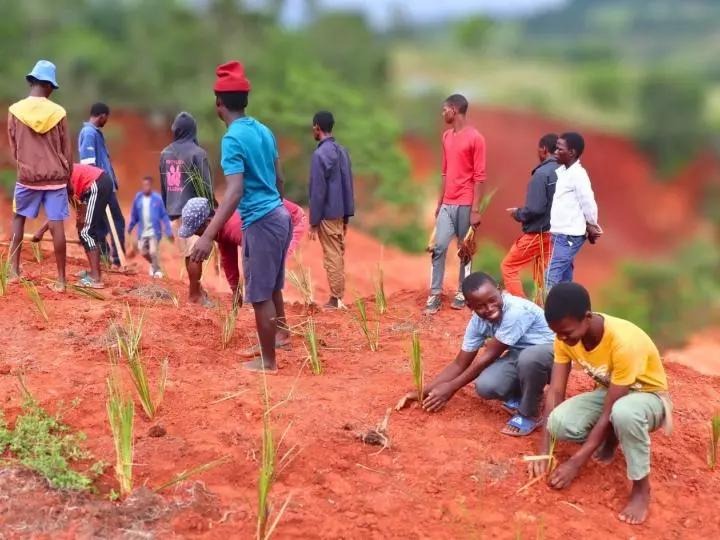
Experts agree that when communities lead environmental initiatives, they can safeguard land, biodiversity, and local livelihoods. Yet for these efforts to truly shape decisions and create lasting change, communities need a real seat at the table when crafting the policies that govern their territories.

Across regions, communities are crafting unique approaches to agriculture, conservation, and resource management that mirror their own priorities and landscapes. But finding solutions is just the beginning. For these grassroots efforts to ripple out and shape broader environmental policy, the people driving them must have a voice in decision-making, gain recognition for their methods, and see that policy promises become reality.

Stories shared by environmental policy advocates during a recent webinar brought to life both the power of collective action and the hurdles communities encounter when trying to shape decisions beyond their own backyards.

A project in central Italy demonstrates how collaboration among communities, farmers, and local officials can win formal policy recognition. At the same time, Guillerme Eidt’s advocacy work underscores why local communities must move from passive recipients of environmental policies to active shapers.

In Italy’s Lazio region, the Bio-district of Via Amerina e delle Forre shows that collective action can lay the groundwork for environmental stewardship and shape the future of territorial development.

According to the Food and Agriculture Organization of the United Nations (FAO), the bio-district brings together 13 municipalities and more than 300 organic farms in a territory with approximately 70,000 inhabitants. The initiative connects agriculture, local communities, environmental protection and economic development through a shared approach to managing the territory.

Instead of leaving environmental challenges for individual farmers to tackle alone, the bio-district champions teamwork among producers, residents, civil society groups, and local authorities.

Andrea Ferrante, an agronomist and agroecologist with experience in food and agriculture policy and rural development, says this territorial perspective is central to understanding how environmental protection can work in practice.

“So, we need communities; we need organizations and movements that are the ones stewarding also the soil, the biodiversity,” Ferrante said during the webinar.

He argued that tackling issues like land degradation requires more than focusing on single farms, since landscape health depends on the web of relationships among those who live and work there.

“It’s not the single farm, it’s a territory,” he added.

The bio-district supports organic farming, boosts direct sales from farmers to consumers, promotes environmental education, and champions sustainable local growth. Reports also highlight how the community has come together to address concerns about intensive hazelnut farming, including pesticide use, water pollution, and threats to biodiversity.

Ferrante pushed back against the idea that innovation always means new gadgets or technology. He argued that true innovation often lies in collaboration, especially when communities tap into their shared wisdom and work hand in hand with nature.

“Innovation is all about how we work together, how we build on our local community, how the capacity to manage and live in collaboration, in great collaboration with nature,” he said.

Ferrante described how civil society and local government joined forces to create a framework that would bring their shared vision for agriculture and territorial development to life.

“So, both civil society and the municipality, we built together a structure because if we are recognized, we have the capacity to protect our territory, to build our socioeconomic models. And from the regional law, we arrived at the national legislation,” he further added.

In October 2019, the Lazio regional government officially recognized the initiative, marking a key step in building a legal framework for bio-districts.

While the Italian bio-district shows how collective action can earn official recognition, Guillerme Eidt’s presentation spotlighted a different challenge: ensuring communities have a real voice in shaping the policies that govern their lands.

Eidt believes that true participation means honoring the identities and governance systems that communities use to organize themselves.

“We understand that local communities have the right to self-identify themselves and not be labeled for the state,” he said.

He explained that local communities comprise a rich tapestry of groups, from pastoralists and Afro-descendant peoples to community foresters, nomads, and farmers. Despite their varied histories and cultures, many rely on collective systems to steward land and resources.

Eidt pointed out that local communities often have little say in international environmental negotiations, even though decisions on climate, biodiversity, and land use can reshape how resources are managed at every level.

“It’s not fully open. It’s not fully inclusive. If you invite parties to do something, it means something different. We need to pay attention to these documents and understand how they are written. We need to participate in these processes to ensure local communities have a more visible voice. Indigenous people are so well organized.” He added

Eidt emphasized that for local communities to have real influence in international environmental governance, they need ongoing coordination and strong, organized advocacy.

In his presentation, he described how the Global Forum of Local Communities brings organizations together, helping them align their priorities and take part in international environmental discussions.

He outlined several ways communities and their allies can influence policy, including contributing proposed wording to negotiation texts, preparing policy briefs and technical submissions, participating in mandated workshops, holding bilateral meetings with decision-makers, and organizing events that bring communities together. The stories Ferrante and Eidt share reveal how vital it is to bridge the gap between local environmental action and the institutions that craft, enforce, and implement policy.

Ferrante’s story of the Italian bio-district shows how communities, farmers, and local authorities can work together to manage land and win official recognition.

Eidt’s presentation, on the other hand, highlights the challenge of ensuring communities can shape decisions that reach far beyond their borders, even in international environmental negotiations.

Hania Morani, a legal expert and former vice-chair of the United Nations Permanent Forum on Indigenous Issues, reinforced this relationship in her closing reflections during the webinar.

“International ideas inspire local action, and communities give those ideas meaning, and their experiences return to reshape policy,” she said.


Continue Reading

MEDIA FOR CHANGE NETWORK

A coalition of 625 African faith leaders will gather, united in their call for reparations in response to what they describe as the failure of a Gates-backed agricultural model.
Published

on

By the Witness Radio Team

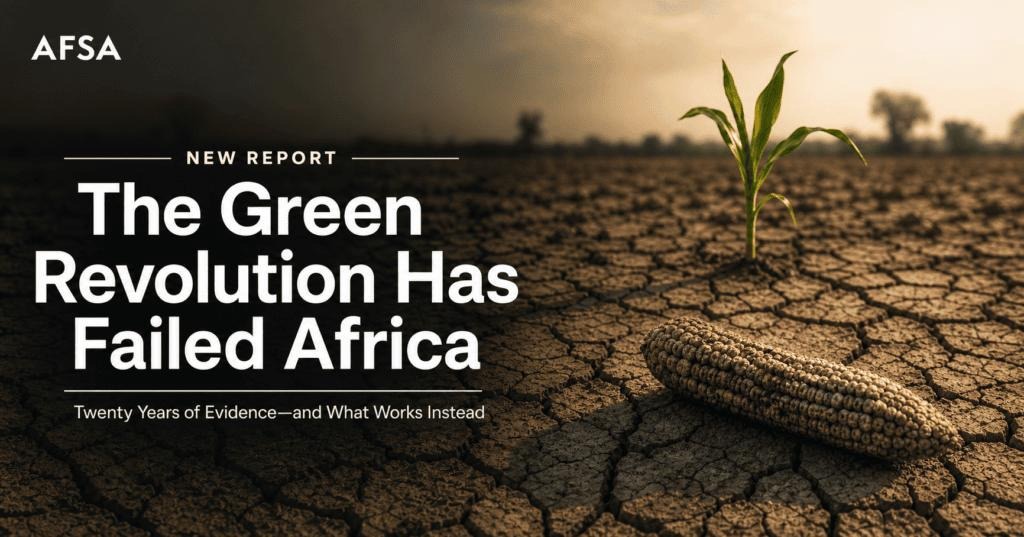
On Thursday, 29th October 2026, faith leaders representing more than 20 African nations will release an open letter to the Bill & Melinda Gates Foundation. In it, they urge the Foundation to acknowledge and address the harm they say two decades of industrial agricultural funding in Africa has caused—their call for reparations centers on redirecting resources toward agroecology and food systems led by Africans themselves.

Signed by 625 faith leaders, the letter directly challenges the Foundation’s backing of the Alliance for a Green Revolution in Africa (AGRA), an organization established in 2006 by the Gates and Rockefeller Foundations. Their demands gain urgency from research published in August 2026 by Tufts University’s Timothy Wise and the Alliance for Food Sovereignty in Africa (AFSA), which found a 58% surge in undernourished people across AGRA’s 13 focus countries between 2004–2006 and 2022–2024.

AGRA says its mission is to transform African agriculture by helping smallholder farmers increase production, improve their livelihoods and access growing agricultural markets.

On its website, the organization states: “AGRA, headquartered in Nairobi, is a proudly African-led institution focused on scaling agricultural innovations that help smallholder farmers towards increased incomes, better livelihoods, and improved food security. We understand that African farmers need uniquely African solutions to the environmental and agricultural challenges they face, enabling them to sustainably boost production and gain access to rapidly growing agricultural markets.”

Marking its 20th anniversary, AGRA frames this milestone as a moment for reflection and a renewed pledge to transform Africa’s food systems.

“In 2026, AGRA celebrates 20 years since Kofi Annan ignited a bold vision: a continent where agriculture fuels prosperity, opportunity, and resilience for millions of smallholder farmers. Over two decades, we have partnered with governments, farmers, research institutions, the private sector, and development partners to strengthen the foundations of Africa’s food systems. AGRA@20 is a milestone of reflection and renewal. It honors two decades of advancing Africa’s food systems, while charting a bolder path for the future of food systems transformation across the continent.”

Yet, civil society groups, agricultural experts, and independent researchers have sharply criticized AGRA’s approach, questioning whether its focus on commercial seeds, synthetic fertilizers, and industrial inputs has truly delivered on its promises of improved food security.

The August 2026 research by Wise and AFSA found that the number of undernourished people across AGRA’s 13 focus countries rose from 94.6 million in 2004–2006 to 149.6 million in 2022–2024. It also found that annual staple-crop yield growth averaged 1.2% after AGRA’s introduction, slightly below the 1.3% recorded annually during the preceding 12 years.

According to the report, fertilizer use more than doubled, while the share of cultivated land planted with millet and sorghum, both drought-tolerant crops, declined from 26% to 16%.

The researchers also cited Senegal, not one of AGRA’s 13 focus countries, as a contrast. The country halved its number of undernourished people while using approximately half as much fertilizer per hectare as the AGRA countries.

These findings have only deepened the worries of faith leaders and food-sovereignty advocates, who insist that agricultural development funding must put ecological sustainability, farmers’ rights, and locally driven solutions at the forefront.

The delegation delivering the letter will feature voices from South Africa, Liberia, Kenya, and Botswana. These leaders plan to urge the Gates Foundation to meet with them before its 2026 funding decisions and to respond directly to independent research scrutinizing the impact of its agricultural investments.

The faith leaders have raised similar concerns with the Foundation in previous years. In 2020, they called on it to stop funding Green Revolution programs. In November 2025, they sent another letter through the Southern African Faith Communities’ Environment Institute (SAFCEI), urging the Foundation to acknowledge what they described as the failure of its interventions in African food and farming systems.

In the 2025 letter, the leaders questioned the Foundation’s continued support for AGRA, arguing that its agricultural development approach raised concerns about environmental sustainability, community rights and the well-being of vulnerable populations.

“As faith leaders, we have a responsibility as custodians of the Earth and of our faith communities to call out injustice and ensure the equitable sharing of resources for all, particularly the most vulnerable. While we note that the Gates Foundation has committed itself to ending food insecurity and poverty in Africa, we are gravely concerned about the approach it continues to take, through its support of AGRA (until recently known as the Alliance for a Green Revolution in Africa).”

The leaders urge the Foundation to halt funding for AGRA and similar initiatives and redirect investment toward agroecology and food systems shaped by Africans. Their demands encompass support for farmer-led research, community seed banks, and local knowledge, along with policies that safeguard African communities’ rights and empower them to control their own food production.

The virtual press conference on 29 October will bring together Francesca de Gasparis, Executive Director of SAFCEI; Rev. Dr Tolbert Thomas Jallah Jr., Board Chair of AFSA; Ulfat Hussein Masibo from the Africa Muslims Women’s Action Network; Gorata Ramokgothwane of the Botswana Council of Churches; Dr Hassan Omari Kinyua from the Africa Faith Actors Network for Climate Justice and the Muslim Council in Kenya; and Gabriel Manyangadze, Food and Climate Justice Manager at SAFCEI, who will deliver the letter and issue the call to action.

At the heart of their appeal is a call for international funders to pivot their support toward agroecology and food production strategies defined by local communities.

“It’s time for international funders to transition towards agroecology through respecting and supporting locally defined holistic approaches in Africa, by Africa. As faith leaders, we must advocate for the restoration of our relationship with the Earth and the community of life on which we all depend,” the faith leaders stated.

AGRA, however, rejects claims that its agricultural model has failed, arguing that any progress over the past twenty years should be weighed against the broader challenges facing African food systems.

In its August 2026 Impact, Learning and Foresight Report, the organization says agricultural output across Africa has roughly doubled in real terms since 2005, while cereal yields have increased by about 40%. It also points to the growth of local seed companies, agricultural input distribution networks, and community extension services as evidence of progress.


Continue Reading

Resource Center

Legal Framework

READ BY CATEGORY

Facebook

Newsletter

Subscribe to Witness Radio's news and report updates


Trending

Subscribe to Witness Radio's news and report updates