Connect with us

MEDIA FOR CHANGE NETWORK

A son of the community defender is shot dead, another critically injured in a retaliatory attack by security guards evicting locals off their land to give way to large-scale sugarcane growing.


Published

on

By Witness Radio team

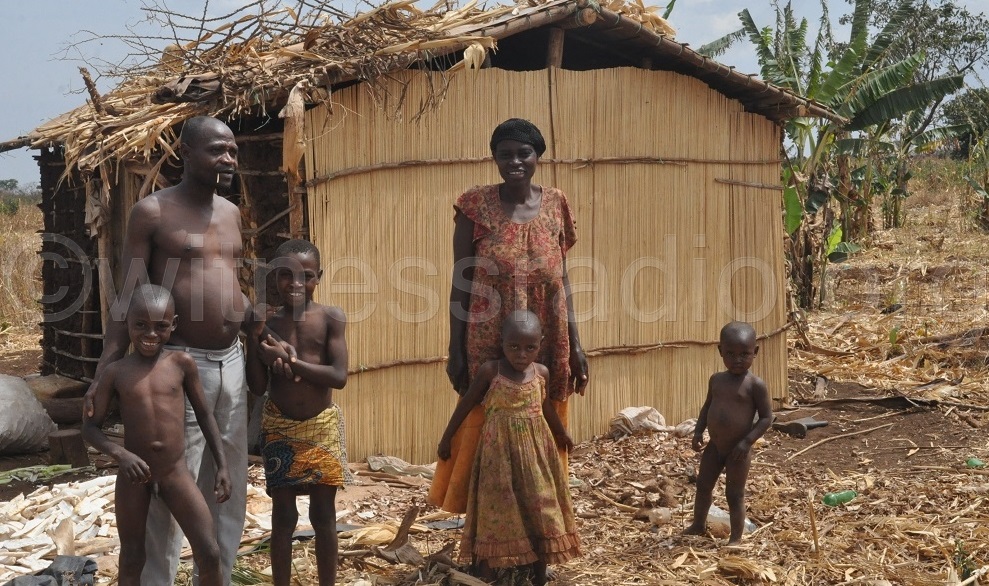
Kiryandongo – Uganda. Security guards attached to Magnum Limited, a private security company employed by Somdiam Limited, have shot dead a son of a community land rights defender in Kiryandongo district and critically injured his second son, currently admitted in the hospital. Somdiam Limited, is owned by an Indian investor.

Somdiam contracted Magnum Limited in October 2023 to carry out illegal evictions in the villages such as Nyamuntende, Kikungulu, and Ndoi in the Kiryandongo sub-county in Kiryandongo district without a court order.

The same security company has a record of being hired and carryout in illegal land evictions and guarding grabbed lands. It is on record that Magnum security carried out another violent land eviction involving over 2500 locals in Kapapi in Hoima district to give way to the East African Crude Oil Pipeline Project (EACOP).

Since 2020, Somdiam has been grabbing land for over 809.3700 hectares that have been lawfully occupied and cultivated by over 3000 locals. In the early 2000s, the locals applied for a freehold title, and eventually granted by the government.

According to records seen by Witness Radio, Somdiam Company was established in 2011 in Uganda and owned by two Indian nationals Mr. Dhedhi Himatbhai and Mrs. Dhedhi Hansaben Himatbhai.

One of its lawyers includes the former attorney general in the current Kampala government Mr. Mwesigwa Rukutana.

The company has branches in Rwanda, Tanzania, Madagascar, and the United Arab Emirates – Dubai primarily deals in importing various food commodities, including rice, sugar, vegetable cooking oil, biscuits, salt, tomato paste, powdered milk, pasta, and spaghetti, among others.

According to investigations by Witness Radio team, the killing happened on November 25th, 2023.

Kato Geoffrey, aged 20, one of the sons of Kaliisa Joseph, was shot in his back at 5:30 pm and passed away at the gate of Kiryandongo Hospital while being rushed for treatment. Another victim, Rugazu Steven, was shot in the thigh and is currently receiving treatment at Bweyale General Clinic.

Eyewitness accounts detail that the distressing events unfolded in Kisalanda Village, Kiryandongo district, when 10 Somdiam armed personnel, guarding Somdiam on orders of Isaac Balute, Somdiam Company manager, raided the residence of a community land rights defender, Kaliisa Joseph at Kisalanda with the intent of forcibly evicting him from his property in vain.

Joseph Kaliisa, a community land rights in the Kiryandongo district, has been actively engaged in mobilizing his community of more than 3000 residents to push back Somdiam Company’s illegal land eviction in Nyamuntende, Ndoi, and Kikungulu, all villages in the Kiryandondongo district.

In addition, when the defender refused to give up on his land, the armed guards’ personnel proceeded to loot his livestock but found strong resistance from Kaliisa’s family members who were grazing the cattle. In the scuffle, the guards opened fire and killed Kato and injured Rugazu.

“These armed company guards have repeatedly patrolled my home and livestock enclosure, aiming to loot them. They have already displaced most of our community members in Ndoi, Kikukungulu, and Nyamuntende, alleging that we have no rightful claim to this land despite us being its rightful owners. When they tried to evict me on Saturday, I stood my ground, asserting that I wouldn’t be displaced. Their response was to loot my grazing cows,” recounted the Kaliisa.

He added that the investor and its agents are revenging because of his work to resist an illegal eviction.

Somdiam company manager, Mr. Balute Isaac, confirmed that cattle keepers were grazing on the company’s land.

“It’s true that our guards were impounding their cattle because they had grazed in our plantations. Initially, this process was peaceful. However, the cattle keepers resisted and attacked our guards. In self-defense, two individuals were shot,” Mr. Balute disclosed to Witness Radio.

Continue Reading

MEDIA FOR CHANGE NETWORK

Lawyers Move to Court to Stop New Luxury Tourism Projects in Maasai Mara

Published

on

A coalition of regional legal and environmental organisations has moved to court seeking to halt the approval and development of new luxury tourism facilities in the Maasai Mara National Reserve, arguing that the projects threaten one of the world’s most important wildlife ecosystems.

The petition, filed before the Environment and Land Court, seeks orders stopping further construction of high-end tourist accommodation within the reserve pending the determination of the case.

Those behind the petition include East Africa Law Society, Natural Justice, JustAct and Africa Centre for Peace and Human Rights, who have sued several government agencies and private investors involved in the developments.

Among the respondents are Marriott International, The Ritz-Carlton Hotel Company, Minor Hotels, National Environment Management Authority (NEMA), Kenya Wildlife Service (KWS) and the Narok County Government.

Narok Governor Patrick Ole Ntutu and the Maasai Mara National Reserve date in Narok County.
Photo| County Government of Narok / Maasai Mara National Reserve.

The petitioners contend that approvals granted for the tourism developments violated constitutional and environmental safeguards, arguing that the projects were allowed within ecologically sensitive areas meant primarily for wildlife conservation.

Court documents further claim that the developments sit close to critical wildlife habitats and migration routes linking the Maasai Mara ecosystem with Serengeti National Park.

This, according to them, potentially disrupts the annual wildebeest migration that attracts thousands of tourists every year.

They have asked the court to certify the matter as one raising substantial constitutional questions and refer it to the Chief Justice for the appointment of a five-judge bench to hear the case.

The latest legal challenge comes months after the planned opening of the luxury Ritz-Carlton safari camp sparked public debate, with conservationists raising concerns that the facility could interfere with wildlife movement near the Sand River.

At the time, the Kenya Wildlife Service dismissed claims circulating online that the camp had blocked the wildebeest migration, describing videos shared on social media as misleading.

“The Ritz-Carlton safari camp is situated within a designated tourism investment low-use zone, as provided for in the Maasai Mara National Reserve Management Plan, 2023-2032,” KWS said at the time.

The agency also maintained that camps established along the Mara, Sand and Talek rivers have historically coexisted with wildlife movements without obstructing migration.

Source: kenyans.co.ke

Continue Reading

MEDIA FOR CHANGE NETWORK

More than 17,000 people in the Philippines face eviction from their ancestral land for a multimillion-dollar energy project.

Published

on

By Witness Radio Team,

In the Visayas and Mindanao regions, in the Iloilo municipality on Panay Island in the central Philippines, thousands of Indigenous Tumandok people face forced displacement as a major energy project advances through their ancestral territories.

The Jalaur River Multi-Purpose Project, a state-backed dam and hydropower initiative, has triggered fears of forced evictions affecting more than 17,000 people and has already submerged ancestral land belonging to Indigenous communities.

The Tumandok have relied on the river basin as burial grounds, fishing sites supporting their livelihoods, and sacred landscapes preserved through oral history and cultural tradition for decades.

In 2012, the Korean Export-Import Bank provided a USD 260 million loan to the Philippine government for a multi-purpose project on the Jalaur River. Authorities present the project as a long-term solution for irrigation, flood control, and hydropower generation, designed to benefit agricultural production across thousands of hectares of farmland. However, host communities say the development has come at a high human cost.

The dam project, which began in the 1960s, entered a new construction phase in 2012, triggering new waves of human rights violations, from attacks and killings to arrests, and is expected to reach full completion in 2027.

As construction progresses, Indigenous ancestral domains within the project-affected watershed—covering approximately 16,780 hectares in the Calinog component—are being impacted by the Jalaur River Multi-Purpose Project Stage II. Community leaders say this is displacing Indigenous families from their homes amid concerns over inadequate consultation and potential violations of Indigenous land rights and free, prior, and informed consent standards.

Article 19 of the Declaration on the Rights of Indigenous Peoples requires states to consult and cooperate in good faith with the Indigenous peoples concerned, through their own representative institutions, to obtain their free, prior, and informed consent before adopting and implementing legislative or administrative measures that may affect them.

Article 32(b) of the same declaration urges states to make consent the objective of consultation before any projects that affect Indigenous peoples’ rights to land, territory, and resources, including mining and other uses or exploitations of resources.

John Ian Alecianga, coordinator of the Jalaur River People’s Movement, says opposition to the project has drawn allegations of intimidation, killings, arrests, and a heavy security presence in affected communities.

“Mobilizing these indigenous communities to fight for their rights has come at a cost. Indigenous leaders and activists have been subjected to surveillance, harassment, and red-tagging due to their resistance to the dam,” John said in an exclusive interview with our team.

According to John, tensions escalated in December 2020 when a police attack in Tumandok communities killed at least nine Indigenous leaders and elders and led to the arrest of 16 others.

“The military was deployed, human rights were violated, many elders were killed, and others were arrested, escalating into what we call a massacre. A fake search warrant was used in a staged operation to enter the houses of the Tumandok leaders. This is how much the government has ignored the rights of the indigenous peoples from the project conception until the project implementation,” he said. “The event remains one of the most traumatic moments in the ongoing conflict around the project,” John added.

Despite pressure, Indigenous communities continue to resist eviction through local and international advocacy networks, calling for justice for those killed in 2020, recognition of their land rights, and immediate protection from further displacement.

“The people are resisting because land is their life. Without it, there will be no community. There will be no identity,” he said.

The Jalaur River People’s Movement also seeks accountability through international mechanisms, including engagement with South Korean institutions linked to project financing.

Continue Reading

MEDIA FOR CHANGE NETWORK

Peruvian communities have launched a global petition to halt a mining project they say threatens the water supply of over 10 million people.

Published

on

By the Witness Radio team

Communities and environmental organizations in Peru have launched an international petition urging people around the world to pressure financiers to withdraw support for the Ariana copper-zinc mining project, which they say could jeopardize the water supply of more than 10 million people in Lima and Callao.

The campaign, led by international advocacy group EKO Movement and backed by the Peruvian environmental organization CooperAcción, targets Banco Santander, which campaigners say provided a US$100 million refinancing facility to Alpayana S.A.C., the Peruvian company that owns the Ariana mining project.

The Ariana project is an underground copper and zinc mine located in the Marcapomacocha district, Peru’s Junín region. Alpayana acquired the project from its previous owner, Southern Peaks Mining, in 2025. That same year, the company secured a US$100 million refinancing facility from Banco Santander Perú S.A. and Banco Santander S.A. (Spain).

“Banco Santander has enormous leverage over the company. We want Santander to understand that the environmental and reputational costs of supporting this project are greater than any economic benefits,” Paul Maquet, a campaigner with CooperAcción, told Witness Radio Uganda.

The petition is the latest chapter in a campaign that has lasted more than six years. Environmental organizations first challenged the project in court in 2019, arguing that its location within the Marcapomacocha water system poses unacceptable risks that the project’s Environmental Impact Assessment (EIA) failed to address.

“The mining project is located in the heart of the Marcapomacocha water system, a natural and artificial infrastructure network that is the main source of water for Peru’s capital, Lima, and the city of Callao, which together have more than 10 million inhabitants,” Maquet added.

He said campaigners’ concerns are echoed by SEDAPAL, which has identified significant risks in its own technical assessments.

According to the petitioners, Lima’s public water utility, SEDAPAL, warned that the project could reduce both the quantity and quality of water reaching the capital by disrupting groundwater flows and exposing water sources to heavy metals from mining operations. The utility also raised concerns that vibrations from underground mining could affect the structural integrity of the Trans-Andean Tunnel, an essential component of Lima’s water supply system, and that the proposed tailings storage facility, located about 100 meters from the tunnel, could collapse.

The Ariana project received environmental approval in 2016 and was expected to begin operations in 2019. However, legal challenges have delayed its development.

In 2025, Peru’s Constitutional Chamber of Lima, ruling on a constitutional appeal filed by a group of Lima citizens, found that the project poses an imminent threat to the fundamental rights to water and to a healthy environment. The court ordered additional studies to better assess the mine’s potential impacts on Lima’s water supply before the project can proceed.

Campaigners argue that while Ariana is promoted as a source of copper needed for the global energy transition, the race for critical minerals should not come at the expense of environmental protection and fundamental human rights.

“This is an example of the global rush for strategic minerals. If the water supply for a country’s capital is not a limit, then where are the limits?” Maquet asked.

Rather than focusing solely on the mining company, campaigners are directing their efforts toward its financiers, calling on banks to use their leverage and responsibility to ensure investments do not contribute to environmental harm or human rights violations.

The international petition calls on Banco Santander to withdraw financial support for the project and use its influence to encourage Alpayana to abandon the mine.

Witness Radio Uganda contacted Alpayana S.A.C. and Banco Santander for comment on the concerns raised by campaigners and the international petition. Neither company had responded by publication time.

But Alpayana, on its website, says it is committed to being a responsible and sustainable mining company with deep respect for the environment, social responsibility, and people at the core of its values.

Continue Reading

Resource Center

Legal Framework

READ BY CATEGORY

Facebook

Newsletter

Subscribe to Witness Radio's news and report updates


Trending

Subscribe to Witness Radio's news and report updates