Connect with us

MEDIA FOR CHANGE NETWORK

Kenya: Court suspends Netflix and Meta’s carbon credits project over land dispute with Maasai herders

Published

on

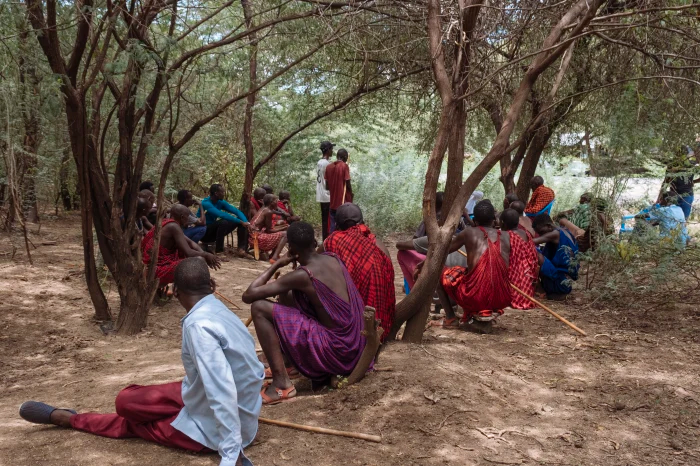
A Kenyan court has suspended the approval process for the world’s largest soil carbon project — potentially jeopardising carbon credits purchased by major companies like Netflix and Meta (see sustainability performance). The decision comes after Maasai herders challenged the Northern Kenya Rangelands Carbon Project, arguing it restricts their access to ancestral grasslands critical for grazing. Launched in 2012, the project spans 4.7 million acres and aims to sequester carbon through better land and livestock management in territories shared by Maasai, Borana and other Indigenous pastoralist communities

While the project has received widespread backing from conservation groups and corporate buyers eager to offset emissions, local herders argue it prioritises commercial carbon revenue over their traditional livelihoods. This dispute highlights the growing tensions around land use and Indigenous rights in large-scale carbon offset projects. As demand for nature-based offsets rises, especially from corporate actors under pressure to decarbonise, questions of equity, consent, and local benefit-sharing are becoming more urgent. The case underscores the need for robust, community-inclusive governance in carbon markets to avoid greenwashing and exploitation

The court ruling temporarily halts the project’s verification and crediting process, casting uncertainty over carbon credits already sold or planned for sale. If the challenge leads to long-term suspension or redesign, companies relying on these offsets may face scrutiny over the credibility of their climate claims. Legal reviews and stakeholder consultations are likely to intensify in coming months, potentially setting new standards for consent and community rights in carbon markets. “This case shows how global climate finance can ignore the voices of those most affected by it,” — Local Maasai advocate.

Source: Business & Human Rights Resource Centre

Continue Reading

MEDIA FOR CHANGE NETWORK

Youth activists detained as they boldly petition Parliament, demanding a future for Uganda free from oil dependency.

Published

on

By the Witness Radio team.

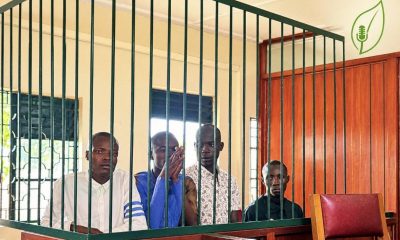
Four young members of Rooted in Resistance were arrested as they tried to deliver a petition urging Parliament to steer Uganda away from oil dependency toward an ‘oil-free economy’ built on economic freedom, sustainability, and active citizen involvement.

Ssembalirwa Aniwallh, Mugoya Hassan, Aron Patrick Ariong, and Okanya Ivan were taken into custody by parliamentary police early in the day as they marched toward Parliament to submit their petition.

According to Witness Radio sources, the four were detained nearly the entire day before being taken to Kampala Central Police Station.

The group aimed to persuade Parliament to rethink Uganda’s investment in petroleum extraction and infrastructure, insisting that true prosperity cannot survive on a resource that will run out.

In their petition, Rooted in Resistance invoked several provisions of the Constitution, including Article 38, which provides for citizens’ participation in the affairs of government, as well as provisions relating to freedom of expression and assembly, environmental protection, fair administrative treatment and the management of natural resources in the interests of present and future generations.

The activists point out that oil has long been touted as the answer to Uganda’s economic woes, promising jobs, industry, and progress. They warn these promises often fail to reach everyday Ugandans.

“Petroleum development carries significant economic, social and environmental risks and must be resisted. Our demand for an oil-free economy is not a rejection of development, but a demand for a different development model, one that places Ugandan citizens, productive sectors and sustainable wealth creation at the center of national planning,” the group says in its petition.

They highlight that petroleum development demands massive capital, depends on foreign corporations, and involves complex investments and sprawling infrastructure.

They say this approach falls short of creating the widespread jobs needed for Uganda’s fast-growing population.

They warn that relying on oil risks turning Ugandans into bystanders, watching their resources extracted instead of taking part in building the nation’s wealth.

“Economic freedom will be difficult to achieve through dependence on an exhaustible resource largely controlled through capital-intensive investments, multinational corporations and complex petroleum agreements,” the group argues.

Rooted in Resistance envisions an economy where Uganda invests in sectors that open doors for all citizens: agriculture, manufacturing, tourism, renewable energy, technology, and homegrown businesses.

They believe Uganda’s future should be rooted in its people, rich land, abundant water, vibrant biodiversity, and entrepreneurial spirit, not a resource destined to run dry.

The activists’ petition arrives at a pivotal moment, as Uganda speeds up its petroleum projects and prepares to launch commercial oil production.

Uganda discovered commercially viable oil deposits in 2006 and is now expected to begin commercial production in late September 2026.

As of June 30, 2026, the Tilenga project was 74 percent complete, with 234 wells drilled, exceeding the minimum 170 wells required for production.

The Kingfisher project had reached 79 percent completion. In comparison, the East African Crude Oil Pipeline (EACOP) stood at about 90 percent overall progress, with more than 1,443 kilometers of pipeline welded across Uganda and Tanzania.

In July, Irene Bateebe, the Permanent Secretary in the Ministry of Energy and Mineral Development, said Uganda remained on course to begin commercial oil production in September. As the country moves closer to its first barrels of commercially produced oil, environmental and social concerns continue to accompany the petroleum push.

Activists and researchers have sounded the alarm about oil development’s potential toll on communities, wetlands, wildlife, and Uganda’s precious biodiversity.

The activists urge Parliament to look past the lure of quick oil profits and reflect on the legacy Uganda will leave for generations to come.

Continue Reading

MEDIA FOR CHANGE NETWORK

Communities once resettled by President Museveni in Kiryandongo now find themselves losing their land to a sugarcane investor, accusing the Uganda Land Commission of granting a leasehold behind their backs.

Published

on

By the Witness Radio team.

For over ten years, families in Ranch 11, Kiryandongo District, cherished the hope that they had at last found a true home.

Their path to Ranch 11 was paved with hardship and repeated displacement. Some families, as Witness Radio discovered, were forced out of conservation areas, while others lost their homes amid political turmoil. When the government finally allocated them land through the Office of the President, they dared to believe their long search for safety was over.

Yet now, the very land they say President Yoweri Kaguta Museveni gave them has become the heart of a fresh conflict, as a sugarcane company lays claim to it.

Residents now accuse the Uganda Land Commission of quietly leasing part of Ranch 11 to sugarcane investor M/S Muhazi Heritage, leaving out the very communities who had built lives there for over a decade.

For families like Fred Kangume’s, this so-called development feels like yet another eviction, carried out without the voices or consent of those who call the land home.

“We were resettled on this land on orders of the President. And now we are surprised that an investor was given the same land without our consent or being informed,” Kangume told Witness Radio.

A Witness Radio investigation reveals a troubling contradiction: while official documents show attempts to secure land for these communities, the Uganda Land Commission later handed over more than 1,000 hectares of that very land to Muhazi Heritage through a lease agreement.

This dispute now sparks a deeper question about land governance in Uganda: how can families settled by government order lose their land when another state body gives it away to a private investor?

Several correspondences reviewed by Witness Radio indicate that President Yoweri Kaguta Museveni directed the Ministry of Lands to allocate land in Kiryandongo to approximately 750 landless families, including the Nubian and Kibyama communities who had converged in Kigumba and were living in difficult conditions in makeshift settlements.

The affected groups included about 350 families who had been evicted from the Karuma Wildlife Reserve in 1999 and 404 Nubian families who had been displaced from different parts of Uganda during and after the 1978/79 political turmoil.

According to information obtained by Witness Radio from the office of the Minister of State for Lands, the history of displacement for some of these families dates back to the 1970s.

During the government of former President Idi Amin, authorities established the Palestinian Farm at Kiroko in Kiryandongo Sub-county, displacing hundreds of families from their land.

The documents indicate that the affected families were neither compensated nor resettled after losing their land. As a result, some moved to neighboring public land, which was later gazetted as part of the Karuma Forest Reserve.

Years later, these same families faced another displacement when the Uganda Wildlife Authority evicted them from the reserve, leaving many without homes, land for cultivation, or reliable sources of livelihood.

The second group comprised members of the Nubian community who, after returning from exile, found that their former homes and properties in places such as Gulu, Lira, Soroti, and other parts of Uganda had been taken over during insurgencies. They also faced a challenging social and political environment, forcing many to seek refuge among friends and relatives in Masindi District.

With both groups facing prolonged landlessness and uncertainty, they petitioned President Museveni in 2000, requesting government intervention and resettlement.

A 2001 correspondence from the Ministry of Lands to the Office of the President states that government officials identified Ranch 11, part of the former Bunyoro Ranching Scheme, as available land that could be used to resettle the landless families.

The document states: “Within Masindi District, currently Kiryandongo District, was a vacant Ranch No. 11… which according to the Ranches Restructuring exercise was allocated to the Office of the President and could in this circumstance be subdivided to settle the landless 750 families.”

In 2006, President Museveni directed that the communities be resettled on approximately 5.5 square miles of land in Ranch 11.

For these families, the directive represented a new beginning and what they hoped would be an end to decades of displacement. In 2013, with support from local leaders and officers from the Ministry of Lands, the affected communities were resettled on the land.

Over the years, residents had built homes, established trading centers, and invested in agriculture. But according to residents, the land was never fully surveyed, and individual ownership documents were never issued.

In 2023, the Chief Administrative Officer (CAO) of Kiryandongo District requested financial support from the Ministry of Finance to facilitate the resettlement process for these categories: “Nubian community and families displaced from Karuma Wildlife Reserve.”

A letter from Permanent Secretary Ramathan Ggoobi informed the district that Shs200 million (about $53,428 USD) would be provided for the exercise. The funds, according to the letter, were to be budgeted under the Transitional Development Grant for the 2023/24 financial year.

Yet as communities waited in hope for official land documents, a separate process was quietly granting the same land to an investor.

Documents obtained by Witness Radio show that the Uganda Land Commission, during the Commission’s meeting of 4 August 2023 under Minute 64/2023(a)(04), approved the allocation of 1,059.89 hectares of land, equivalent to four square miles, to Muhazi Heritage.

The company received a five-year lease, renewable up to 49 years. On 17 December 2024, the Uganda Land Commission issued a certificate of title to Muhazi Heritage.

This turn of events stunned residents, who insist they were never consulted despite being the rightful occupants. Instead of security, the allocation sparked another wave of violent evictions as the company pressed for full control and communities fought back against what they called blatant land grabbing.

Charles Kalakire, the chairperson of Kimogola B village, told Witness Radio that local leaders were not involved in the allocation process.

“I was never consulted when the Uganda Land Commission awarded land to the company, which had legally known sitting tenants,” Kalakire said.

He added that he only learned about changes in land allocation after receiving information from district security officials.

“I got this information from the Resident District Commissioner (RDC), a president’s representative in the district, and the District Internal Security Officer (DISO) that land had now moved from the hands of the people to the investor,” he added.

Residents say the investor’s deal left just 1.5 square miles for over 750 families. For many, the conflict has spilled from paperwork into daily life.

“The situation is worse; people are beaten and forced to receive compensation, a level of impunity which forced the state minister of lands, Hon Sam Mayanja, to intervene and cause harmony in the area.” Mr. David Bakundaki, another resident, said.

During his visit to Kimogora in 2024, Mayanja revealed that the investor had requested the commission to allocate his company the entire Ranch 11 measuring over 5.5 square miles.

Based on his guidance, through a 2024 letter to the commission, he ordered the commission to allocate 4 square miles, and the remaining 1.5 square miles be used to resettle the affected people. The company was also directed to compensate residents, support relocation, and provide infrastructure including schools, health facilities, and roads as part of corporate social responsibility.

However, residents and leaders say the remaining land is already occupied, making relocation difficult.

“The people who have been occupying the four-square miles are now being packed into the 1.5 square miles. They are being allocated a quarter acre. On top of that, the allocations are now creating land tensions with those they found in.”

“Also, those who have received compensation have got peanuts, 200,000, 300,000 Uganda shillings, which can’t afford to cater for their families or buy land elsewhere, and the responsibility that had to come along with resettling people was never fulfilled.” Mr. Godfrey Kiviri, former chairperson of Mutunda A village, told Witness Radio.

Meanwhile, those refusing to leave their land face violence from company workers, supported by security forces.

The Ranch 11 saga lays bare a deep contradiction in Uganda’s land management: a government meant to restore dignity to the displaced later hands their land to a private sugarcane investor.

For these communities, the fight has become about more than land. It is now a struggle for trust, accountability, and the hope that government promises to its most vulnerable will be honored.

Continue Reading

MEDIA FOR CHANGE NETWORK

News: Kapapi Land dispute: Security investigate gunfire exch

Published

on

HOIMA — Security in Hoima district is investigating circumstances under which police personnel and Uganda People’s Defence Forces (UPDF) officers deployed at the disputed Kapapi land in Kapapi sub-county, Hoima district, exchanged gunfire and left two vehicles damaged.

The incident occurred last Sunday at night as UPDF officers deployed on the disputed land attempted to arrest Capt. Rogers Karamagi, the manager of Brig. Gen. Peter Akankunda Nabasa on the land.

Brig. Gen. Nabasa got involved in the Kapapi land dispute after Moses Byangire, the administrator of the late Tito Byangire’s estate leased 700 acres of land to the general for 10 years in Kigorobya, Hoima District.

The deployment of UPDF soldiers on the land was after the 2,000 residents who were evicted from the land measuring about three square miles petitioned the former lands state minister, Dr Sam Mayanja (now Attorney General), seeking his intervention.

When Mayanja visited the land in October last year, he ordered the Commander of the Field Artillery Division based in Masindi, Maj. Gen. Daniel Kakono, to deploy security on the disputed land to protect the evictees and to disarm private security personnel who had deployed there.

Since then, UPDF soldiers have been deployed on the land and have not been allowing any agent to step on the land covering over four villages, including Waki South, Waki North, Runga, Kapapi Central and Kiryateete, all within Kapapi sub-county.

How it startedAccording to Brig. Gen. Nabasa, on the fateful day, Karamagi was coming from Kapapi sub-county driving a Toyota Mark X registration number UBR 117L when soldiers started trailing him.

Nabasa explained that when Karamagi realised that some people were following him, he drove off the main road and hid the car at the home of a one Nyakahara Mudede in Kapapi 1 village.

While in his hideout, Karamagi reportedly called police officers from Kigorobya police station to intervene and rescue him from the group, which wanted to arrest him.

However, shortly after police arrived at the scene in a Toyota Corolla XS, UAK 227D, one of the UPDF officers also showed up and attempted to grab Karamagi.

The Toyota Corolla (UAK 227D) used by police officers from Kigorobya sub-county to rescue Karamagi was also damaged during the scuffle. (Photo by Peter Abaanabasazi)

The Toyota Corolla (UAK 227D) used by police officers from Kigorobya sub-county to rescue Karamagi was also damaged during the scuffle. (Photo by Peter Abaanabasazi)

According to eyewitness, a scuffle ensued during which police and the UPDF officers exchanged gunfire. In the process, Karamagi’s car and another used by police officers had their tyres flattened.

“Karamagi was my manager before they had blocked us from this land. All along, they have been tracking him; I do not know what they need from him,” Nabasa said.

Mudede said that several bullets that were fired left the residents in the area in panic.

Authorities speak out

When contacted for a comment, Christopher Ayine, the Hoima deputy resident district commissioner, confirmed the incident.

Ayine said they have instructed the Hoima district police commander and the Albertine regional police commander to investigate the matter. “Whoever will be found in the wrong will be arrested.”

The Albertine Regional Police Spokesperson, Julius Allan Hakiza, declined to comment on the matter and referred New Vision to the UPDF.

Maj. Flavia Terimulungi, the UPDF 1st division public information officer, said that the army was following up on the issue.

Source: newvision.co.ug/

Continue Reading

Resource Center

Legal Framework

READ BY CATEGORY

Facebook

Newsletter

Subscribe to Witness Radio's news and report updates


Trending

Subscribe to Witness Radio's news and report updates