MEDIA FOR CHANGE NETWORK
Environmentalists reject TFFF, warning it will deepen forest destruction.
Published
11 months agoon

By Witness Radio team
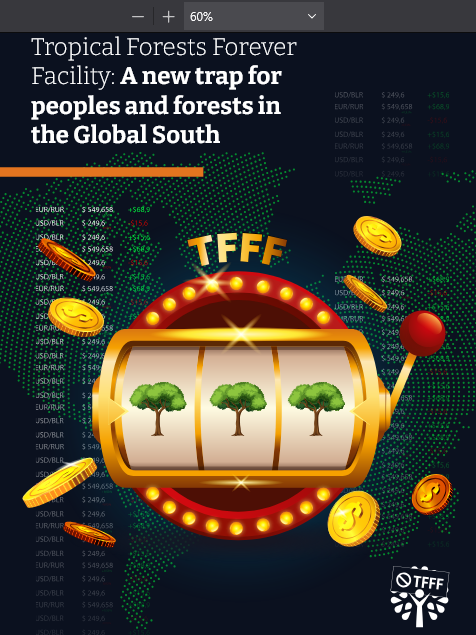
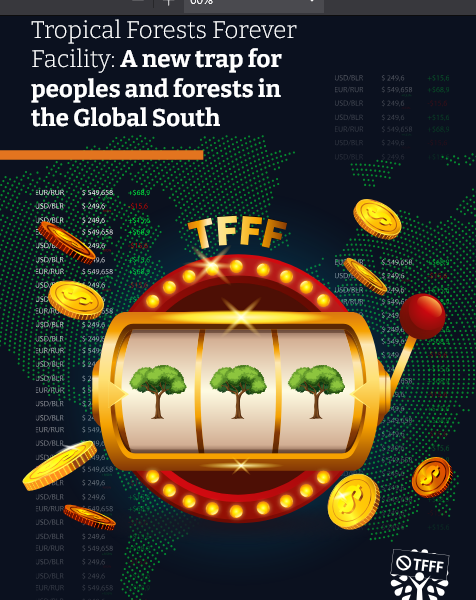
The Tropical Forest Forever Facility (TFFF), unveiled with great fanfare on November 6th, 2025, as a pre-event ahead of the 30th UN Climate Conference in Belém, is already facing a storm of criticism from civil society and environmentalists.
More than 200 civil society organizations, Indigenous networks, and environmental justice groups from every corner of the globe are demanding an immediate halt to the initiative, calling it “a false solution that will deepen forest destruction rather than stop it.”
The Tropical Forest Forever Facility (TFFF) is a proposed global financing mechanism intended to support the long-term protection of tropical forests. Its goal, according to those behind it, is to offer stable, ongoing funding to countries that preserve or expand their forest cover, using investment-generated returns to reward practical conservation efforts.
But activists warn that the facility is being promoted as a bold new funding model for forest conservation. Yet, in reality, it is built on a financial structure that they say will benefit wealthy investors while burdening tropical forest nations with more debt, potentially leading to their further exploitation.
While in Belém, Brazil, on November 6th, global leaders officially launched the Tropical Forest Forever Facility (TFFF), with a collective investment of USD $5.5 billion following an initial US$1 billion committed by Brazil in September this year.
COP30 is the United Nations Climate Change Conference taking place in Belém, Brazil, from November 10th to 21st, 2025. UN Climate Change Conferences (or COPs) take place every year, and are the World’s only multilateral decision-making forum on climate change that brings together almost every country.
According to the Fund promoters, the Tropical Forest Forever Facility (TFFF) emerges as an innovative, essential, and strategic financing solution designed to permanently protect tropical forests, the biological and climatic pillars of our planet, through addressing the climate crisis, combating biodiversity loss, and recognizing Indigenous Peoples and traditional Communities in climate justice.
The TFFF’s governance is split into two parts: The Tropical Forest Investment Fund (TFIF), run by the World Bank under its own governance system, responsible for managing investments and deciding how much money is available for forest payments, and the TFFF Secretariat, which oversees monitoring, reporting, and the distribution of those payments to participating countries.
But environmentalists argue that this financial model reveals a more profound, more troubling logic. They say the initiative is a colonial plan by Northern elites, for Northern elites, and designed by wealthy investors who get paid first. At the same time, forest peoples receive only “what is left.”
“TFFF is yet another trap that will not stop deforestation. TFFF is a colonial plan of Northern elites, by Northern elites, and for Northern elites that will make the rich richer by extracting wealth from the global South. Initiatives like this one end up reinforcing a capitalist, racist, colonialist, and patriarchal vision of the world that only deepens the current injustices and manifold crises,” they wrote in a petition calling individuals to join efforts to stop the initiative.
The TFFF claims to be a “new hope” for tropical forests worldwide. However, it’s not designed to address the drivers of deforestation, but to benefit investors in financial markets that are actually driving deforestation.
Far from protecting forests and their communities, this new market-based initiative will actually reinforce a capitalist, racist, colonialist, and patriarchal worldview that only deepens current manifold crises and injustices. It could lead to the displacement of indigenous communities and the loss of their traditional lands, a direct violation of their rights, and a significant social injustice.
The World Bank is set to host the TFIF and influence daily fund management. Activists argue that this Bank has a long record of financing projects that violate community rights, promote industrial plantations, and deepen debt crises in the global South. For instance, the Bank’s support for large-scale infrastructure projects has often led to the displacement of local communities and environmental degradation.
For critics, this is proof that the TFFF is yet another top-down, Northern-led mechanism destined to repeat past failures. Similar initiatives in the past have often failed to address the root causes of deforestation, instead focusing on market-based solutions that benefit investors more than local communities.
It is high time to address the root causes of deforestation: unjust economic relations and trade, land grabbing by agribusiness, and expansion of mining and other extractive industries. These are the systemic issues that perpetuate deforestation and environmental degradation. Our commitment is to resist struggles against large-scale projects that destroy forests and fuel climate chaos. TFFF will undermine solidarity among communities protecting their territories.
Related posts:

How forest policies and agencies promote sustainable destruction

Environmentalists raise red flags over plan to expand oil palm fields in Kalangala

Uganda: Court of Appeal starts hearing an appeal case challenging the High Court’s decision of not canceling the ESIA certificate that allowed the cutting down of Bugoma Forest.

UNCCD COP16: NGOs issue a stark warning and call for urgent actions to deal with the escalating threats of desertification, land degradation, and drought.
You may like
MEDIA FOR CHANGE NETWORK
From grassroots action to policy transformation: How local environmental solutions spark enduring change.
Published
19 hours agoon
October 26, 2026
By the Witness Radio team.
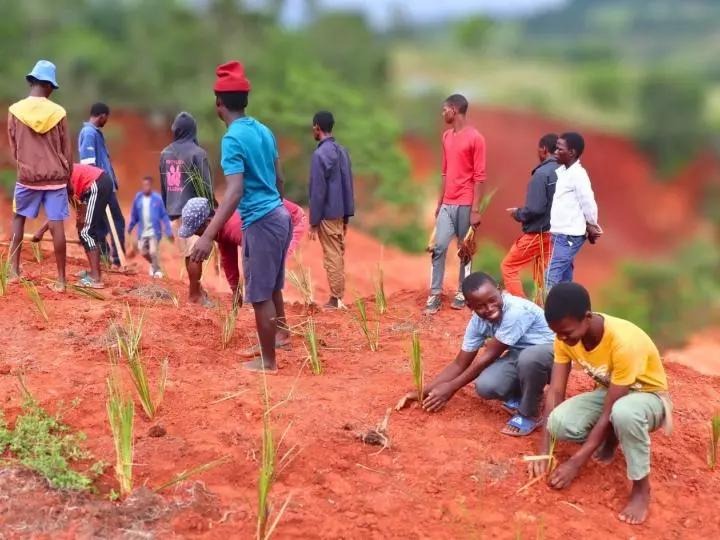
Experts agree that when communities lead environmental initiatives, they can safeguard land, biodiversity, and local livelihoods. Yet for these efforts to truly shape decisions and create lasting change, communities need a real seat at the table when crafting the policies that govern their territories.
Across regions, communities are crafting unique approaches to agriculture, conservation, and resource management that mirror their own priorities and landscapes. But finding solutions is just the beginning. For these grassroots efforts to ripple out and shape broader environmental policy, the people driving them must have a voice in decision-making, gain recognition for their methods, and see that policy promises become reality.
Stories shared by environmental policy advocates during a recent webinar brought to life both the power of collective action and the hurdles communities encounter when trying to shape decisions beyond their own backyards.
A project in central Italy demonstrates how collaboration among communities, farmers, and local officials can win formal policy recognition. At the same time, Guillerme Eidt’s advocacy work underscores why local communities must move from passive recipients of environmental policies to active shapers.
In Italy’s Lazio region, the Bio-district of Via Amerina e delle Forre shows that collective action can lay the groundwork for environmental stewardship and shape the future of territorial development.
According to the Food and Agriculture Organization of the United Nations (FAO), the bio-district brings together 13 municipalities and more than 300 organic farms in a territory with approximately 70,000 inhabitants. The initiative connects agriculture, local communities, environmental protection and economic development through a shared approach to managing the territory.
Instead of leaving environmental challenges for individual farmers to tackle alone, the bio-district champions teamwork among producers, residents, civil society groups, and local authorities.
Andrea Ferrante, an agronomist and agroecologist with experience in food and agriculture policy and rural development, says this territorial perspective is central to understanding how environmental protection can work in practice.
“So, we need communities; we need organizations and movements that are the ones stewarding also the soil, the biodiversity,” Ferrante said during the webinar.
He argued that tackling issues like land degradation requires more than focusing on single farms, since landscape health depends on the web of relationships among those who live and work there.
“It’s not the single farm, it’s a territory,” he added.
The bio-district supports organic farming, boosts direct sales from farmers to consumers, promotes environmental education, and champions sustainable local growth. Reports also highlight how the community has come together to address concerns about intensive hazelnut farming, including pesticide use, water pollution, and threats to biodiversity.
Ferrante pushed back against the idea that innovation always means new gadgets or technology. He argued that true innovation often lies in collaboration, especially when communities tap into their shared wisdom and work hand in hand with nature.
“Innovation is all about how we work together, how we build on our local community, how the capacity to manage and live in collaboration, in great collaboration with nature,” he said.
Ferrante described how civil society and local government joined forces to create a framework that would bring their shared vision for agriculture and territorial development to life.
“So, both civil society and the municipality, we built together a structure because if we are recognized, we have the capacity to protect our territory, to build our socioeconomic models. And from the regional law, we arrived at the national legislation,” he further added.
In October 2019, the Lazio regional government officially recognized the initiative, marking a key step in building a legal framework for bio-districts.
While the Italian bio-district shows how collective action can earn official recognition, Guillerme Eidt’s presentation spotlighted a different challenge: ensuring communities have a real voice in shaping the policies that govern their lands.
Eidt believes that true participation means honoring the identities and governance systems that communities use to organize themselves.
“We understand that local communities have the right to self-identify themselves and not be labeled for the state,” he said.
He explained that local communities comprise a rich tapestry of groups, from pastoralists and Afro-descendant peoples to community foresters, nomads, and farmers. Despite their varied histories and cultures, many rely on collective systems to steward land and resources.
Eidt pointed out that local communities often have little say in international environmental negotiations, even though decisions on climate, biodiversity, and land use can reshape how resources are managed at every level.
“It’s not fully open. It’s not fully inclusive. If you invite parties to do something, it means something different. We need to pay attention to these documents and understand how they are written. We need to participate in these processes to ensure local communities have a more visible voice. Indigenous people are so well organized.” He added
Eidt emphasized that for local communities to have real influence in international environmental governance, they need ongoing coordination and strong, organized advocacy.
In his presentation, he described how the Global Forum of Local Communities brings organizations together, helping them align their priorities and take part in international environmental discussions.
He outlined several ways communities and their allies can influence policy, including contributing proposed wording to negotiation texts, preparing policy briefs and technical submissions, participating in mandated workshops, holding bilateral meetings with decision-makers, and organizing events that bring communities together. The stories Ferrante and Eidt share reveal how vital it is to bridge the gap between local environmental action and the institutions that craft, enforce, and implement policy.
Ferrante’s story of the Italian bio-district shows how communities, farmers, and local authorities can work together to manage land and win official recognition.
Eidt’s presentation, on the other hand, highlights the challenge of ensuring communities can shape decisions that reach far beyond their borders, even in international environmental negotiations.
Hania Morani, a legal expert and former vice-chair of the United Nations Permanent Forum on Indigenous Issues, reinforced this relationship in her closing reflections during the webinar.
“International ideas inspire local action, and communities give those ideas meaning, and their experiences return to reshape policy,” she said.
Related posts:

Uganda moves toward a Bamboo Policy to boost environmental conservation and green growth.
Witness Radio, private companies, CSOs and local government officials are meeting to discuss alternative remedies to salvage the appalling land and environmental rights situation in Kiryandongo district.

Joint CSO Statement Calls on IFC and MIGA to Strengthen its New Approach to Remedial Action Policy
Experts push for a National Bamboo Policy to strengthen climate mitigation efforts.
MEDIA FOR CHANGE NETWORK
A coalition of 625 African faith leaders will gather, united in their call for reparations in response to what they describe as the failure of a Gates-backed agricultural model.
Published
19 hours agoon
October 26, 2026
By the Witness Radio Team
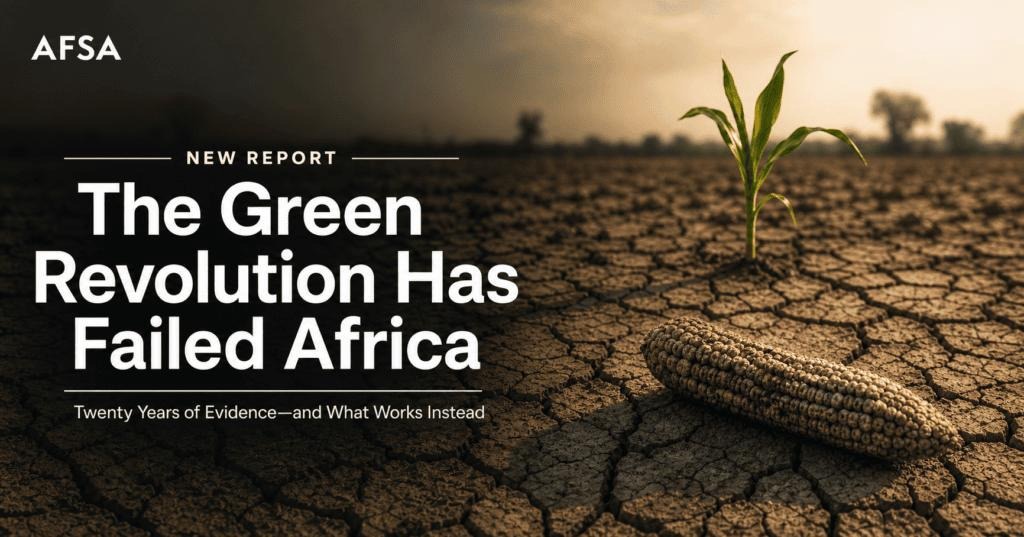
On Thursday, 29th October 2026, faith leaders representing more than 20 African nations will release an open letter to the Bill & Melinda Gates Foundation. In it, they urge the Foundation to acknowledge and address the harm they say two decades of industrial agricultural funding in Africa has caused—their call for reparations centers on redirecting resources toward agroecology and food systems led by Africans themselves.
Signed by 625 faith leaders, the letter directly challenges the Foundation’s backing of the Alliance for a Green Revolution in Africa (AGRA), an organization established in 2006 by the Gates and Rockefeller Foundations. Their demands gain urgency from research published in August 2026 by Tufts University’s Timothy Wise and the Alliance for Food Sovereignty in Africa (AFSA), which found a 58% surge in undernourished people across AGRA’s 13 focus countries between 2004–2006 and 2022–2024.
AGRA says its mission is to transform African agriculture by helping smallholder farmers increase production, improve their livelihoods and access growing agricultural markets.
On its website, the organization states: “AGRA, headquartered in Nairobi, is a proudly African-led institution focused on scaling agricultural innovations that help smallholder farmers towards increased incomes, better livelihoods, and improved food security. We understand that African farmers need uniquely African solutions to the environmental and agricultural challenges they face, enabling them to sustainably boost production and gain access to rapidly growing agricultural markets.”
Marking its 20th anniversary, AGRA frames this milestone as a moment for reflection and a renewed pledge to transform Africa’s food systems.
“In 2026, AGRA celebrates 20 years since Kofi Annan ignited a bold vision: a continent where agriculture fuels prosperity, opportunity, and resilience for millions of smallholder farmers. Over two decades, we have partnered with governments, farmers, research institutions, the private sector, and development partners to strengthen the foundations of Africa’s food systems. AGRA@20 is a milestone of reflection and renewal. It honors two decades of advancing Africa’s food systems, while charting a bolder path for the future of food systems transformation across the continent.”
Yet, civil society groups, agricultural experts, and independent researchers have sharply criticized AGRA’s approach, questioning whether its focus on commercial seeds, synthetic fertilizers, and industrial inputs has truly delivered on its promises of improved food security.
The August 2026 research by Wise and AFSA found that the number of undernourished people across AGRA’s 13 focus countries rose from 94.6 million in 2004–2006 to 149.6 million in 2022–2024. It also found that annual staple-crop yield growth averaged 1.2% after AGRA’s introduction, slightly below the 1.3% recorded annually during the preceding 12 years.
According to the report, fertilizer use more than doubled, while the share of cultivated land planted with millet and sorghum, both drought-tolerant crops, declined from 26% to 16%.
The researchers also cited Senegal, not one of AGRA’s 13 focus countries, as a contrast. The country halved its number of undernourished people while using approximately half as much fertilizer per hectare as the AGRA countries.
These findings have only deepened the worries of faith leaders and food-sovereignty advocates, who insist that agricultural development funding must put ecological sustainability, farmers’ rights, and locally driven solutions at the forefront.
The delegation delivering the letter will feature voices from South Africa, Liberia, Kenya, and Botswana. These leaders plan to urge the Gates Foundation to meet with them before its 2026 funding decisions and to respond directly to independent research scrutinizing the impact of its agricultural investments.
The faith leaders have raised similar concerns with the Foundation in previous years. In 2020, they called on it to stop funding Green Revolution programs. In November 2025, they sent another letter through the Southern African Faith Communities’ Environment Institute (SAFCEI), urging the Foundation to acknowledge what they described as the failure of its interventions in African food and farming systems.
In the 2025 letter, the leaders questioned the Foundation’s continued support for AGRA, arguing that its agricultural development approach raised concerns about environmental sustainability, community rights and the well-being of vulnerable populations.
“As faith leaders, we have a responsibility as custodians of the Earth and of our faith communities to call out injustice and ensure the equitable sharing of resources for all, particularly the most vulnerable. While we note that the Gates Foundation has committed itself to ending food insecurity and poverty in Africa, we are gravely concerned about the approach it continues to take, through its support of AGRA (until recently known as the Alliance for a Green Revolution in Africa).”
The leaders urge the Foundation to halt funding for AGRA and similar initiatives and redirect investment toward agroecology and food systems shaped by Africans. Their demands encompass support for farmer-led research, community seed banks, and local knowledge, along with policies that safeguard African communities’ rights and empower them to control their own food production.
The virtual press conference on 29 October will bring together Francesca de Gasparis, Executive Director of SAFCEI; Rev. Dr Tolbert Thomas Jallah Jr., Board Chair of AFSA; Ulfat Hussein Masibo from the Africa Muslims Women’s Action Network; Gorata Ramokgothwane of the Botswana Council of Churches; Dr Hassan Omari Kinyua from the Africa Faith Actors Network for Climate Justice and the Muslim Council in Kenya; and Gabriel Manyangadze, Food and Climate Justice Manager at SAFCEI, who will deliver the letter and issue the call to action.
At the heart of their appeal is a call for international funders to pivot their support toward agroecology and food production strategies defined by local communities.
“It’s time for international funders to transition towards agroecology through respecting and supporting locally defined holistic approaches in Africa, by Africa. As faith leaders, we must advocate for the restoration of our relationship with the Earth and the community of life on which we all depend,” the faith leaders stated.
AGRA, however, rejects claims that its agricultural model has failed, arguing that any progress over the past twenty years should be weighed against the broader challenges facing African food systems.
In its August 2026 Impact, Learning and Foresight Report, the organization says agricultural output across Africa has roughly doubled in real terms since 2005, while cereal yields have increased by about 40%. It also points to the growth of local seed companies, agricultural input distribution networks, and community extension services as evidence of progress.
Related posts:

Failed Green Revolution: African Leaders Demand Reparations from Gates Foundation.
African Food Systems Summit 2024: Do not use it to promote failed agricultural models – African Faith Leaders.
African Faith Communities Tell Gates Foundation, “Big Farming is No Solution for Africa
East African lawmakers and CSO leaders are meeting in Uganda to draw up plans to promote Agroecology as an alternative to climate change mitigation.
MEDIA FOR CHANGE NETWORK
High land title costs, bureaucracy, and distance leave women struggling to secure land rights in Africa.
Published
1 day agoon
October 26, 2026
By the Witness Radio Team.
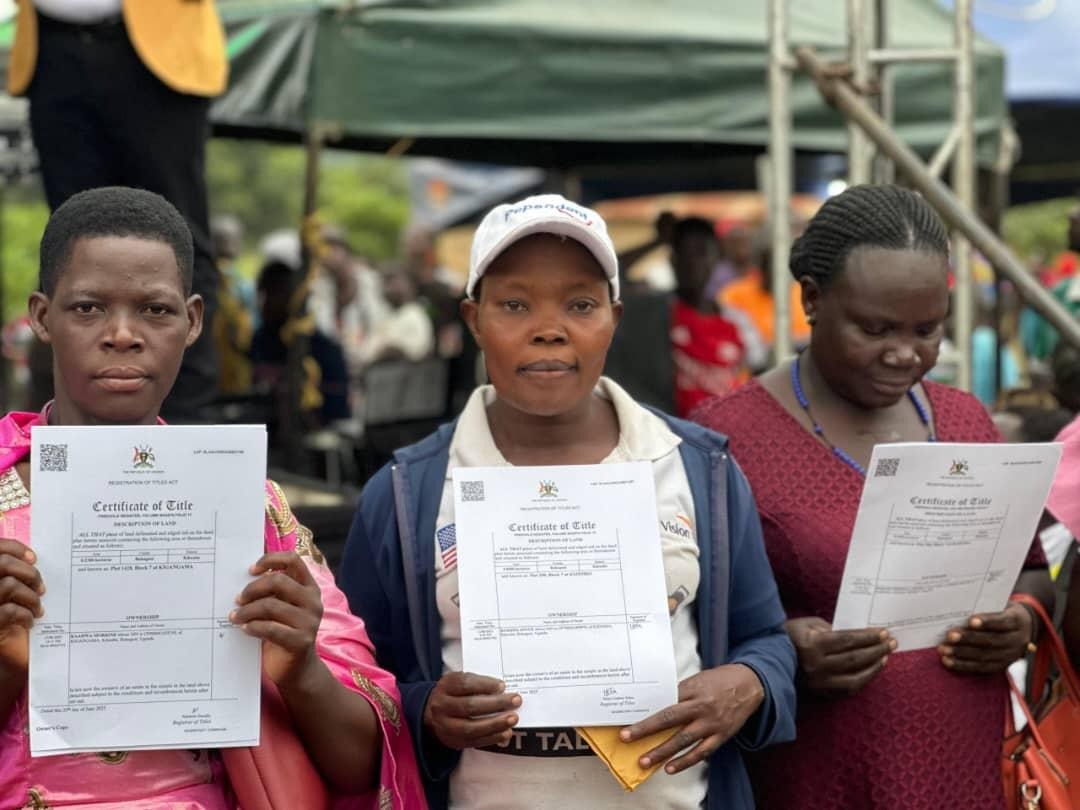
For many women, securing land rights is not just about having a law that recognizes their ownership. Even after participating in land registration programs, some lack the documents to prove their claims because they cannot afford the fees, travel long distances to government offices, or navigate complicated procedures.
Experiences from Tanzania, Uganda, and Zambia show how these barriers keep women from completing the final stages of land documentation, leaving their claims vulnerable even after the registration process has begun.
Land rights practitioners discussed these challenges during an online webinar organized by TenureSecurity.org with LandBridge International on the recent International Day of Rural Women. The event commemorated the day and examined why women with recognized land claims can remain without legal documentation and what must change to help them secure and exercise their rights.
Ms. Rania Ahmed, a co-founder of LandBridge International, said the organization began focusing on these barriers after noticing a gap between men’s and women’s access to land titles in Zambia. She says data from land-titling work showed that women-headed households participated in the process but did not receive their titles.
“We started to wonder how many other women have a recognized claim to land and have even begun the documentation process but couldn’t complete the final steps needed to secure legal ownership,” Ms. Ahmed said.
The organization initially suspected that the upfront payment to complete registration prevented women from obtaining their documents. This concern led to the creation of LandBridge, which works through local partners to help women overcome practical obstacles to obtaining documentation in their own names.
According to Ahmed, the problem extends beyond the absence of legal rights. In many places, she said, women have recognized claims to land and government documentation programs are already in place, yet they remain unable to complete the process.
“Without documentation in their names, their homes and land remain vulnerable, especially after divorce or the death of a spouse,” she added.
Ms. Ailey Kaiser-Hughes, a land tenure and women’s land rights specialist and co-founder of LandBridge, said the barriers often go beyond the cost of obtaining a title.
“We see common barriers across countries, and a fee is rarely the whole story. Women may lack clear information, money for transportation, or the documents needed to enter the registration process. Some also lack the confidence or support to navigate government bureaucracy and unfamiliar offices,” she added.
“I saw this firsthand during land titling work in Monrovia “I saw this firsthand during land titling work in Monrovia, Liberia. To participate, landholders needed an official ID costing about US$5, plus travel expenses to a government office. As a result, few community members had the required ID, and even fewer were women. This prevented many women from participating from the start. We negotiated with the government to bring identification services directly to the community, significantly increasing participation,” she added.
Identification remains a significant obstacle, particularly for widows and older women who may have limited financial resources.
Mr. Mustafa Issa, CEO of Tanzania Land Tenure Assistance, said the organization has worked for about 20 years to help women obtain Certificates of Customary Right of Occupancy (CCROs). He added that about 60 percent of women in the villages they worked with could not afford the payment.
He explained that awareness of land rights had improved through government initiatives and the work of implementing partners. However, paying for documentation remained a serious challenge.
“Most of the women we’ve been working with face challenges in getting financial support to contribute to their land registration and receive certification,” Mustafa said. explained that the cost of obtaining a certificate had risen from about US$10 per parcel to about US$20, making it unaffordable for many rural women.
“Those with husbands can manage, but widows and older women struggle to pay for their CCROs,” he added. He called for targeted financial support to help disadvantaged women complete land registration and suggested incorporating such assistance into local government financing systems.
In Uganda’s Oyam District, some women have land titles already produced under a government project but remain uncollected because of the costs and administrative procedures required to release them.
Ms. Christine Kajumba, research manager at Associates Research Trust, explained that the government had completed the technical work and delivered the titles to the district. However, applicants still needed to pay outstanding government fees and have caveats removed before receiving their documents. She added that the required payments amounted to approximately US$28 to US$30 per title.
Kajumba described how the process can stall even after people pay and submit titles to the relevant offices.
“When we paid for those 100 titles, we spent six months without getting the land titles,” she said, attributing the delays to administrative procedures involving the national land information system, which requires titles to pass through a digital process before they can be released.
Ms. Kajumba adds that distance is another obstacle, as offices are located far away.
“Even when a woman can afford the US$30, she must navigate a lengthy process involving separate government offices. She first goes to the district land office to collect the title, then travels about 70 kilometers to the regional Ministry of Lands, Housing and Urban Development office in Lira. For women from sub-counties or villages 80 to 100 kilometers away, the journey is even more challenging. This creates an opportunity cost. A woman may ask why she should spend time and money traveling to collect a document when she can continue using her land without it. Even when the title is ready, she may decide the cost and effort are not worth it,” she added.
In Zambia, the financial burden becomes particularly evident at the final stage of land registration, when applicants receive an offer letter specifying the payment required to obtain a certificate of title.
Ms. Kamiji Malasha, a gender specialist with LandBridge International in Zambia, explained that the government’s land formalization program takes households through sensitization, enumeration, verification, and the offer-letter stage, adding that, although women may complete the earlier steps, the required payment can prevent them from receiving their certificates.
“Many women want to secure their title deeds, but the upfront cost is simply out of reach for them,” Kamiji said.
“The initial payment required by the Ministry of Lands was about 1,000 Zambian Kwachas, roughly US$50 at the time. The total cost to obtain a title was about US$150. For a woman-headed household in an informal settlement, that’s less than $2 a day. That’s nearly a month’s household income. As a result, women may have to choose between paying for land documents and meeting immediate family needs like food, rent, and other basic expenses,” she said.
Kamiji said targeted support could help women overcome this final barrier, while community outreach and sensitization could ensure they understand the registration process and the importance of obtaining their documents.
She also called for services to be brought closer to women, rather than requiring them to travel repeatedly to government offices.
“Services must come to the women, rather than requiring the women to come to the system,” she said.
Related posts:

Land Grabbing Crisis Escalates in Uganda: Mayiga Urges Citizens to Secure Land Documents

Women’s Climate Assembly, 2024: African women vow to protect human and environmental rights amidst an influx of destructive land-based investments on the continent.
“No Land, No Life” – Women at the East Africa Convergence Refuse to Move out Quietly
Kibaale Residents Raise Corruption Concerns Over Delayed Land Title Processing
From grassroots action to policy transformation: How local environmental solutions spark enduring change.
A coalition of 625 African faith leaders will gather, united in their call for reparations in response to what they describe as the failure of a Gates-backed agricultural model.
High land title costs, bureaucracy, and distance leave women struggling to secure land rights in Africa.
Environmental and human rights advocates are urging the world to hold global investors accountable for their actions.
Tanzanian Government Abducts Maasai Villagers in an Unconscionable Attack on Indigenous Land Defenders
World Food Day 2026: Building healthy diets means reimagining how we grow, share, and enjoy our food.
The global race for clean energy minerals is leaving communities grappling with conflicts and human rights abuses, a new report reveals.
Sweeping investments are fueling widespread land grabbing and deepening rights violations across Uganda – Report.
Innovative Finance from Canada projects positive impact on local communities.
Over 5000 Indigenous Communities evicted in Kiryandongo District

Petition To Land Inquiry Commission Over Human Rights In Kiryandongo District

Invisible victims of Uganda Land Grabs
Resource Center
- CAN AFRICAN FOOD SYSTEMS THRIVE WITHOUT CHEMICAL FERTILISERS
- Land And Environment Rights In Uganda Experiences From Karamoja And Mid Western Sub Regions
- REPARATORY AND CLIMATE JUSTICE MUST BE AT THE CORE OF COP30, SAY GLOBAL LEADERS AND MOVEMENTS
- LAND GRABS AT GUNPOINT REPORT IN KIRYANDONGO DISTRICT
- THOSE OIL LIARS! THEY DESTROYED MY BUSINESS!
- RESEARCH BRIEF -TOURISM POTENTIAL OF GREATER MASAKA -MARCH 2025
- The Mouila Declaration of the Informal Alliance against the Expansion of Industrial Monocultures
- FORCED LAND EVICTIONS IN UGANDA TRENDS RIGHTS OF DEFENDERS IMPACT AND CALL FOR ACTION
Legal Framework
READ BY CATEGORY
Newsletter
Trending
-
NGO WORK2 weeks agoTanzanian Government Abducts Maasai Villagers in an Unconscionable Attack on Indigenous Land Defenders
-
MEDIA FOR CHANGE NETWORK2 weeks agoWorld Food Day 2026: Building healthy diets means reimagining how we grow, share, and enjoy our food.
-

MEDIA FOR CHANGE NETWORK2 weeks agoCourt remands 10 anti-oil activists as suspect collapses in dock
-
MEDIA FOR CHANGE NETWORK5 days agoEnvironmental and human rights advocates are urging the world to hold global investors accountable for their actions.
-
MEDIA FOR CHANGE NETWORK2 weeks agoInternational Day of Rural Women : Rural women farmers deserve not only equal rights and access to resources, but also the strength and voice to safeguard Mother Nature.
-
MEDIA FOR CHANGE NETWORK2 weeks agoDefending ancestral land comes at a steep price as Maasai communities in Tanzania face relentless, mounting pressure.
-

NGO WORK2 weeks agoAs World Bank Holds Annual Meetings, 84,000 Tanzanians Call for Justice
-

MEDIA FOR CHANGE NETWORK2 weeks agoAs waves of investment sweep across Uganda, countless women rise to defend their land, safeguard their traditions, and claim their right to be heard.