Connect with us

MEDIA FOR CHANGE NETWORK

Appellate Division of the East African Court of Justice (EACJ) rejects the request to dismiss the EACOP appeal case.


Published

on

By Witness Radio team.

The Appellate Division of the East African Court of Justice (EACJ) has rejected a request by the Tanzanian government to dismiss an appeal filed by four East African civil society organizations (CSOs) seeking compliance with the East African Crude Oil Pipeline (EACOP) with regional and international human rights standards.

Tanzania’s Deputy Solicitor General, Mr. Mark Mulwambo, requested the judges dismiss the Appeal, arguing that the record of proceedings from the hearings held at the First Instance Division was missing. The record of proceedings includes the CSOs and respondents’ submissions. He added that, without it, the judges at the Appellate Division could not determine whether the First Instance Court erred in the ruling that they made.

However, the court could not grant his request. Instead, it ordered the four CSOs that filed the Appeal to file supplementary information so that the judges could hear the case.

The Appeal will be heard by a panel of judges from the Appellate Division of the EACJ, including Justice Nestor Kayobera, the division’s president; Justice Anita Mugeni, the Vice President; Justice Kathurima M’Inot; Justice Cheboriona Barishaki; and Justice Omar Othman Makungu. These judges, with their expertise in regional and international law, will review the Appeal and make a final decision.

The Appeal was filed by four CSOs, including the Africa Institute for Energy Governance (AFIEGO) from Uganda, the Centre for Food and Adequate Living Rights (CEFROHT) from Uganda, the Natural Justice (NJ) from Kenya, and the Centre for Strategic Litigation (CSL) from Tanzania, in December 2023. This was in response to the dismissal of their case, which sought compliance with the East African Crude Oil Pipeline (EACOP) with regional and international human rights standards, by judges at the First Instance Division of the EACJ in November 2023.

During the dismissal, the court ruled that the applicants filed the petition out of time, stating that the petitioners should have filed the petition as early as 2017 instead of 2020. The court also ruled that it did not have jurisdiction to hear the case, meaning it did not have the legal authority to decide on this matter. These decisions were based on legal precedents and the specific circumstances of the case.

The CSOs were ordered to file the record of proceedings by Justice Nestor Kayobera by November 29, 2024.

The court session was attended by EACOP-affected communities from both Uganda and Tanzania. Among them was Mr. Gozanga Kyakulubya, an affected person from Kyotera District in Southern Uganda, who traveled to Arusha to participate in the hearing. His personal story underscores the profound impact of the EACOP on the lives of these communities.

He shared his grievance, stating, “I came to the court because I have a lot of pain. My land was taken for the EACOP, and before I was paid, it was fenced off. The government of Uganda also sued me because I rejected the low compensation offered by EACOP. We need at least one court to be fair to EACOP host communities, and we hope the East African Court of Justice will be that court.”

The EACOP has been designed, constructed, financed, and operated through a dedicated Pipeline Company with the same name. The shareholders in EACOP are affiliates of the three upstream joint venture partners: the Uganda National Oil Company (8%), TotalEnergies E&P Uganda (62%), and CNOOC Uganda Ltd (15%), together with the Tanzania Petroleum Development Corporation (15%).

The 1,443km pipeline will eventually transport Uganda’s crude oil from Kabaale—Hoima to the Chongoleani peninsula near Tanga Port in Tanzania.

Climate activists and civil society organizations, however, continue to oppose the project, claiming that it will harm several fragile and protected habitats irreversibly and violate key agreements and treaties.

The potential environmental damage is a cause for concern among these groups.

Continue Reading

MEDIA FOR CHANGE NETWORK

Environmentalists Call for Stronger Enforcement as Wetland and Forest Destruction Accelerates

Published

on

Environmentalists have called on government to strengthen enforcement of environmental laws to curb the continued destruction of wetlands, forests and other natural ecosystems, warning that weak implementation is worsening flooding, land degradation and climate vulnerability in Uganda’s urban and rural areas.

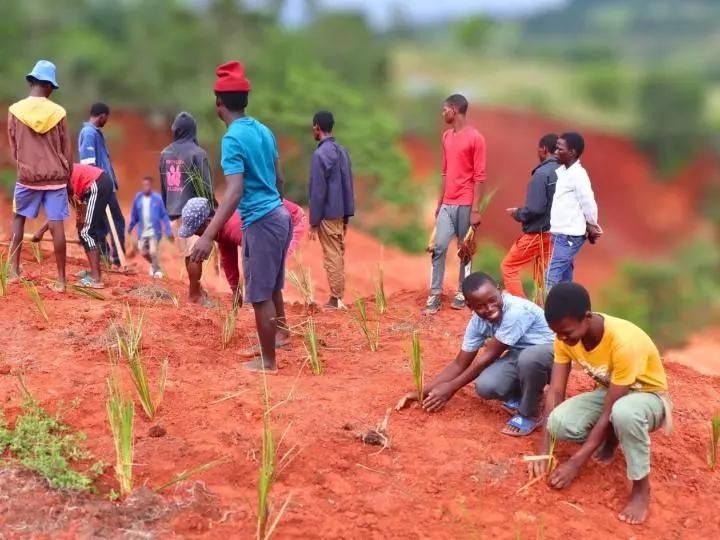
The warning was issued by conservation advocates during a tree-planting and environmental awareness campaign in at Gayaza Junior School in Wakiso District, where stakeholders said ongoing encroachment on protected ecosystems is undermining national conservation efforts.

Enjer Ashraf, Executive Director of the My Tree Initiative, said the rapid loss of wetlands and forest cover is already contributing to environmental disasters, particularly flooding in Kampala and surrounding areas.

“The continuous flooding you see in Kampala and other areas is a result of people degrading natural resources like swamps and forests,” Ashraf said.

He noted that many wetlands and forest reserves are being cleared for settlement, industrial developments and other construction projects, despite existing legal protections meant to safeguard them.

According to Ashraf, while Uganda has environmental protection laws in place, enforcement remains inconsistent, allowing encroachment to continue with limited consequences for violators.

He warned that if the trend is not reversed, the country risks more severe climate-related impacts, including increased flooding, loss of biodiversity and declining agricultural productivity.

The environmentalist made the remarks during a tree-planting exercise at Gaaza Junior School, where more than 500 fruit trees were planted under a broader campaign promoting environmental restoration and climate awareness among young learners.

“As we plant trees to regreen the environment, the spaces where this should happen are being taken over,” he said, calling for tougher action against illegal developments in protected ecosystems.

Push for climate education in schools

Beyond enforcement, the My Tree Initiative also urged government to integrate environmental conservation and climate change education into the national school curriculum, saying early awareness is critical in addressing long-term environmental challenges.

The call was made during the same school-based tree-planting programme, which also saw stakeholders plant mango, avocado and jackfruit trees as part of efforts to establish a sustainable school orchard system.

Organisers said practical environmental education—such as tree planting—should complement classroom learning to help pupils develop long-term conservation habits.

“We believe integrating environmental aspects, including climate change, into the curriculum can help advance awareness among young people,” a representative of the initiative said.

They argued that schools provide a strategic platform for shaping behaviour, noting that children are more likely to adopt environmental practices if exposed to them early.

Private sector joins conservation push

The campaign has also attracted private sector participation, with companies pledging support for nationwide tree-planting initiatives aimed at promoting sustainability and reducing environmental degradation.

Crown Beverages Limited has launched a school-based tree-planting programme targeting more than 2,000 trees across Uganda this year, beginning with 600 fruit trees at Gaaza Junior School.

Pearl Elizabeth Kitimbo, Brand Communications Manager at Crown Beverages Limited, said the initiative is intended to promote environmental responsibility among young people.

“Planting trees is one way of addressing global warming and ensuring future generations have a better environment,” Kitimbo said.

He added that involving children in such programmes increases the likelihood of long-term behavioural change and helps extend conservation practices into households and communities.

Gaaza Junior School officials welcomed the intervention, describing it as a milestone in promoting environmental awareness and nutrition among pupils.

“This is a memorable day because we have never planted such a number of trees before,” said Mrs. Lillian Nyanzi Gwokyalya, Quality Assurance at Gayaza Junior School

She said the fruit trees will provide long-term benefits, including food supply for learners and improved school environmental conditions.

Stakeholders involved in the campaign have urged government, development partners and private sector actors to scale up similar initiatives across the country, arguing that combining enforcement with education and community participation is key to reversing environmental degradation.

They said Uganda’s growing environmental challenges require a coordinated approach that strengthens law enforcement while also promoting awareness and sustainable practices among future generations.

Source: nilepost.co.ug

Continue Reading

MEDIA FOR CHANGE NETWORK

Nabakooba Urges Judicial Integrity in Land Cases Amid Rising Evictions

Published

on

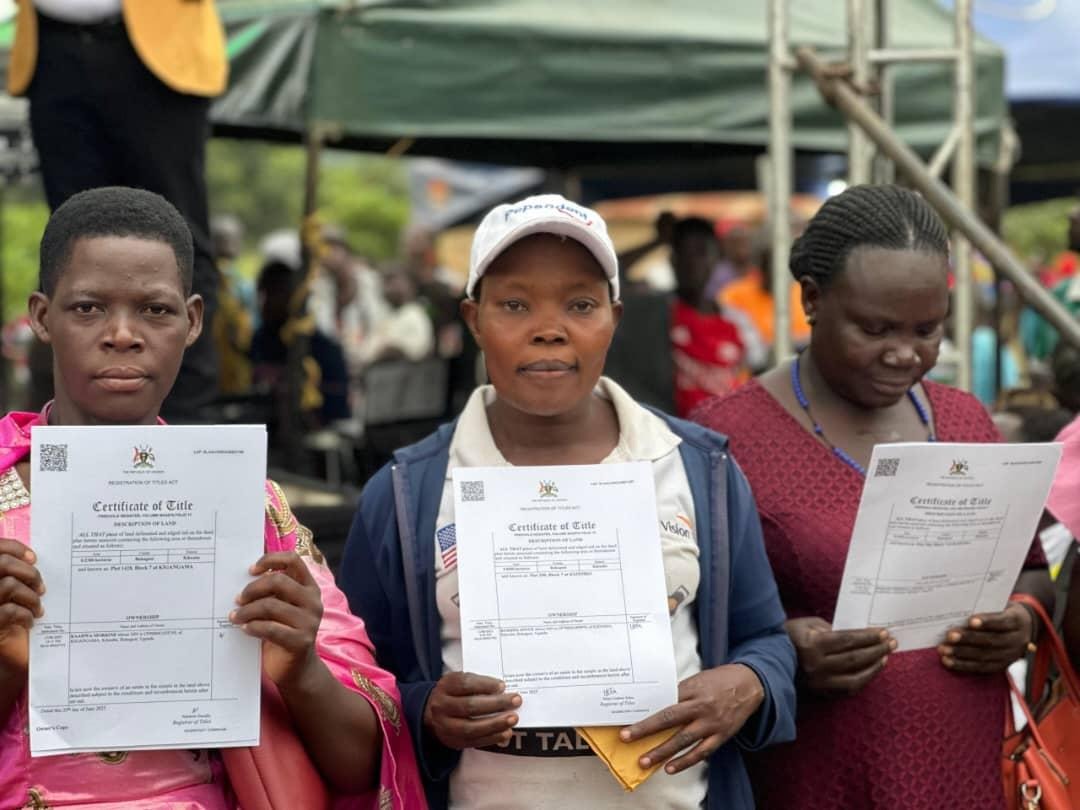
The Minister of Lands, Housing and Urban Development, Judith Nabakooba, has urged judicial officers to exercise greater diligence and uphold the law when handling land-related cases, amid growing concern over unlawful evictions.

Nabakooba emphasized that the judiciary plays a central role in safeguarding citizens’ land rights and must ensure that justice is administered fairly, without bias or external influence.

“Judicial officers must carefully handle land disputes in line with the law, without fear or favour, so that we can put an end to the continued eviction of people from their land,” she said.

She warned that in some cases, the court system is being exploited by individuals seeking to dispossess vulnerable people who lack the resources or legal knowledge to defend themselves effectively.

“There are cases where the courts are used to intimidate those who cannot adequately represent themselves, and in the end, they lose their land unfairly,” she added.

Her remarks come against the backdrop of increasing land disputes across Uganda, many of which have resulted in forced evictions and prolonged legal battles.

Nabakooba stressed the need for a justice system that protects all citizens—particularly the vulnerable—by ensuring transparency, accountability, and strict adherence to the law in land adjudication processes.

She called on judicial officers to remain vigilant and committed to upholding the rights of Ugandans, noting that restoring public trust in the system is essential to addressing the country’s persistent land conflicts.

Source: nilepost.co.ug

Continue Reading

MEDIA FOR CHANGE NETWORK

Breaking: Ugandan Court jails eight Anti-EACOP activists as crackdown on dissent deepens.

Published

on

By the Witness Radio team.

KAMPALA, Uganda—The Buganda Road Chief Magistrate’s Court sentenced eight environmental activists to 11 months in prison for “public nuisance.” The court ruled that their protest against the East African Crude Oil Pipeline unlawfully disrupted traffic in central Kampala.

The group includes Akram Katende, Ismail Zziwa, Teopista Nakyambadde, Shammy Nalwadda, Dorothy Asio, Shafik Kalyango, Noah Kafiiti, and Keisha Ali. They were sentenced on Friday, April 17, 2026, by a Grade One Magistrate. The court convicted them of nuisance on the road, contrary to section 65(e) of the Road Act Cap. 346.

In a judgment delivered by Chief Magistrate H/W Achayo Rophine, the court found that the activists had “placed themselves on the road in a manner that caused danger or inconvenience to traffic.

The activists, operating under the umbrella of Rooted in Resistance, formerly Students Against EACOP Uganda, were arrested on August 1, 2025, while marching toward Stanbic Bank Uganda’s headquarters. They were protesting the bank’s alleged role in financing the controversial East African Crude Oil Pipeline (EACOP).

They have been on remand for more than eight months after being repeatedly denied bail.

In her ruling, Magistrate Achayo relied heavily on police testimony and video evidence, which she said showed the activists standing and sitting in the middle of Hannington Road, holding

placards reading “Stop EACOP” and refusing orders to disperse.

The court concluded that the protest constituted an unlawful assembly, noting that the group had not notified authorities in advance and had failed to comply with police instructions to clear the road.

Citing Article 43 of the Constitution, she ruled that the activists’ actions prejudiced the rights of other road users and the public interest, particularly by causing a traffic jam in a busy section of Kampala.

“The accused persons… caused inconvenience on the road with their unlawful assembly,” the judgment reads.

Despite the relatively minor nature of the offense, which carries a maximum sentence of one year, the activists had already spent most of that time in detention before conviction.

Their prolonged remand has drawn criticism from legal observers and human rights advocates, who argue that the case reflects a broader pattern of punitive pre-trial detention.

Defense lawyer Kato Tumusiime condemned the ruling and announced plans to appeal to the High Court, describing the decision as an attack on fundamental freedoms.

He argued that the conviction is “intended to silence freedom of expression and speech in Uganda.”

“The judgment is unfair, and we intend to appeal it,” lawyer Kato Tumusiime said.

The case is part of a growing number of arrests linked to opposition to the East African Crude Oil Pipeline, a major regional infrastructure project.

In April 2025, another group of activists, commonly known as KCB 11, protesting against KCB Bank Uganda’s involvement in the project, were detained for three months under similar circumstances.

Campaigners say these cases point to a systematic use of the justice system to deter protest against powerful economic interests.

The East African Crude Oil Pipeline (EACOP) is a 1,443-kilometer heated crude oil pipeline designed to transport crude oil from western Uganda’s Lake Albert region to the port of Tanga in Tanzania. The project is being developed by a consortium led by TotalEnergies and China National Offshore Oil Company, alongside the governments of Uganda and Tanzania.

Supporters of the project say it is central to Uganda’s economic ambitions, expected to generate revenue, create jobs, and enable the country to become an oil exporter.

However, environmental groups and civil society organizations have raised concerns about its impact. Critics point to the displacement of communities during land acquisition, potential risks to ecosystems, and the project’s contribution to global carbon emissions.

Despite opposition, the project has already entered the implementation phase. Construction activities are ongoing in both Uganda and Tanzania, and land acquisition processes have largely progressed, although some disputes remain. Uganda continues to target its first oil production within the next few years.

These concerns have fueled a wave of protests, targeting financial institutions seen as backing the pipeline.

Campaigners have also criticized companies and financiers linked to the project for failing to speak out. StopEACOP Campaign Coordinator Zaki Mamdoo has argued that corporate silence in the face of arrests is not neutral, pointing to evidence of communication between project developers and Ugandan authorities.

“At COP28, when I confronted TotalEnergies CEO Patrick Pouyanné over the arrest of yet another group of anti-EACOP activists, he confirmed to me that the company was in direct communication with Ugandan authorities over the detention of those activists. That demonstrates that the companies behind EACOP are not passive observers of the repression meted out by the authorities”, said StopEACOP Campaign Coordinator, Zaki Mamdoo.

Continue Reading

Resource Center

Legal Framework

READ BY CATEGORY

Facebook

Newsletter

Subscribe to Witness Radio's newsletter


Trending

Subscribe to Witness Radio's newsletter