
MEDIA FOR CHANGE NETWORK
StopEACOP Coalition demands disclosure of US$3.7 billion in pipeline financing

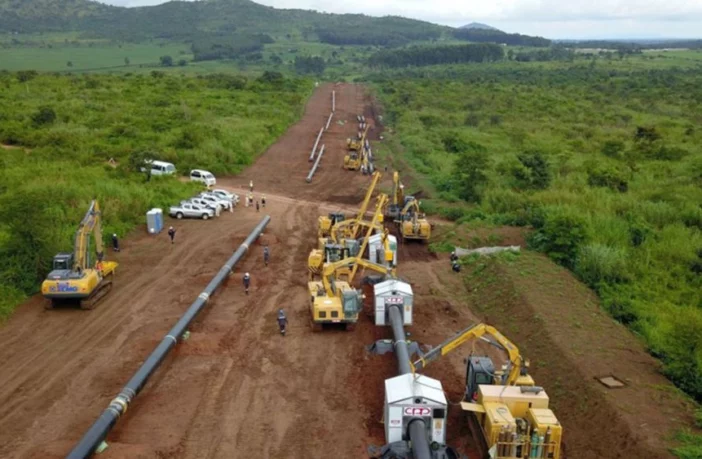
- A coalition of 149 organisations has called on eight African and Middle Eastern financial institutions to disclose their involvement in the East African Crude Oil Pipeline.
- New analysis by Reclaim Finance identified approximately US$3.7 billion in project lending linked to the pipeline between 2025 and 2026, with several lenders yet to publicly disclose their exposure.
- The coalition is demanding greater transparency, a commitment to stop further funding for oil expansion and financial support for communities affected by the project.
The StopEACOP coalition has sent an open letter to eight African and Middle Eastern financial institutions, demanding full disclosure of their financial involvement in the East African Crude Oil Pipeline (EACOP) project and greater accountability for its environmental and social impacts.
Signed by 149 organisations, including representatives of communities affected by the pipeline, the letter follows new analysis by Reclaim Finance that identified approximately US$3.7 billion in project lending linked to EACOP between 2025 and 2026.
The institutions linked to the financing include Afreximbank, KCB Group and KCB Bank Uganda, the Islamic Development Bank Group and the Islamic Corporation for the Development of the Private Sector, NMB Bank Tanzania, Qatar National Bank, Standard Bank Group and Stanbic Bank Uganda, and Uganda Development Bank.
The coalition says the financing has largely come from African and Gulf lenders after more than 40 banks and 30 insurance companies declined to support EACOP or introduced policies restricting their involvement.
Although EACOP Ltd has publicly confirmed some financing involving Afreximbank, Standard Bank, Stanbic Bank Uganda, KCB Bank Uganda and the Islamic Corporation for the Development of the Private Sector, it has not disclosed the amounts involved. The terms and extent of exposure among other institutions, including NMB Bank Tanzania, Qatar National Bank and Uganda Development Bank, also remain undisclosed.
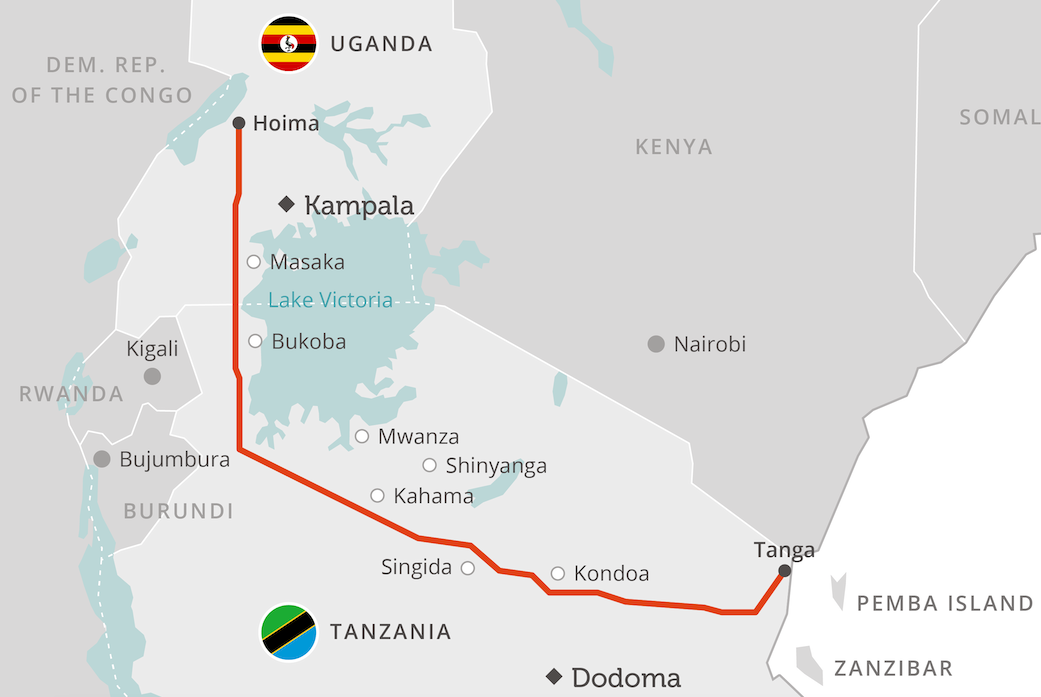
East African Crude Oil Pipeline map. Image credit: EACOP
The demand for transparency comes as the project faces further delays to its expected start of oil production. At African Energy Week, held from 12 to 16 October, Uganda National Oil Company officials said commercial production was now targeted for June 2027. Previous targets had included 2025, June 2026 and July 2026.
Tanzania’s state petroleum company has separately indicated that crude oil could reach Tanga by February 2027, with the first tanker loading expected in March.
EACOP is designed to transport crude oil from Uganda’s oil fields to the Tanzanian coast for export. The project has faced sustained opposition from environmental organisations and community groups concerned about its climate impact, land acquisition, compensation, biodiversity and human rights implications.
In its letter, the StopEACOP coalition is calling on each financial institution to disclose the full scope, structure and terms of its support, including exposure through bonds, guarantees and advisory roles.
The coalition also wants the institutions to commit to providing no further funding for EACOP expansion or related oil and gas development in Uganda’s Albertine Graben region or elsewhere.
A third demand calls for financial contributions towards remedying harm suffered by affected communities. The proposed mechanism would be independent and community led, providing compensation, restoring livelihoods and funding environmental clean up. The coalition says EACOP Ltd and its financial backers should contribute according to their respective roles in the project.
“First oil does not mark an end to the harm caused by EACOP. It escalates and entrenches it,” said Zaki Mamdoo, StopEACOP campaign coordinator.
Mamdoo said financial institutions that had provided billions of dollars to the project must publicly account for their decisions and take responsibility for addressing the damage associated with their investments.
For communities affected by land acquisition and construction, the consequences of the project are already being felt.
“When they took our land, we lost more than the land itself. We lost the means to support our families. Compensation was supposed to help us rebuild our lives, but for some of us, that has not happened,” said Rachael Tugume, an EACOP project affected person.
She questioned whether the banks financing the pipeline understood the impact on the people whose land had made the project possible.
Antoine Bouhey, Defund TotalEnergies campaign coordinator at Reclaim Finance, said financial institutions that had agreed to finance EACOP should be held accountable for the project’s impacts.
He said lenders should contribute to reparative justice for affected communities and commit to excluding new financing for oil and gas expansion in Uganda and elsewhere.
The coalition has also raised concerns about land acquisition and compensation failures, the loss of livelihoods, militarisation and environmental damage along the pipeline route and at the Chongoleani terminal in Tanga, Tanzania. It warns that these risks will persist and could intensify once oil production and exports begin.
The eight financial institutions have been asked to clarify their positions by 16 November. The coalition says it will publish both responses and non-responses after the deadline.\
Author: Bryan Groenendaal
Source: greenbuildingafrica.co.za
Related posts:

 StopEACOP Movement calls for an end to harmful oil projects and demands a just transition.
 #StopEACOP campaign calls on Standard Bank to come clean about its funding of the East African Crude Oil Pipeline
 StopEACOP raises alarm over €1.5bn back door funding for TotalEnergies
 A Financial gap: Can China be stopped from financing the EACOP?
MEDIA FOR CHANGE NETWORK
Standard Bank faces complaint over sustainability claims linked to East African Oil Pipeline

- Fossil Free South Africa and its partners have lodged a complaint with the Advertising Regulatory Board, challenging the bank’s environmental and climate related marketing.
- The complaint centres on Standard Bank’s involvement in financing the 1,443 kilometre East African Crude Oil Pipeline, which campaigners say conflicts with its sustainability commitments.
- The complainants are seeking a review of the bank’s environmental claims and want any statements found to be misleading or inadequately supported to be amended or withdrawn.
Standard Bank is facing a formal complaint to South Africa’s Advertising Regulatory Board (ARB) over environmental and climate claims in its corporate reporting and financial services advertising, with campaigners questioning whether its sustainability messaging accurately reflects its involvement in fossil fuel infrastructure.
The complaint was lodged by Fossil Free South Africa (FFSA), represented by Lawyers for Human Rights. They are joined by StopEACOP Coalition, an international coalition of frontline community organisations and civil society groups. It challenges statements in Standard Bank’s 2025 Report to Society, its Climate Related Financial Disclosures and advertising for its energy, infrastructure and sustainable finance services.
According to the complainants, Standard Bank presents itself as a leading provider of sustainable finance and an enabler of Africa’s just energy transition while supporting financing for the East African Crude Oil Pipeline (EACOP). They argue that the bank’s environmental claims should be assessed against the wider impact of the projects it helps finance.
East African Crude Oil Pipeline map. Image credit: EACOP
The 1,443 kilometre pipeline is designed to transport crude oil from Uganda’s oilfields to the Tanzanian coast. The project has attracted international criticism over its potential climate impact, environmental risks and effects on communities along its route.
Peak production is projected to generate up to 34 million tonnes of carbon dioxide equivalent annually at peak production and approximately 379 million tonnes over the project’s lifecycle. Furthermore, the pipeline’s path breaches 158 wetlands in Uganda, eleven rivers and dozens of legally protected, ecologically sensitive areas.
The complainants further raise concerns about reported land loss, economic displacement, compensation disputes and disruption to local livelihoods. They also point to reports of harassment, arrests and intimidation involving environmental and human rights defenders who oppose the project.
Standard Bank’s stated commitments to renewable energy, reduced fossil fuel exposure, water conservation, biodiversity protection and net zero financed emissions by 2050 are central to the complaint. The campaigners argue that these commitments require clear evidence of how the bank’s financing activities align with its public sustainability messaging.
Kholwani Simelane, campaign coordinator and team lead at Fossil Free South Africa, said the complaint seeks to establish whether the bank’s environmental image can withstand scrutiny of the projects it supports.
The complaint also questions Standard Bank’s assertion that EACOP meets the Equator Principles and the International Finance Corporation’s Performance Standards. It asks the bank to substantiate this position and explain how its financing decisions align with its commitments to water conservation and environmental protection, particularly given the pipeline’s proximity to freshwater systems, including the Lake Victoria basin.
The dispute comes amid wider scrutiny of financial institutions involved in fossil fuel infrastructure. According to the StopEACOP Coalition, more than 40 banks and 30 insurers internationally have distanced themselves from EACOP or introduced policies excluding the project or similar developments. South African financial institutions including Absa, FirstRand, Nedbank and Investec have also declined to participate, the coalition says.
Zaki Mamdoo, coordinator of the StopEACOP Coalition, said the concerns extend beyond corporate advertising to the consequences experienced by communities along the pipeline corridor, including pressure on livelihoods and local ecosystems.
The ARB Code requires environmental claims to be substantiated and not mislead consumers through omission, ambiguity, inaccuracy or exaggeration. The complaint asks the regulator to examine Standard Bank’s claims relating to climate alignment, fossil fuel reduction and sustainable finance, and to require amendments or withdrawal of any representations found to be misleading or inadequately supported.
Brighton Aryampa, a Ugandan human and environmental rights lawyer working with communities affected by EACOP, said the complaint was intended to establish whether the bank’s public sustainability messaging provides an accurate account of its financing activities. He noted that financing a fossil fuel project does not automatically negate every renewable energy investment made by a bank, but argued that its overall environmental claims must be assessed in context.
The outcome of the complaint could have implications for how financial institutions communicate their sustainability commitments and environmental performance to customers and the public. It also raises broader questions about the evidence banks should provide when marketing sustainable finance services while maintaining exposure to fossil fuel infrastructure.
The ARB has been asked to scrutinise the claims and determine whether corrective action is warranted.
Author: Bryan Groenendaal
Source: greenbuildingafrica.co.za
Related posts:
 Breaking: Complaint filed with US NCP against insurance broker Marsh over East African pipeline.
 Insurance firms should shun the East African Crude Oil Pipeline
 Uganda: StopEACOP Campaign Condemns Standard Bank’s Decision to Fund EACOP
 Indigenous communities’ complaint against World Bank-linked Nepal Cable Car Project declared eligible for investigation.
MEDIA FOR CHANGE NETWORK
From grassroots action to policy transformation: How local environmental solutions spark enduring change.
Related posts:

 Uganda moves toward a Bamboo Policy to boost environmental conservation and green growth.
 Witness Radio, private companies, CSOs and local government officials are meeting to discuss alternative remedies to salvage the appalling land and environmental rights situation in Kiryandongo district.
 Joint CSO Statement Calls on IFC and MIGA to Strengthen its New Approach to Remedial Action Policy
 Experts push for a National Bamboo Policy to strengthen climate mitigation efforts.
MEDIA FOR CHANGE NETWORK
A coalition of 625 African faith leaders will gather, united in their call for reparations in response to what they describe as the failure of a Gates-backed agricultural model.
Related posts:

 Failed Green Revolution: African Leaders Demand Reparations from Gates Foundation.
 African Food Systems Summit 2024: Do not use it to promote failed agricultural models – African Faith Leaders.
 African Faith Communities Tell Gates Foundation, “Big Farming is No Solution for Africa
 East African lawmakers and CSO leaders are meeting in Uganda to draw up plans to promote Agroecology as an alternative to climate change mitigation.

Standard Bank faces complaint over sustainability claims linked to East African Oil Pipeline

StopEACOP Coalition demands disclosure of US$3.7 billion in pipeline financing

From grassroots action to policy transformation: How local environmental solutions spark enduring change.

A coalition of 625 African faith leaders will gather, united in their call for reparations in response to what they describe as the failure of a Gates-backed agricultural model.

Tanzanian Government Abducts Maasai Villagers in an Unconscionable Attack on Indigenous Land Defenders

World Food Day 2026: Building healthy diets means reimagining how we grow, share, and enjoy our food.

The global race for clean energy minerals is leaving communities grappling with conflicts and human rights abuses, a new report reveals.

Environmental and human rights advocates are urging the world to hold global investors accountable for their actions.

Innovative Finance from Canada projects positive impact on local communities.
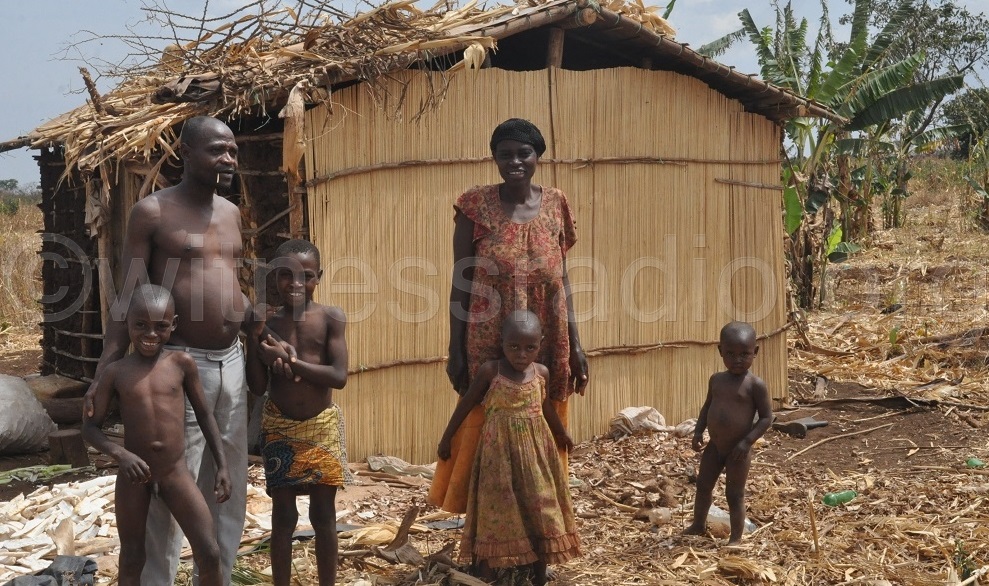
Over 5000 Indigenous Communities evicted in Kiryandongo District
Petition To Land Inquiry Commission Over Human Rights In Kiryandongo District

Invisible victims of Uganda Land Grabs
-
 MEDIA FOR CHANGE NETWORK2 weeks ago
World Food Day 2026: Building healthy diets means reimagining how we grow, share, and enjoy our food.
-
 MEDIA FOR CHANGE NETWORK7 days ago
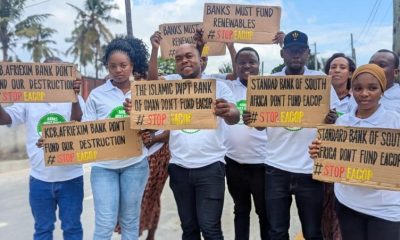
Environmental and human rights advocates are urging the world to hold global investors accountable for their actions.
-
 MEDIA FOR CHANGE NETWORK2 weeks ago
International Day of Rural Women : Rural women farmers deserve not only equal rights and access to resources, but also the strength and voice to safeguard Mother Nature.
-
 NGO WORK2 weeks ago
As World Bank Holds Annual Meetings, 84,000 Tanzanians Call for Justice
-
 FARM NEWS2 weeks ago
Teso farmers revamp grapefruit growing
-

 MEDIA FOR CHANGE NETWORK1 week ago
Why are secure land rights key to Africa’s climate resilience and the protection of its natural treasures?
-

 FARM NEWS1 week ago
Uganda Leads Africa in Certified Organic Farmland Ahead of First Organic, Nature Expo
-

 MEDIA FOR CHANGE NETWORK1 week ago
Lands Ministry tightens rules for replacing lost titles, gives landowners 30 days to object