Connect with us

MEDIA FOR CHANGE NETWORK

The Taiwanese investor & Others: Dozens of community land and environmental rights defenders are in prison for opposing his aggressive land acquisition tactics.


Published

on

By Witness Radio team.

An independent investigation by Witness Radio has revealed that a tree plantation co-owned by the Taiwanese has aided the criminalization of over 20 community land defenders’ work in Mubende District and caused prison sentences ranging from 30 months to 34 years, respectively.

Witness Radio is a Ugandan-based not-for-profit organization that uses legal aid support and media-oriented approaches, such as investigative, data, and advocacy journalism, to protect and promote the land and environmental rights of local and Indigenous communities in development.

These investigations, spanning two months, have unearthed a staggering 23 cases of criminalization against defenders since Quality Parts commenced operations in Mubende District in 2011. These arbitrary arrests, kidnaps, raids of defenders’ homes at night, assaults, tortures, and alleged aiding of unfair convictions are a stark reminder of the profound injustice faced by those who oppose the company’s land grab of the community land.

For many years, Quality Parts Limited has deployed Mubende district police, private security firms, and company workers to carry out intimidation, coercion, and manipulation. No community member has ever been consulted or consented to the removal of their land.

In their unwavering commitment, these defenders are protecting a community of smallholder farmers who have lawfully occupied and cultivated their land for over five (5) decades. Most smallholder farmers have legal documents proving their legitimate land ownership, starkly contrasting the injustice they face.

Quality Parts Uganda Limited, incorporated in 2000, operates plantations of pine and eucalyptus trees in Mubende district, southwestern Uganda. The company is co-owned by Taiwanese investor Chang Shu-mu, known as Martin Chang, and his wife, Anna Kyoheirwe.

When writing this report, nine (9) community defenders are serving prison sentences ranging from 30 months to 34 years in Muyinayina and Kaweeri government prisons in the Mubende district, with the majority facing multiple offenses. According to Witness Radio interviews, more community defenders allege that the company regularly threatens community land defenders that they will face the same fate if they continue to oppose its actions.

In the latest incident, hell broke loose in the early morning hours of January 29, 2024, when four Quality Parts Uganda Ltd company workers, guarded by three armed police officers in casual attire (later it was established to be attached to Mubende Central Police Station), attacked, beat, and arbitrarily arrested three land rights defenders based in Kicuculo village, Kiruuma Sub-county in Mubende district accusing them of destroying the tree plantation. It was the second brutal arrest of the trio.

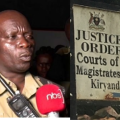
The three defenders, Byakatonda David, Kabuuka Levi, and Byamukama Yuda, the Kicucuulo Village chairman, were briefly taken to Mubende Police before being aligned before Mubende district Magistrates’ Court. They were charged with malicious property damage and remanded to Kaweeri Prison on the same day.

Mr. Byamukama Yuda is one of those serving a 30-month sentence at Muyinayina Prison; an interview with Witness Radio revealed that three armed Police officers from Mubende and company officials raided his home at 5 a.m., manhandled and assaulted, and arrested him without explanation.

“In the early hours of the morning, the group raided my home and ordered me to open the door. At first, I hesitated because I had no idea who they were since they never introduced themselves. But when they started aggressively banging one of my house’s doors, my wife and I had no choice but to open it. The moment I did, my eyes met the furious faces of armed officers who humiliated and assaulted me in front of my wife and children before forcefully arresting me without offering any explanation. These officers threw me into a waiting saloon car whose number plates I can’t recall, where I found workers from Quality Parts. Instead of offering any clarity about my arrest, they just threatened me, accusing me of being ‘big-headed. Within minutes, they sped off to my son Levi’s home, where he, too, was arbitrarily arrested alongside me,” Byamukama revealed.

Another defender, 62-year-old Byakatonda David, was forcefully arrested by masked gangs wielding machetes, led by a man named Kayumba, affiliated with Quality Parts Uganda Ltd. He revealed, “These men told me that the police had instructed them to arrest me and take me to join the other two who had been arrested earlier (Byamukama and Kabuuka). They forcefully arrested threatening to cause more harm to me in case I tried to resist,” the defender told Witness Radio.

They further revealed that their continued mobilization of community members (villagers) to resist the company’s land grab continues to lead to their criminalization. This continued criminalization highlights the deep-rooted injustices that defenders face when opposing harmful development projects. The trio spent five months on remand at Kaweeri prison, appeared in court over 18 times, and emphasized that their conviction was made in bad faith.

“First of all, this case was unnecessarily delayed, as either the state or the magistrate frequently absented themselves, forcing us to appear in court numerous times. The trial was also unfair, as we were never allowed to defend ourselves. Also, the evidence presented was fake. In the ruling, the magistrate stated that the testimony of four witnesses satisfied the court, yet only three appeared, and even their evidence was questionable,” Mr. Byakatonda further mentioned.

Witness Radio has also established that powerful multinational companies are using police, district officials, and court personnel to aid land grabbing. The same system weakens the poor landowners and forces them to surrender their land for Quality Parts. “When we try to resist, they oppress us. The company tells us they are backed by government officials and other powerful individuals in security forces, which is evident because even when we report our cases to authorities, little or no action is taken. They tell us we have no power to oppose the investors,” Byamukama expressed his disappointment.

On June 21, 2024, the three were convicted of malicious damage to property and sentenced to 30 months in Muyinayina prison despite inconsistencies in the evidence presented by witnesses.

The charges against the community defenders stem from a violent incident on December 6, 2022, when a group of over 20 casual workers linked to Quality Parts Uganda Ltd attacked the village of Kicucuulo, hacked people, and destroyed property, including houses and crops. These workers raided the homes of outspoken community members, cut people with pangas, and beat everyone they found in their homes, threatening to kill them if they didn’t leave the land. Three people were hacked, while properties worth millions of Shillings were destroyed.

Despite the violence they endured that day, those who were hacked and others whose property was destroyed were arrested when they went to report the incident to Mubende police.

Meanwhile, the company workers responsible for the harm remained untouched. At that time, the defenders, Kabuka Levi, Lubwama Robert, Bulegeya Erisa, Byakatonda David, and Byamukama Yuda, were arrested, interrogated, and made to record statements before being released on police bond.

“When we reached Mubende police, we were all arrested and interrogated for almost an hour before recording statements on malicious damage charges. The company claimed we cut its trees, which we did not do,” Mr. Kabuka Levi told Witness Radio in an interview in 2023.

Witness Radio’s investigations have also found out that by the time the alleged tree cutting took place, as said by the company and its witnesses in court, that is the same time, the accused were treating wounds from the previous attack by the company workers, raising questions on whether the accused were the real suspects.

“It is unfortunate that people accused of committing land-related crimes against the ‘investor’ are landowners who have for generations occupied and cultivated their land until they faced this violent land grab. Duty bearer agencies have been captured and are being used to target defenders and activists pushing back forced evictions,” Witness Radio’s Team Leader Jeff Wokulira Ssebaggala said.

The Mubende Magistrates Court eventually dismissed the case on October 17, 2023, due to a lack of evidence. However, in January 2024, the three Byamukama, Byakatonda, and Kabuuka were arrested, charged, and convicted again for the same offense of cutting the company’s trees.

This trend of persecution has instilled fear in the majority of the community, with a saying: “You accept what the company wants, or you go to jail for opposing it.” Other individuals arrested for resisting the company’s land grab include Kaberuka Fenehansi, who died last year while serving a prison sentence; Sinamenya Paul, Ssemombwe Richard, Ategeka Esau, Bukenya Godfrey, Ssebanenya Yona, and Sserugo Sam, all serving sentences ranging from 15 to 34 years.

Continue Reading

MEDIA FOR CHANGE NETWORK

Land surveyors escape mob action in Mubende over alleged illegal demarcation.

Published

on

By Witness Radio Team.

Mubende: Residents of Kisagazi Village, Kiteera Parish, Butoloogo Sub-county, Mubende District, drove away land surveyors accused of trying to illegally demarcate land boundaries without consultation or authorization.

The situation briefly turned chaotic as over 50 residents mobilized to stop the exercise, which they say lacked their consent and clear instructions. Tensions escalated when residents noticed unknown people with surveying equipment moving through the land.

Residents allege the surveyors, led by a man named Lutalo, entered the area with “questionable land documents.” These documents were reportedly from the Mubende District land office, but had not been shared with local occupants.

Emmanuel Katende, 52, of Kisagazi Village, said he has lived on the land since the 1980s and that it has sustained his family for decades.

“I have been on this land since the 1980s. I bought these five acres and have depended on them ever since,” Katende said.

He said people were surprised when the surveyors suddenly showed up and only took action after they noticed the land boundaries being marked.

“When boundary opening began unexpectedly, we stopped them because we weren’t informed,” he added.

The land in question is about 948.8 hectares. It is located on Block 48, Plot 2, and is reportedly managed by Kakulo Alpathic Kisamula Estate. It covers Kisagazi and Kawoloro villages.

Fred Mwesigwa, another resident, said villagers acted when they realized the surveyors were unknown to them.

“I saw three men moving with a measuring tape and a theodolite. When I asked what they were measuring, they said they were acting on instructions from their bosses but refused to name them,” Mwesigwa said.

He added that residents alerted local leaders as soon as concerns about transparency grew. Another resident, Kenneth Byakatonda, said a lack of clear communication heightened tensions.

“After the surveyors gave unclear answers, I called our local leaders,” he said.

Witness Radio found the surveyors were from Surve Tech Solution Ltd and were reportedly working under instructions from an individual identified as Lutalo.

A letter reportedly signed by District Staff Surveyor Mr. Birungi Albert on April 17, 2026, authorized Surve Tech Solution Ltd to demarcate boundaries in Kisagazi Village, Kiteera Parish, Butoloogo Sub-county. Despite this, residents say they were not informed beforehand.

Residents further reported that after being ordered to leave by local leaders, who serve as the community’s primary mediators in land affairs, the survey team returned later that day with Lutalo. This second attempt triggered renewed tension. Residents again angrily mobilized and chased them away.

“Despite the leaders’ earlier decision, these people seemed ready to continue. The leaders arrived and ordered them to leave, but they returned later, angering residents,” Mwesigwa added.

Police intervened and escorted the surveyors away after the standoff escalated.

Sandra Nalwanga, Chairperson of the Butoloogo Sub-county Local Council III, said she was unaware of the surveying exercise until residents phoned her. As chairperson, she oversees local governance, community issues, and land matters. She urged authorities to consult communities before starting any land-related activities.

“Early communication can help prevent misunderstandings that may lead to violence or mob action,” she said. She warned that incidents like this could endanger lives if not managed well.

When Witness Radio spoke to Lutalo Richard, the accused survey leader, he said he was acting on behalf of his friend, whom he refused to mention.

Continue Reading

MEDIA FOR CHANGE NETWORK

NEMA ‘evictions’: how the process reveals NEMA’s mistakes and failures to ascertain whether people who have lived on their land in Kawaala since the 1940s are lawful occupants.

Published

on

By the Witness Radio team.

On August 24th this year, as Namala Christine turns 66, she might have been celebrating her life. Instead, she wonders what went wrong and now faces her next birthday homeless.

“I do not know why I am being punished to this extent,” she told the Witness Radio Journalist.

In 1968, at age eight, Namala joined her grandfather, Mr. Sam Walakira Musoke, on land in Kawaala Zone II, Rubaga Division. He bought it in 1955. Since then, Namala and her family have lived there. Today, NEMA classifies this land as a wetland.

Namala herself has lived on the land for more than 58 years.

On June 4th this year, the National Environmental Management Authority (NEMA) removed Namala from the land where she had lived for many years. When Witness Radio visited, she sat quietly on broken bricks, what was left of her home. Her face showed shock, sadness, and worry as she thought of her next step.

“As we grew up, each of us was given a portion of the land to settle on. Today, I am the eldest in the family, and I was entrusted with the responsibility of caring for our family’s land,” Namala revealed.

In my talk with her, as she remembered what happened on June 4, her voice shook, and tears came to her eyes as she spoke of how armed men tore down her house and everything the family owned.

“Everything has been destroyed; there is nothing I can show, not even household items. They didn’t allow me to remove any of my belongings from the house,” She told our team.

She now lives by chance. At night, she and other people who lost their homes sleep at the site in old clothes and bags.

“This is what my neighbors gave me. I use it as a mattress and blanket,” she said, explaining that they make a fire at night to keep warm.

After witnessing years of political and social change, Namala finds herself homeless and uncertain about the future.

“I hoped to live well up to death, but look, I don’t even know the next move. I don’t know what to do with my family,” she reveals.

Namala is among the hundreds of villagers in Kawaala Zone II who were evicted from their land.

A Witness Radio investigation found that many people forced out had lived on what is now called “a wetland by NEMA” as land users since the 1940s.

“We have people that we call Bataka (elders) in our Buganda culture. Those people lived on this land starting in the 1940s, and those are the people most of us bought land from,” Mr. Abbas Ssegujja, another resident who lost property worth millions during the evictions, told Witness Radio.

Some documents seen by Witness Radio show that those forced out had paid fees to the Buganda Land Board (BLB) since the 1940s. The families lived on Mailo land, one of Uganda’s forms of land ownership, which belonged to the Buganda Kingdom and is administered by the BLB.

According to Witness Radio’s Team Leader, Jeff Wokulira Ssebaggala, these families living in Kawaala Zone II are accepted by Ugandan law. Jeff says that when residents have real proof of land use or legal stay, government offices must check their claim before removing them.

He added that, in addition to people taking over wetlands, NEMA must also follow the rules. Otherwise, people forced out deserve to be paid for what they lost, and their houses should be rebuilt. NEMA’s committee responsible for overseeing eviction processes is expected to ensure that investigations into lawful occupation status are conducted before any eviction takes place.

“NEMA is in a better position to establish and understand the historical and social attachment of this land to the urban poor community before passing a judgment of eviction and implementing it,” Ssebaggala stressed.

Article 26 of Uganda’s Constitution (1995) gives everyone the right to own property, alone or with others, and says the government cannot take property unless it is needed for public use, and where prompt, fair, and adequate compensation is paid before the taking of possession, Article 237(8) of the Constitution protects the rights of those who legally live on Mailo, Freehold, or Leasehold land, and the Land Act, Cap. 236, also protects Ugandans like Namala.

Uganda has four land ownership types: Mailo, Freehold, Customary, and Leasehold. Mailo is split into two: private and official Mailo. In Kawaala Zone II, people have lived on official Mailo land.

In Uganda, a Kibanja holder is a tenant who uses land without an official ownership paper. The 1995 Constitution and the Land Act (Cap 236) state that Kibanja holders are legal or true tenants. This provides them with strong protection and keeps them safe from removal without a fair reason.

“The government has not clearly matched laws protecting the environment with property rights where people already live in protected places. Because there are no clear plans for moving people, environmental groups focus on restoring the land, and affected families look to property laws for help. So, even though the government has the right to repair and protect wetlands, any removal or demolition must comply with the rules, provide fair compensation, and involve those affected. If needed, they must also help people find new homes.” He added.

Notices seen by Witness Radio indicated that Namala and others were occupying a wetland. Residents had been directed to remove their structures at their own expense before the forced demolition.

NEMA’s Public Relations Officer, William Lubuulwa, told Witness Radio that the affected people are occupying a wetland. He insists that the evictions are lawful. Namala and others had lived on their land since at least the 1940s. This was long before the older NEMA Act CAP 153, which was replaced with CAP 181 in 2019, was enacted.

Continue Reading

MEDIA FOR CHANGE NETWORK

Accountability in Crisis: Development banks, while funding Asia’s energy transition, are accused of silencing Asian local and Indigenous communities, highlighting the central tension between a clean-energy push and the repression of those most affected.

Published

on

By the Witness Radio Team.

As the world races to abandon fossil fuels and embrace renewable energy to avert climate catastrophe, development banks, governments, and corporations promote this transition as a global priority. In Asia, this transition, presented as a path to a clean-energy future, is shadowed by serious concerns about who bears its costs.

However, for many Indigenous peoples, farmers, fisherfolk, and urban poor living on lands targeted by these projects, the energy transition has led to displacement, repression, and the loss of livelihoods.

This alternative reality is documented in a new regional report, Financing the Transition, Silencing Defenders. The report details how communities raising concerns about renewable energy projects across seven Asian countries have faced reprisals ranging from harassment and arrests to military occupation and killings.

The report challenges the region’s energy transition. It argues that renewable energy projects use vast resources, burdening Indigenous and local communities who have contributed little to the climate crisis. The report documents how these projects cause displacement, loss of cultural identity, ecological disruption, health risks, and increased debt.

Security forces were often reported to have carried out reprisals. Police and the military were frequently deployed to sites. Communities described beatings, arrests, and intimidation during consultations, compensation, and construction.

Rather than providing security, the report concludes that “in most contexts, their presence does not make communities feel secure, but rather threatened and silenced.”

The report goes on to describe how, in several documented cases, security personnel forcibly entered villages, dismantled community barricades, demolished homes, and stopped peaceful protests. According to the report, these confrontations often escalated tensions and contributed to the criminalization of local resistance.

The report underscores a central argument: when communities raise concerns, their voices are systematically silenced through SLAPPs, attacks, criminalization, intimidation, and discrimination—primarily by local authorities and security forces. These practices form a system of control involving governments, security forces, corporations, and development banks to repress dissent and maintain project momentum.

The 44-page report examined 12 renewable energy and energy-transition projects across seven Asian countries—India, Indonesia, Pakistan, the Philippines, Tajikistan, Thailand, and the Maldives. It was produced by the Coalition for Rights in Development, a global network representing over 100 social movements, civil society organizations, grassroots groups, and partners.

Despite variations in scale and technology among these projects, affected communities across these countries consistently reported being excluded from decision-making processes.

Many projects moved forward without real consultation or Free, Prior, and Informed Consent (FPIC) of Indigenous Peoples. Communities said they were told about decisions after the fact, kept from key project details, or pressured to accept compensation.

As the report notes, when projects exclude rights holders from decision-making, it often leads to protests, legal challenges, and revoked permits. These outcomes raise costs and cause delays. More importantly, leaving out affected communities creates mistrust toward specific projects and the broader energy transition narrative that justifies them.

In Assam, India, Indigenous Karbi, Naga, and Adivasi communities oppose a solar project projected to affect more than 20,000 people. Community representatives report that consultations were held in only 9 of the 23 impacted villages, leaving thousands excluded from the process. They claim the project threatens livelihoods, land rights, biodiversity, bamboo forests, and elephant habitats.

“The project was approved without ensuring the communities’ Free, Prior, and Informed Consent (FPIC). Consultations were held in only 9 out of 23 impacted villages, thus excluding thousands from the process,” the report states.

Researchers found that when communities attempt to challenge the harmful impacts of these projects, they are often labeled anti-development, extremists, or threats to national interests. In response, authorities, corporations, and local officials have reportedly targeted outspoken community leaders and sought to isolate them.

According to the report, “government authorities, private companies, and other actors who have a vested interest in the projects identify the most vocal community members and human rights defenders who are raising concerns and stigmatize them.”

In another case, in Pakistan, activists opposing hydropower projects reported receiving threats from authorities. They have also been accused of working against national development goals. The Madyan Hydropower Project is funded by the World Bank. The Torwali Indigenous community worries about their land, culture, and future.

Similarly, in the Philippines, environmental defenders and Indigenous leaders who oppose dam projects have faced “red-tagging.” This is a tactic that labels activists as communist sympathizers or security threats. The report says these tactics have created fear and deterred people from participating in public consultations.

Poorly planned projects imposed without meaningful consent harm communities, and those voicing concerns face intimidation and reprisals.

Many projects are led by major public development finance institutions. These include the Asian Development Bank, the World Bank, and the Asian Infrastructure Investment Bank. These institutions are directly implicated in reported abuses and the silencing of communities.

The findings directly challenge development banks: they must choose either to fund actors implicated in human rights violations or to actively leverage their influence to uphold community rights and genuine participation in Asia’s energy transition.

“Banks can either look the other way and continue funding government and corporate entities that have historically disregarded human rights and environmental sustainability, or they can use their influence to ensure that the highest standards and safeguards are upheld. The report states that development banks have responsibilities regarding both the prevention of and response to reprisals,” the report states.

The report calls on development banks to improve environmental and social safeguards. Banks should conduct thorough risk assessments and implement measures to ensure safe, meaningful engagement with affected communities. This should happen throughout the energy transition.

Development banks invoke the push to abandon fossil fuels to underscore urgency, but the report warns that this urgency is sometimes misused to accelerate approvals, rush assessments, and limit community consultation—thereby undermining both human rights and the legitimacy of the transition.

Continue Reading

Resource Center

Legal Framework

READ BY CATEGORY

Facebook

Newsletter

Subscribe to Witness Radio's newsletter


Trending

Subscribe to Witness Radio's newsletter