Connect with us

FARM NEWS

National Coffee Forum Petitions Parliament Over UCDA Merger

Published

on

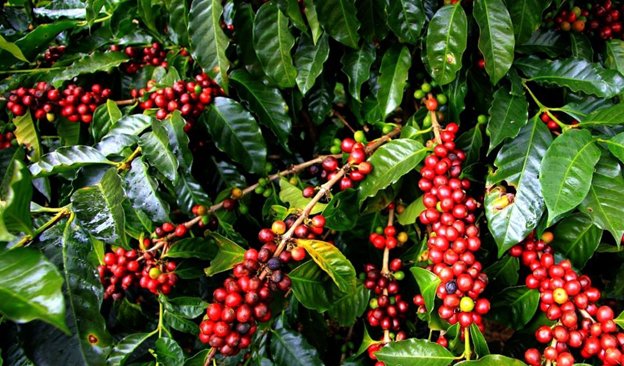
Coffee stakeholders through National Coffee Forum say UCDA merger will disrupt the coffee sub-sector. Coffee is one of the leading sources of foreign exchange for Uganda

Coffee stakeholders through the National Coffee Forum – Uganda (NCF – UG) has petitioned Parliament through the Speaker over the proposed mainstreaming of Uganda Coffee Development Authority (UCDA) into Ministry of Agriculture, Animal Industry and Fisheries (MAAIF)

The government plans to merge a number of Agencies to the line Ministries in a move aimed at saving about Shs1 trillion annually. If the move succeeds, UCDA will be taken to MAAIF.

However, coffee stakeholders through NCF – UG say that they find the proposal to take UCDA to MAAIF untenable and detrimental to the coffee sub-sector.

NCF-UG is a private foundation whose membership includes farmers, processors, exporters, roasters, brewers and researchers, among others.

The Forum Chairperson Francis Wakabi says that mainstreaming the entity will negatively affect the achievements Uganda has attained in coffee production and export.

“This decision will negatively affect our access to the international market and will stunt Uganda’s economic growth opportunities by distorting the functions of UCDA that have stabilized the industry over the years,” said Wakabi in a petition dated February 21, 2024. The petition was copied in to the Chairperson of Parliament’s Committee on Agriculture, Animal Industry and Fisheries as well as all MPs.

He adds that Uganda should not risk its achievements by tampering with UDCA that is the main contributor to our coffee success story.

“Mainstreaming it would therefore disrupt the many livelihoods that depend on the industry and adversely affect the badly needed foreign exchange for the country,” the petition reads in part.

As a result of UCDA coffee regulation, Wakabi says that Uganda’s competitiveness was elevated on the global market, ensuring high quality Uganda coffee and enabling Uganda’s coffee to displace that of Brazil and India in Italy and UK coffee markets.

“… World over, coffee is supervised and regulated by a specialized body like UCDA for purposes of institutional memory and specialized focus. Experience from Ethiopia and Kenya who disbanded their specialized coffee authorities and mainstreamed them back into the relevant ministries had to reverse their decisions after registering negative outcomes,” said Wakabi.

The Forum further says that the European Union (EU) buys over 60% of Uganda coffee, making it the biggest market for Uganda.

“The EU has introduced a new regulation called the EU deforestation regulations (EUDR) which bans export of coffee from deforested land, taking effect from 2025. This calls for farmer traceability and the EU commission in Uganda is already working with UCDA to implement the said regulations. They require a country to constantly monitor deforested areas and map all the farmers for purposes of implementation of the farmer traceability program to maintain a high standard of quality. It was reported that Uganda has achieved most of the requirements under the EUDR and required a few steps to be declared compliant. Monitoring and implementing the scheme for the millions of farmers is a tedious activity which requires a specialized unit that can be best implemented using the already established structures of UCDA. Disrupting the current UCDA structure will not only halt the progress made in achieving compliance, but also risk reversing the gains made,” added Wakabi.

He avers that UCDA has been able to greatly contribute to Uganda’s improved Coffee quality through implementation of programs such as certification of Coffee nurseries to ensure quality of planting materials, Provision of Coffee specific extension services and agronomy to improve production and productivity, Provision of technical expertise in Coffee rehabilitation, post-harvest handling practices and pest and disease management and provision of coffee processing equipment like wet mills to farmers and cooperatives to improve quality and promote value addition. The coffee stakeholders are worried that once UCDA is taken to MAAIF which is loaded with many crops and projects, coffee, a key source of foreign exchange for Uganda may not get the necessary priority. Coffee stakeholders argue that if indeed Parliament is a people-centred institution, it should listen to the views of farmers and other stakeholders and retain UCDA as a semi-autonomous agency.

“Given the above position with the attendant reasons, the NCF advises that the proposed mainstreaming of UCDA into MAAIF should not be implemented and that the proposed Bill No. 30 (part VII) be dropped in order not to disrupt the industry and the progress made under the stewardship of UCDA. All coffee stakeholders are unanimously in agreement with this position,” reads the petition in part.

Source: businessfocus.co.ug

Continue Reading

FARM NEWS

Govt pushes natural regeneration to restore 8.4 million hectares

Published

on

The government through the Ministry of Water and Environment is promoting natural regeneration as a low-cost way of restoring degraded land, with an assessment identifying about 8.4 million hectares with restoration potential.

Uganda has lost nearly half its forest since 1990, even as the world records a slowdown in deforestation, according to the Global Forest Resource Assessment 2025 (FRA 2025) released by the Food and Agriculture Organization. The data indicate Uganda’s forest area declined from 4.55 million hectares in 1990 to 2.37 million in 2025, representing 48 percent over 35 years.

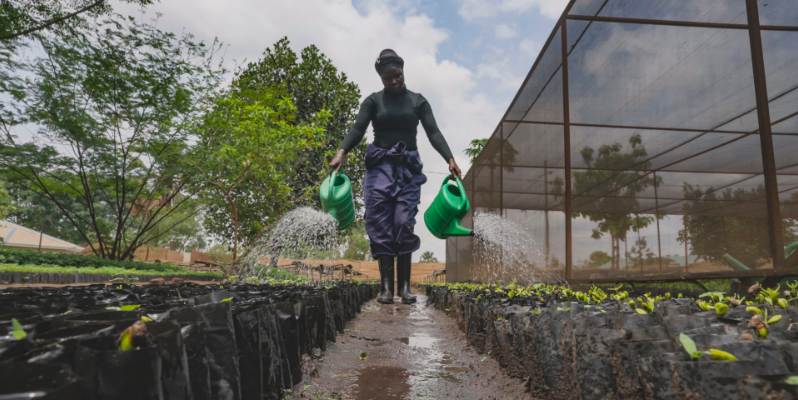
The approach, known as Farmer Managed Natural Regeneration (FMNR), involves farmers protecting and managing naturally growing trees and shrubs, including those sprouting from existing stumps and root systems, instead of relying entirely on planting new seedlings.

Assistant Commissioner for Forestry Monitoring at the Ministry, Mr Bob Kazungu, said the improvement in forest cover should not create complacency because restoration is still falling behind the rate of loss.

“We are not happy with the current situation. Restoration efforts in the sense that we are not gaining as much as we are losing,” Mr Kazungu said.

He was speaking in Kampala on Wednesday during the opening of the two-day Annual National FMNR Conference held under the theme: “Scaling up Community-led Landscape Restoration using FMNR.”

He said the approach could reduce cost at a time of high demand for seedlings.

“Not all restoration interventions require procurement of seed, seedlings and vegetative planting materials. We could also use existing materials, the roots that require farmers to excite a little to be able to re-sprout,” he said.

FMNR allows communities to identify, protect and manage trees that naturally emerge on degraded farmland and grazing areas. It is recognised in Uganda’s forestry standards as a technically simple and inexpensive restoration method.

Despite recent gains, Uganda’s forest cover remains well below the 24 percent recorded in 1990. Cover has increased from about 10 percent in 2015 to 12.7 percent in 2024, but officials warn loss still outpaces restoration.

Mr Kazungu attributed continued loss to expansion of agriculture, demand for firewood and charcoal, illegal logging, population growth, settlement and weaknesses in governance.

He said the recent increase has been driven largely by monoculture plantations, particularly eucalyptus and pine.

While such plantations have raised overall tree cover, Mr Kazungu said the government wants better balance between exotic and indigenous species.

“We have to create a balance between our indigenous tree species and our exotics that we also promote,” he said.

The Restoration Opportunities Assessment Methodology (ROAM) assessment identified about 8.4 million hectares of land with restoration potential.

FMNR Network Uganda chairperson Ms Gusta Kiyingi said the movement has grown considerably since the first national FMNR conference was convened by World Vision Uganda in 2014.

She described FMNR as low-cost, with potential benefits including improved soil fertility, biodiversity, food security and climate resilience. However, she acknowledged challenges including limited resources, coordination difficulties, competing land uses, climate variability and gaps in data.

World Vision Uganda’s Programme Development and Impact Director, Mr Richard Ramsey, said the organisation is working towards restoring 2.3 million hectares in Uganda, including a direct target of 570,000 hectares.

He said natural regeneration had shown potential globally and should be expanded as Uganda works towards 2030 ecosystem restoration targets.

“This is not a new practice. This is the simplest practice on the earth in many ways. And yet these things happen out in communities quietly. But I think what we need to do now is accelerate that progress,” Mr Ramsey said.

He said taking the approach from individual projects to national scale would be important to ensure restoration continues after projects end.

Source: monitor.co.ug

Continue Reading

FARM NEWS

Lango ex-combatants count losses after dry spell destroys maize harvest

Published

on

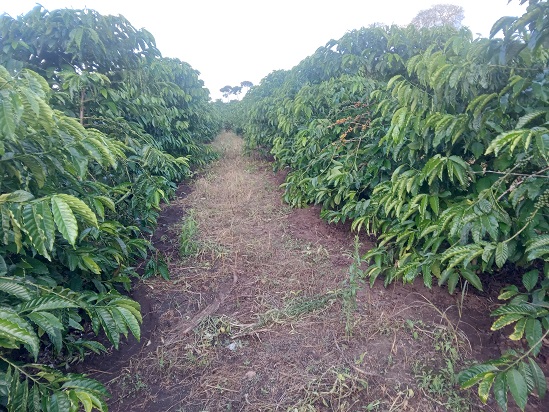
Ex-combatants in Lango Sub-region are counting losses after prolonged dry spells destroyed much of their maize crop during the first planting season, threatening a government-backed project aimed at improving food and feed security.

The project, funded by the Ministry of Defence and Veterans Affairs and the Ministry of Agriculture, Animal Industry and Fisheries (MAAIF), supports army veterans to engage in commercial maize and animal feed production.

Under the programme, veterans receive agricultural inputs including seed, fertiliser and pesticides, while the National Enterprise Corporation (NEC) buys their produce after harvest.

In 2025, ex-combatants in Lango supplied NEC with more than 1,200 tonnes of maize grain, generating income for members and supporting their household livelihoods.

However, unreliable rainfall in 2026 affected both the first and second planting seasons, leaving farmers struggling to recover their investments.

Julius Peter Odur, chairperson of Apac District Veterans Sacco, said the dry spell affected farmers who planted late during the first season.

“We planted our crops and along the way sunshine came and most of us who planted a little late didn’t harvest anything after investing heavily in it,” Odur said.

He was speaking during an inspection of the veterans’ farm on September 24 by Defence and Veterans Affairs Minister Huda Oleru.

Odur appealed for additional government support, particularly tractors, to reduce the cost of land preparation and improve production.

“Currently the cost of labour is too high, we are requesting for the tractors to help our members in reducing the cost of cultivating land and increasing production,” he said.

Margret Aguma, the wife of an army veteran, said her family spent heavily on maize production during the first season but lost the crop because of unreliable rainfall.

“We spent over Shs 2 million but at the end our maize dried out and we harvested nothing then we prepare the land for the second season harvest but rainfall disappeared and it has just rained yesterday yet the season is about to end,” she said.

Minister proposes irrigation

Oleru said the government would explore irrigation as a way of reducing veterans’ dependence on increasingly unreliable rainfall.

She asked local governments to help identify large blocks of land where irrigation infrastructure could be installed in partnership with the Ministry of Water and Environment and MAAIF.

“The local government must help these veterans they must get big land at least 100 acres and above so that we work with the ministry of water and ministry of agriculture to install them irrigation system and you can’t just put irrigation in small pieces of land,” Oleru said.

She also urged the veterans to adopt recommended agricultural practices and use improved seed varieties that can withstand diseases.

“We shall continue to train them with better agricultural practicing methods and we shall also encourage them to buy good seeds which are resistance to diseases so that they can do better and all their problems we have noted them and we shall continue to help them,” she said.

The minister’s proposal comes as farmers in Lango face growing uncertainty over the reliability of rainfall, with veterans seeking mechanisation and irrigation to protect their investments and sustain commercial production.

Source: monitor.co.ug

Continue Reading

FARM NEWS

Govt moves to set up food and agriculture regulatory authority

Published

on

Agriculture minister Frank Tumwebaze tabled the Food and Agriculture Regulatory Authority Bill, 2026, for first reading in Parliament on August 25, 2026. (Credit: Maria Wamala)

The Bill has been referred to the Committee on Agriculture for scrutiny. The proposed authority will regulate the manufacture, processing, importation, exportation, distribution, transportation, advertisement, labelling, storage, sale and supply of veterinary medicines, agricultural chemicals, veterinary equipment and devices.

KAMPALA – The Government has proposed the creation of a food and agriculture regulatory authority to bring food, animal medicines, agricultural chemicals and related products under one regulatory framework.

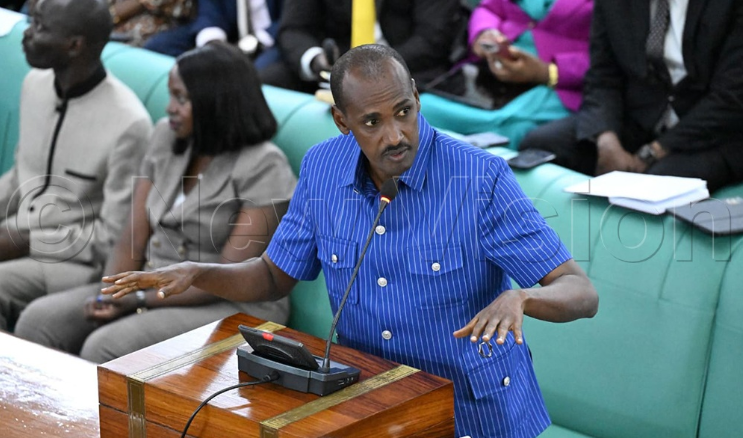
Agriculture minister Frank Tumwebaze tabled the Food and Agriculture Regulatory Authority Bill, 2026, for first reading in Parliament on August 25, 2026.

The Bill has been referred to the Committee on Agriculture for scrutiny. The proposed authority will regulate the manufacture, processing, importation, exportation, distribution, transportation, advertisement, labelling, storage, sale and supply of veterinary medicines, agricultural chemicals, veterinary equipment and devices.

It will regulate food and feed manufacturing, processing and distribution, oversee food and feed safety, develop standards, inspect and certify agricultural inputs, and establish traceability systems for regulated products.

The Bill’s memorandum presents a troubling picture of the current food and agricultural regulatory system, stating that the country is “flooded with counterfeit substandard veterinary medicines and agricultural chemicals.”

It cites concerns over medicines and chemical residues, aflatoxins, harmful microorganisms and heavy metals in food and feed, warning that such contaminants compromise public health and the safety of agricultural exports.

Members of Parliament during Plenary on Tuesday. (Credit: Maria Wamala)The memorandum attributes the problem in part to “fragmented regulation”, which it says has resulted in weak and uncoordinated regulation by multiple agencies, duplication of efforts and inefficiencies in enforcement.

It argues that the absence of a single body overseeing the food and agriculture value chain “undermines the effectiveness of regulation” and creates uncertainty for stakeholders.

The proposed authority will inspect food premises, certify meat for public consumption, inspect and certify fish, regulate processed and semi-processed food, and oversee the storage and transportation of food.

The Bill seeks to regulate food packaging, labelling and advertising, while prohibiting the use of radioactive materials, heavy metals and banned substances in food. It provides for residue monitoring to detect harmful substances in food products.
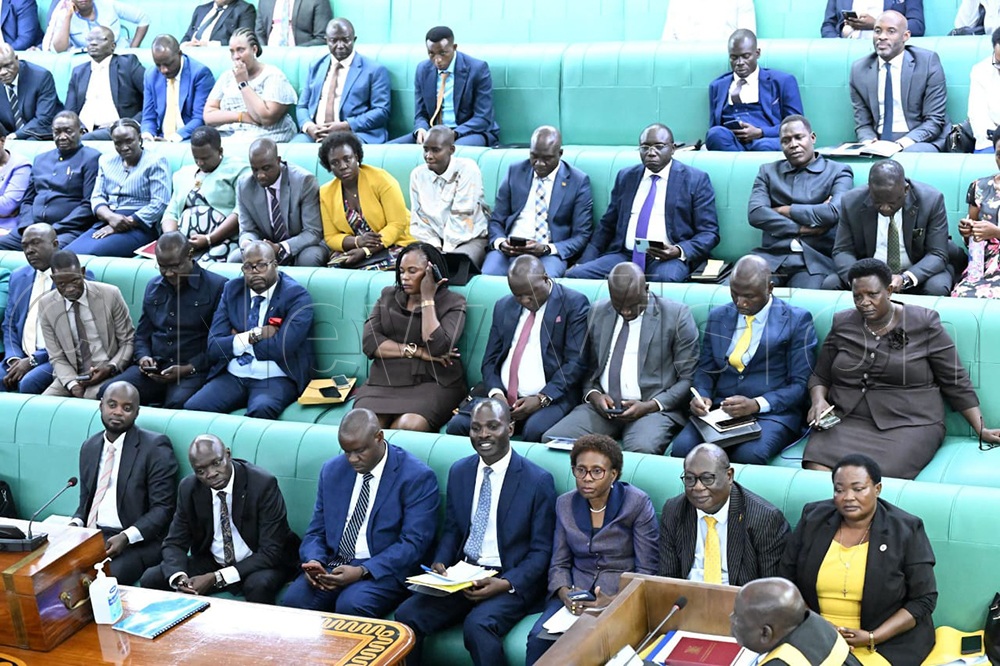
Members of Parliament during Plenary on Tuesday. (Credit: Maria Wamala)

For agricultural chemicals, the Authority will license manufacturers, distributors, fumigators and commercial applicators. It would regulate the import and export of chemicals, as well as their packaging and labelling, storage, sale and advertising.

The Authority will have powers to recall agricultural chemicals and deal with prohibited, banned, restricted, falsified or adulterated products.

The Bill proposes inspectors and analysts with powers to access establishments, conduct sampling and analysis, seize adulterated products and oversee the disposal of obsolete, banned, prohibited and expired products.

Inspectors will, in certain circumstances, order the detention, return or destruction of non-compliant consignments.

The proposed authority will be a body corporate with perpetual succession. Its functions include the registration of veterinary medicines, veterinary devices, veterinary equipment, agricultural chemical application equipment and agricultural chemicals for use in Uganda.

The authority will be governed by a nine-member board appointed by the minister. The board will comprise a chairperson, six members with expertise in veterinary medicine, agriculture, pharmacy, standards and environmental science, and two representatives of farmers nominated by a recognised farmers’ federation.

The Bill contains 13 parts, 101 clauses and three schedules. It seeks to amend the Dairy Industry Act, Fisheries and Aquaculture Act, National Coffee Act and Animal Feeds Act, while repealing the Agricultural Chemicals (Control) Act and the Food and Drugs Act.

The proposed law seeks to give the Minister power to issue written policy directions to the authority.

The Government argues that the new framework would improve the quality and safety of agricultural inputs, strengthen consumer protection and help Uganda gain access to regional and international agricultural markets.

The Bill moves to the Agriculture Committee, where MPs are expected to examine its regulatory, institutional and enforcement provisions before it returns to the House for further consideration.

The public, including experts, are expected to provide their views on the Bill.

Continue Reading

Resource Center

Legal Framework

READ BY CATEGORY

Facebook

Newsletter

Subscribe to Witness Radio's news and report updates


Trending

Subscribe to Witness Radio's news and report updates