Connect with us

MEDIA FOR CHANGE NETWORK

Land actors warn of looming violent conflicts due to escalating land grabbing in Sebei and Bugisu sub-regions.

Published

on

By Witness Radio team.

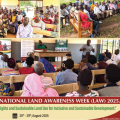
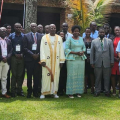
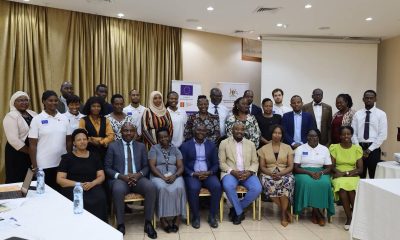
During the 9th National Land Awareness Week, a campaign aimed at educating communities on their land rights and promoting sustainable land use in Eastern Uganda, Land actors unveiled shocking realities. Local communities revealed that the issue of escalating land grabbing in Sebei and Bugisu was a potential trigger for violent conflict if left unresolved.

The 5-day-long activity, held under the theme “Promoting Land Rights and Sustainable Land Use for Inclusive and Sustainable Development,” created opportunities for engagement with farming communities, local governments, and customary landowners. However, the stories that emerged were filled with tales of dispossession, impunity, and betrayal, with influential individuals and state agencies involved in serious violations and abuses that have continued to fuel conflict, insecurity, and suffering in rural areas.

Lwanga Deborah Marie, who works with ActionAid International Uganda and is one of the experts who participated in the campaign, noted that it has become alarmingly easy for politically connected individuals to take land from impoverished communities.

“Many community members, the have-nots, are the majority. The haves are the minority. But there have been a lot of stories, a lot of testimonies coming in from the community regarding people with power, people with money, people with connections, coming in to displace the vast majority of the communities and go ahead to get titles, land titles to land on which community members are staying.”

In Kween district, sub-counties such as Ngenge, Ngiriki, and Chepsukunya were cited as hotspots. Experts warned that this unchecked pattern of elite-driven land grabbing could spark instability. “It is a ticking time bomb. If it is not addressed, there are fears it could cause bloodshed,” Deborah cautioned.

The experts also uncovered allegations of violent evictions by the Uganda Wildlife Authority (UWA), which has displaced ancestral communities in the name of conservation. Reports gathered during the campaign pointed to killings, injuries, destruction of crops, and illegal detentions carried out during UWA’s operations.

“We received reports of people shot at and killed, and those shot and injured. We actually met individuals with their stories and medical records regarding these UWA violations and the destruction of food crops,” Deborah recounted.

Such behavior is deemed inhumane and violates people’s human rights, as Deborah explained.

“And this violates not only the right to food but also the right to life. It violates the right to be free from cruel, inhuman, and degrading treatment. The situation is unacceptable. There have been reports of illegal detentions by UWA. These have been one of the troubling revelations during our interactions with community members,” she said.

One community in Kapkwata, commonly referred to as Rwanda village, was forced off its ancestral land to create space for the Kapkwata forest reserve. Since eviction, the residents have been living in what experts likened to an internally displaced persons’ camp—without toilets, health facilities, or farmland. Their demand, as experts relayed, is not charity but justice: an alternative land to rebuild their lives.

The activity also revealed a disturbing pattern of gender discrimination in land ownership. According to these experts, they noted that even when women contribute money toward purchasing land, they are not recognized as co-owners but merely as “witnesses.”

“The bigger picture of their rights being violated is their land rights,” Deborah explained. “We heard testimonies of women contributing money towards land purchases, but they didn’t appear as co-owners. They only appeared as witnesses.” Experts warned that these practices not only deny women economic security but also perpetuate cycles of marginalization across generations.

Byantalo Hassan Abdallah, an officer from the Ministry of Lands, acknowledged government shortcomings. He admitted that communities evicted by UWA have been waiting in vain for resettlement for years, despite repeated promises of assistance. “The government has promised several times to resettle them, but this has not come to pass,” he said.

While some displaced families have been moved to Bulambuli district under interventions by the Office of the Prime Minister, communities like Rwanda remain in limbo. But Byantalo says the government and the Ministry are working hard to resettle this community.

“During the discussions that we had on the ground, especially with the communities in Rwanda, they clearly stated to us that officials from the Ministry of Land and Office of the Prime Minister (OPM) came and visited them and told them they were trying to secure some piece of land on which these people are yet to be resettled. So, the government is not seated, the Ministry of Land is working with other government agencies and ministries.” Byantalo expressed

Other structural challenges were identified, including land registration costs, which continue to prevent people from accessing formal protection. The experts also pointed to dysfunctional Area Land Committees, many of whose members confessed ignorance of their roles, thereby worsening disputes instead of resolving them.

Experts involved in the campaign called for significant reforms and follow-ups. They urged the government to prioritize resettling displaced communities fairly and with dignity, making land registration more affordable and transparent, providing widespread education to dispel myths about customary titles, and training Area Land Committees to perform their roles effectively.

They also emphasized the need to protect women’s land rights and close gender gaps in ownership, while holding state agencies, such as UWA, accountable for human rights abuses.

Christine Nabunya, a lawyer and land rights advocate, summed up the call: “We need more empowerment and sensitization of communities. Most people believe they don’t have the right to land, especially women. That is really absurd.”

As the Awareness Week concluded with a roundtable discussion, the experts unanimously agreed: the land grabbing in Sebei and Bugisu is not just a matter of property; it’s a matter of justice, survival, and peace. The stark injustice of these land issues should stir a sense of moral outrage, compelling us to work towards a fair and equitable resolution.

If the escalating land grabbing, compounded by violent state-backed evictions, is not addressed, the region could be plunged into deeper conflict. For farming communities, land is not just an asset but the foundation of food security and livelihoods. Losing it, experts warn, means losing the future. This potential for deeper conflict should underscore the gravity of the situation.

“The communities are crying out not for aid, but for justice,” Deborah said. “If we fail to act, we risk a crisis that will be far costlier to solve.” The resilience of these communities in the face of such adversity is truly inspiring.

Continue Reading

MEDIA FOR CHANGE NETWORK

Uganda is grappling with mounting land struggles as the needs of refugees collide with the rights and hopes of the communities that host them.

Published

on

By the Witness Radio team.

For more than ten years, hundreds of families in Kikuube District have fought to piece their lives back together after losing their land to the ever-expanding Kyangwali Refugee Settlement.

One such person is Mr. Ahumuza Busingye, a community leader who recalls how, in 2013, many families were uprooted when the government seized their land to make room for more refugees.

“We have been suffering since 2013 when we were evicted from our land to expand Kyangwali camp. “The problem is we are often displaced from fertile land which is given to refugees. That hurts us. Our families have grown, but we have no place to settle them. We now live in an informal settlement with no land to farm and sustain ourselves,” said Mr. Busingye.

Mr. Busingye’s experience mirrors a rising dilemma in Uganda, a nation celebrated worldwide for its welcoming approach to refugees. Unlike countries that restrict refugees to camps, Uganda offers land for settlement, freedom to move, opportunities to work and start businesses, and access to schools, healthcare, and public services. These progressive policies have transformed Uganda into Africa’s largest haven for refugees and one of the most significant hosts on the planet.

Yet, even as Uganda’s refugee policy draws global praise, tough questions linger about how the country can keep protecting refugees without sacrificing the land rights, livelihoods, and futures of its own people.

This challenge formed the central theme of an X Spaces discussion organized by UCOBAC (Uganda Community Based Association for Women and Children Welfare) in partnership with AWO International and co-hosted by NBS TV under the theme, “Understanding Land Governance: Issues Affecting Refugee and Host Communities in Uganda.”

The event brought together voices from government, academia, humanitarian groups, and the legal sector to tackle rising land governance issues in refugee-hosting districts and to seek ways for refugees and host communities to live together in harmony.

Uganda now shelters almost 1.9 million refugees and asylum seekers, most of them women and children escaping violence in South Sudan, the Democratic Republic of Congo, and nearby nations. As new arrivals pour in and families grow, the hunger for land intensifies, sparking fresh challenges for both refugees and the communities that welcome them.

Dr. Brian Makabayi, a lecturer in the Department of Geomatics and Land Management at Makerere University, argued that refugee settlements should no longer be viewed as temporary humanitarian interventions.

“The issue is not only humanitarian assistance where we are trying to solve the problem temporarily. These communities have stayed for long periods, and if these issues are not properly managed, they can become violent,” he said.

Citing research from districts like Adjumani, Makabayi pointed out that refugees now make up nearly half the population in some places. As families expand but land stays the same, the struggle for space grows ever more intense.

“Many refugees lease farmland from host communities to supplement the small plots allocated to them. However, conflicts often emerge when landowners decide to reclaim their land for personal use, sale, or lease to other people before previous agreements expire.” He further added.

Ms. Claire Birungi Agaba, the Information, Counseling and Legal Assistance Specialist at the Norwegian Refugee Council, said many of the land disputes her organization handles arise from informal and undocumented land agreements.

She explained that land transactions between refugees and host communities are frequently based on verbal agreements without written records specifying land size, duration of use, payment arrangements or responsibilities of each party. As a result, disputes over boundaries, crop destruction, unexpected evictions and changing rental terms have become increasingly common.

“Many host families themselves occupy customary land that has never been formally documented, making it difficult to prove ownership whenever disagreements arise.”  She said.

Responding to concerns about land acquisition, Agnes Baseera, Protection Officer (Legal) in the Office of the Prime Minister’s Department of Refugees, said the government does not allocate land for refugee settlements arbitrarily.

According to Baseera, establishing refugee settlements involves close collaboration between the Office of the Prime Minister, district local governments, line ministries, development partners and host communities.

She explained that before any land is designated, the government verifies ownership, assesses the suitability of the land and considers factors such as security, access to water, food availability and the capacity of social services.

“The host communities are always part of this process,” Baseera said, adding that consultation remains central to the government’s refugee settlement policy.

Eunice Nabakwa, Principal Land Officer at the Ministry of Lands, Housing and Urban Development, argued that securing customary land rights is essential to reducing future conflicts.

She noted that more than 75 percent of Uganda’s land is held under customary tenure, much of it without formal documentation. Since many refugee settlements are located on customary land, uncertainty over ownership and boundaries often fuels disputes.

To address this, the Ministry is implementing systematic land adjudication, demarcation, mapping and certification programs, including the issuance of Certificates of Customary

Ownership (CCOs).

These initiatives are intended to formally recognize customary land rights, strengthen tenure security, clarify boundaries and improve local land administration.

Continue Reading

MEDIA FOR CHANGE NETWORK

As TotalEnergies’ profits soar, calls are growing for the company to answer for the human rights abuses and environmental damage linked to EACOP.

Published

on

By the Witness Radio team.

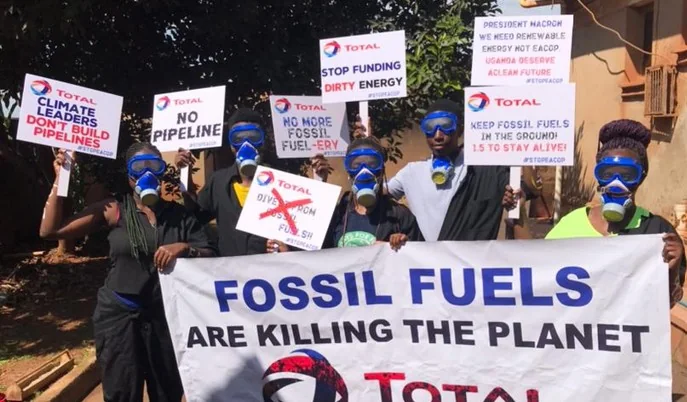
While French oil giant TotalEnergies boasts multi-billion-dollar profits, campaigners against the East African Crude Oil Pipeline (EACOP) are intensifying demands for the company to face up to the social, environmental, and human rights consequences of its oil ventures in Uganda and Tanzania.

These renewed demands come on the heels of TotalEnergies announcing a staggering US$5.4 billion net profit for the first quarter of 2026, a 29 percent jump from the previous year. While shareholders revel in record-breaking earnings, campaigners point out that communities along the EACOP route are left to shoulder the burdens of displacement, lost livelihoods, and environmental harm.

TotalEnergies is the largest shareholder and lead developer of the East African Crude Oil Pipeline (EACOP), holding a 62 percent stake in the pipeline company. Other shareholders include the Uganda National Oil company (15%), the Tanzania Petroleum Development Corporation (15%), and China National Offshore Oil Corporation (8%). As the majority shareholder, TotalEnergies oversees key decisions concerning the construction, financing, and management of the 1,443-kilometer heated crude oil pipeline that will transport oil from Uganda’s Albertine region to Tanzania’s Port Tanga.

Civil society groups across East Africa warn that TotalEnergies’ financial windfall has come at a steep price for the communities living in the shadow of the pipeline.

Environmental campaigners, including Sherelee Odayar of Greenpeace Africa, Zaki Mamdoo of Stop EACOP, Ziadah Kasimu of Green Conservers, Rukiya Khamis of 350Africa.org, and Balach Bakundane, an EACOP host community representative from Uganda, argue that local people continue to shoulder the social and economic burdens of fossil fuel extraction while corporations reap enormous profits.

Speaking during a discussion on fossil fuel accountability, Rukiya Khamis from 350 Africa- Kenya criticized governments for granting tax incentives to multinational oil companies. At the same time, ordinary citizens struggle with rising living costs.

“We were experiencing massive hikes in utility bills and retail prices. If you are in Kenya, you realize the price of milk was high, the price of bread was high, and the price of basic commodities became increasingly unaffordable. Yet, fossil fuel companies continued receiving subsidies and were free to raise prices.” Rukiya added.

She cautioned that pouring more investment into fossil fuels would only worsen the climate crisis, leaving vulnerable communities even more exposed to devastating climate disasters.

For those living along the EACOP pipeline, the promised benefits remain little more than empty words.

Balach Bakundane, who works with the EACOP Host communities in Uganda, said residents were promised employment opportunities, improved infrastructure, better healthcare services, and enhanced livelihoods. Instead, he says, many families have experienced land loss, declining incomes, and restrictions on fishing activities around affected water bodies.

“It is unbearable and very painful to see TotalEnergies announcing huge profits while our communities continue to lose their dignity, cultural values, and livelihoods. These profits are being made at our expense.” Balach revealed.

Bakundane also noted that fishing communities have been hit hard, losing access to vital parts of the lake due to oil operations.

“It is a very clear indicator that this is a neocolonial project that has no regard for our human rights, cultural values and our livelihood.” He further added.

Greenpeace Africa activist Sherelee Odayar called on African governments to rethink the generous tax breaks and investment perks handed to multinational fossil fuel giants.

She argued that governments should instead enforce the “polluter pays” principle, making companies behind greenhouse gas emissions pay their fair share for climate adaptation, disaster recovery, and compensation to affected communities.

“These companies should not be allowed to privatize the gains while socializing the costs. The extraordinary profits generated from fossil fuels should help finance climate adaptation, loss and damage, and support communities already suffering the impacts of climate change.” Odayar said, adding that accountability should accompany profits.

In Tanzania, activist Ziadah Kasimu of Green Conservers raised alarms about the lack of genuine community consultation and the displacement of thousands of residents uprooted by the pipeline.

She described how women, fishing communities in Tanga, pastoralists in Singida, and farming families have all seen their livelihoods upended by land grabs and new barriers to natural resources.

Kasimu insisted that affected communities deserve clear information, a real voice in decisions, and fair accountability for how the project’s benefits are shared.

“The profits belong only to them, but TotalEnergies and EACOP ignore the benefits for communities. We need transparent and timely information, and monitoring systems that communities themselves can access because this is our land.” She further said.

She emphasized that while communities value development, investments must respect human rights and follow just procedures. These calls for accountability grow louder as legal challenges against EACOP mount.

Earlier this year, four Ugandan farmers filed a case before the UK High Court seeking to have Ugandan constitutional, environmental, and climate laws applied to EACOP Ltd, the UK-registered company responsible for financing the pipeline.

According to Human Rights Watch, more than 100,000 people in Uganda and Tanzania are expected to lose land or access to land because of the pipeline and associated oil infrastructure.

Similarly, advocacy reports by Global Aktion have documented allegations of forced displacement, restrictions on civic space, and adverse impacts on communities affected by the project.

In 2025, BankTrack also urged financial institutions supporting EACOP to reconsider their involvement, citing concerns over environmental destruction and impacts on local livelihoods.

Campaigners point out that TotalEnergies keeps posting robust profits, even as criticism against the company intensifies.

Continue Reading

MEDIA FOR CHANGE NETWORK

Researchers sound the alarm: Uganda’s oil development threatens the nation’s vital wetlands.

Published

on

By the Witness Radio team.

Uganda is set to launch commercial oil production in late September, but researchers caution that this rapid petroleum push could endanger the country’s precious wetlands, wildlife, and rich biodiversity.

This warning arrives as Uganda nears its long-awaited first oil, almost twenty years after crude was first discovered in the Albertine Graben.

In a recent post on the X platform, formerly Twitter, by the Petroleum Authority of Uganda (PAU), Uganda’s statutory body mandated to monitor and regulate the exploration, development, and production, together with the refining, gas conversion, transportation, and storage of petroleum in Uganda, it indicated that the country’s major oil projects are progressing towards production. As of June 30, 2026, the Tilenga project was 74 percent complete, with 234 wells drilled, exceeding the minimum 170 wells required for production.

The Kingfisher project had reached 79 percent completion. In comparison, the East African Crude Oil Pipeline (EACOP) stood at about 90 percent overall progress, with more than 1,443 kilometers of pipeline welded across Uganda and Tanzania.

In July, Irene Bateebe, the Permanent Secretary in the Ministry of Energy and Mineral Development, said Uganda was on course to begin commercial oil production in September.

Speaking during a retreat for Ugandan diplomats organized by the Ministry of Foreign Affairs in Kampala, Bateebe said the country’s upstream oil projects and export infrastructure were in their final stages, with first oil expected soon.

Yet as Uganda edges toward commercial oil production, a fresh study from the Africa Institute for Energy Governance (AFIEGO) raises red flags about the environmental fallout, especially for wetlands, biodiversity, and the communities whose lives are intertwined with them.

The 31-page AFIEGO report, titled “Siltation, Noisy Generators & Air Pollution: Documenting Oil Sector Damage to Murchison Falls National Park & Uganda’s Wetlands,” documents the impacts of oil pipeline construction and related activities under the Tilenga and Kingfisher upstream projects, as well as EACOP.

The research, conducted between March and June 2026, is based on interviews and focus group discussions with oil-host communities and tourism-sector stakeholders in Buliisa, Hoima, Kikuube, Kakumiro and Kyotera districts.

The report identifies several oil infrastructure projects that are affecting wetlands, including the Victoria Nile Pipeline Crossing under the Tilenga project, the Kingfisher feeder pipeline and EACOP.

The affected ecosystems include the Murchison Falls-Albert Delta Ramsar wetland system, Kibale/Bukoora wetland, Sango Bay-Musambwa Island-Kagera (SAMUKA) Ramsar wetland system and Kafu wetland, as well as other wetlands within the Lake Albert basin.

The AFIEGO report documents increased cases of siltation and blockage of tributaries connected to wetlands, including Wambabya, Kafu and Kibaale/Bukoora in Hoima, Kakumiro and Kyotera districts.

The report also spotlights a surge in population, along with rising air and water pollution, as troubling side effects of the oil boom.

Researchers warn these impacts could ripple through wildlife populations and disrupt the delicate ecological systems that local communities rely on.

“Anthropogenic [human-generated] noise and vibrations can cause stress in wildlife, while affecting communication, movement, and foraging,” the report states.

It adds that fossil-fuel-powered generators release carbon monoxide, carbon dioxide, nitrogen dioxide, and sulfur dioxide, which can cause respiratory distress, weakened immunity, and reproductive disruptions in wildlife.

Diana Nabiruma, Senior Communications Officer at AFIEGO, told Witness Radio that the research was conducted to understand the effects of oil infrastructure on wetlands and identify measures to address the damage.

“AFIEGO decided to conduct research to ensure that first we understand what impacts the construction of the EACOP-related pipelines had on selected wetlands in the country and what measures can be put in place to remediate these impacts and to ensure that the wetlands are conserved for the benefit of Ugandans,” Nabiruma said.

She said several pipelines associated with the oil projects are crossing or affecting wetlands of significant ecological importance.

“The wetlands are being crossed or affected by several pipelines belonging to the aforementioned projects. Some of these pipelines include the Victoria Nile Pipeline Crossing under the Tilenga project, the Kingfisher feeder pipeline and the EACOP,” she said.

Nabiruma said the pipelines are also crossing the Murchison Falls-Albert Delta Ramsar wetland system, which is partly located within Murchison Falls National Park and forms part of the Victoria Nile basin.

The Kibale/Bukoora wetland, which forms part of the Sango Bay-Musambwa Island-Kagera (SAMUKA) Ramsar wetland system, is also among the affected ecosystems. The report further identifies Kafu wetland and other wetlands within the Lake Albert basin as being affected by the oil infrastructure.

The concerns documented by AFIEGO are also being raised by communities living near the oil infrastructure.

Kyakulumbye Gonzaga, a resident of Kakuuto village in Kakuuto Sub-county, Kyotera District, said residents are worried about the safety of their water sources following construction of the EACOP pipeline through the Kibaale/Bukoora wetland.

“The EACOP camp is based in our sub-county, and most of its pipelines were constructed through the Kibaale/Bukoora river and its tributaries like Kisoma tributary. They constructed the pipeline through the water, which is a big threat to the aquatic life and to us too because we use the water for cooking and drinking.” Gonzaga revealed.

The AFIEGO research also documents concerns about reduced water access for chimpanzees in Wambabya Forest in relation to the Kingfisher pipeline.

According to the report, communities said water was pumped from River Rutooha during construction activities, after which chimpanzees began entering residential areas in search of water.

Another community member from Hoima District affected by EACOP activities said blocked tributaries had reduced water flowing into Wambabya Forest, forcing chimpanzees into nearby communities.

“Water no longer flows into Wambabya forest very well because some tributaries belonging to Kanywabarogo were blocked. The forest is home to chimpanzees. These seem not to be getting water well anymore, so they come to the community to access water,” she said.

She said the chimpanzees destroy gardens when they leave the forest in search of water. “We no longer grow maize because the chimpanzees take it when they come out of the forest looking for water,” she added.

These findings emerge as civil society groups, environmental experts, and campaigners voice mounting concerns about the social and environmental toll of Uganda’s oil drive. Activists say land acquisition for the projects has already disrupted the lives of over 100,000 people.

Dickens Kamugisha, Executive Director of AFIEGO, said Uganda cannot achieve sustainable economic transformation by degrading the ecosystems that support citizens.

He emphasized that the research reveals Uganda’s oil activities are harming vital wetlands that millions of people depend on for their livelihoods.

Kamugisha called on the government to ensure that TotalEnergies EP Uganda (TEPU) and China National Offshore Oil Corporation Uganda Limited (CUL) remediate the harm caused to wetlands, while also urging the government to rethink oil production in the country.

In one of Witness Radio’s interviews with Dr. Patricia Litho, the Assistant Commissioner for Communication in the Ministry of Energy and Mineral Development, she acknowledged that there are potential risks associated with oil exploration and production, which is why the government established robust regulations, monitoring mechanisms, and contingency plans to prevent and respond to any environmental incidents.

She added that the government of Uganda is committed to ensuring that the oil projects are executed in an environmentally sustainable and responsible manner because it also understands the importance of preserving the natural heritage and biodiversity.

Continue Reading

Resource Center

Legal Framework

READ BY CATEGORY

Facebook

Newsletter

Subscribe to Witness Radio's news and report updates


Trending

Subscribe to Witness Radio's news and report updates