
NGO WORK
EACOP Was Anchored On Disinformation, Persons Affected By Pipeline Declare

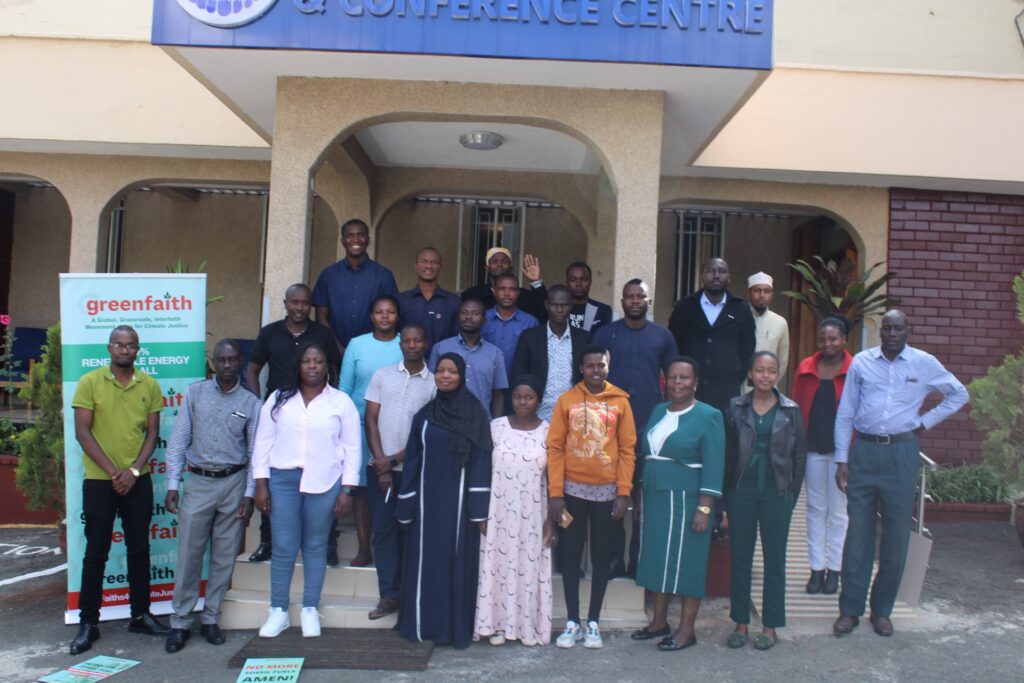
At least 30 persons affected by the East African Crude Oil Pipeline (EACOP) in Uganda and Tanzania have resorted to pushing beyond compensation for losses incurred in the project’s initial stages.
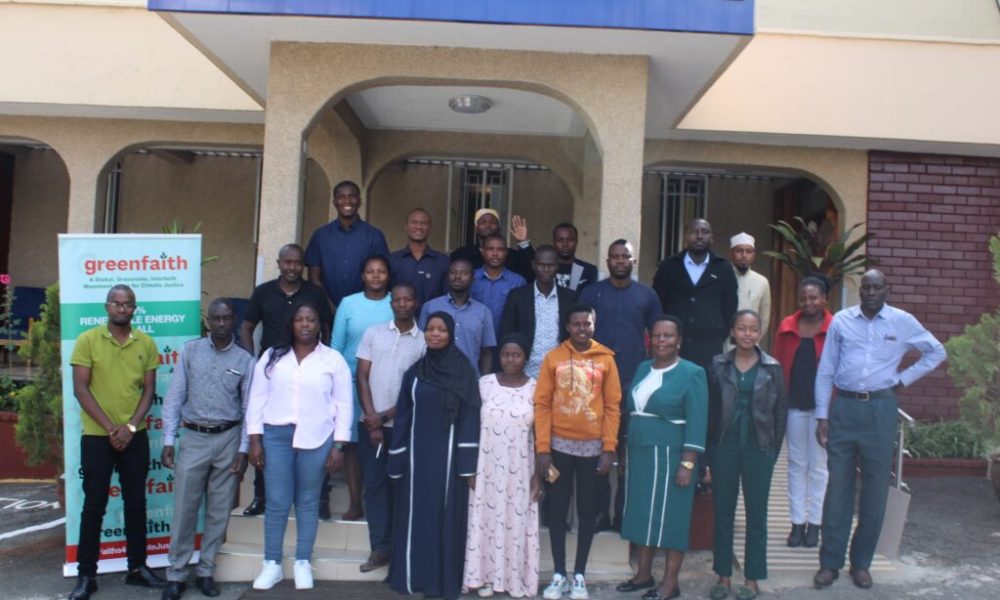
The EACOP Project Affected Persons (PAPs) from Uganda and Tanzania grassroots met for the first time at a three-day conference in Nairobi, where experiences and lessons learnt were shared. They were also joined by participants from Nigeria, Sierra Leone and Gambia, who shared their experiences with fossil fuels, especially in Niger Delta.
Both the Ugandan and Tanzanian PAPs, some of them faith leaders, complained of misinformation, disinformation by the project’s proponents’ agents, intimidation, bribery, forced land possession, coercion to accept government terms for land acquired and unfair subsequent compensation for the property lost. The PAPs also complained of intentional classification of primary PAPs as secondary to reduce the compensation due them.
“During the social Impact Assessment, a lot of clans, especially the Bagungu, were given volumes of literature to read within two weeks, then decide to relinquish their property. But we could not make head or tail of the documents. Those who signed them were not left with copies,” said Jealusy Mugisha, a religious leader and PAP from Uganda’s Hoima District.
His sentiments were echoed by Swalleh Nkungu from Tanzania, who added: “Information scarcity played a huge role in enabling EACOP. We are knowledgeable enough to tell that the project is harmful, but a lot of secret planning went into this project before it was made public. Some people acting as CSOs also came to the grassroots and intentionally shared false and misleading information to boost EACOP acceptance”.
The participants, including those from Laudato Si Movement and youth in Kenya, were grateful for the event dubbed “Experience sharing meeting for grassroots persons affected by EACOP in Uganda and Tanzania”.
TotalEnergies holds 62 per cent stake of EACOP. Others stakeholders in the would-be world’s longest heated pipeline expected to cover 1,443km from Northern Uganda to Tanzania’s Tanga Port are Ugandan National Oil Company (15 per cent), Tanzania National Oil Company (15 per cent) and Chinese National Offshore Oil Company at 8 per cent.
Pastor Mugisha said: “I declined to receive money in exchange for my land and instead demanded to be relocated. This made the Uganda government to mark me and others, claiming we were sabotaging its project,” he said.
“Is it wrong for me to demand justice over my damaged home? Once I was chained and harassed at the Entebbe airport when I returned from France where I had attended a hearing about rights of PAPs. After release they kept sending my friends to tell me to be silent about EACOP. I became louder on it, even at funerals”.

Several other participants at the event organised by GreenFaith Africa spoke of bribery for people opposed to the EACOP to change their minds. “My father was very decisive when EACOP started, but he later caved in to pressure. We lost acres of land. What this means to women and children is helplessness, less food and loss of sources of living. But we can still act because EACOP is evil,” said Mwajuma Tunu from Tanzania.
Kamili Fabiano from Tanzania said: “It is no longer about compensation; it is now about climate justice. We need a conducive environment to farm and take care of our current and future generations”.
Julius Caesar, a faith leader from Uganda, urged the affected persons to act fast. “Staying near the anthill turned the antelope brown. Anyone lying to you in broad daylight is capable of deceiving you more in the dark. The disinformation was to divide us and keep us in the dark,” he said.
Mugisha said currently the EACOP’s Central Processing Facility for the oil was a key polluter through dust. “Multiple letters were written to TotalEnergies regarding this, but nothing much has happened. I fear for our water sources.”
The conference that ended yesterday also featured Baraka Lenga, an anti-EACOP activist from Tanzania, and a grassroots organizer for GreenFaith. “For people of faith, water is central to life in many ways. The pipeline is a threat to over 200 precious water sources that support our livelihoods and biodiversity. This is an attack on the very foundations of our spirituality,” he said.
Baraka outlined the projected pollutant emissions, should the project start, as millions of tonnes of carbon, adding that it would worsen the climate crisis. “The roads constructed in the Murchison National Park to enable easy transportation of oil is the reason cases of human/wildlife conflict have gone up. This also affects food security”.
Maxwell Atuhura of Uganda said not only were oil and gas firms from developed nations targeting Africa. “They are more likely to be successful where dictatorship seems to work.”
He urged participants to study Kenya and Nigeria cases. “I’m inspired by how Kenya fought the Lamu coal project. They knew they had a UNESCO-recognised heritage to protect. They defended their indigenous identity, even coming up with policies around it. East Africa can have such an identity,” he said, giving an example of powers that the EU Parliament wields. “Europe respects decisions made at the EU parliament. We can use the East African Legislative Assembly the same way; with binding laws for East Africa. Uganda, Kenya and Tanzania are, for instance, joined by Lake Victoria. An East African law protecting the lake basin can be great.”
Pius Oko, a Lift Humanity Foundation leader, narrated Nigerians’ experiences with oil. “Oil drilling in Niger Delta started in 1950s, but people are poorest there. Residents eat oil contaminated fish and cassava. Water bodies are filled with oil. Land is filled with oil, making farming untenable. The atmosphere is filled with suit. People inhale a lot of dirt. Diseases are more rampant in the Niger Delta. Life expectancy has gone below 50 years. EACOP will benefit a few rich people. The rest will suffer like those in the Niger Delta,” he said, sharing images of women and children scooping oil from ditches, fire, gas flaring and fish laced with oil, but which many consumed for lack of alternatives.
Early this year Uganda and Tanzania cabinets approved EACOP construction license. The project continues to face opposition, including from grassroots people.
Last year the EU Parliament pointed out human rights abuse in EACOP. In addition, 25 multinational financial institutions have either disassociated themselves from EACOP or vowed not to loan it for the $5 billion dollar project that still needs over $2 billion loan to be financially secure.
At the end of the Nairobi conference, Meryne Warah, the GreenFaith’s Global Director for Advocacy, urged the PAPs to remain focused in their quest for justice guided by their beliefs and values. “From participants’ sentiments since the beginning of this conference, it is clear that the governments of Uganda and Tanzania did not listen to project affected persons. However, despite all the atrocities committed, we need each other. We need to stand together as one, encouraged by our faiths teachings.
She said the meeting gave the persons affected by EACOP and Tilenga an opportunity to share their experiences about the various adverse effects of the pipeline, as well as build resilience towards effective continued campaigning against the EACOP.
Source: Panafricanvisions.com
Related posts:
 A reference filed by CSOs against the planned construction of the East African Crude Oil Pipeline (EACOP) is set for hearing.
 EACOP Partners With Surveyors Body as Pipeline Land Acquisition Nears Completion.
 Close to 20 local farmers are in jail for fighting for their land not to be taken by the East Africa Crude Oil Pipeline (EACOP).
 CSOs urge banks and other IFIs not to finance E.Africa oil pipeline project…


Oakland, CA – As the World Bank convenes its Annual Meetings in Thailand this week, the accountability of the institution is entirely omitted from the agenda. Yet, its lack of accountability to the millions of people displaced or harmed by its programs around the world has never been more appalling.
The Bank claims that recent 2026 reforms would strengthen its accountability mechanism, but the facts show a total disregard for the devastation it has caused. In Tanzania, it has failed to act on damning findings from its own Inspection Panel – whose investigation detailed systemic violations of its own Operating Procedures and a “critical failure” in project planning and supervision, leaving local villagers to continue bearing the brunt of harsh, unmitigated serious harms.
Between 2017-2024, the World Bank poured over US$100 million into REGROW, doubling the size of Ruaha National Park in Southern Tanzania and funding the paramilitary park rangers (TANAPA) implicated in egregious human rights abuses – including killings and forced disappearances. Following an independent investigation, the project was officially cancelled.
“The park expansion effectively criminalized over 84,000 people on their own land, stripping them of their livelihoods by barring essential farming and grazing. The Bank’s REGROW initiative turned poor villagers into targets for park rangers. Despite clear evidence that the devastation it unleashed continues today, the Bank has completely failed to provide redress, compensate or support the communities whose lives it upended,” said Anuradha Mittal, Executive Director of the Oakland Institute, who represented villagers in their complaint to the Inspection panel.

In April 2025, ignoring community demands for reparations and the return of land, the Board approved a largely insufficient and inadequate Management Action Plan (MAP). On September 4, 2026, the Bank officially “closed” the REGROW case after deeming all actions in the MAP had been completed.
“The World Bank has destroyed our lives. Since the project started, rangers have killed or disappeared 18 of us. We are banned from farming our lands and grazing our livestock. Thousands of our cattle were confiscated. We are still waiting for justice and reparations for our losses. How can the World Bank walk away after being found responsible for this catastrophe?” said a local villager who filed the initial complaint.
Today, despite the Bank’s assertions that livelihoods could resume, many farmers remain barred from their fields, and pastoralists face continuous threats and fines for grazing cattle. The international spotlight that the Institute put on the dire situation has brought a halt to fatal shootings by TANAPA rangers since May 2025 – a grim baseline for “progress” from a paramilitary force that has terrorized communities since the Bank bolstered their capacity. The families of those murdered by TANAPA, including 27-year-old Hamprey Mhaki and 20-year-old Kulwa Igembe, continue to be denied justice.
“The Inspection Panel presented undeniable evidence of the Bank’s wrongdoings, yet the Bank’s Board and senior management refused to take responsibility. Affected communities took monumental personal and collective risks to expose these abuses, offering the Bank every opportunity to correct course. Instead, management turned its back on the very people it harmed – leaving a permanent stain on the institution’s credibility. The Oakland Institute will continue to stand with communities in their fight for justice,” concluded Mittal.
The World Bank’s expanding accountability crisis is further deepened by its decision to join the Trump-established Board of Peace (BoP) for Gaza, proactively enabling impunity for crimes against humanity and genocide. By joining the BoP, the Bank directly violates its own mandate and policies, international humanitarian law and decades of UN General Assembly Resolutions. Furthermore, the move defies provisional orders and advisory opinions from the International Court of Justice (ICJ) and rulings from the International Criminal Court (ICC).
Source: oaklandinstitute.org
Related posts:
 World Bank Fails to Remedy Harms it Caused in Tanzania, Despite a Scathing Investigation by its Inspection Panel
 Communities Under Siege: New Report Reveals World Bank Failures in Safeguard Compliance and Human Rights Oversight in Tanzania
 The World Bank Must Be Held Accountable for Harm Inflicted on Tanzanian Communities by Tourism Project
 Campaign Victory: World Bank Suspends Funding for REGROW, a Conservation Project Responsible for Evictions & Human Rights Abuses in Tanzania
NGO WORK
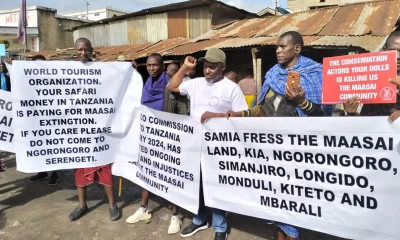
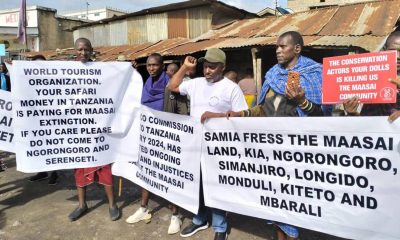
Tanzanian Government Abducts Maasai Villagers in an Unconscionable Attack on Indigenous Land Defenders
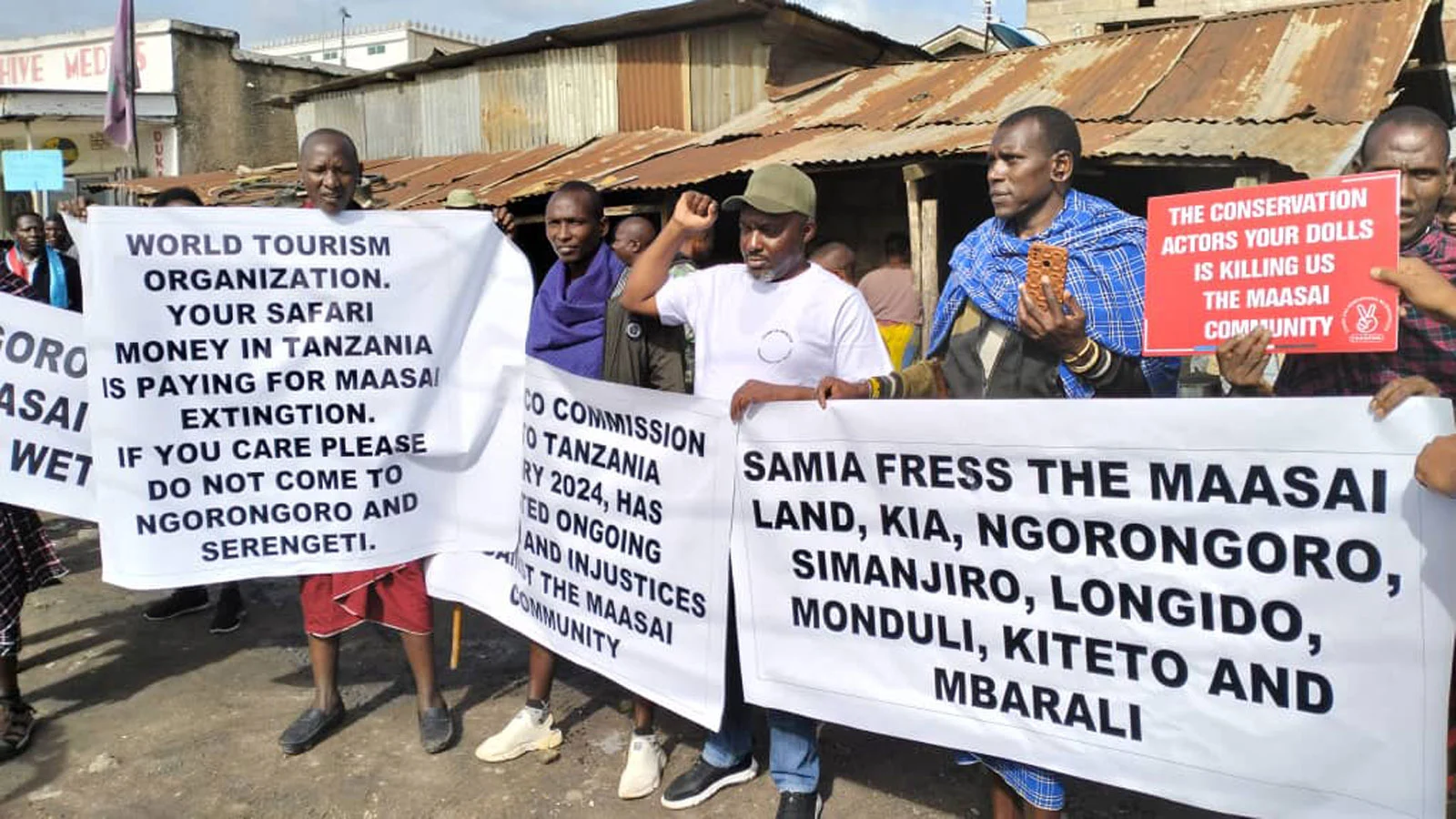
- Human rights conditions in northern Tanzania have deteriorated sharply since August, as the Tanzanian government carries out a coordinated campaign of violence and arrests against the Indigenous Maasai.
- In Ngorongoro, five Maasai were arrested last week; Over 30 community members have been arrested over the last two months; In neighboring Loliondo, thousands of livestock have been confiscated.
- The government is pressuring Maasai to leave the area to reach its goal of expanding the number of safari tourists and trophy hunters to eight million by 2030.
- The last arbitrary arrests unfolded in Arusha as Tanzania hosted the 153rd Assembly of the Inter-Parliamentary Union, centered on the theme of “enhancing good governance and empowering communities through inclusivity, trust and opportunities for all.”
Oakland, CA – On the night of October 6, the Tanzanian government forcefully abducted five Maasai men, Nangei Meitaya, Salangat Makko, Ezekiel Kishau, Dickson and Thadeus Clamian, holding them under arbitrary detention at the Arusha Central Police Station. While the individuals were released the following night, these targeted arrests are a dangerous escalation in the government’s systemic oppression of the Indigenous Maasai people.
Since August, human rights conditions in northern Tanzania have worsened sharply as the state carries out a wave of coordinated violence and arrests against the Maasai. In the Ngorongoro Division, authorities have detained more than 30 community members, while confiscations of livestock have intensified in neighboring Loliondo. Local advocates state these actions are part of a systemic campaign to suppress peaceful dissent and dismantle civil society, through economic restrictions, intimidation, and unlawful incarceration of Maasai pastoralists.
“Far from being an isolated incident, this is a calculated campaign of intimidation. Driven by its goal to attract eight million safari tourists by 2030, the Tanzanian government is escalating pressure to evict the Maasai from their ancestral lands. As a result, community leaders have been driven into hiding once again, describing a rapidly deteriorating situation across the region,” said Anuradha Mittal, Executive Director of the Oakland Institute.
While detained, the victims were deprived access to their families or legal counsel. Four of those arrested are employees of the Pastoral Women’s Council (PWC), a local NGO dedicated to the “sustainable empowerment of Indigenous pastoralist women and girls in northern Tanzania.” Furthermore, authorities searched the homes of other staff members without due process.
“The abduction and subsequent detention of our community members is one of the many incidents of lawless targeting of the Maasai people in Ngorongoro – a deliberate campaign to instill fear and censorship, designed to make state dispossession and displacement easy. When a regime normalizes abductions and uses public hospitals as hunting grounds, it reveals a complete breakdown of common sense and basic humanity,” said Joseph Moses Oleshangay, a prominent Maasai human rights lawyer and activist from the Ngorongoro District in Tanzania.

The arbitrary arrests unfolded in Arusha as Tanzania hosted the 153rd Assembly of the Inter-Parliamentary Union, centered on the theme of “enhancing good governance and empowering communities through inclusivity, trust and opportunities for all.” This international gathering of parliamentarians from around the world comes a year after the rigged October 2025 national elections, during which the security forces violently suppressed pro-democracy demonstrations and killed thousands of civilians. Meanwhile, in March 2026, President Hassan accepted recommendations from sham land commissions advocating for the widespread eviction of Maasai communities from their ancestral lands in the Ngorongoro Conservation Area (NCA) and Loliondo.
The government plans to drastically reduce Maasai presence in the NCA to expand safari tourism and trophy hunting. To pressure residents to leave, the government has stopped basic medical, education, and water services while restricting access to grazing land for pastoralists. Massive mobilizations by the Maasai against this forced resettlement have exposed the government’s lie that people are leaving willingly.
“As international visitors plan safari tours to Tanzania, they must recognize that tourism revenues are inadvertently financing the government’s violent attack on Maasai communities whose ancestral lands are being stolen in plain sight,” concluded Mittal.
Source: oaklandinstitute.org
Related posts:
 Tanzanian Government Continues Violent Repression of the Maasai in Loliondo Despite Worldwide Condemnation
 Justice Denied: East African Court of Justice Grants Tanzanian Government Impunity to Trample Human Rights of the Maasai
 Tanzanian Government’s Sustained Campaign Against the Maasai in Loliondo and the Ngorongoro Conservation Area
 Call to Sever Ties with Tanzanian Government Over Latest Human Rights Abuses Against the Maasai
Related posts:
 The Great “Green” Heist: When Artificial Intelligence and Arms Dealers Seize the Minerals of the South
 Human rights defenders & business in 2022: People challenging corporate power to protect our planet.
 U.S. Peace Efforts in the DRC: Protecting Communities or Minerals?
 Peruvian communities have launched a global petition to halt a mining project they say threatens the water supply of over 10 million people.

Environmental and human rights advocates are urging the world to hold global investors accountable for their actions.

Why are secure land rights key to Africa’s climate resilience and the protection of its natural treasures?

Biodiversity Goals: The world has no time to meet its 2030 goals.

Lands Ministry tightens rules for replacing lost titles, gives landowners 30 days to object

Lango ex-combatants count losses after dry spell destroys maize harvest

Five years after Uganda’s National Action Plan on Business and Human Rights, are local communities hosting land-based investment projects seeing change?

The global race for clean energy minerals is leaving communities grappling with conflicts and human rights abuses, a new report reveals.

Tanzanian Government Abducts Maasai Villagers in an Unconscionable Attack on Indigenous Land Defenders

Innovative Finance from Canada projects positive impact on local communities.

Over 5000 Indigenous Communities evicted in Kiryandongo District

Petition To Land Inquiry Commission Over Human Rights In Kiryandongo District

Invisible victims of Uganda Land Grabs
-
 NGO WORK1 week ago
Tanzanian Government Abducts Maasai Villagers in an Unconscionable Attack on Indigenous Land Defenders
-
 MEDIA FOR CHANGE NETWORK6 days ago
World Food Day 2026: Building healthy diets means reimagining how we grow, share, and enjoy our food.
-

 MEDIA FOR CHANGE NETWORK1 week ago
Court remands 10 anti-oil activists as suspect collapses in dock
-
 MEDIA FOR CHANGE NETWORK1 week ago
Defending ancestral land comes at a steep price as Maasai communities in Tanzania face relentless, mounting pressure.
-

 MEDIA FOR CHANGE NETWORK1 week ago
As waves of investment sweep across Uganda, countless women rise to defend their land, safeguard their traditions, and claim their right to be heard.
-
 MEDIA FOR CHANGE NETWORK6 days ago
International Day of Rural Women : Rural women farmers deserve not only equal rights and access to resources, but also the strength and voice to safeguard Mother Nature.
-

 NGO WORK1 week ago
As World Bank Holds Annual Meetings, 84,000 Tanzanians Call for Justice
-
 MEDIA FOR CHANGE NETWORK1 week ago
In Nepal, women seek ownership rights to the lands they tend