Connect with us

MEDIA FOR CHANGE NETWORK

CSOs, oil host communities, and concerned citizens have petitioned the President of Uganda to stop oil drilling in the Murchison Falls National Park.

Published

on

By Witness Radio team

A group of 828 civil society organizations (CSOs) such as Witness Radio- Uganda, oil host communities, fisherfolk, small-scale farmers as well as tour and travel operators, and other individuals from Uganda and the Democratic Republic of Congo (DRC) have petitioned the President Yoweri Kaguta Museveni to stop the ongoing TotalEnergies’ oil drilling in Murchison Falls National Park and its planned deployment of a second oil rig in the park. 


The petition follows reports that Total Energies E&P (U) B.V. is sweet-talking the President to allow them to deploy the second rig in the park following the Petroleum Authority of Uganda’s (PAU) refusal to allow them to deploy another oil rig in the park over biodiversity conservation concerns.

The undersigned led by the Africa Institute for Energy Governance (AFIEGO) claim that the oil extraction in one of the pristine areas presents risks such as immense environmental destruction witnessed in the Albertine Graben in Uganda.


TotalEnergies is drilling oil from 130 oil wells in Murchison Falls National Park under the Tilenga oil project as well as from tens of wells from Lake Albert under the Kingfisher oil project, which is widely criticized by experts given the fact that Murchison Falls National Park alongside the Bugungu and Karuma Game Reserves remains one of Uganda’s most important conservation areas.

“Biodiversity experts and tour guides are worried about the impact that oil rigs, well-pads, oil roads, and other infrastructures could have on biodiversity.  Light pollution from the rig has caused a risk to the conservation of nocturnal wildlife such as lions, leopards, various bird species, and others. 


Paved oil roads in the park have been identified as a risk factor for increasing poaching, which is already affecting the conservation of wildlife such as hippopotami Plus, an increased human presence in the park has also been implicated as a conservation risk for shy and nervous wildlife such as waterbuck and bushbuck. The fact that well pads and an oil pipeline called the Victoria Nile Crossing are being developed a few meters from or will affect the Murchison-Falls Albert Delta Ramsar Site is concerning.” The petition mentions.


Given the imminent or ongoing risks, TotalEnergies E&P (U) B.V. is not concerned, it plans to deploy a second oil rig to extract oil from Murchison Falls National Park, which is likely to exacerbate negative impacts on biodiversity concerns further. ­

 “We are saddened by reports that TotalEnergies E&P (U), B.V. wants to deploy a second oil rig to extract oil from Murchison Falls National Park. The company is already operating an oil rig to drill the Jobiri wells under the Tilenga oil project in the park. The time is now for you to protect the park and through this petition,” the petition reads in part.

 Murchison Falls National Park plays a critical role in Uganda’s tourism sector as it received the highest number of tourists between 2019 and 2023. According to the Ministry of Tourism, Wildlife and Antiquities, the park received 141,335 visitors, equivalent to 36.4% of the 387,914 tourists that visited Uganda’s ten national parks in 2023. Further, in 2022, the park received 146,649 visitors, accounting for 39.8% of the 367,869 tourists that visited Uganda’s national parks.

 “Your Excellency, you have variously championed tourism, noting that it is important for Uganda’s economic growth. In your 2023 State of the Nation Address, you informed Ugandans that the tourism sector had earned Uganda US$ 1.047 billion by February 2023. This was equivalent to 59% of all the services export receipts. As you may know, TotalEnergies E&P (U) B.V. wants to put more pressure on the park by deploying a second rig. We are writing to you today with heavy hearts to stop the ongoing oil activities in the park.” The signatories requested in the petition.

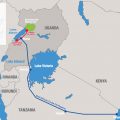
Murchison Falls National Park is one of the biodiversity features affected by the EACOP project. The East Africa Crude Oil Pipeline (EACOP) connects the Tilenga and Kingfisher oilfields in western Uganda with the port of Tanga in eastern Tanzania upon completion, the project will be the longest heated crude oil pipeline in the world crossing through 10 districts in Uganda, and 25 districts in Tanzania.


Despite Civil societies and concerned citizens raising concerns over environmental and human rights violations associated with the EACOP project, the government of Uganda and Tanzania, and EACOP financiers such as TotalEnergies remain unbothered.


Read the petition: https://www.afiego.org/wp-content/uploads/2024/07/Petition-to-president-Museveni-to-stop-oil-rig-deployment-in-MFNP-4-July-2024.pdf

Continue Reading

MEDIA FOR CHANGE NETWORK

EALA members renew push for unified sub-regional Agroecology Law during Mukono meeting.
Published

on

By Witness Radio Team.

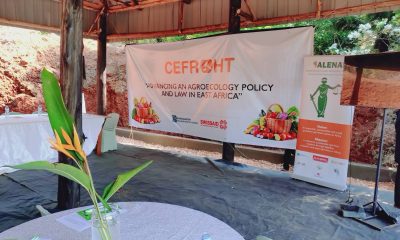
The East African Legislative Assembly (EALA) has renewed its call for a unified regional agroecology policy and law, following a high-level capacity-building meeting held in Nakisunga Village, Mukono District, Uganda.

The gathering brought together more than 50 EALA members, over 100 participants, including civil society organizations (CSOs) representatives, agroecology experts, and officials from Mukono Local government, to discuss the gaps in existing regional frameworks and the urgent need for coherent legislation to support sustainable and climate-resilient farming systems.

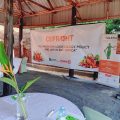
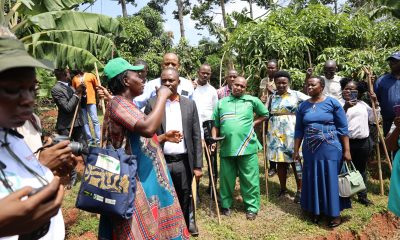
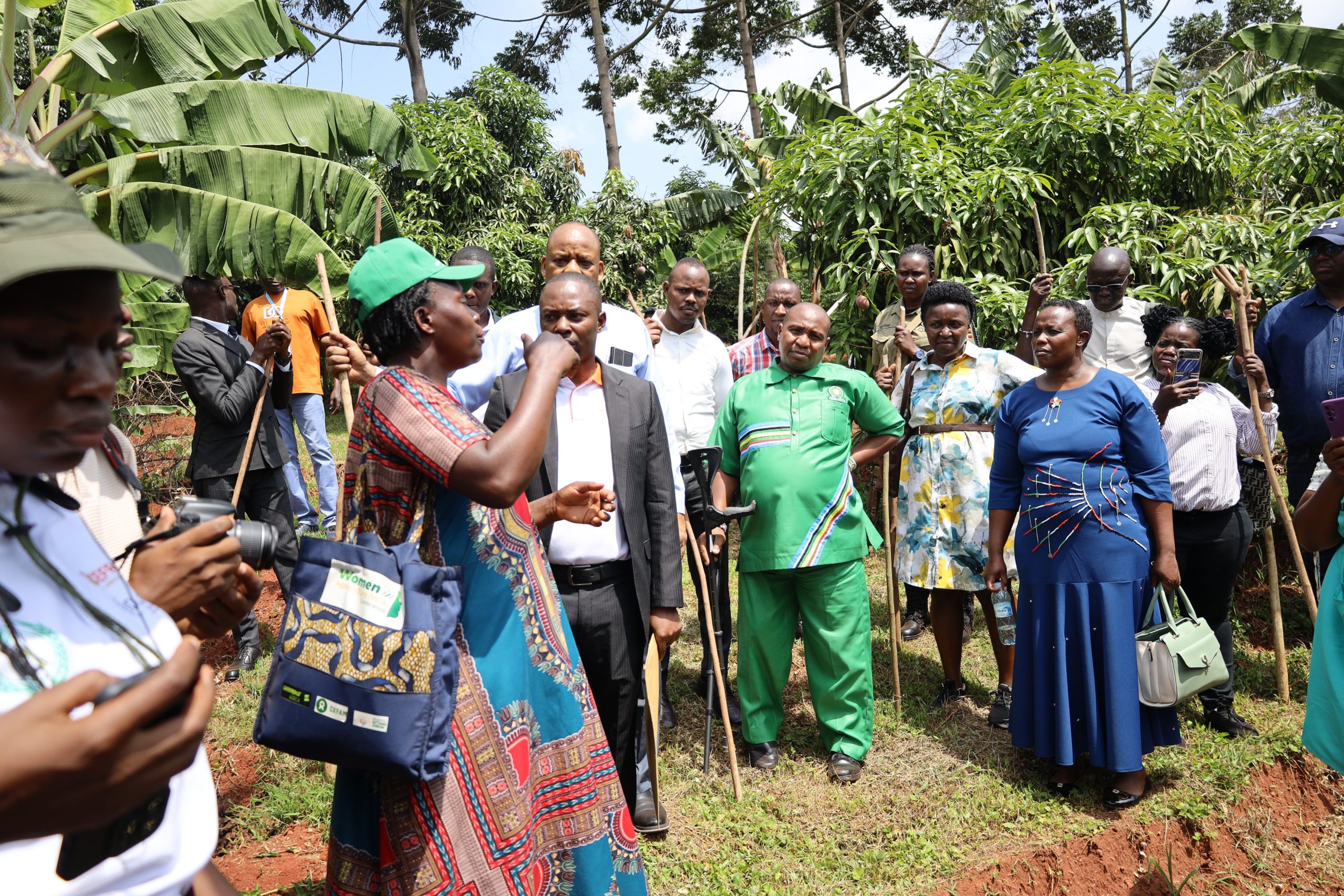
The field tour of Nansubuga CEFROHT Agroecology Training Farm showcased successful organic farming practices, illustrating the benefits of agroecology firsthand to lawmakers and stakeholders.

“I’m amazed at how a local female farmer can transform non-fertile land into a productive farm,” said Hon. Fatuma Ndangiza of the EALA delegation from Rwanda. “Agroecology is about access, safe food, resilient and equitable food systems, and environmental friendliness. What we see here is the right path for our small-scale farmers.”

The proposed regional agroecology law aims to protect smallholder farmers like Nansubuga by safeguarding their seeds, reducing reliance on costly chemical inputs, and shielding them from land grabs, thereby directly enhancing their resilience and livelihoods.

Representing EALA Speaker Rt. Hon. Joseph Ntakirutimana, Hon. Gideon Gatpan Thoar, Chair of the EALA Committee on Agriculture, Tourism and Natural Resources, emphasized the urgency to put the Agroecology policy and law in place:

“There is no law protecting agroecology farmers like Nansubuga. Their seeds are not protected, and they face intense competition from corporate-backed industrial systems. This deserves urgent attention.”

He added that lawmakers’ mandate requires them to legislate in the interest of East Africans, most of whom are smallholder farmers, and that firsthand field experience will strengthen the upcoming model law.

“So now, with this experience, we can push for a regional policy that empowers agroecology farmers and fosters resilient agriculture. Supporting them can lead to a brighter future for East African farming,” He added.

Hon. Fatuma Ndangiza revealed that the agroecology bill could be ready within a year, pending adequate funding, offering hope that smallholder farmers will have access to supportive legislation.

“East Africa cannot build resilient food systems without a unified agroecology policy and law. This meeting is a big step toward drafting a model law that reflects the needs of our farmers. At least by the end of our mandate in 2027, we want this bill in place,” she said. “Members of the agriculture committee have already been trained in agroecology, and thanks to CEFROHT and other partners, even more lawmakers now appreciate the importance of this legislation. It will move quickly.”

Experts at the meeting highlighted systemic biases that keep East African farmers impoverished. These include a longstanding emphasis on export-oriented industrial agriculture, corporate-controlled seeds, increasing pesticide and fertilizer use, and land grabs.

Dr. Million Belay, General Coordinator of the Alliance for Food Sovereignty in Africa (AFSA), warned that Africa is being pushed into an unsustainable corner.

“One of the legacies of colonialism is pushing us to export food instead of feeding our people. Chemicals, GMOs, and land grabs are increasing, and global actors now control food production.

A farm like this one shows the direction we should take.”

He went on to say that proper food security and environmental health depend on farmers’ control over their land, seeds, and output-what we call food sovereignty-empowering farmers to shape their future.

As part of the capacity-building process, EALA members visited the CEFROHT Agroecology Learning Center, where they witnessed demonstrations of intercropping and crop diversification, agroforestry systems, animal husbandry, water and pesticide trapping, among others.

Dr. David Kabanda, whose organization, the Center for Food and Adequate Living Rights (CEFROHT), hosted the delegation, noted that farmers are already successfully practicing agroecology, demonstrating the tangible benefits of this approach.

“We are pleased to support lawmakers with evidence and field-level experiences. Agroecology is not theoretical; farmers are already practicing it successfully. It is what we advocate for, the production of good food as well as environmental conservation,” he added.

Looking ahead, EALA announced a series of concrete steps to advance the regional agroecology agenda. The assembly plans to complete the Agroecology Bill process within a year, then conduct public hearings across all eight EAC Partner States to gather stakeholder input. The bill will be fast-tracked for debate and approval in the EALA plenary, with civil society expected to help secure the Heads of State’s assent. Once adopted, the law will become the EAC Agroecology Act, guiding and harmonizing agroecology efforts across the region.

As climate shocks intensify and millions of families depend on smallholder farming, the Mukono meeting marks a turning point in East Africa’s pursuit of sustainable, resilient food systems. The push for a unified agroecology law signals a growing regional recognition that the future of East African agriculture must be farmer-centered, biodiversity-based, and rooted in local knowledge.

Continue Reading

MEDIA FOR CHANGE NETWORK

East African lawmakers and CSO leaders are meeting in Uganda to draw up plans to promote Agroecology as an alternative to climate change mitigation.
Published

on

By Witness Radio team.

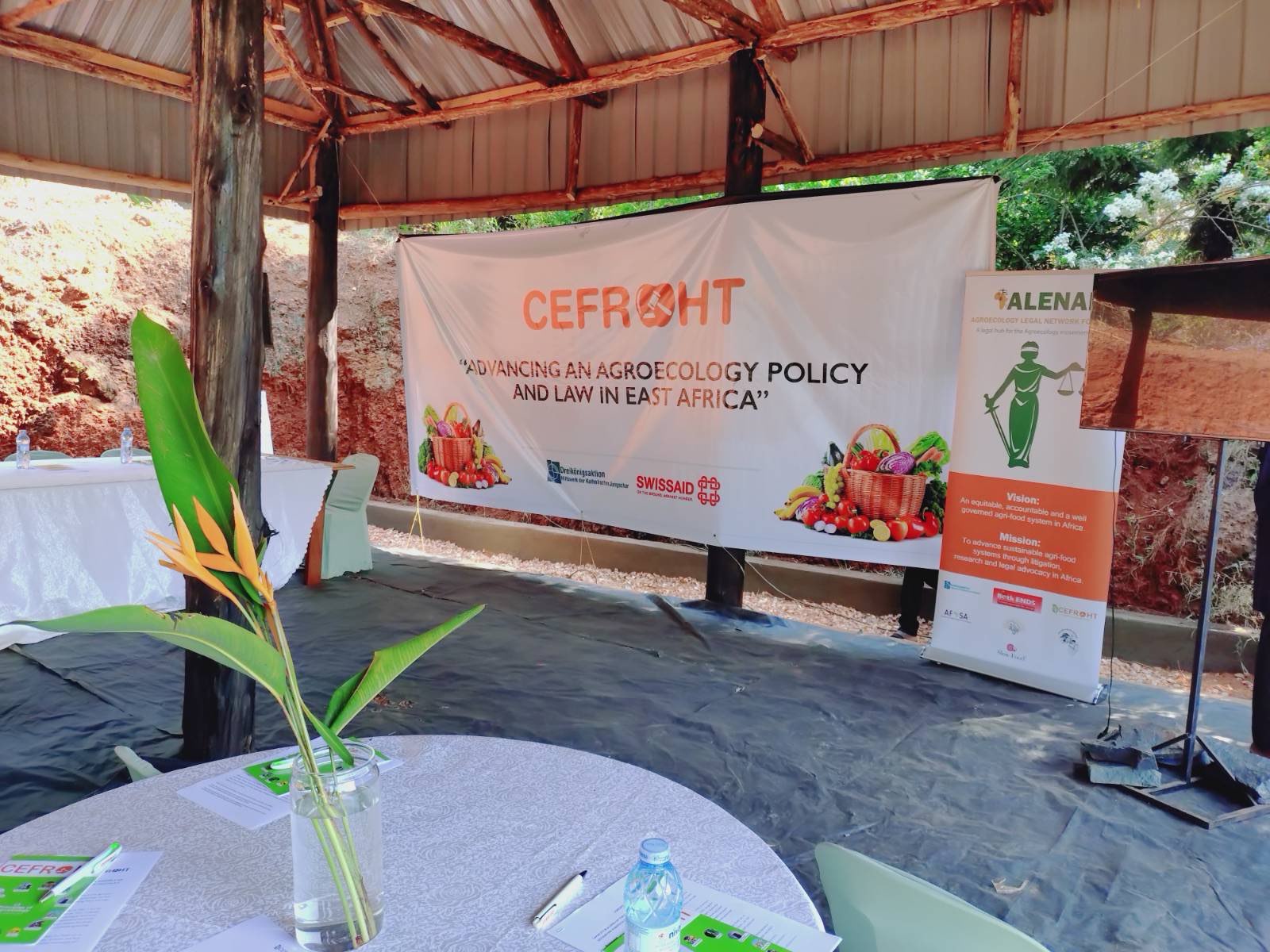
Mukono, Uganda — the East African Legislative Assembly (EALA) members and Civil society organizations (CSOs) leaders in Uganda are convening in Nakisunga, Mukono district today, 28th November, to discuss how to promote agroecology at the regional level and inspire a collective commitment to regional resilience.

Agroecology offers a robust, holistic approach to combating climate change by enhancing the resilience of food systems and reducing their environmental impact.

Spearheaded by the Center for Food and Adequate Living Rights (CEFROHT), the event emphasizes integrating agroecology into regional climate resilience strategies, especially as the East African Community (EAC) faces rising food costs, climate shocks, and declining soil health.

During the meeting, EALA members, together with CSOs, will explore how principles like crop diversification, soil regeneration, and community seed saving can directly improve smallholder farmers’ resilience and livelihoods, complemented by a hands-on field visit to the CEFROHT Agroecology Learning Center in Mukono.

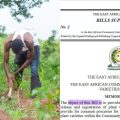
The event has also occurred at a time when EALA is reviewing the East African Seed and Plant Varieties Bill, 2025, which is being criticized for undermining the role of smallholder farmers in seed saving, conservation, and the management of seed systems to promote healthy foods.

Players from CSOs include: Participatory Ecological Land Use Management (PELUM Uganda), Eastern and Southern Africa Small-scale Farmers’ Forum (ESAFF), Seed Savers Network Kenya, TABIO Tanzania, the Alliance for Food Sovereignty in Africa (AFSA), Slow Food Uganda, SEATINI, FIAN Uganda, and the Mukono District Local Government, among others.

The meeting will lay the groundwork for East Africa’s first Policy and Model Law on Agroecology, a long-awaited step toward sustainable and equitable agri-food systems that empower regional stakeholders to shape the future.

The event will be broadcast live on Witness Radio.

Continue Reading

MEDIA FOR CHANGE NETWORK

Kenyan farmers secure right to share local seeds in court ruling

Published

on

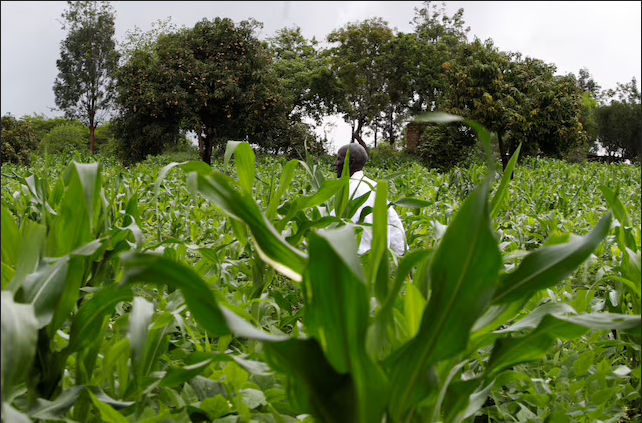
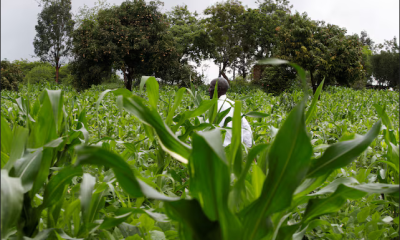
A small-scale farmer works at his maize farm where he plants indigenous seeds at Kyeleni village of Machakos, Kenya December 13, 2022. REUTERS/Monicah Mwangi Purchase Licensing Rights

NAIROBI, Nov 27 (Reuters) – Small-scale farmers in Kenya sang and celebrated on Thursday after a court ruling secured their right to carry on the traditional practice of sharing local seeds.

Kenya’s High Court said that part of a law banning the practice was unconstitutional, a ruling that farmer Samuel Kioko called a “great victory”.

The Reuters Daily Briefing newsletter provides all the news you need to start your day. Sign up here.

“It will be a relief for us farmers because we will be planting seeds that are familiar to us. We know where they come from, they are drought resistant and they have been in our lineage all along for many years,” he said in Kenya’s capital Nairobi after watching the court give the verdict online.

Under the 2012 “Seed and Plant Varieties Act”, anyone who saved uncertified seeds from their crops, then sold or shared them, could face fines or jail. The state-run Kenya Plant Health Inspectorate Service argues on its website the legislation was meant to guarantee seed quality and maximise yields.

A group of smallholder farmers from across Kenya petitioned the High Court in 2022 asking it to declare that the parts of the law imposing those penalties were unconstitutional.

A lawyer representing the farmers said the court in Machakos town, about 60 km (40 miles) southeast of the capital, had ruled the law did not treat farmers and commercial seed producers equally.

Parts of the law “granted extensive proprietary rights to plant breeders and there was no corresponding right that was given to the farmers. So, it favoured big commercial and corporate interests over the rights of farmers,” Wambugu Wanjohi from the Law Society of Kenya said.

Campaign group Greenpeace called the ruling a victory for “food sovereignty”.

The verdict, it said, affirmed that “the ancient right of farmers to save and share seeds supersedes commercial interests, reshaping the legal balance of power between communities and agribusiness worldwide.”

Karoly Bus is the inventor behind the waste-based concrete.

Source: reuters.com

Continue Reading

Resource Center

Legal Framework

READ BY CATEGORY

Facebook

Newsletter

Subscribe to Witness Radio's newsletter


Trending

Subscribe to Witness Radio's newsletter