MEDIA FOR CHANGE NETWORK
Environmental and human rights advocates are urging the world to hold global investors accountable for their actions.
Published
3 hours agoon

By the Witness Radio Team
Communities and organizations defending their land, livelihoods, and environment demand that global investors and development finance institutions take responsibility for projects they believe harm people and the planet.
Environmental and human rights defenders from Thailand, the Philippines, Indonesia, and India gathered at the World Bank Group Annual Meetings to share stories of communities fighting to be heard and seeking justice for harm caused by development projects.
Ms. Ueangfa Chamket, representing Chachoengsao Re: Power in Thailand, described her community’s long battle to defend the land that sustains their way of life. For over twenty years, residents have stood firm against the Burapa power plant, first proposed as a coal-fired facility and later changed to a gas-fired plant.
She explained that this region is a lifeline for farming communities, whose fields not only ensure local food security but also supply Bangkok markets with fresh produce.
“Our communities are agricultural communities which practice organic farming and later sell some of our produce in Bangkok,” she said.
Chamket voiced concerns about the power plant’s environmental impact and its effects on local livelihoods, citing air pollution, dust, and strain on water resources. She warned these threats endanger both people’s health and the biodiversity that sustains the community.
The Burapa Power Plant Project is a proposed 540 MW fossil gas-fired combined cycle power plant under construction in Khao Hin Son, Phanom Sarakham, Chachoengsao Province, Thailand. The project began in 2007 as a 600 MW coal-fired power plant awarded to Advance Agro (now Double A Power/National Power Supply, NPS), according to research from Bank Track, an international organization that tracks private-sector commercial banks and their financed activities.
Despite strong opposition from local communities and four rejections of its Environmental and Health Impact Assessments, most recently in 2016, the project remains in Thailand’s National Power Development Plans.al-fired proposal was replaced by plans for the 540-megawatt Burapa natural gas-fired power plant at the same location. The developers subsequently signed a 25-year Power Purchase Agreement with the Electricity Generating Authority of Thailand (EGAT), alongside a long-term gas supply agreement with PTT PCL.
Chamket says residents refuse more industrial development unless their concerns are addressed, stressing their determination to resist the power plant and what they see as the taking of their local resources.
Beyond environmental worries, Chamket said the community felt shut out of key decisions, from consultations to public hearings. She questioned why residents’ voices mattered less than those of powerful financiers.
“They do not hear our comments and only listen to the funders and financiers of the project. We want to share in public hearing forums, but they block us by saying there is limited time, creating a situation where we cannot report the actual situation in the area,” she said.
Similar worries have surfaced in Prachinburi province, where communities are pushing back against industrial waste incineration projects promoted under the banner of a circular economy.
The Gulf Waste-to-Energy (GWTE) Circular Economy Project aims to build and operate 12 waste-to-energy power plants across five Thai provinces: Saraburi, Ayutthaya, Prachinburi, Rayong, and Chonburi.
Mr. Ridtidat Boonyaburanakit, of the Strong Prachinburi Community Network, described how the project area supports rice, cassava, maize, and poultry farming. He said residents struggle to be heard at public hearings.
“We do not have the opportunities for public hearings,” he said.
“We do not have opportunities for public hearings,” he said. AIIB, along with other lenders, backs the project. In February 2026, the ADB announced loan agreements totaling 16.6 billion Thai baht (approximately US$511.9 million) with 12 companies indirectly owned by Gulf Waste to Energy Holdings Company Limited, a subsidiary of Gulf Development Public Company Limited (GULF), with the intention of supporting energy generation from nonhazardous industrial waste, promoting diversion from landfills, and reducing illegal waste disposal activities in Thailand.
On the ground, community leaders say the project has failed to meet its promises. Boonyaburanakit also reported security personnel intimidated residents who tried to join project discussions. Counsel Aaron Pedrosa, of the Philippine Movement for Climate Justice, highlighted the uphill battle communities face in holding investors accountable for environmental and social harm.
The Philippine Movement for Climate Justice is a coalition of more than 150 grassroots, sectoral, and other organizations working nationwide to advance climate justice.
Pedrosa said the coalition filed a case in 2017 against the International Finance Corporation (IFC), the private-sector arm of the World Bank Group, over financing linked to 19 coal power projects in the Philippines through a financial intermediary, Rizal Commercial Banking Corporation.
He explained this financing fueled the spread of coal power in the country, with 16 of 19 proposed projects ultimately built.
“This is happening in a country where for 13 years now, according to the recent Global Witness Report, we remain the deadliest place for land and defenders,” Pedrosa said, highlighting the dangers people face when defending their land and environment.
Despite the challenge of confronting powerful financial institutions, Pedrosa emphasized the need to keep fighting for accountability, vowing to persist even when justice seems out of reach in Bangkok also sparked debate over who ultimately shoulders the burden of environmental damage and climate disasters.
Sutharee WannasiSutharee Wannasiri, a senior community associate with Accountability Counsel and one of the event’s moderators, referred to recent flooding in Thailand and questioned who pays the price of such farmers cries, vendors, and families seeking shelter as those most vulnerable to the fallout, even as powerful institutions make decisions that shape their futures.
Her remarks linked communities’ opposition to individual projects to a broader concern, suggesting people facing environmental risks may have little influence over investment decisions that affect them.
Advocates demanded stronger accountability for harmful projects, insisting that affected communities must be heard and that investors and operators take responsibility for the outcomes of their choices.
Margaux Day, the policy director at Accountability Counsel, said investors could make better decisions by listening to communities with direct knowledge of their environments and livelihoods.
“Local communities are the experts in their own lives and environments, and if investors were to listen to them, then those projects would be more sustainable and successful because they would be more informed by the actual experts,” Day said.
Yet advocates argue that complaint mechanisms alone are not enough. Communities need a real voice before projects are approved, protection from intimidation when they speak up, and access to remedies when their rights and livelihoods are threatened.
“The polluter and the financier should fix it and pay for it and stop silencing the people for speaking the truth,” said Margaux Day, policy director at Accountability Counsel.
Related posts:

The 4th African Forum on Business and Human Rights: The rapidly escalating investment in Africa is urgently eroding environmental conservation and disregarding the dignity, the land, and human rights of the African people.
#COP27: HUMAN RIGHTS ADVOCATES URGE PARTIES TO INCREASE RECOGNITION AND PROTECTION OF ENVIRONMENTAL AND LAND DEFENDERS.
Land and environmental rights defenders, CSOs, scholars, and government to meet in Kampala to assess Uganda’s performance on the implementation of the UN Guiding principles on Business and Human Rights in Uganda.
Report reveals ongoing Human Rights Abuses and environmental destruction by the Chinese oil company CNOOC
You may like
MEDIA FOR CHANGE NETWORK
Why are secure land rights key to Africa’s climate resilience and the protection of its natural treasures?
Published
12 hours agoon
October 22, 2026
By the Witness Radio Team.
Protecting forests, breathing new life into exhausted land, and confronting climate change hinge not only on policies but on whether those who live on the land truly hold secure rights to it.
The challenge is significant. Between 2015 and 2019, at least 100 million hectares of healthy, productive land were degraded worldwide each year, affecting about 1.3 billion people, according to the United Nations Convention to Combat Desertification (UNCCD). A 2026 global assessment by the Food and Agriculture Organization of the United Nations (FAO), the International Land Coalition (ILC), and the French agricultural research organization CIRAD found that only 35 percent of the world’s land has formally documented ownership, tenure, or use rights. These figures highlight the scale of land degradation and the gaps in recognizing and documenting people’s land rights.
Across Africa, communities depend on farmland, forests, and grazing lands not just for food, but to keep their traditions and livelihoods alive. When climate and environmental policies ignore their rights to these resources, their power to protect the land and shape its destiny fades.
This is why land rights advocates across Africa are calling for land governance to be more deeply woven into climate action and conservation, insisting that securing people’s land rights is the foundation for protecting the environment.
The issue was discussed during an online webinar organized by ILC Africa in partnership with the West African Economic and Monetary Union (UEMOA), the Economic Community of West African States (ECOWAS) and the German development agency GIZ. Practitioners and policy actors shared experiences from several African countries on integrating land governance into climate and environmental policies.
Ms. Johanna von Braun, People, Climate and Nature Lead at the International Land Coalition, explained that land rights are fundamental to achieving the objectives of the three major global environmental conventions addressing climate change, biodiversity loss and desertification.
She said secure land rights can support emissions reduction, help communities adapt to climate change and strengthen biodiversity conservation. In the Amazon, she noted, research shows that recognizing Indigenous peoples’ territories helps protect tropical forests and preserve carbon sinks.
“For mitigation, we know now that with land rights, we can ensure the protection of critical carbon sinks,” Ms. von Braun said.
Land rights are equally important for communities whose livelihoods depend on adapting to changing environmental conditions. Ms. von Braun explained that pastoralist communities with secure rights to move their livestock are better positioned to respond to climate change and manage grazing areas sustainably.
Evidence on rangeland loss reinforces this connection. Research has found that 92 percent of rangeland loss through land-use conversion between 2016 and 2024 occurred in areas where Indigenous peoples’ and local communities’ land rights were not secure, were unknown, or the land fell outside mapped community territories, facts which highlight the importance of recognizing community land rights in efforts to protect rangelands and strengthen climate resilience.
Ms. von Braun also pointed to Namibia, where communal conservancies cover about 20 percent of the country and support biodiversity conservation. She said community-based conservation initiatives can help countries advance global biodiversity commitments, including the 30×30 target to conserve at least 30 percent of the world’s land and sea by 2030.
Despite the clear connection between land rights and environmental protection, bringing land governance into national climate policies remains a persistent and difficult challenge.
Moise Mbimbe, a regional program analyst with ILC Africa, described efforts to address this gap in Burkina Faso, Liberia, Togo and Senegal.
With catalytic funding, the coalition ignited efforts to weave land governance into countries’ Nationally Determined Contributions (NDCs), which serve as blueprints for their climate commitments under the Paris Agreement. This meant reviewing policies, amplifying community voices, and bringing together a wide range of actors to shape recommendations that place land issues at the core of national climate plans.
Mr. Mbimbe said the process had helped participating countries consider land governance.
“Whether it’s in Togo, Burkina Faso or Liberia, we have made considerable progress when it comes to taking or considering land when it comes to NDCs,” he said.
In Burkina Faso, an assessment of the country’s previous climate commitments revealed that land governance had received limited attention.
Mr. Blaise Bama, coordinator of the Multi-Stakeholder Platform on Land (PMAF) in Burkina Faso, said the assessment reviewed policy documents and gathered perspectives from institutional, community, and regional stakeholders.
The findings pointed to significant gaps in how the country’s previous NDC addressed land issues.
“This assessment identified a very weak level where land was not considered in the previous NDC,” Mr. Bama said. assessment recommended recognizing the central role of land rights in climate action and securing community land rights. Mr. Bama added that local consultations allowed community-level actors to share their views and contribute to the policy process.
“It was a moment of close analysis, and these local consultations allow us to consider the opinions of local actors, especially at the community level,” he said.
In Senegal, practitioners are forging new links between land governance, environmental restoration, and active local community participation.
Ms. Nicole Chaby Hary, facilitator of the National Land Governance Platform (PNGF), said consultations revealed that land security and environmental restoration are top priorities. Yet, motivating communities to invest in restoration has proven difficult, highlighting the need for practical tools, clear responsibilities, and authentic participation.
She emphasized that women, youth, local leaders, government bodies, and all stakeholders must have a seat at the table when managing and restoring land.
“We have to put in place tools, like pastoral units, to help with consultations and community responsibilities, especially for women and youth,” Ms. Hary said.
In Madagascar, efforts are underway to ensure that community rights are reflected in biodiversity policies and implementation.
Ms. Stefana Raharijaona, a senior program officer at Natural Justice Madagascar, said the organization has worked to incorporate local communities’ concerns into national biodiversity priorities and translate them into monitorable actions.
This work has meant championing the recognition of community rights and land tenure, supporting community-led management, and striving to formalize and protect these hard-earned rights.
Ms. Raharijaona also described efforts to support implementation of Madagascar’s National Biodiversity Strategy and Action Plan, including work related to Target 22 and the establishment of a national biodiversity platform to improve coordination among the different actors involved.
Across these countries, practitioners confront a common challenge: climate and biodiversity goals will stay out of reach unless the rights of those who depend on and nurture the land are genuinely recognized.
As African nations strengthen their environmental policies, securing community land rights and ensuring meaningful participation in decision-making will be essential to protect ecosystems, heal damaged land, and build resilience to climate change.
Related posts:

Restoring Our Land: Tackling Degradation for Climate Resilience, Food Security, and Sustainable Development at COP16
Africa’s responsible business agenda is facing challenges as more land is taken from local communities for investment, and landowners struggle to secure justice.
Road to COP30: Climate justice is achievable if young people have secure land tenure as a mitigation measure against migration.
Africa adopts the Africa Climate Innovation Compact (ACIC) Declaration to drive the continent towards innovative climate solutions.
MEDIA FOR CHANGE NETWORK
Biodiversity Goals: The world has no time to meet its 2030 goals.
Published
12 hours agoon
October 22, 2026
By the Witness Radio Team
With fewer than four years left to meet global biodiversity targets, a new United Nations assessment urges country to accelerate efforts to protect and restore nature, warning that current efforts fall short of promises.
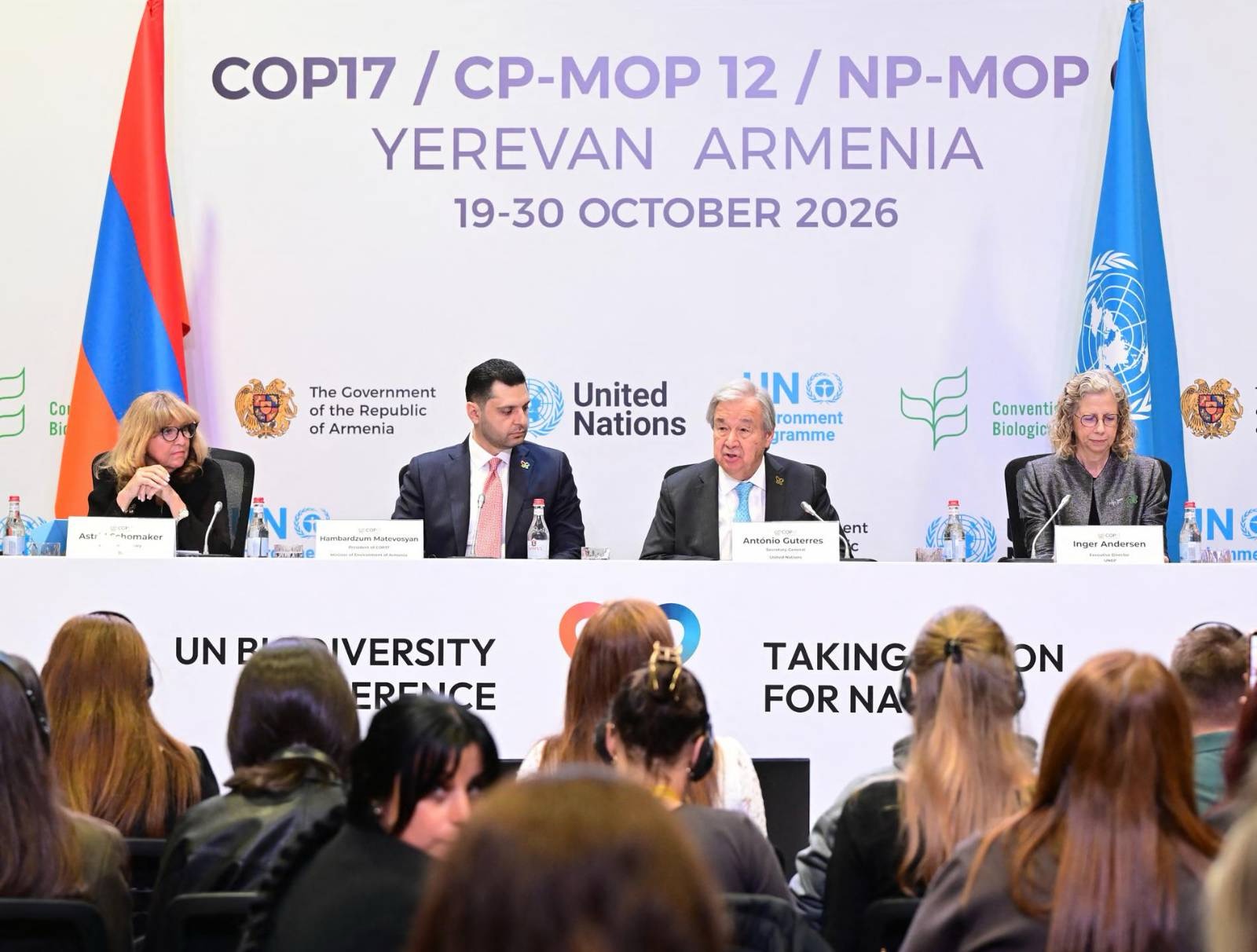
The State of Biodiversity Action report, released just before the 17th Conference of the Parties to the Convention on Biological Diversity (COP17) in Armenia, reveals that while almost 90 percent of countries have set national biodiversity targets, less than half are making progress toward achieving them.
COP17 starts today in Yerevan, Armenia, and runs until October 30, 2026.
As the conference opens, the findings cast doubt on whether countries can fulfill the Kunming-Montreal Global Biodiversity Framework, adopted in 2022 to stop and reverse biodiversity loss by 2030.
The Framework addresses the principal drivers of biodiversity loss, including land- and sea-use change, unsustainable exploitation of species, climate change, pollution and invasive alien species, as well as economic and financial activities contributing to biodiversity loss.
A key ambition of the framework is to safeguard at least 30 percent of the world’s land and sea by 2030. The assessment reveals that current pledges fall short. Even if all commitments are met, just 26 percent of land and 12 percent of marine ecosystems would be protected by the deadline.
The gap between promises and progress was highlighted by Astrid Schomaker, Executive Secretary of the Convention on Biological Diversity, who called on governments to use the global review to identify shortcomings and accelerate implementation.
“We know where we stand. We know where the gaps are. Now we must work together to close them,” Ms. Schomaker said.
Her words highlight the conference’s core challenge. Countries know what must be done, but meaningful action is still lagging.
The assessment points to gaps in funding, coordination among government bodies, and the data needed to measure progress. It also shows that targets requiring action beyond environment ministries, such as business practices, sustainable consumption, harmful incentives, and finance, are falling furthest behind.
To meet the 2030 targets, governments must integrate biodiversity concerns into broader economic and development choices.
At the opening of COP17 on 19 October, the outgoing Colombian presidency also stressed the need to turn international agreements into practical results.
David Olarte Amaya, who represented Colombia’s COP16 presidency, described the gathering in Yerevan as a decisive moment for the planet, noting that the international community had an urgent responsibility to turn the framework’s commitments into “concrete, measurable, and lasting results.”
He also stressed that biodiversity is deeply connected to daily life, underpinning water and food security, resilient communities, thriving economies, and the well-being of society.
“Biodiversity is not merely an environmental concern but also the foundation of our water and food security, the resilience of our territories, the productivity of our economies, and the well-being of our societies,” he stressed.
He noted that the true measure of the conference’s success will not be the number of decisions made, but whether they spark real change in countries and communities.
“Today, as we hand over the COP16 presidency, Colombia reaffirms its commitment to solution-oriented multilateralism, grounded in dialogue, mutual respect among parties, and shared responsibilities. We express our confidence in Armenia’s leadership and our readiness to contribute constructively to the work of this conference,” he added.
Armenia’s Minister of Environment and incoming COP17 president, Mr. Hambardzum Matevosyan, recognized that countries must now focus on what works, where progress is lacking, and what must change to accelerate results.
“COP 15 gave us the framework. COP 16 advanced important mechanisms for its implementation. COP 17 must now help us determine where we stand, what is working, where progress is falling short, and what must change to accelerate implementation,” Mr. Matevosyan said.
He praised Colombia’s COP16 presidency and described the handover as a seamless continuation of the global push for biodiversity.
Mr. Matevosyan also highlighted the Leaders for Nature Summit in Yerevan, which concluded with the Yerevan Declaration—a call to action for nature and a reminder to turn promises into tangible outcomes.
Staying true to the promise of an inclusive COP, Matevosyan pledged that Armenia’s presidency would listen to Indigenous Peoples, local communities, women, youth, civil society, academia, local leaders, businesses, and the finance sector, recognizing that governments cannot tackle biodiversity loss on their own.
“The challenges we face are too big to be addressed by governments alone. The story, the parallel forums, thematic days, and numerous side events will inform and support negotiation outcomes,” he concluded.
As the 2030 deadline looms, the real test is whether countries can move from promises to action and deliver the transformation needed to stop and reverse biodiversity loss. The Yerevan review gives governments a chance to face the gaps, build stronger partnerships, and turn words into measurable progress for nature and all who rely on it.
Related posts:

Conference of the Parties to the Convention on Biological Diversity (COP16): Solutions for companies, losses for communities and biodiversity
Civil society groups at UNCCD COP17 are calling for urgent action on land rights, drought, and vital funding.
New report: EACOP threatens tourism and biodiversity in Greater Masaka.
COP16 in Riyadh: World Leaders Commit $12.15B to Combat Land Degradation and Drought
MEDIA FOR CHANGE NETWORK
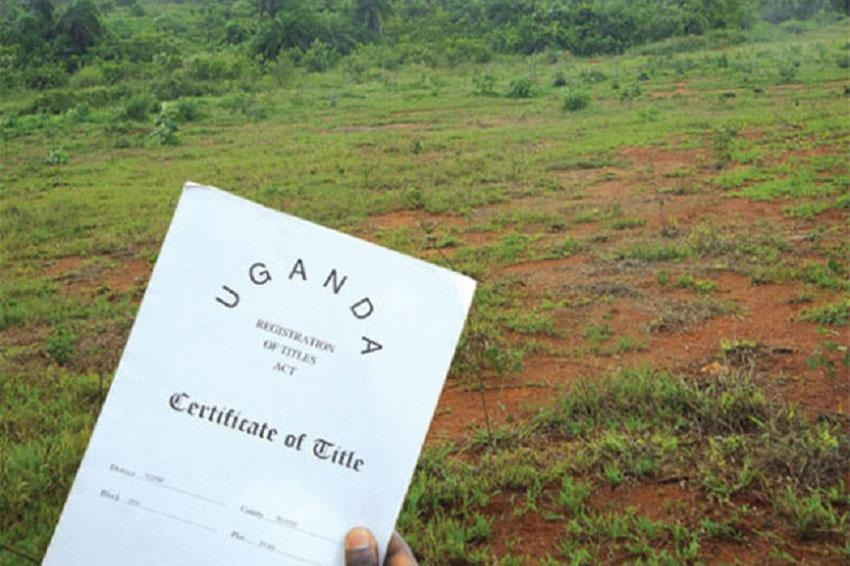
Lands Ministry tightens rules for replacing lost titles, gives landowners 30 days to object
Published
1 day agoon
October 21, 2026
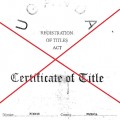
KAMPALA — The Ministry of Lands, Housing and Urban Development has introduced stricter procedures for replacing lost, destroyed or damaged land titles, requiring public notices, physical inspections and stronger verification to curb fraud and protect legitimate landowners.
Under new guidelines presented by Lands Minister Judith Nabakooba on Tuesday, applications for Special Certificates of Title will be subjected to a mandatory notice period of at least 30 days, during which people claiming an interest in the land can raise objections before a replacement title is issued.
The measures seek to close loopholes that have enabled fraudulent land transactions, impersonation, double sales and disputes over ownership by strengthening checks before the government issues replacement documents.
The guidelines require the ministry to publish notices in the Uganda Gazette for at least 30 days, display them on the relevant land and at sub-county and Local Council I notice boards, and publish monthly lists of applications in a newspaper of wide circulation.
The ministry will also publish details of the affected land parcels and applicants on its website for the same period, allowing potential claimants and other interested parties to scrutinise applications.
Any person alleging fraud, competing ownership claims, double sale, impersonation, unlawful retention or another material irregularity will be allowed to lodge a formal objection with the Registrar of Titles within the applicable notice period.
Where an objection is received, the registrar must summon the parties for a hearing and make a ruling, giving those who may be affected an opportunity to be heard before a decision is made.
The guidelines are anchored in the Registration of Titles Act and other applicable laws, including the Constitution and the Land Act. They provide for the issuance of Special Certificates where duplicate certificates have been lost, destroyed or become so damaged that they are unusable, as well as cases where a court orders their issuance.
Beyond paperwork and public notices, the ministry will require physical inspections and, where necessary, boundary-opening exercises to establish the status of land before approving applications.
The exercises must be conducted by a government surveyor together with a registrar of titles or land officer, in the presence of the Local Council I committee, which must have a quorum of five members.
Inspection reports will document the proceedings, people present, developments on the land, occupancy and current use. The requirement is intended to provide additional evidence about the property and help identify competing claims that may not be apparent from the documents submitted.
Applicants seeking replacement titles for lost documents must submit a statutory declaration, proof of payment of the required fees, a national identity document, passport-size photographs, a police form reporting the loss, an LC I committee report and an inspection or boundary-opening report.
They must also provide evidence of publication through a Gazette notice and newspaper advertisement, alongside a local notice.
For titles that have been obliterated, applicants must surrender the damaged duplicate certificate and provide supporting documents, including a statutory declaration, identification and inspection reports.
The guidelines also introduce specific requirements for administrators and executors seeking Special Certificates of Title on behalf of deceased persons’ estates.
In addition to the general application documents, they must provide an inventory, letters of probate or administration, and a copy of the petition for probate or letters of administration.
The additional requirements are intended to establish that applicants have the legal authority to act for the deceased person’s estate before a replacement title is issued.
For court-directed applications, the person seeking implementation of the order must submit a formal letter and a certified copy of the court order. The Registrar of Titles must independently verify the order with the court that issued it before proceeding.
Under the new framework, a replacement title cannot be approved merely because an applicant reports that the original document is missing.
The registrar must establish that the original certificate was genuine, the applicant has been properly identified and is legally authorised to apply, and the loss, destruction or damage has been sufficiently demonstrated.
The registrar must also confirm that the transaction is genuine, relevant dealings and encumbrances have been identified, recognised pending transactions have been completed, and no unresolved legal matter prevents issuance.
The proposed Special Certificate must accurately reflect the particulars contained in the Register Book, which serves as the official record of registered land interests.
Every decision to approve, defer, reject or suspend an application must be documented with reasons. The ministry will also require material steps in the process to be recorded and stored in both physical and electronic formats to improve accountability and traceability.
Once issued, the Special Certificate must contain the relevant register particulars, endorsements and the reason for its issuance. The Register Book must also be updated with the issuance date, application number, reference to the previous certificate and relevant Gazette notice or court order, where applicable.
The guidelines are intended to strengthen the integrity of Uganda’s land registration system while providing an avenue for people with legitimate interests to challenge questionable applications before replacement titles are issued.
They also reinforce the principle that land registration procedures must be conducted in accordance with the law and with due regard to the rights of lawful and bona fide occupants protected under Article 237 of the Constitution.
Source: pmldaily.com
Related posts:

Lands ministry rejects call to save over 300 Masaka residents facing eviction
An early bird: oil-affected communities have launched a petition to the Lands Ministry, seeking protection of their rights in the face of forced acquisitions.
Uganda’s top Lands Ministry official has been arrested and charged with Corruption and Abuse of Office, a significant event that will have far-reaching implications for land governance in the country.
Mubende land grabs: Two land titles covering over 6800 hectares of land in Kiganda sub-County, Mubende district have been cancelled
Environmental and human rights advocates are urging the world to hold global investors accountable for their actions.
Why are secure land rights key to Africa’s climate resilience and the protection of its natural treasures?
Biodiversity Goals: The world has no time to meet its 2030 goals.
Lands Ministry tightens rules for replacing lost titles, gives landowners 30 days to object

Lango ex-combatants count losses after dry spell destroys maize harvest
Five years after Uganda’s National Action Plan on Business and Human Rights, are local communities hosting land-based investment projects seeing change?
The global race for clean energy minerals is leaving communities grappling with conflicts and human rights abuses, a new report reveals.
Tanzanian Government Abducts Maasai Villagers in an Unconscionable Attack on Indigenous Land Defenders
Innovative Finance from Canada projects positive impact on local communities.
Over 5000 Indigenous Communities evicted in Kiryandongo District

Petition To Land Inquiry Commission Over Human Rights In Kiryandongo District

Invisible victims of Uganda Land Grabs
Resource Center
- CAN AFRICAN FOOD SYSTEMS THRIVE WITHOUT CHEMICAL FERTILISERS
- Land And Environment Rights In Uganda Experiences From Karamoja And Mid Western Sub Regions
- REPARATORY AND CLIMATE JUSTICE MUST BE AT THE CORE OF COP30, SAY GLOBAL LEADERS AND MOVEMENTS
- LAND GRABS AT GUNPOINT REPORT IN KIRYANDONGO DISTRICT
- THOSE OIL LIARS! THEY DESTROYED MY BUSINESS!
- RESEARCH BRIEF -TOURISM POTENTIAL OF GREATER MASAKA -MARCH 2025
- The Mouila Declaration of the Informal Alliance against the Expansion of Industrial Monocultures
- FORCED LAND EVICTIONS IN UGANDA TRENDS RIGHTS OF DEFENDERS IMPACT AND CALL FOR ACTION
Legal Framework
READ BY CATEGORY
Newsletter
Trending
-
NGO WORK1 week agoTanzanian Government Abducts Maasai Villagers in an Unconscionable Attack on Indigenous Land Defenders
-
MEDIA FOR CHANGE NETWORK6 days agoWorld Food Day 2026: Building healthy diets means reimagining how we grow, share, and enjoy our food.
-

MEDIA FOR CHANGE NETWORK1 week agoCourt remands 10 anti-oil activists as suspect collapses in dock
-
MEDIA FOR CHANGE NETWORK1 week agoDefending ancestral land comes at a steep price as Maasai communities in Tanzania face relentless, mounting pressure.
-

MEDIA FOR CHANGE NETWORK1 week agoAs waves of investment sweep across Uganda, countless women rise to defend their land, safeguard their traditions, and claim their right to be heard.
-
MEDIA FOR CHANGE NETWORK6 days agoInternational Day of Rural Women : Rural women farmers deserve not only equal rights and access to resources, but also the strength and voice to safeguard Mother Nature.
-

NGO WORK1 week agoAs World Bank Holds Annual Meetings, 84,000 Tanzanians Call for Justice
-
MEDIA FOR CHANGE NETWORK1 week agoIn Nepal, women seek ownership rights to the lands they tend