Connect with us

MEDIA FOR CHANGE NETWORK

EACOP activism under Siege: Activists are reportedly criminalized for opposing oil pipeline project in Uganda.


Published

on

By Witness Radio and Südnordfunk teams.

Close to 100 activists have been criminalized this year for speaking out about the harm caused by the East African Crude Oil Pipeline (EACOP) project in Uganda. The EACOP has already caused significant social harm to communities hosting the project, and it is projected to further damage the environment.

The EACOP is a planned 1,443km pipeline stretching from Hoima in Western Uganda to the port of Tanga in Tanzania. It is expected to transport crude oil from Uganda’s Tilenga and Kingfisher oil fields to export markets. Key stakeholders in this venture include Total Energies, the China National Offshore Oil Corporation (CNOOC), and the governments of Uganda and Tanzania.

In Uganda, hundreds of families have already lost their land to the project through the government’s compulsory land acquisition. Many had refused to accept the compensation, arguing it was inadequate compared to the size and value of the land taken but the government, in some cases, has forcibly acquired it. Meanwhile, those who also accepted compensation and surrendered their land have reported that the project has driven them deeper into poverty.

The social harm already inflicted on these communities, coupled with the impending environmental destruction, has sparked a massive rise in anti-EACOP activism, both within Uganda and internationally, with growing opposition to the project.

In August, Global Witness reported that at least 96 people, alone in Uganda had been detained in the past nine months, highlighting the increasing repression faced by environmental and human rights defenders who stand against the pipeline and its impacts.

Bob Barigye cannot be excluded when discussing EACOP activism and the fight for environmental justice in Uganda. Once a biology and chemistry teacher, Barigye has since turned into an activist and has been criminalized for opposing the controversial EACOP project. He is among the many activists targeted for standing up against the environmental and social impacts of the oil industry in Uganda.

“I have been arrested more than six times now”. Barigye revealed.

The escalating arrests result from activists revealing the darker side of the project once implemented, facts that the government and other project implementers are not interested in acknowledging. Their efforts to expose the environmental and social impacts of the project have continued repression.

“Our crime has always been trying to talk about the effects, trying to petition embassies, trying to report, trying to talk to government officials about the dangers of the project that they badly want to invest in. We have encountered with the Chinese embassy where we have been arrested three times with other activists trying to deliver a petition,” the activist revealed in an interview with Surdinordfunk.

The most common accusations against the Stop EACOP activists such as common nuisance, incitement to violence, and most recently, unlawful assembly are seen by the activists as deliberate attempts to weaken their efforts in challenging the environmental harm caused by the project. This makes the activists feel isolated in their struggle.

“They have made us seem like criminals, they have made us seem like unserious people. I have been taken to court twice, and the charges that they have always preferred against us are dubious and dehumanizing. Because the common charge that they normally charge us is a common nuisance, you are taking a report to a government body, but when you are arrested, you will be arraigned in court as a common nuisance.” Barigye further added.

Activists assert that these charges are false, pointing to the recent dismissal of cases due to lack of evidence as proof. For instance, in November 2023, incitement to violence charges against nine young environmental activists were dropped. Earlier, in January 2023, human rights defenders Barigye Bob, Ivan Kabale, Musoke Hamis Walusimbi, and Ssemwanga Jackson were re-arrested and similarly charged with incitement to violence and common nuisance. However, their case was dismissed for want of prosecution, further reinforcing the activists’ claims that these charges are fabricated.

It is not only in Uganda where those campaigning against the oil project are living dangerously. But also, in neighboring Tanzania where oil is to be transported. Richard Senkondo leads the Organization for Community Engagement (OCE) there. At the World Climate Change Conference in Dubai in November 2023, he addressed the problematic consequences of EACOP in his country. However, this didn’t go well with him upon his return back home from COP 28.

“I didn’t know the government was censoring me. Immediately after returning on the 4th of December to Tanzania, I found out that I had been summoned to one of the infamous police stations in Dar es Salaam. That police station is typically known and has recorded a high number of torture and complete disappearances of people who criticize the government.

According to Mr. Senkondo, after receiving the summons, he had to flee Tanzania to save his life. “I was ordered immediately to vacate to Kenya. Up to now, I have not been able to reunite with my family because there is still a lot of hunting and searching for me, but I have stood very firmly against the challenges,” he added.

Standing up against the oil project and for justice demands a lot from activists in Tanzania and Uganda. Also, the lawyers representing the Stop-EACOP activists and the affected community members report being threatened.

“Some of us have received letters, telling us to back off the cases or they prefer charges of defamation on their companies against us individually. But because we believe that the information and the knowledge we use, the evidence we use is direct and correct. So even if they prefer such kind of defamation cases, we are not scared because we have the evidence-based information, that is real and well known to everybody.” Lawyer Kato Tumusiime revealed this in an interview with Surdinordfunk.

The aim of the threatening letters, arrests, and lawsuits is to silence the voices against the oil development activities. Activist Barigye says that young people in particular who still live with their parents, are intimidated by this. Women are also increasingly deterred by police violence and social stigma:

“Most of them are married. Most of them have children. So, in case a charge like a common nuisance is provided against this person, it is the way that he will be viewed in the community. Because if you are being arraigned before court, if you are being harassed as a woman, being arrested the way they arrest us, being beaten, bangled on police pickups, there is that kind of dignity and psychological torture that it brings to them. And it has discouraged most of them.” Barigye added.

But, lawyers and activists are now discovering that the unending arrests of those opposing the EACOP Project are being sponsored by the oil companies involved in the project. They believe that companies like Total are directly funding these arrests to suppress opposition to their operations.

“Of course, these kinds of arrests, I believe, are sponsored directly by the oil companies here that we have in Uganda, including Total itself. Yes, obviously, most of the arrests, including of the activists themselves and the PAPs that are affected by the whole project are sponsored directly by those companies. When you go ahead and follow up on those cases, you find the representatives of those companies also at different police stations or even attending different court sessions to find out what is transpiring about these cases. So that one is a clear and a green light to show that these companies are directly involved and sponsoring these kinds of arrests,” counsel Tumusiime further mentioned.

Listen to the podcast here.

Continue Reading

MEDIA FOR CHANGE NETWORK

EALA members renew push for unified sub-regional Agroecology Law during Mukono meeting.

Published

on

By Witness Radio Team.

The East African Legislative Assembly (EALA) has renewed its call for a unified regional agroecology policy and law, following a high-level capacity-building meeting held in Nakisunga Village, Mukono District, Uganda.

The gathering brought together more than 50 EALA members, over 100 participants, including civil society organizations (CSOs) representatives, agroecology experts, and officials from Mukono Local government, to discuss the gaps in existing regional frameworks and the urgent need for coherent legislation to support sustainable and climate-resilient farming systems.

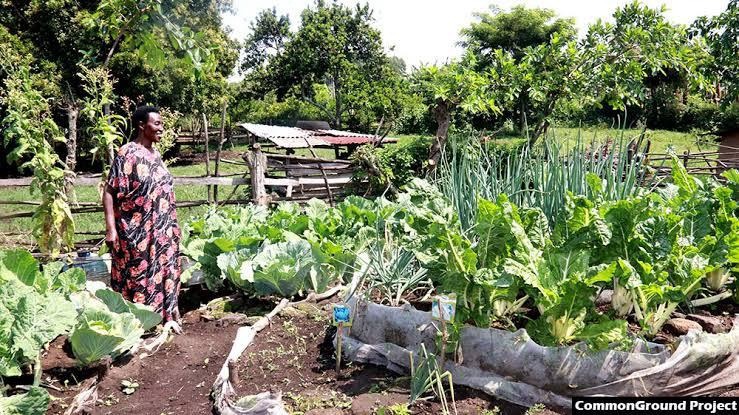
The field tour of Nansubuga CEFROHT Agroecology Training Farm showcased successful organic farming practices, illustrating the benefits of agroecology firsthand to lawmakers and stakeholders.

“I’m amazed at how a local female farmer can transform non-fertile land into a productive farm,” said Hon. Fatuma Ndangiza of the EALA delegation from Rwanda. “Agroecology is about access, safe food, resilient and equitable food systems, and environmental friendliness. What we see here is the right path for our small-scale farmers.”

The proposed regional agroecology law aims to protect smallholder farmers like Nansubuga by safeguarding their seeds, reducing reliance on costly chemical inputs, and shielding them from land grabs, thereby directly enhancing their resilience and livelihoods.

Representing EALA Speaker Rt. Hon. Joseph Ntakirutimana, Hon. Gideon Gatpan Thoar, Chair of the EALA Committee on Agriculture, Tourism and Natural Resources, emphasized the urgency to put the Agroecology policy and law in place:

“There is no law protecting agroecology farmers like Nansubuga. Their seeds are not protected, and they face intense competition from corporate-backed industrial systems. This deserves urgent attention.”

He added that lawmakers’ mandate requires them to legislate in the interest of East Africans, most of whom are smallholder farmers, and that firsthand field experience will strengthen the upcoming model law.

“So now, with this experience, we can push for a regional policy that empowers agroecology farmers and fosters resilient agriculture. Supporting them can lead to a brighter future for East African farming,” He added.

Hon. Fatuma Ndangiza revealed that the agroecology bill could be ready within a year, pending adequate funding, offering hope that smallholder farmers will have access to supportive legislation.

“East Africa cannot build resilient food systems without a unified agroecology policy and law. This meeting is a big step toward drafting a model law that reflects the needs of our farmers. At least by the end of our mandate in 2027, we want this bill in place,” she said. “Members of the agriculture committee have already been trained in agroecology, and thanks to CEFROHT and other partners, even more lawmakers now appreciate the importance of this legislation. It will move quickly.”

Experts at the meeting highlighted systemic biases that keep East African farmers impoverished. These include a longstanding emphasis on export-oriented industrial agriculture, corporate-controlled seeds, increasing pesticide and fertilizer use, and land grabs.

Dr. Million Belay, General Coordinator of the Alliance for Food Sovereignty in Africa (AFSA), warned that Africa is being pushed into an unsustainable corner.

“One of the legacies of colonialism is pushing us to export food instead of feeding our people. Chemicals, GMOs, and land grabs are increasing, and global actors now control food production.

A farm like this one shows the direction we should take.”

He went on to say that proper food security and environmental health depend on farmers’ control over their land, seeds, and output-what we call food sovereignty-empowering farmers to shape their future.

As part of the capacity-building process, EALA members visited the CEFROHT Agroecology Learning Center, where they witnessed demonstrations of intercropping and crop diversification, agroforestry systems, animal husbandry, water and pesticide trapping, among others.

Dr. David Kabanda, whose organization, the Center for Food and Adequate Living Rights (CEFROHT), hosted the delegation, noted that farmers are already successfully practicing agroecology, demonstrating the tangible benefits of this approach.

“We are pleased to support lawmakers with evidence and field-level experiences. Agroecology is not theoretical; farmers are already practicing it successfully. It is what we advocate for, the production of good food as well as environmental conservation,” he added.

Looking ahead, EALA announced a series of concrete steps to advance the regional agroecology agenda. The assembly plans to complete the Agroecology Bill process within a year, then conduct public hearings across all eight EAC Partner States to gather stakeholder input. The bill will be fast-tracked for debate and approval in the EALA plenary, with civil society expected to help secure the Heads of State’s assent. Once adopted, the law will become the EAC Agroecology Act, guiding and harmonizing agroecology efforts across the region.

As climate shocks intensify and millions of families depend on smallholder farming, the Mukono meeting marks a turning point in East Africa’s pursuit of sustainable, resilient food systems. The push for a unified agroecology law signals a growing regional recognition that the future of East African agriculture must be farmer-centered, biodiversity-based, and rooted in local knowledge.

Continue Reading

MEDIA FOR CHANGE NETWORK

East African lawmakers and CSO leaders are meeting in Uganda to draw up plans to promote Agroecology as an alternative to climate change mitigation.

Published

on

By Witness Radio team.

Mukono, Uganda — the East African Legislative Assembly (EALA) members and Civil society organizations (CSOs) leaders in Uganda are convening in Nakisunga, Mukono district today, 28th November, to discuss how to promote agroecology at the regional level and inspire a collective commitment to regional resilience.

Agroecology offers a robust, holistic approach to combating climate change by enhancing the resilience of food systems and reducing their environmental impact.

Spearheaded by the Center for Food and Adequate Living Rights (CEFROHT), the event emphasizes integrating agroecology into regional climate resilience strategies, especially as the East African Community (EAC) faces rising food costs, climate shocks, and declining soil health.

During the meeting, EALA members, together with CSOs, will explore how principles like crop diversification, soil regeneration, and community seed saving can directly improve smallholder farmers’ resilience and livelihoods, complemented by a hands-on field visit to the CEFROHT Agroecology Learning Center in Mukono.

The event has also occurred at a time when EALA is reviewing the East African Seed and Plant Varieties Bill, 2025, which is being criticized for undermining the role of smallholder farmers in seed saving, conservation, and the management of seed systems to promote healthy foods.

Players from CSOs include: Participatory Ecological Land Use Management (PELUM Uganda), Eastern and Southern Africa Small-scale Farmers’ Forum (ESAFF), Seed Savers Network Kenya, TABIO Tanzania, the Alliance for Food Sovereignty in Africa (AFSA), Slow Food Uganda, SEATINI, FIAN Uganda, and the Mukono District Local Government, among others.

The meeting will lay the groundwork for East Africa’s first Policy and Model Law on Agroecology, a long-awaited step toward sustainable and equitable agri-food systems that empower regional stakeholders to shape the future.

The event will be broadcast live on Witness Radio.

Continue Reading

MEDIA FOR CHANGE NETWORK

Kenyan farmers secure right to share local seeds in court ruling

Published

on

A small-scale farmer works at his maize farm where he plants indigenous seeds at Kyeleni village of Machakos, Kenya December 13, 2022. REUTERS/Monicah Mwangi Purchase Licensing Rights

NAIROBI, Nov 27 (Reuters) – Small-scale farmers in Kenya sang and celebrated on Thursday after a court ruling secured their right to carry on the traditional practice of sharing local seeds.

Kenya’s High Court said that part of a law banning the practice was unconstitutional, a ruling that farmer Samuel Kioko called a “great victory”.

The Reuters Daily Briefing newsletter provides all the news you need to start your day. Sign up here.

“It will be a relief for us farmers because we will be planting seeds that are familiar to us. We know where they come from, they are drought resistant and they have been in our lineage all along for many years,” he said in Kenya’s capital Nairobi after watching the court give the verdict online.

Under the 2012 “Seed and Plant Varieties Act”, anyone who saved uncertified seeds from their crops, then sold or shared them, could face fines or jail. The state-run Kenya Plant Health Inspectorate Service argues on its website the legislation was meant to guarantee seed quality and maximise yields.

A group of smallholder farmers from across Kenya petitioned the High Court in 2022 asking it to declare that the parts of the law imposing those penalties were unconstitutional.

A lawyer representing the farmers said the court in Machakos town, about 60 km (40 miles) southeast of the capital, had ruled the law did not treat farmers and commercial seed producers equally.

Parts of the law “granted extensive proprietary rights to plant breeders and there was no corresponding right that was given to the farmers. So, it favoured big commercial and corporate interests over the rights of farmers,” Wambugu Wanjohi from the Law Society of Kenya said.

Campaign group Greenpeace called the ruling a victory for “food sovereignty”.

The verdict, it said, affirmed that “the ancient right of farmers to save and share seeds supersedes commercial interests, reshaping the legal balance of power between communities and agribusiness worldwide.”

Karoly Bus is the inventor behind the waste-based concrete.

Source: reuters.com

Continue Reading

Resource Center

Legal Framework

READ BY CATEGORY

Facebook

Newsletter

Subscribe to Witness Radio's newsletter


Trending

Subscribe to Witness Radio's newsletter