MEDIA FOR CHANGE NETWORK
3 Division Commander Warns Communities Against Land Wrangles
Published
1 hour agoon

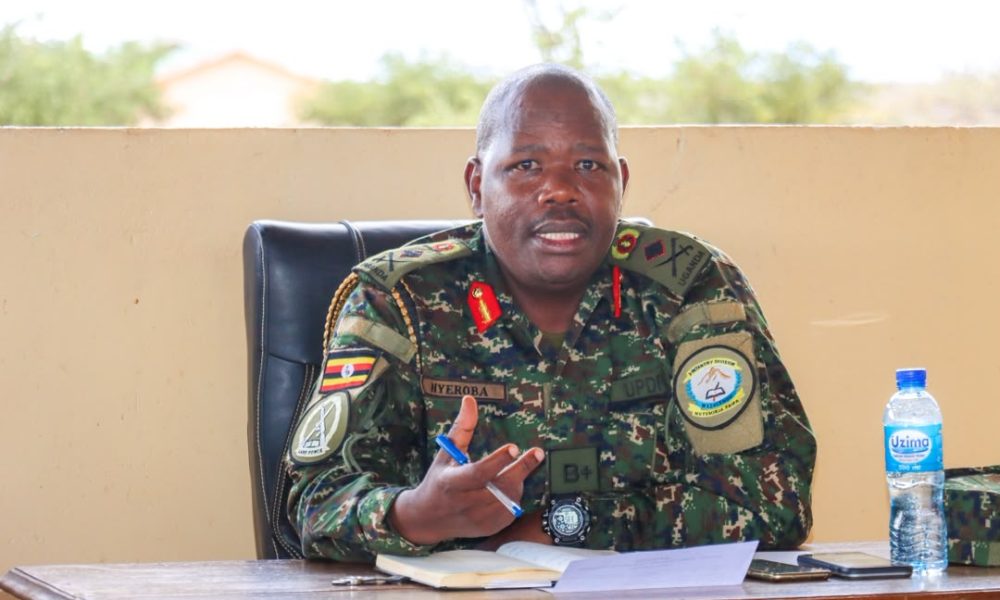
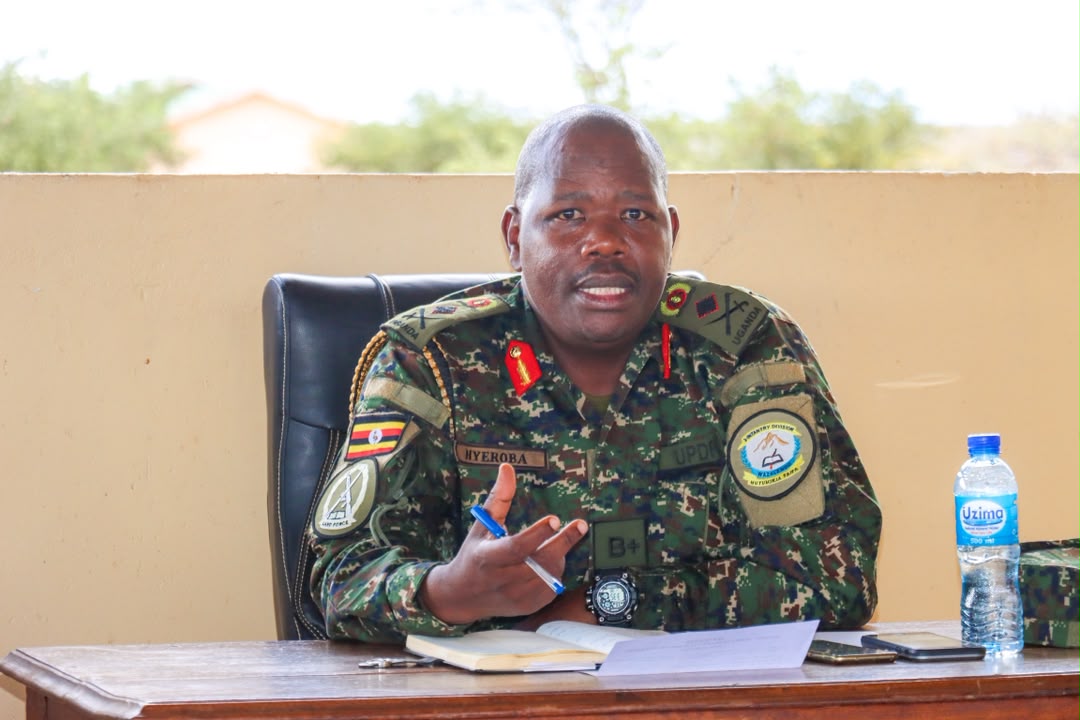
The Commander of the 3 Infantry Division, Brig Gen Michael Hyeroba Wakala, has warned communities in the Karamoja and Teso sub-regions against escalating communal land conflicts, saying the disputes pose a threat to peace, security and socio-economic development.
Brig Gen Hyeroba made the remarks during a joint regional security meeting at the 403 Brigade Headquarters in Matany, Napak District, where security leaders reviewed persistent land disputes in Abim, Napak and Kapelebyong districts.
He said the Uganda Peoples’ Defence Forces (UPDF) would not tolerate violence, incitement or illegal occupation arising from land disputes.
“Land conflicts are now a major security threat. I direct all commanders under 3 Division to take firm action against anyone who takes the law into their own hands. No community has the right to evict, attack or destroy property of another under the guise of land ownership. We shall enforce peace and protect every Ugandan,” Brig Gen Hyeroba said.
He said disputes involving gazetted land, communal grazing corridors and inter-district boundaries had been exploited to fuel violence, and tasked the joint security committee with conducting a comprehensive verification of gazetted land ownership and submitting recommendations to the Government.
“This committee must address the historical and administrative gaps. We need to know what is gazetted, what is communal, and what belongs to the local government. Without clarity, criminals will continue to hide behind land conflicts,” he added.
The Resident District Commissioner of Napak, Mr Milton Odongo, called for closer cooperation between security agencies and local leaders, saying isolated interventions had failed to deliver lasting solutions.
“We are moving from talking to action. We have resolved to deploy joint security teams in all hotspots across the three districts to stop violence, prevent illegal demarcations and protect lives and property. Any local leader who incites communities over land will be held personally accountable,” Odongo said.
He said the conflicts had outgrown local council mechanisms and now required a coordinated, multi-agency response.
“Land conflict is no longer a mere community disagreement; it is a security matter. We shall not allow it to reverse the peace we have achieved in Karamoja and Teso,” he said.
Mr. Odongo also said he would engage the Minister of Karamoja Affairs to facilitate the involvement of the Ministry of Lands, Housing and Urban Development and the Ministry of Local Government in developing a lasting policy solution.
The Deputy RDC of Abim District, Mr Gilbert Okwir, called for unity among communities and closer coordination among security agencies.
“The people of Abim, Napak and Kapelebyong are one. We cannot afford to fight over boundaries. I appeal to all security agencies to speak with one voice and find a lasting solution,” Okwir said.
He commended the UPDF, Uganda Police Force and Anti-Stock Theft Unit (ASTU) for joint operations that he said had helped curb cattle raids, which had contributed to tensions over land.
The Deputy Commander of the 5 Infantry Division, Col Gai Fraser Mpadwa, urged field commanders to strengthen intelligence sharing and community engagement to prevent land disputes from escalating into violence.
The meeting brought together the Commander of 3 Infantry Division, Brig Gen Michael Hyeroba Wakala; Deputy Commander of 5 Infantry Division, Col Gai Fraser Mpadwa; brigade commanders; ASTU commanders; District Internal Security Officers; intelligence officers; and Resident District Commissioners from the affected districts.
Source: chimpreports.com
Related posts:

EACOP PAPs have started a private criminal proceeding against Army General, Hoima Police Commander and others over their criminal acts during illegal land evictions.
Private prosecution: Army General, police commander, presidential representative and others to be charged with over seven offenses committed while illegally evicting locals to give way to EACOP.
Appellate Division of the East African Court of Justice (EACJ) rejects the request to dismiss the EACOP appeal case.
Court issues criminal summons against Dodoviko, FFU commander
You may like
MEDIA FOR CHANGE NETWORK
The global race for clean energy minerals is leaving communities grappling with conflicts and human rights abuses, a new report reveals.
Published
1 hour agoon
October 1, 2026
By the Witness Radio Team
The global rush to secure minerals for the clean-energy transition is exposing local and indigenous communities to land dispossession, conflicts, human rights abuses or violations, and attacks on those who challenge mining projects, according to a new report by the Business & Human Rights Resource Center (BHRRC).
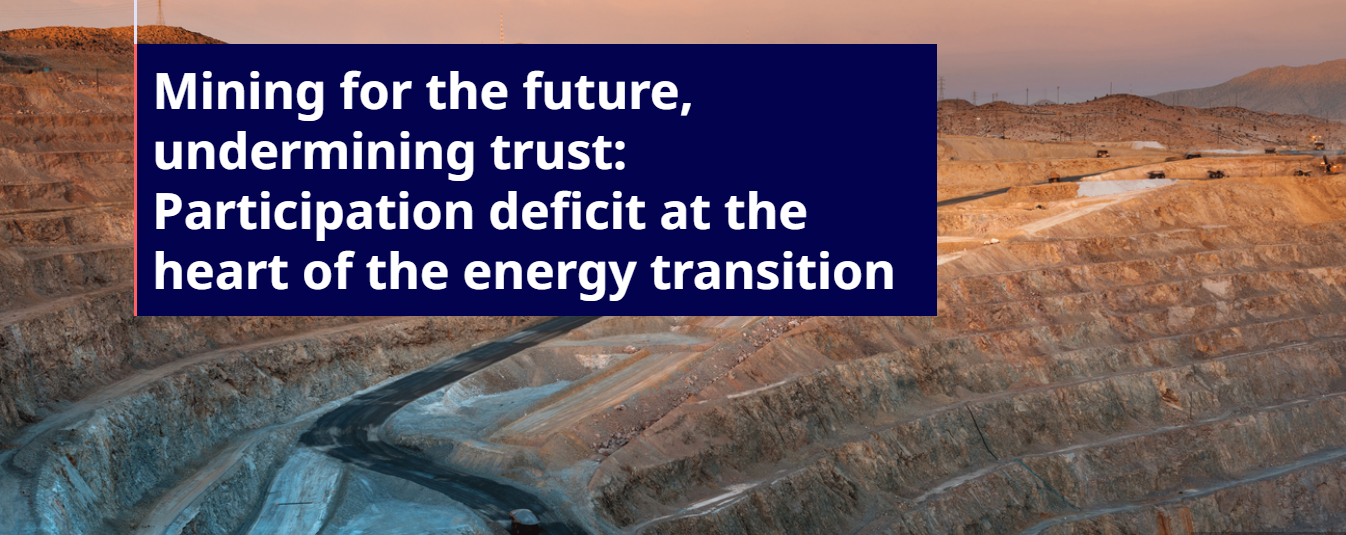
The report, Mining for the Future, Undermining Trust: Participation Deficit at the Heart of the Energy Transition, warns that growing demand for minerals like copper, lithium, nickel, and other transition minerals is advancing faster than mechanisms to ensure affected communities have a meaningful say in decisions about mining projects on their land.
Tanzania is among the African countries positioning itself as a future supplier of minerals needed for the global energy transition. The country has significant potential for graphite, nickel and rare earth elements, while investor interest is growing in minerals used in batteries and renewable-energy technologies.
In Kandaskira, a village in Simanjiro District, the drive to extract these minerals raises deep worries about land loss, water scarcity, forced displacement, and exclusion from decisions shaping their future.
Indigenous rights organization PINGO’s Forum has documented land conflicts, fears of forced displacement, risks of water contamination, and exclusion of communities from negotiations with mining companies around graphite projects. It also recorded unfulfilled corporate social responsibility promises, violence against community members resisting mining projects, and gender-based violence.
Rombo Ole, chairman of Kandaskira, said communities need clear information about the opportunities and potential impacts of the energy transition. He also called for transparent laws, procedures, and fair compensation for people whose land, livelihoods, or resources are affected.
“A just energy transition is important because energy is about people and communities. The transition must put people at the center and ensure no community is left behind or unfairly affected,” Rombo said.
Kandaskira’s story echoes a broader struggle faced by communities living near transition-mineral projects worldwide.
According to the BHRRC report, the resulting “participation deficit” risks undermining public trust and could fuel conflicts, lawsuits, and delays to projects supporting the global transition away from fossil fuels.
“The energy transition cannot be built on the silencing or exclusion of the people and communities who bear its costs,” the report argues.
The findings come as demand for transition minerals is projected to rise sharply in coming decades. The report estimates that by 2040, the share of global mineral demand for the energy transition could rise from 20% to 45% for copper, 38% to 92% for lithium, and below 10% to 54% for nickel.
As demand surges, so do the dangers for those who challenge mining projects.
The report documents over 1,880 attacks against critics of the mining sector in 11 years, highlighting a shrinking civic space around mining activities.
It identifies 1,226 allegations of abuse connected to transition-mineral mining since 2010. About one in six involved attacks on human-rights defenders, while 25 cases involved strategic lawsuits against public participation, known as SLAPPs.
The report says more than a third of human-rights defenders murdered over the past decade were raising concerns about mining, while close to 40% were Indigenous defenders.
The findings come against a broader deterioration in civic space globally. According to the report, only seven percent of the world’s population currently live in countries where civic space is considered free or relatively open.
The report says restrictions on civic freedoms make it harder for communities, journalists, environmental defenders, and human-rights organizations to scrutinize mining projects or challenge decisions affecting their land and livelihoods.
The report recorded at least 173 cases in 2024 and 2025 where communities or workers pushed back against abuses linked to the energy transition.
It identified 125 legal cases brought by people affected by abusive energy-transition projects. Eighty-nine involved transition-mineral mining, while 71 lawsuits targeted states for authorizing business activities.
The report calls on governments to protect civic freedoms and human-rights defenders, strengthen Indigenous rights and free, prior and informed consent, improve transparency around mining contracts and licenses, and ensure that affected communities have meaningful influence over decisions.
It also calls on mining companies and investors to conduct human-rights due diligence, establish effective grievance mechanisms, disclose project information, provide fair compensation and benefit-sharing, and commit to zero tolerance for attacks against human-rights defenders.
The report warns that unless communities have a meaningful role in mining decisions, the rush to build a clean-energy future could deepen the very conflicts and inequalities the transition is meant to address.
Related posts:

Report reveals ongoing Human Rights Abuses and environmental destruction by the Chinese oil company CNOOC
Development financiers fuel human rights abuses – New Report
Global Scramble for Minerals Wages War on People and Planet
The 2nd edition of East Africa Business and Human Rights opens in Nairobi, highlighting the critical issue of African States’ limited participation in global treaty-making, which risks leaving the continent’s specific needs unaddressed.
MEDIA FOR CHANGE NETWORK
Uganda urged to drop charges against 11 environmental defenders after 17 months without witnesses
Published
1 day agoon
September 30, 2026
Climate Rights International says the 11 defenders have faced repeated court delays since their arrest over a peaceful petition to KCB concerning EACOP financing.
Eleven Ugandan environmental defenders have spent more than 17 months facing criminal trespass charges without a single prosecution witness testifying, prompting calls for the case to be dropped.
According to Climate Rights International, the group, known as the KCB11, was arrested on April 23, 2025, after going to the Kenya Commercial Bank (KCB) headquarters in Kampala to peacefully deliver a letter urging the bank to end its financial support for the East African Crude Oil Pipeline (EACOP).
The organisation said the defenders were instead taken to the bank’s basement by a KCB official under the pretext of arranging a meeting, where police and security personnel were waiting for them.
Climate Rights International has urged Ugandan authorities to immediately withdraw the charges, saying the case has been repeatedly delayed since the 11 were arrested.
“The case has dragged on for more than 17 months with repeated delays, without a single prosecution witness testifying,” the organisation said in a statement on Monday.
At a hearing on September 8, the court adjourned the case until September 29 and gave prosecutors what it described as a final opportunity to present their witnesses. The court indicated that it could dismiss the case if the prosecution failed to proceed again.
The 11 were charged with criminal trespass on April 25, 2025, and taken to Luzira prison, which Climate Rights International said has a history of torture and poor detention conditions.
The organisation first called for their immediate release and dismissal of the charges on June 30, 2025. The KCB11 were eventually granted bail on July 17 after spending 85 days in prison and were released the following day.
Since then, they have repeatedly returned to court while the charges have remained pending.
“The fact that 11 people were arrested and held for 85 days in a horrible prison for delivering a letter is a travesty,” Brad Adams, Executive Director at Climate Rights International said.
“The government has compounded this by holding a ridiculous prosecution over their heads for the past 17 months. This is punishment by process, and the charges should be dropped immediately.”
Climate Rights International said KCB Group had been identified as one of five financial institutions providing an initial tranche of financing for EACOP.
On September 14, the organisation wrote to KCB Group seeking information about the role of its personnel in the arrests and whether the bank had asked Ugandan authorities to withdraw the charges.
No response had been received from KCB Group at the time of publication.
EACOP is a 1,443-kilometre heated pipeline designed to transport oil from the Tilenga and Kingfisher oilfields in western Uganda to the port of Tanga on Tanzania’s coast.
Climate Rights International said more than 100,000 people in Uganda and Tanzania will permanently lose land for the pipeline and the Tilenga development.
Families affected by the projects have reported inadequate compensation, food insecurity, lost income and difficulties paying school fees.
The wider project is estimated to generate 379 million tonnes of carbon dioxide-equivalent emissions over 25 years.
In August 2026, EACOP Ltd.’s deputy managing director said construction of the pipeline was 91 per cent complete, bringing the project closer to operation despite continued human rights, environmental and climate concerns.
Climate Rights International also raised concerns about the effects of the oilfields that will supply the pipeline.
Research into the TotalEnergies-operated Tilenga project found that delays in compensation, inadequate payments and the loss of productive land had left many families poorer and harmed their livelihoods.
At the CNOOC-operated Kingfisher project, a Climate Rights International investigation documented forced evictions, violence and intimidation by the military, destruction of fishing boats, sexual and gender-based violence and labour abuses.
The organisation said the lengthy KCB11 proceedings form part of a wider pattern involving people who oppose EACOP and other oil projects.
A May 2026 review by the American Bar Association of more than 25 criminal cases involving opponents of EACOP and other oil projects found what it described as systematic repression, including mass arrests, vague charges linked to peaceful activities, prolonged pretrial detention and cases that were repeatedly adjourned before being dismissed for lack of prosecution.
A 2023 investigation by Human Rights Watch also documented arbitrary arrests, threats, office raids and intimidation against environmental defenders raising concerns about Uganda’s oil developments.
Climate Rights International further raised concerns over judicial independence following remarks reportedly made by Uganda’s Chief Justice Flavian Zeija on August 7.
According to the organisation, Zeija stated, “It would be equivalent to treason for a judicial officer to put an injunction stopping the progress of an oil project because of any dispute,” and urged judicial officers to “be an aid to oil development rather than stepping on it.”
The organisation said the remarks by Uganda’s highest-ranking judicial officer warning judges against particular outcomes raise concerns about pressure on judges and interference with judicial independence.
“The Chief Justice should be defending the independence of judges, not warning them against decisions that could affect favoured oil projects,” Adams said.
“His remarks could reasonably make environmental defenders fear that courts will treat opposition to oil development as disloyal or criminal before their cases are even heard.”
Uganda’s Constitution protects freedom of expression and peaceful assembly and guarantees every person a “fair, speedy and public hearing” within a reasonable time before an independent and impartial court.
The International Covenant on Civil and Political Rights and the African Charter on Human and Peoples’ Rights also provide similar protections, including the right to be tried without undue delay.
Climate Rights International said peacefully approaching a bank to deliver a letter concerning a project of major public importance amounts to protected civic participation and should not lead to criminal prosecution.
The organisation also said pressure on independent civil society in Uganda has increased.
On May 17, President Yoweri Museveni signed the Protection of Sovereignty Act, which Climate Rights International said uses broad and unclear language to criminalise promoting foreign interests over Uganda’s interests and restrict certain activities supported by foreign organisations.
Advertisement
The organisation said the new law, together with repeated prosecutions and statements portraying opposition to oil development as a threat to the state, risks further limiting independent voices.
Climate Rights International has called on Ugandan prosecutors to immediately withdraw the charges against all 11 defenders.
It also wants courts to review other pending protest-related cases and dismiss charges based solely on peaceful expression or assembly.
KCB Bank Uganda has been urged to clarify its role in the arrests and publicly call for the charges to be dropped, while KCB Group has been asked to commit to receiving peaceful petitions without retaliation or criminalisation.
The organisation has also called on TotalEnergies, CNOOC, EACOP Ltd., the Uganda National Oil Company and the Tanzania Petroleum Development Corporation to use their influence to oppose reprisals against peaceful critics of the projects.
“The KCB11 and other environmental defenders are doing what responsible citizens should do: raise concerns about decisions that will shape their communities and country for decades,” Adams said.
“Uganda should listen to them, not imprison them or keep them trapped in an endless court case.”
Source: eastleighvoice.co.ke
Related posts:

Uganda: the number of community environmental and land rights defenders targeted for challenging irresponsible business practices has reached more than 1500 victims as of June 31st, 2023.
80-year-old widow evicted from her land, detained for five months on trespass charges
Criminalization of planet, land, and environmental defenders in Uganda is on the increase as 2023 recorded the soaring number of attacks.
Ten out of sixteen Rooted in Resistance activists now face charges and have been sent to Luzira Prison after standing up against Uganda’s oil development.
MEDIA FOR CHANGE NETWORK
The pain and anguish in the Albertine Part II
Published
5 days agoon
September 26, 2026
The rural village of Kapaapi, Bugahya county, Hoima district has turned into a crucible of violence after 1,000 families live under the constant threat of being evicted.
They are scared of cartels that often hire rogue UPDF, police, and private security firms to evict communities from their lands in the oil-rich Albertine Graben. In this second and last part, EMMANUEL MUTAIZIBWA spent six months conducting an investigation and discovered several disturbing issues.
A GORY HORROR
Brig Peter Nabasa grazes his cattle on 700 acres of land, which he claims he leased out of 1,235 hectares belonging to the Byangire family. The Byangire family parcelled out another 1,050 acres to kibanja holders who have occupancy rights but do not hold a registered title.
They are protected by the Constitution and the Land Act and cannot be evicted without a court order, and they possess the right to use, sell, inherit, or formalise their occupancy on registered land. Minister Mayanja’s order to resettle the families has been supported by the commander of the UPDF Field Artillery Division, Maj Gen Dan Kakono, whose soldiers are offering protection to families that were previously evicted.
Women in this area, subjected to horrendous torture and sexual abuse during the eviction raids, carry invisible scars. While speaking on condition of anonymity, the doctor who treated these women confirmed that they were still experiencing trauma when he examined them in 2025.
Five women are willing to testify in court, but others choose to remain silent as a result of the stigma associated with rape and threats from the perpetrators of this crime. The deputy Inspector General of Government, Patricia Achan Okiria, on January 15, 2024, filed a petition before the Uganda Police Professional Standards Unit (PSU) calling for the investigation of the former Hoima District Police Commander, Patrick Bogere, on allegations of abuse and improper misconduct.
The letter states that “In February, 2023, the District Police Commander [DPC], together with the assistance of armed goons, invaded seven villages located in Kapaapi, Hoima, at night, tied up several women, and gang-raped them before evicting them from the land.
Consequently, the affected women reported the matter at Hoima rural police station, where Bogere Jackson is the DPC. When the victims followed up the matter, the DPC threatened them with arrest and blocked them from making further appearances at the police station.”
Some of the women who encountered violence during the evictions, including two rape victims, provided these testimonies. Unknown thugs came together in large numbers with police and Magnum security guards.
I was two months pregnant, I fell on a stone and started bleeding, and I had a miscarriage and lower abdominal pain. I am a mother of nine, and we often sleep in the bushes with the children. There is no honour in that if a family member passes away, their corpses are thrown into the bushes,” revealed one of the women who was examined and whose identity was concealed for fear of reprisals.
INCIDENTS OF RAPE
Another victim and mother of eight, whose house was torched and livestock stolen, claimed that her husband was imprisoned and her children are out of school.
“I was raped by two people who covered my eyes with a cloth. I fell while running, and currently I suffer from severe back pain. My oldest son, who was 17 years old, was shot in the shoulder. We now live like destitutes in [the neighbouring] Buliisa district,” she lamented without disclosing her identity.
“I was five months pregnant, and I am a mother of five. I was spared from being raped, but they took my livestock, including a cow, which was roasted and eaten,” revealed another victim who was attacked on February 10, 2024, after her husband fled to hide in the bushes. Another victim, who was three months pregnant, was awoken by noises and silhouettes of soldiers.
“She lost the pregnancy and got retained products of conception, leading to a dilation and curettage [a minor surgical procedure used to open the cervix and remove tissue from the inner lining of the uterus],” reads the summary of a medical report. She claims that her children were beaten and hospitalised, and “one of the attackers was identified as the LC-I chairperson Michael Oketta, Ndahura Gafayo, who was dressed in a camouflage uniform and was armed with pangas and guns.”
Her children’s identity cards, academic records, and a motorcycle were incinerated in the fire. The victim, according to a medical report, “developed peptic ulcers, insomnia, high blood pressure and paranoid delusions”.
On February 10, 2023, at about midnight, while asleep, soldiers and police entered another woman’s house. She was assaulted and taken to the back of the house, and while pregnant, she was raped, and her house was torched. A medical report reveals that “she developed a urinary tract infection and experiences pain in the pelvic area and back and suffers from bouts of insomnia.”
At 1 am, the young woman noticed that their houses were ablaze. “The door was hit, and it fell in and injured a baby. My mother-in-law was in the house and was severely beaten. I was seven months pregnant. I was pushed out of the house naked; I got severe lower abdominal pain and vaginal bleeding, and I was abducted and taken to an unknown place with my four children. All my livestock were stolen, and my children are out of school while my husband was imprisoned for five months.”
Several incidents of rape have been chronicled during evictions in the Albertine Graben. About four women claimed that they were raped in 2014 during evictions in Rwamutonga, Hoima district, when 200 families were evicted to pave the way for the construction of an oil waste treatment plant by McAlester, a US-based firm.
Arinaitwe and Company Advocates, a law firm based in Kampala, has, between 2023 and 2026, filed three separate suits in Hoima High court on behalf of the evicted families. One of the lawsuits is a public interest litigation which is seeking to hold TotalEnergies and the government of Uganda vicariously liable for the abuses the victims suffered during the eviction.
Peter Arinaitwe, the lawyer for the evicted communities in the seven villages of Kapapi, says that “our legal representation of the victims has also come at a high personal cost. We have experienced what we believe to be attempts on our lives, persistent surveillance of our movements, raids on our homes, and intimidation by unidentified individuals in suspicious vehicles. These incidents have created a climate of fear and insecurity for us and our families.”
He said the case has been deeply traumatising.
A HALL OF MIRRORS
The land that Asiimwe Byangire leased to Brig Nabasa was the subject of a legal dispute filed in 2021 before the Masindi District High Court at the time the senior army officer acquired it. Asimwe Byangire, as the plaintiff, had sued the local community in Kapaapi for trespass.
The petitioners claimed that, “As the court process is still ongoing, Asiimwe Byangire, who is the plaintiff, and Brig. Nabasa have decided to come and force the residents to agree and sign a [consent agreement] document to divide the land of the four villages into two parts without any written document from the court allowing them to do so.”
The locals claim that Asiimwe Byangire sought to present a forged document purporting that the defendants had entered into a consent agreement with him. It reads further, “The second part, i.e., the western part [Waaki North and Kiryatete Rukola], will be given to Brigadier Nabasa to pay back his loan, so the residents of the western part will be chased immediately without any compensation.”
The locals claim that Brig. Nabasa acquired the 700- acre leasehold after Asiimwe Byangire failed to pay a loan he acquired from the army officer. The director for complaints, investigations & legal services at the Uganda Human Rights Commission (UHRC), Pauline Nansamba Mutumba, told Vox Populi that UHRC’s officers in Hoima district met the complainants, but they were not willing to cooperate and preferred to wait for the decision of courts of law.
“We agreed that the office of the resident district commissioner would take the lead. I consider it ongoing. We could not interfere because of the sub judice rule, but we did offer to mediate.”
This article was produced as part of the Bertha Challenge Fellowship.
Source: The Observer
Related posts:

EACOP PAPs have started a private criminal proceeding against Army General, Hoima Police Commander and others over their criminal acts during illegal land evictions.
UPDF General on the spot over fresh evictions in Hoima
Breaking: The army general, police chief, presidential representative, and others are appearing before the Hoima Chief Magistrate court today.
Court issues fresh criminal summonses against army general, police chief and presidential representative and others in a private criminal case.
The global race for clean energy minerals is leaving communities grappling with conflicts and human rights abuses, a new report reveals.
3 Division Commander Warns Communities Against Land Wrangles
Uganda urged to drop charges against 11 environmental defenders after 17 months without witnesses
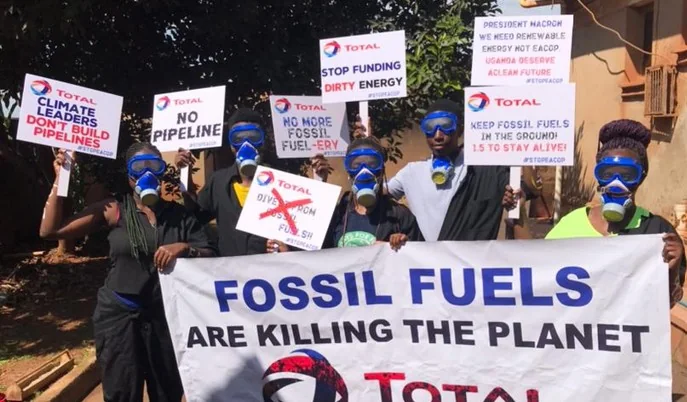
The pain and anguish in the Albertine Part II
Ten out of sixteen Rooted in Resistance activists now face charges and have been sent to Luzira Prison after standing up against Uganda’s oil development.
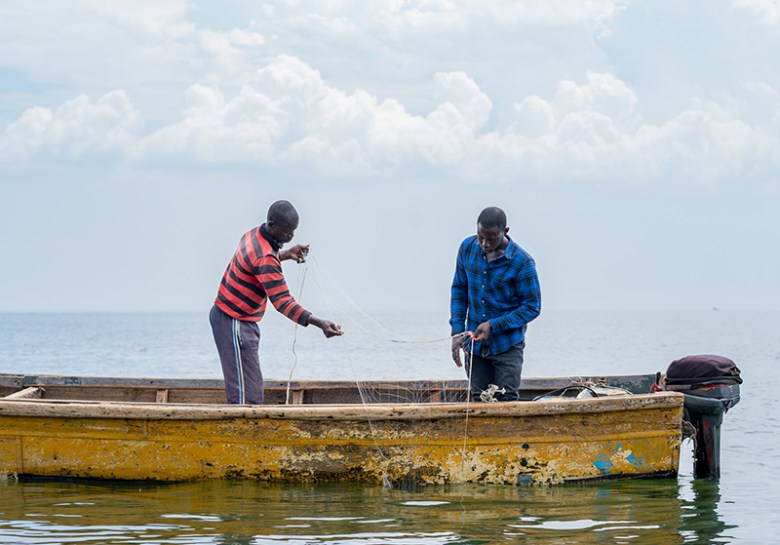
New revelations: TotalEnergies is investing in countries facing political and economic risks, raising fresh questions about the company’s investment strategy.
Civil society organizations are rallying for a robust grievance mechanism in the EAC Seed and Plant Varieties Bill.
While hunger continues to grip the world, a new report highlights forests and forest foods as a hidden treasure trove of nourishment.
Innovative Finance from Canada projects positive impact on local communities.

Over 5000 Indigenous Communities evicted in Kiryandongo District

Petition To Land Inquiry Commission Over Human Rights In Kiryandongo District

Invisible victims of Uganda Land Grabs
Resource Center
- CAN AFRICAN FOOD SYSTEMS THRIVE WITHOUT CHEMICAL FERTILISERS
- Land And Environment Rights In Uganda Experiences From Karamoja And Mid Western Sub Regions
- REPARATORY AND CLIMATE JUSTICE MUST BE AT THE CORE OF COP30, SAY GLOBAL LEADERS AND MOVEMENTS
- LAND GRABS AT GUNPOINT REPORT IN KIRYANDONGO DISTRICT
- THOSE OIL LIARS! THEY DESTROYED MY BUSINESS!
- RESEARCH BRIEF -TOURISM POTENTIAL OF GREATER MASAKA -MARCH 2025
- The Mouila Declaration of the Informal Alliance against the Expansion of Industrial Monocultures
- FORCED LAND EVICTIONS IN UGANDA TRENDS RIGHTS OF DEFENDERS IMPACT AND CALL FOR ACTION
Legal Framework
READ BY CATEGORY
Newsletter
Trending
-
MEDIA FOR CHANGE NETWORK2 weeks agoWhile hunger continues to grip the world, a new report highlights forests and forest foods as a hidden treasure trove of nourishment.
-
MEDIA FOR CHANGE NETWORK1 week agoAlert: Land degradation is emerging as a pressing threat to global security.
-

FARM NEWS5 days agoLango ex-combatants count losses after dry spell destroys maize harvest
-

MEDIA FOR CHANGE NETWORK6 days agoFive years after Uganda’s National Action Plan on Business and Human Rights, are local communities hosting land-based investment projects seeing change?
-

MEDIA FOR CHANGE NETWORK1 week agoYoung people and agriculture: Step into the world of Ugandan NGO ESAFF, where a new generation in schools is being inspired to reimagine farming, celebrate wholesome food, and become passionate advocates for food sovereignty.
-
MEDIA FOR CHANGE NETWORK2 weeks agoLira siblings reclaim father’s land after bitter family dispute
-

MEDIA FOR CHANGE NETWORK1 week agoThe Fight for Climate Justice: African Women at the Forefront
-
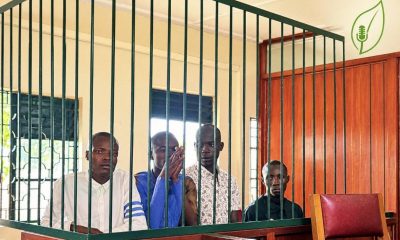
MEDIA FOR CHANGE NETWORK2 weeks agoAfter weeks behind bars, six anti-oil activists have been granted cash bail by the LDC Court.