
NGO WORK
Malnutrition the worst childhood enemy


Related posts:

 More people to go hungry as the COVID-19 pandemic hits harder
 Uganda faces serious hunger
 More people to go hungry as the COVID-19 pandemic hits harder
 “Development” Projects Yield Starvation and Death in Ethiopia’s Lower Omo Valley
NGO WORK
Tanzanian Government Abducts Maasai Villagers in an Unconscionable Attack on Indigenous Land Defenders


- Human rights conditions in northern Tanzania have deteriorated sharply since August, as the Tanzanian government carries out a coordinated campaign of violence and arrests against the Indigenous Maasai.
- In Ngorongoro, five Maasai were arrested last week; Over 30 community members have been arrested over the last two months; In neighboring Loliondo, thousands of livestock have been confiscated.
- The government is pressuring Maasai to leave the area to reach its goal of expanding the number of safari tourists and trophy hunters to eight million by 2030.
- The last arbitrary arrests unfolded in Arusha as Tanzania hosted the 153rd Assembly of the Inter-Parliamentary Union, centered on the theme of “enhancing good governance and empowering communities through inclusivity, trust and opportunities for all.”
Oakland, CA – On the night of October 6, the Tanzanian government forcefully abducted five Maasai men, Nangei Meitaya, Salangat Makko, Ezekiel Kishau, Dickson and Thadeus Clamian, holding them under arbitrary detention at the Arusha Central Police Station. While the individuals were released the following night, these targeted arrests are a dangerous escalation in the government’s systemic oppression of the Indigenous Maasai people.
Since August, human rights conditions in northern Tanzania have worsened sharply as the state carries out a wave of coordinated violence and arrests against the Maasai. In the Ngorongoro Division, authorities have detained more than 30 community members, while confiscations of livestock have intensified in neighboring Loliondo. Local advocates state these actions are part of a systemic campaign to suppress peaceful dissent and dismantle civil society, through economic restrictions, intimidation, and unlawful incarceration of Maasai pastoralists.
“Far from being an isolated incident, this is a calculated campaign of intimidation. Driven by its goal to attract eight million safari tourists by 2030, the Tanzanian government is escalating pressure to evict the Maasai from their ancestral lands. As a result, community leaders have been driven into hiding once again, describing a rapidly deteriorating situation across the region,” said Anuradha Mittal, Executive Director of the Oakland Institute.
While detained, the victims were deprived access to their families or legal counsel. Four of those arrested are employees of the Pastoral Women’s Council (PWC), a local NGO dedicated to the “sustainable empowerment of Indigenous pastoralist women and girls in northern Tanzania.” Furthermore, authorities searched the homes of other staff members without due process.
“The abduction and subsequent detention of our community members is one of the many incidents of lawless targeting of the Maasai people in Ngorongoro – a deliberate campaign to instill fear and censorship, designed to make state dispossession and displacement easy. When a regime normalizes abductions and uses public hospitals as hunting grounds, it reveals a complete breakdown of common sense and basic humanity,” said Joseph Moses Oleshangay, a prominent Maasai human rights lawyer and activist from the Ngorongoro District in Tanzania.

The arbitrary arrests unfolded in Arusha as Tanzania hosted the 153rd Assembly of the Inter-Parliamentary Union, centered on the theme of “enhancing good governance and empowering communities through inclusivity, trust and opportunities for all.” This international gathering of parliamentarians from around the world comes a year after the rigged October 2025 national elections, during which the security forces violently suppressed pro-democracy demonstrations and killed thousands of civilians. Meanwhile, in March 2026, President Hassan accepted recommendations from sham land commissions advocating for the widespread eviction of Maasai communities from their ancestral lands in the Ngorongoro Conservation Area (NCA) and Loliondo.
The government plans to drastically reduce Maasai presence in the NCA to expand safari tourism and trophy hunting. To pressure residents to leave, the government has stopped basic medical, education, and water services while restricting access to grazing land for pastoralists. Massive mobilizations by the Maasai against this forced resettlement have exposed the government’s lie that people are leaving willingly.
“As international visitors plan safari tours to Tanzania, they must recognize that tourism revenues are inadvertently financing the government’s violent attack on Maasai communities whose ancestral lands are being stolen in plain sight,” concluded Mittal.
Source: oaklandinstitute.org
Related posts:

 Tanzanian Government Continues Violent Repression of the Maasai in Loliondo Despite Worldwide Condemnation
 Justice Denied: East African Court of Justice Grants Tanzanian Government Impunity to Trample Human Rights of the Maasai
 Tanzanian Government’s Sustained Campaign Against the Maasai in Loliondo and the Ngorongoro Conservation Area
 Call to Sever Ties with Tanzanian Government Over Latest Human Rights Abuses Against the Maasai
Related posts:
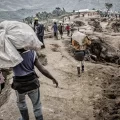 The Great “Green” Heist: When Artificial Intelligence and Arms Dealers Seize the Minerals of the South
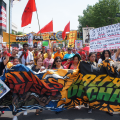 Human rights defenders & business in 2022: People challenging corporate power to protect our planet.
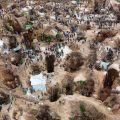 U.S. Peace Efforts in the DRC: Protecting Communities or Minerals?
 Peruvian communities have launched a global petition to halt a mining project they say threatens the water supply of over 10 million people.
NGO WORK
The Great “Green” Heist: When Artificial Intelligence and Arms Dealers Seize the Minerals of the South
By Franck Zongwe Lukama, Congolese journalist and researcher, leads the independent media KilaloPress in DRC.
We were sold a simple equation: to save the planet, we must dig. Dig faster, deeper, extracting from the earth the cobalt, lithium, or copper needed for solar panels and electric vehicles. Yet, this climate rescue rhetoric conceals a staggering statistical deception. Today, 70% of global demand for critical minerals does absolutely nothing to support the energy transition. These resources end up in aerospace, communication technologies, and, above all, weaponry. Sectors that, ironically, exacerbate the global ecological crisis. The green revolution has become the perfect smokescreen, the moral veneer for a very different kind of war.
Far from the promises of sustainable development touted by the World Bank, the current scramble is driven by a strict logic of geopolitical power. A damning report from the California-based Oakland Institute exposes this global scheme. The report reveals an unprecedented and formidable convergence of interests between the American military-industrial complex and the giants of Silicon Valley. With the Pentagon openly pivoting toward a combat strategy focused on artificial intelligence (AI), securing supply chains is no longer a matter of ecology, but a question of survival in the face of Chinese influence. The United States is not seeking to reduce carbon emissions; it is seeking to guarantee its technological and military supremacy.

The real winners of this frantic race wear suits far removed from environmental activism. Trillions of dollars are flowing into new alliances that intertwine AI-driven mining companies, like KoBold Metals—backed by billionaires such as Bill Gates—and companies specializing in cutting-edge defense technologies, like Palantir and Anduril, not to mention the networks of influence close to the Trump family. For these players, the discourse of climate emergency acts as a powerful public relations tool. It justifies massive and accelerated extraction that would otherwise provoke international outrage.
Local communities and Indigenous populations find themselves on the frontlines, forced to resist an extraction machine that has the audacity to justify their suffering by claiming it is necessary to save the world.
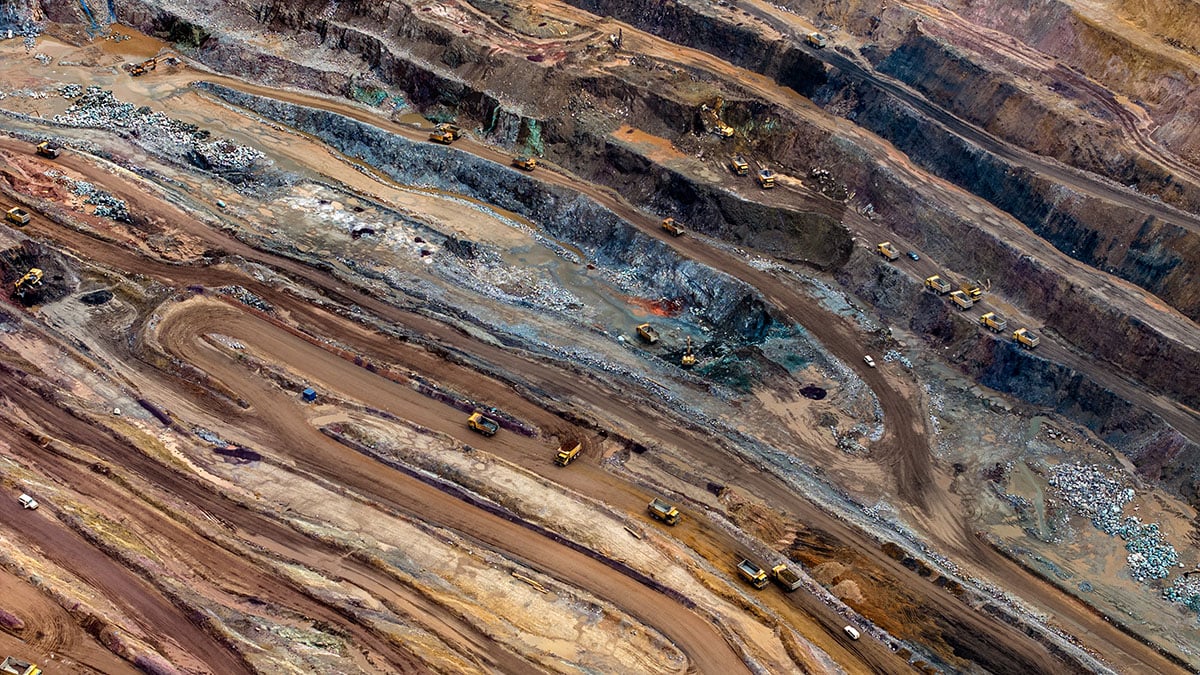
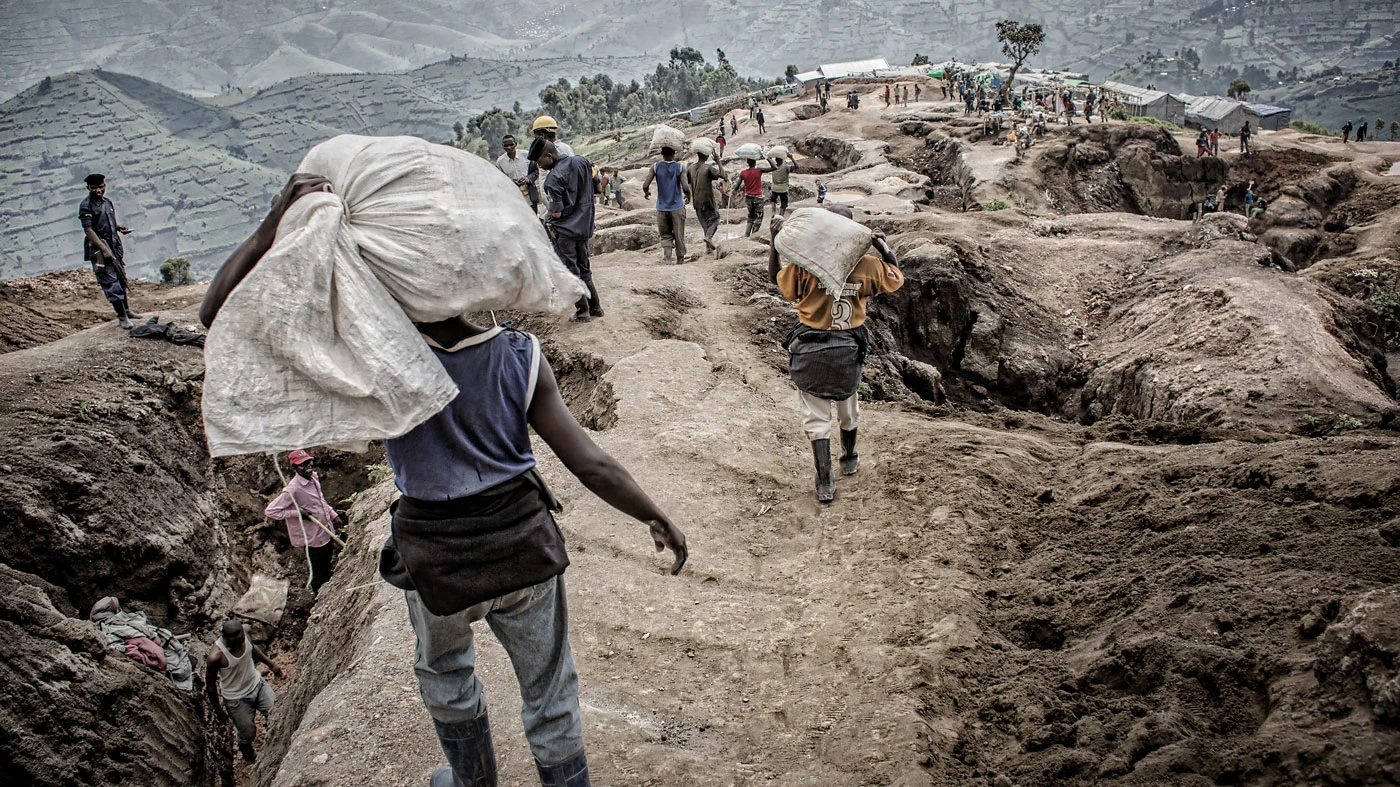
And the price of this hypocrisy is being paid in full throughout the Global South. In the Rubaya hills, in the Kolwezi copper belt, as in the Indigenous territories of Latin America and Asia, the promise of “prosperity” translates into a terrifyingly familiar tragedy. Land grabbing, forced displacement, devastating groundwater pollution: the plundering of ecosystems and human lives is accelerating. Local communities and Indigenous populations find themselves on the frontlines, forced to resist an extraction machine that has the audacity to justify their suffering by claiming it is necessary to save the world. Today, opposing the destruction of one’s village by a multinational mining company risks being accused of hindering the fight against climate change. The rhetorical trap is devastatingly effective.

The long-term consequences of this diversion are alarming. The exponential surge in demand generated by future AI data centers, mass surveillance, and global rearmament will mathematically deplete available reserves. Every ton of copper, nickel, or cobalt consumed by combat drones or algorithmic data processing servers is a ton diverted from the production of renewable energy infrastructure. We are not equipping the energy transition; we are cannibalizing it to militarize our future.
We are not equipping the energy transition; we are cannibalizing it to militarize our future.
If no strict regulations are put in place to curb this rampant mining frenzy, hundreds of new mines will spring up in the coming years, causing irreversible damage on an unprecedented scale. The question facing citizens today, from Kinshasa to Washington, is no longer whether we will have enough minerals to save our atmosphere. It is why we are willing to sacrifice millions of lives and destroy our lands to fuel next-generation algorithms and weapons. In ten years, when the Global South is nothing more than a vast crater serving a militarized hyper-technology, it will be too late to realize that the planet was never the priority.
Photos: Artisanal Coltan – manganese – cobalt mining in Mudere mine under control of Nyatura militia, town of Rubaya, North Kivu region (Democratic Republic of Congo, Africa). Erberto Zani – stock.adobe.com
Source: oaklandinstitute.org/
Related posts:
 Experts warn that without Africa’s control over resources and climate financing, the continent faces the risk of entering a new era of “green colonialism”.
 30 civil society organizations have written to the World Bank Group demanding to publicly disclose the Africa Energy Approach paper.
 Africa Climate Summit 2023 Set to Surrender the Continent to Green Colonialism
 The mothers and daughters of the global south cannot celebrate the World Bank’s 80-year legacy of harm.

Tanzanian Government Abducts Maasai Villagers in an Unconscionable Attack on Indigenous Land Defenders

In Nepal, women seek ownership rights to the lands they tend

Court remands 10 anti-oil activists as suspect collapses in dock

Govt orders fresh valuation of land for Rubanda iron ore project

While hunger continues to grip the world, a new report highlights forests and forest foods as a hidden treasure trove of nourishment.

Five years after Uganda’s National Action Plan on Business and Human Rights, are local communities hosting land-based investment projects seeing change?

Lango ex-combatants count losses after dry spell destroys maize harvest

Alert: Land degradation is emerging as a pressing threat to global security.

Innovative Finance from Canada projects positive impact on local communities.

Over 5000 Indigenous Communities evicted in Kiryandongo District

Petition To Land Inquiry Commission Over Human Rights In Kiryandongo District

Invisible victims of Uganda Land Grabs
-
 MEDIA FOR CHANGE NETWORK2 weeks ago
The global race for clean energy minerals is leaving communities grappling with conflicts and human rights abuses, a new report reveals.
-

 MEDIA FOR CHANGE NETWORK1 week ago
Across Africa, the push for a greener future is putting new pressure on local communities, as recent ILC case studies highlight.
-

 MEDIA FOR CHANGE NETWORK1 week ago
Sweeping investments are fueling widespread land grabbing and deepening rights violations across Uganda – Report.
-

 MEDIA FOR CHANGE NETWORK1 week ago
Who will shape the future of East Africa’s seeds? Youth and civil society are sounding the alarm over a proposed regional law.
-
 FARM NEWS2 weeks ago
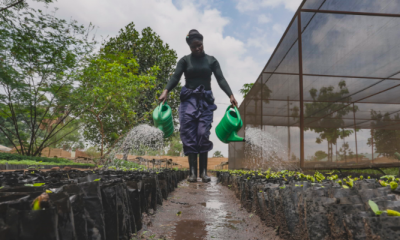
Govt pushes natural regeneration to restore 8.4 million hectares
-

 MEDIA FOR CHANGE NETWORK2 weeks ago
Uganda urged to drop charges against 11 environmental defenders after 17 months without witnesses
-

 MEDIA FOR CHANGE NETWORK2 weeks ago
3 Division Commander Warns Communities Against Land Wrangles
-

 FARM NEWS1 week ago
Can Agroecology Improve the Resilience of African Smallholder Farmers?