Connect with us

MEDIA FOR CHANGE NETWORK

Eastern Buganda Journalist Network

Published

on

Continue Reading
Click to comment

Leave a Reply

Your email address will not be published. Required fields are marked *

MEDIA FOR CHANGE NETWORK

Researchers sound the alarm: Uganda’s oil development threatens the nation’s vital wetlands.

Published

on

By the Witness Radio team.

Uganda is set to launch commercial oil production in late September, but researchers caution that this rapid petroleum push could endanger the country’s precious wetlands, wildlife, and rich biodiversity.

This warning arrives as Uganda nears its long-awaited first oil, almost twenty years after crude was first discovered in the Albertine Graben.

In a recent post on the X platform, formerly Twitter, by the Petroleum Authority of Uganda (PAU), Uganda’s statutory body mandated to monitor and regulate the exploration, development, and production, together with the refining, gas conversion, transportation, and storage of petroleum in Uganda, it indicated that the country’s major oil projects are progressing towards production. As of June 30, 2026, the Tilenga project was 74 percent complete, with 234 wells drilled, exceeding the minimum 170 wells required for production.

The Kingfisher project had reached 79 percent completion. In comparison, the East African Crude Oil Pipeline (EACOP) stood at about 90 percent overall progress, with more than 1,443 kilometers of pipeline welded across Uganda and Tanzania.

In July, Irene Bateebe, the Permanent Secretary in the Ministry of Energy and Mineral Development, said Uganda was on course to begin commercial oil production in September.

Speaking during a retreat for Ugandan diplomats organized by the Ministry of Foreign Affairs in Kampala, Bateebe said the country’s upstream oil projects and export infrastructure were in their final stages, with first oil expected soon.

Yet as Uganda edges toward commercial oil production, a fresh study from the Africa Institute for Energy Governance (AFIEGO) raises red flags about the environmental fallout, especially for wetlands, biodiversity, and the communities whose lives are intertwined with them.

The 31-page AFIEGO report, titled “Siltation, Noisy Generators & Air Pollution: Documenting Oil Sector Damage to Murchison Falls National Park & Uganda’s Wetlands,” documents the impacts of oil pipeline construction and related activities under the Tilenga and Kingfisher upstream projects, as well as EACOP.

The research, conducted between March and June 2026, is based on interviews and focus group discussions with oil-host communities and tourism-sector stakeholders in Buliisa, Hoima, Kikuube, Kakumiro and Kyotera districts.

The report identifies several oil infrastructure projects that are affecting wetlands, including the Victoria Nile Pipeline Crossing under the Tilenga project, the Kingfisher feeder pipeline and EACOP.

The affected ecosystems include the Murchison Falls-Albert Delta Ramsar wetland system, Kibale/Bukoora wetland, Sango Bay-Musambwa Island-Kagera (SAMUKA) Ramsar wetland system and Kafu wetland, as well as other wetlands within the Lake Albert basin.

The AFIEGO report documents increased cases of siltation and blockage of tributaries connected to wetlands, including Wambabya, Kafu and Kibaale/Bukoora in Hoima, Kakumiro and Kyotera districts.

The report also spotlights a surge in population, along with rising air and water pollution, as troubling side effects of the oil boom.

Researchers warn these impacts could ripple through wildlife populations and disrupt the delicate ecological systems that local communities rely on.

“Anthropogenic [human-generated] noise and vibrations can cause stress in wildlife, while affecting communication, movement, and foraging,” the report states.

It adds that fossil-fuel-powered generators release carbon monoxide, carbon dioxide, nitrogen dioxide, and sulfur dioxide, which can cause respiratory distress, weakened immunity, and reproductive disruptions in wildlife.

Diana Nabiruma, Senior Communications Officer at AFIEGO, told Witness Radio that the research was conducted to understand the effects of oil infrastructure on wetlands and identify measures to address the damage.

“AFIEGO decided to conduct research to ensure that first we understand what impacts the construction of the EACOP-related pipelines had on selected wetlands in the country and what measures can be put in place to remediate these impacts and to ensure that the wetlands are conserved for the benefit of Ugandans,” Nabiruma said.

She said several pipelines associated with the oil projects are crossing or affecting wetlands of significant ecological importance.

“The wetlands are being crossed or affected by several pipelines belonging to the aforementioned projects. Some of these pipelines include the Victoria Nile Pipeline Crossing under the Tilenga project, the Kingfisher feeder pipeline and the EACOP,” she said.

Nabiruma said the pipelines are also crossing the Murchison Falls-Albert Delta Ramsar wetland system, which is partly located within Murchison Falls National Park and forms part of the Victoria Nile basin.

The Kibale/Bukoora wetland, which forms part of the Sango Bay-Musambwa Island-Kagera (SAMUKA) Ramsar wetland system, is also among the affected ecosystems. The report further identifies Kafu wetland and other wetlands within the Lake Albert basin as being affected by the oil infrastructure.

The concerns documented by AFIEGO are also being raised by communities living near the oil infrastructure.

Kyakulumbye Gonzaga, a resident of Kakuuto village in Kakuuto Sub-county, Kyotera District, said residents are worried about the safety of their water sources following construction of the EACOP pipeline through the Kibaale/Bukoora wetland.

“The EACOP camp is based in our sub-county, and most of its pipelines were constructed through the Kibaale/Bukoora river and its tributaries like Kisoma tributary. They constructed the pipeline through the water, which is a big threat to the aquatic life and to us too because we use the water for cooking and drinking.” Gonzaga revealed.

The AFIEGO research also documents concerns about reduced water access for chimpanzees in Wambabya Forest in relation to the Kingfisher pipeline.

According to the report, communities said water was pumped from River Rutooha during construction activities, after which chimpanzees began entering residential areas in search of water.

Another community member from Hoima District affected by EACOP activities said blocked tributaries had reduced water flowing into Wambabya Forest, forcing chimpanzees into nearby communities.

“Water no longer flows into Wambabya forest very well because some tributaries belonging to Kanywabarogo were blocked. The forest is home to chimpanzees. These seem not to be getting water well anymore, so they come to the community to access water,” she said.

She said the chimpanzees destroy gardens when they leave the forest in search of water. “We no longer grow maize because the chimpanzees take it when they come out of the forest looking for water,” she added.

These findings emerge as civil society groups, environmental experts, and campaigners voice mounting concerns about the social and environmental toll of Uganda’s oil drive. Activists say land acquisition for the projects has already disrupted the lives of over 100,000 people.

Dickens Kamugisha, Executive Director of AFIEGO, said Uganda cannot achieve sustainable economic transformation by degrading the ecosystems that support citizens.

He emphasized that the research reveals Uganda’s oil activities are harming vital wetlands that millions of people depend on for their livelihoods.

Kamugisha called on the government to ensure that TotalEnergies EP Uganda (TEPU) and China National Offshore Oil Corporation Uganda Limited (CUL) remediate the harm caused to wetlands, while also urging the government to rethink oil production in the country.

In one of Witness Radio’s interviews with Dr. Patricia Litho, the Assistant Commissioner for Communication in the Ministry of Energy and Mineral Development, she acknowledged that there are potential risks associated with oil exploration and production, which is why the government established robust regulations, monitoring mechanisms, and contingency plans to prevent and respond to any environmental incidents.

She added that the government of Uganda is committed to ensuring that the oil projects are executed in an environmentally sustainable and responsible manner because it also understands the importance of preserving the natural heritage and biodiversity.

Continue Reading

MEDIA FOR CHANGE NETWORK

Breaking: El Niño looms over East Africa and Asia, bringing the specter of floods and disease outbreaks.

Published

on

By Witness Radio team.

A leading humanitarian aid group has sounded the alarm over a strengthening El Niño, poised to unleash extreme weather across East Africa and parts of Asia. Millions of vulnerable people now stand on the frontlines, facing mounting threats of floods, disease, food shortages, and shattered livelihoods.

The International Rescue Committee (IRC) warns that the brewing El Niño could unleash severe floods, disease outbreaks, scorching heatwaves, and punishing droughts in the months ahead, threatening countries like Uganda, Kenya, Somalia, Bangladesh, Pakistan, and Afghanistan.

The IRC cautions that communities battered by past floods, droughts, displacement, and dwindling aid now stand to endure yet another major climate blow unless swift action is taken.

“We are watching several emergencies converge at once, and the places least equipped to absorb another shock are the ones in the crosshairs. Acting now, before the rain falls, is far cheaper and far more humane than responding after people have lost everything,” said Bob Kitchen, IRC Vice President for Emergencies.

This warning comes as forecasts predict East Africa could be drenched by unusually heavy rains from October to December, heightening the dangers of flooding, landslides, ruined crops, and surging disease outbreaks.

In Uganda, authorities and aid agencies fear that relentless rainfall could wash away hard-won progress made by communities still recovering from earlier climate disasters, such as drought.

The IRC reports that Uganda may swing from parched conditions to a flood-prone final quarter, sparking fresh worries about displacement.

During the previous El Niño cycle, the IRC states that more than 413,000 people in Uganda were affected by climate-related impacts.

Kenya, too, stands on high alert, as forecasts point to persistent El Niño conditions that could unleash torrents of rain, floods, and landslides before the year ends.

“Kenya faces an 80–82% chance of El Niño persisting through 2026, with dry conditions this summer giving way to a high risk of flooding and landslides,” Humanitarian Aid stated in its press conference.

In Somalia, where millions already grapple with drought and humanitarian crises, aid agencies warn that relentless rains could deepen existing hardships. The IRC notes that over 4.8 million Somalis urgently need help, as floods threaten to wipe out crops, taint water supplies, and fuel the spread of diseases like cholera and acute watery diarrhea.

The organization recalls that earlier floods in Somalia wiped out nearly 13,000 tonnes of crops and battered towns and villages, leaving families with even fewer resources to weather another disaster.

Agricultural experts warn that El Niño could plunge East Africa deeper into food insecurity by upending farming, ravaging crops, and driving up production costs.

Because the region depends so heavily on climate-sensitive agriculture, extreme weather can swiftly trigger food shortages and send prices for essentials soaring.

Dr. Joseph W. Glauber, a senior research fellow at the International Food Policy Research Institute (IFPRI), previously told Witness Radio that Africa remains highly vulnerable to global shocks affecting food systems, including disruptions in fertilizer supply and rising agricultural input costs.

“Africa is quite vulnerable largely because shipment sizes to Africa tend to be smaller, so the unit costs for energy and other components and fertilizer tend to be a little higher than those from bigger countries,” Dr. Glauber said.

The IRC cautions that although rain is vital for farming, relentless downpours could drown fields, devastate crops, and deal a heavy blow to rural livelihoods.

“If rains destroy agricultural production, communities could face reduced food availability, increased food prices, and greater dependence on humanitarian assistance,” experts warn.

As East Africa braces for deluges, parts of Asia are set to feel El Niño’s impact in very different ways.

The IRC reports that El Niño may bring scant rainfall and soaring temperatures to Pakistan, while the northern mountains face the looming threat of sudden glacier-melt floods.

Bangladesh is already reeling from deadly monsoon disasters, as floods and landslides upend the lives of thousands, including Rohingya refugees in the Cox’s Bazar camps.

“Bangladesh’s monsoon season has already turned deadly this year. Landslides and flooding have killed at least 15 Rohingya refugees living in the Cox’s Bazar camps and displaced more than 10,000 people since the start of July,” the organization added.

El Niño is a natural climate phenomenon sparked by unusually warm sea surface temperatures in the equatorial Pacific. It disrupts global weather, drenching some regions with rain while parching others with drought and heat.

The International Rescue Committee calls on governments, donors, and aid groups to boost funding for anticipatory action programs, empowering communities to brace for disasters before they strike.

Continue Reading

MEDIA FOR CHANGE NETWORK

MPs Tasked to Enhance Land Governance Oversight

Published

on

Members of Parliament have been urged to champion reforms that strengthen land governance, protect citizens’ land rights, and facilitate socio-economic transformation during a recent orientation. Legislators were reminded of their crucial role in managing Uganda’s valuable land resource and addressing widespread land disputes. Source: https://www.parliament.go.ug/index.php/news/4506/strengthen-oversight-land-governance-speaker.

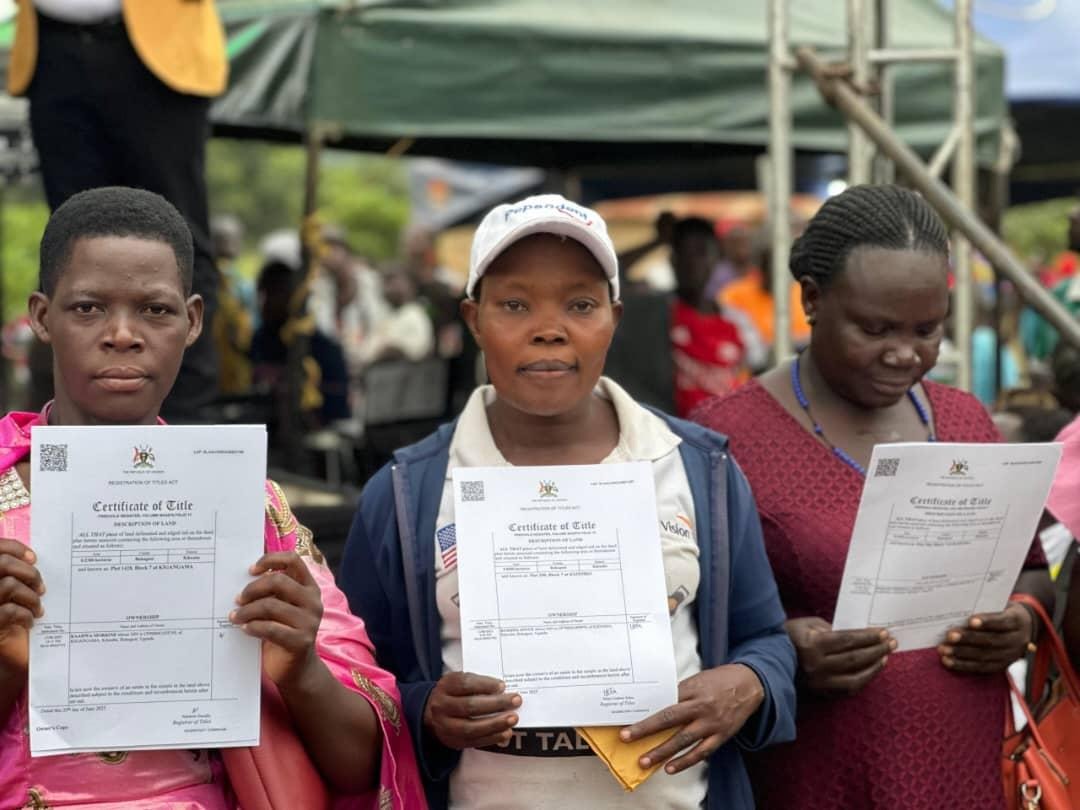
Legislators in Uganda are being called upon to play a more active role in improving the nation’s land governance system. This directive comes as the country continues to face significant challenges related to land disputes, illegal evictions, and land grabbing.

During an orientation on land governance, organized by the Uganda Parliamentarians Land Management Forum and supported by various government and non-government entities, Members of Parliament (MPs) were urged to champion reforms. Parliament Commissioner Jesca Ababiku, representing the Speaker, emphasized that land is a vital national asset and that MPs must use their positions to safeguard citizens’ interests.

Ababiku highlighted the prevalence of land disputes, noting that approximately 42 percent of  court cases are related to land. She warned that vulnerable citizens are at risk of losing their land if leaders do not intervene proactively. The Speaker’s message underscored Parliament’s central role in ensuring justice, attracting investment, and driving national development through effective land governance.

The Minister of Lands, Housing and Urban Development, Judith Nabakooba, acknowledged that despite a robust  legal framework, land conflicts persist. She pointed to issues such as fraud, double titling, and corruption as hindering livelihoods and deterring investment. The Minister stressed the need for greater public awareness regarding land rights and the importance of viewing land as an economic enabler.

Progress in decentralizing land services, digitizing records, and increasing land registration coverage was noted. However, the documentation of customary land remains a significant challenge. The Ministry is seeking parliamentary support for key legislative reforms, including proposals for the Real Estate Bill and amendments to several land-related acts, to strengthen regulation and improve land administration.

Source: ugandaonline.net

Continue Reading

Resource Center

Legal Framework

READ BY CATEGORY

Facebook

Newsletter

Subscribe to Witness Radio's news and report updates


Trending

Subscribe to Witness Radio's news and report updates