Connect with us

MEDIA FOR CHANGE NETWORK

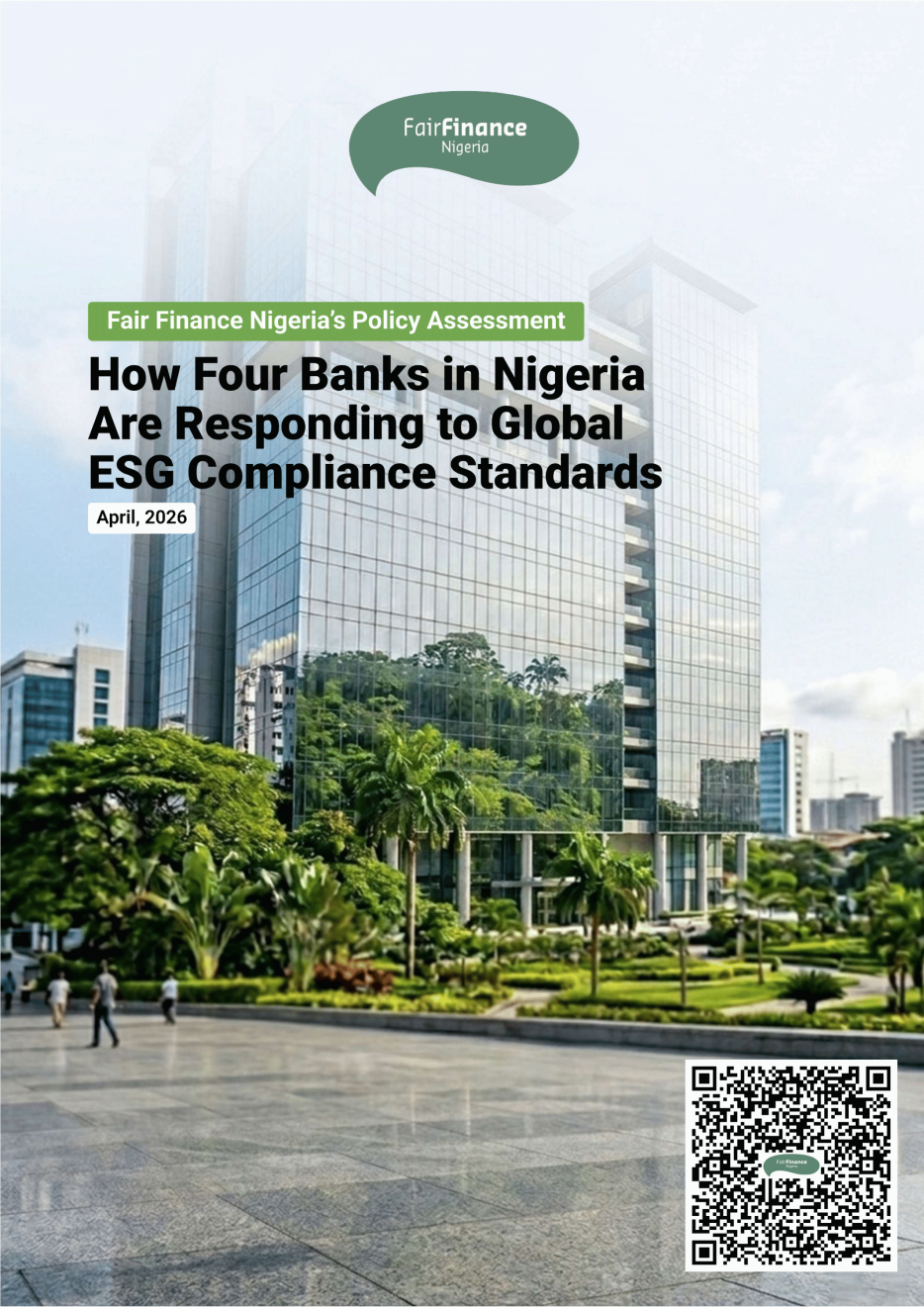
Nigerian Banks under fire over ESG failures as a new report exposes Weak Climate and Human Rights Compliance.

Published

on

By the Witness Radio team.

A new policy assessment has raised serious questions about the environmental and social conduct of Nigeria’s banking sector, revealing that major financial institutions are significantly underperforming on global sustainability standards while continuing to finance high-risk industries with limited transparency. 

The report, produced by Fair Finance Nigeria (FFNG) Coalition, comprising BudgIT, Oxfam, Policy Alert, Civil Society Legislative Advocacy Centre (CISLAC), Connected Development (CODE), and Sustainable Transformation and Empowerment Programme (STEPS) assessed four Nigerian major banks including Access Bank, UBA, Zenith Bank, and Standard Chartered Bank against international Environmental, Social and Governance (ESG) benchmarks. 

Environmental, Social, and Governance (ESG) is a framework for understanding how a company behaves, not just in terms of profit, but also in terms of its impact on people and the planet. 

The environmental side looks at how responsibly a company treats the natural world. This includes how it uses resources, manages waste, reduces pollution, and responds to climate change. The social side focuses on how a company relates to people. That means how it treats its employees, works with suppliers, serves customers, and engages with the communities where it operates, while the governance side is about how the company is run and ensures accountability. 

The assessment was based on the updated 2025 methodology of Fair Finance International, which uses 19 thematic indicators grouped into environmental, social, and governance categories. The evaluation relied solely on publicly available policy documents, sustainability reports, and annual disclosures. 

Acknowledging that Nigerian banks scored an average of 1.7 out of 10 across key sustainability indicators highlights the urgent need for banks and regulators to take responsibility for improving ESG standards, inspiring a sense of duty in stakeholders.

The report identified significant weaknesses in external accountability, particularly in how banks manage the environmental and social risks of the companies they finance, underscoring the need for stronger regulations. 

Despite years of sustainability reporting and regulatory guidance, the report concludes that Nigerian banks remain far from aligning with global ESG expectations.

“It is not only about how banks assess their internal operations—such as limiting discrimination in recruitment or increasing the representation of women in senior leadership positions. They must also examine how these standards are applied across their entire business and supply chains. This includes the companies they invest in, those they lend to, and those they actively finance or support.

Banks should ensure that these companies also comply with international standards. This approach does not only apply to financial institutions themselves; it also plays a critical role in mitigating financial, reputational, and operational risks across their investment portfolios.” Dr. Augustine O’Keary, the lead researcher and research officer of Connected Development, mentioned during the presentation of the research findings.

The report highlights a concerning climate-related disclosure score of 0.9 out of 10, exposing critical gaps in how banks communicate climate risks to stakeholders.

Researchers found limited evidence of credible transition plans aligned with global temperature targets, despite Nigeria’s increasing exposure to climate-related risks. 

By continuing to finance carbon-intensive sectors without publicly disclosing portfolio-level transition strategies, banks risk eroding trust, underscoring the need for greater transparency to civil society and advocacy groups.

“We see continued financing of high-emission sectors without clear commitments to reduce exposure or align with a 1.5°C pathway,” the report noted. 

Environmental analysts warn that this disconnect exposes Nigeria’s financial system to long-term systemic risk as global markets tighten climate regulations.

The Fair Finance Nigeria Coalition is calling for stronger regulatory alignment with global ESG standards, particularly through updates to Nigeria’s sustainability banking principles.

Stakeholders argue that existing frameworks remain outdated and insufficiently aligned with international best practices, especially in climate finance and corporate accountability.

Strong calls for improved engagement between banks, regulators, and civil society organizations aim to foster collaboration, making stakeholders feel involved and motivated to enhance policy frameworks and disclosure standards.

Continue Reading

MEDIA FOR CHANGE NETWORK

African women push for reparations and environmental accountability after landmark Climate Justice Day.

Published

on

By Witness Radio team

Women’s community organizations and grassroots movements across Africa are intensifying calls for climate reparations and environmental accountability following the inaugural African Women’s Climate Justice Day, marked on April 15.

Organized by the West and Central African Women’s Climate Assembly (WCA) under the theme “Our Lands, Our Voices: African Women United for Reparations and Climate Justice,” the convergence took place across multiple parts of the continent, highlighting how women in regions like West and Central Africa face unique climate impacts such as droughts and land degradation, demanding tailored solutions.

The WCA provides a powerful space to analyze the intersecting crises affecting their communities collectively and to develop strategies of resistance rooted in climate justice, food sovereignty, and the Right to Say NO to destructive extractivist and mega-development projects that displace communities, erode ancestral ways of life, and destroy ecological futures.

Since 2022, women from across Central and West Africa have gathered annually through the Women’s Climate Assembly (WCA) — a growing Pan-African, grassroots-led platform that brings together over 120 activists, ecofeminist leaders, and community organizers to collectively build strategies for climate justice, strengthen solidarity across movements, and advance community-led resistance against harmful, destructive projects while amplifying women’s voices.

On the 15th, the Women’s Alliance on Natural Resources Governance (WANRG) led nationwide actions across four districts in Sierra Leone, bringing climate justice conversations directly to communities most affected by environmental degradation. In the West African country, Climate change has had a significant impact on agriculture, exacerbating the existing challenges of low productivity and food insecurity.

According to the Food and Agriculture Organization (FAO), women make up almost 70% of Sierra Leone’s agricultural workforce, and FAO’s support aims to empower women to adapt to climate shocks that threaten food production and household incomes.

These impacts, including unpredictable rainfall patterns, prolonged droughts, and increasing occurrences of extreme weather events such as floods and storms, are disrupting farming activities and resulting in declining crop yields. Further, environmental concerns caused by extractive projects are adding salt to the injury.

In the eastern districts of Kono and Kenema, outreach efforts focused on women working on the front lines of natural resource management, highlighting how extractive activities and climate change are eroding livelihoods.

“Climate justice is a women’s rights issue! Across four districts, we took bold action to ensure women’s voices are at the heart of environmental protection,” the organization’s statement read.

The alliance brought together local leaders and policymakers in Bo District for a stakeholder dialogue to develop and implement gender-sensitive climate policies, with commitments to integrate women’s voices into national climate strategies and to demonstrate tangible policy support for climate justice.

“When women lead, the planet wins. We are not just victims of climate change; we are the leaders, the innovators, and the defenders of our land,” The organization’s statement highlighted. This should inspire the audience with pride and confidence in women’s vital role in climate justice.

Across the continent, similar demands were echoed. In Liberia, the Natural Resource Women Platform (NRWP) described the moment as critical, warning that climate change continues to disproportionately affect women in rural, coastal, and resource-dependent communities.

“Across Liberia and the wider region, women are experiencing the harsh impacts of environmental degradation, land dispossession, and the growing burden of sustaining livelihoods amid the climate crisis,” the organization said in a statement from Monrovia.

The group pointed to worsening coastal erosion in Buchanan, increasing urban pollution, and challenges for women farmers due to erratic rainfall and soil decline. These realities should evoke empathy and a sense of urgency in your audience to support community-led solutions.

Central to the demands raised during the day of action are calls for reparations for communities affected by historical and ongoing environmental exploitation, an end to destructive extractive practices, and greater accountability from governments and corporations driving climate harm.

These calls were reinforced by regional movements such as the Global Convergence of Struggles for Land, Water, Seeds, Forests, Savannas, and the Sea in Central Africa, which framed the climate crisis as part of a broader system of dispossession.

“Land, water, forests, and the sea are fundamental rights, not commodities,” the coalition declared, calling for the dismantling of extractivist systems and for communities to be placed at the center of decisions affecting their territories.

In Central Africa, women’s organizations are already moving from declarations to strategy. In the Democratic Republic of Congo, the Indigenous Women and Local Communities for Sustainable and Participatory Development (FACID) brought together civil society groups to develop joint action plans and strengthen advocacy for climate justice.

“These are our struggles, and African women across the region have come together to reflect on climate change issues. There is drought, water pollution, air pollution, and soil pollution, as well as deforestation. All these scourges of climate change are affecting the African continent.  Since we cannot work in isolation, we have established the Constituent Assembly of African Women on Climate Justice to fight for climate justice through actions that bring about solutions that serve everyone,” said Marie Dorothée Lisenga, a coordinator with FACID, adding that women are at the forefront of the fight against climate change, and their leadership must shape the response.

As momentum builds beyond the April 15 mobilizations, organizations say the focus is now on sustaining pressure through advocacy, alliance-building, and grassroots action to ensure that climate justice is not reduced to rhetoric.

“We commend the growing movement of African women rising in unity to demand systemic and transformative change. Their call for reparations is not only for compensation; it is for dignity, justice, and the restoration of lives, lands, and livelihoods,” The group emphasized. This framing should foster respect and moral support among your readers.

The African Women’s Climate Justice Day was organized by NGO partners, civil society, and community-based organizations, and allies across Africa, including Women and Development (Nigeria), WoMin African Alliance, SynDev (Senegal), Green Development Advocates, and RADD (Cameroon), among others, who hosted solidarity actions and activities.

Continue Reading

MEDIA FOR CHANGE NETWORK

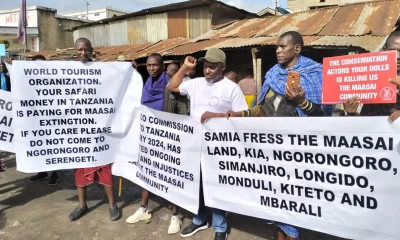
Maasai protest evictions from Ngorongoro as UN experts warn conservation must respect rights

Published

on

The Maasai community living in Tanzania’s Ngorongoro Conservation Area, a United Nations (UN) Educational, Scientific and Cultural Organisation (UNESCO) World Heritage Site, has renewed resistance to plans that would see families removed from ancestral land in the name of conservation.

Protests held on World Heritage Day, April 18, drew attention to what community members describe as forced evictions disguised as voluntary relocation.

The demonstration took place in one of Tanzania’s most important tourism destinations and highlighted growing anger over a long‑standing government policy aimed at reducing human presence in the conservation area. Maasai representatives say relocation plans threaten livelihoods, culture and survival, while failing to recognise the role of Indigenous stewardship in protecting the landscape.

Linda Poppe, Director of the Berlin office of Survival International, said resistance has intensified in recent years as pressure on the community has grown. Poppe said the decision to protest publicly reflects determination not to be silenced despite intimidation, arrests and restrictions on assembly.

A panel of eight UN experts recently issued a public statement warning that conservation efforts must not come at the expense of human rights. The experts argued that removing Indigenous Peoples from land undermines both social justice and environmental protection, calling the approach a violation rather than conservation.

Survival International says Ngorongoro illustrates a broader global problem in which conservation models prioritise “empty wilderness” for tourism, while excluding communities that have managed ecosystems for generations. Poppe said UNESCO assessments have repeatedly portrayed Maasai pastoralism as environmentally harmful, while overlooking the impact of mass tourism, infrastructure development and luxury lodges.

Ngorongoro receives more than one million tourists annually, many arriving in off‑road vehicles and staying in high‑impact facilities. Maasai leaders argue that tourism activity creates far greater environmental pressure than traditional grazing practices.

Survival International is calling on UNESCO to urgently review the World Heritage status of Ngorongoro and to suspend the designation while evictions continue. The organisation says recognition should not be used to legitimise displacement where free, prior and informed consent has not been obtained.

Source: ChannelAfrica

Continue Reading

MEDIA FOR CHANGE NETWORK

Environmentalists Call for Stronger Enforcement as Wetland and Forest Destruction Accelerates

Published

on

Environmentalists have called on government to strengthen enforcement of environmental laws to curb the continued destruction of wetlands, forests and other natural ecosystems, warning that weak implementation is worsening flooding, land degradation and climate vulnerability in Uganda’s urban and rural areas.

The warning was issued by conservation advocates during a tree-planting and environmental awareness campaign in at Gayaza Junior School in Wakiso District, where stakeholders said ongoing encroachment on protected ecosystems is undermining national conservation efforts.

Enjer Ashraf, Executive Director of the My Tree Initiative, said the rapid loss of wetlands and forest cover is already contributing to environmental disasters, particularly flooding in Kampala and surrounding areas.

“The continuous flooding you see in Kampala and other areas is a result of people degrading natural resources like swamps and forests,” Ashraf said.

He noted that many wetlands and forest reserves are being cleared for settlement, industrial developments and other construction projects, despite existing legal protections meant to safeguard them.

According to Ashraf, while Uganda has environmental protection laws in place, enforcement remains inconsistent, allowing encroachment to continue with limited consequences for violators.

He warned that if the trend is not reversed, the country risks more severe climate-related impacts, including increased flooding, loss of biodiversity and declining agricultural productivity.

The environmentalist made the remarks during a tree-planting exercise at Gaaza Junior School, where more than 500 fruit trees were planted under a broader campaign promoting environmental restoration and climate awareness among young learners.

“As we plant trees to regreen the environment, the spaces where this should happen are being taken over,” he said, calling for tougher action against illegal developments in protected ecosystems.

Push for climate education in schools

Beyond enforcement, the My Tree Initiative also urged government to integrate environmental conservation and climate change education into the national school curriculum, saying early awareness is critical in addressing long-term environmental challenges.

The call was made during the same school-based tree-planting programme, which also saw stakeholders plant mango, avocado and jackfruit trees as part of efforts to establish a sustainable school orchard system.

Organisers said practical environmental education—such as tree planting—should complement classroom learning to help pupils develop long-term conservation habits.

“We believe integrating environmental aspects, including climate change, into the curriculum can help advance awareness among young people,” a representative of the initiative said.

They argued that schools provide a strategic platform for shaping behaviour, noting that children are more likely to adopt environmental practices if exposed to them early.

Private sector joins conservation push

The campaign has also attracted private sector participation, with companies pledging support for nationwide tree-planting initiatives aimed at promoting sustainability and reducing environmental degradation.

Crown Beverages Limited has launched a school-based tree-planting programme targeting more than 2,000 trees across Uganda this year, beginning with 600 fruit trees at Gaaza Junior School.

Pearl Elizabeth Kitimbo, Brand Communications Manager at Crown Beverages Limited, said the initiative is intended to promote environmental responsibility among young people.

“Planting trees is one way of addressing global warming and ensuring future generations have a better environment,” Kitimbo said.

He added that involving children in such programmes increases the likelihood of long-term behavioural change and helps extend conservation practices into households and communities.

Gaaza Junior School officials welcomed the intervention, describing it as a milestone in promoting environmental awareness and nutrition among pupils.

“This is a memorable day because we have never planted such a number of trees before,” said Mrs. Lillian Nyanzi Gwokyalya, Quality Assurance at Gayaza Junior School

She said the fruit trees will provide long-term benefits, including food supply for learners and improved school environmental conditions.

Stakeholders involved in the campaign have urged government, development partners and private sector actors to scale up similar initiatives across the country, arguing that combining enforcement with education and community participation is key to reversing environmental degradation.

They said Uganda’s growing environmental challenges require a coordinated approach that strengthens law enforcement while also promoting awareness and sustainable practices among future generations.

Source: nilepost.co.ug

Continue Reading

Resource Center

Legal Framework

READ BY CATEGORY

Facebook

Newsletter

Subscribe to Witness Radio's newsletter


Trending

Subscribe to Witness Radio's newsletter