
MEDIA FOR CHANGE NETWORK
World Bank announces multimillion-dollar redress fund after killings and abuse claims at Tanzanian project

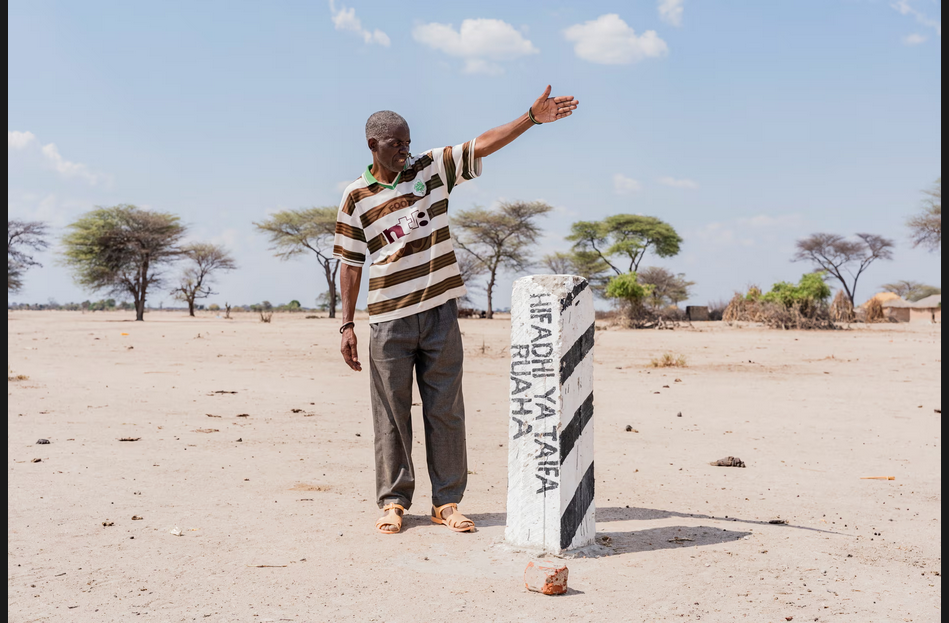
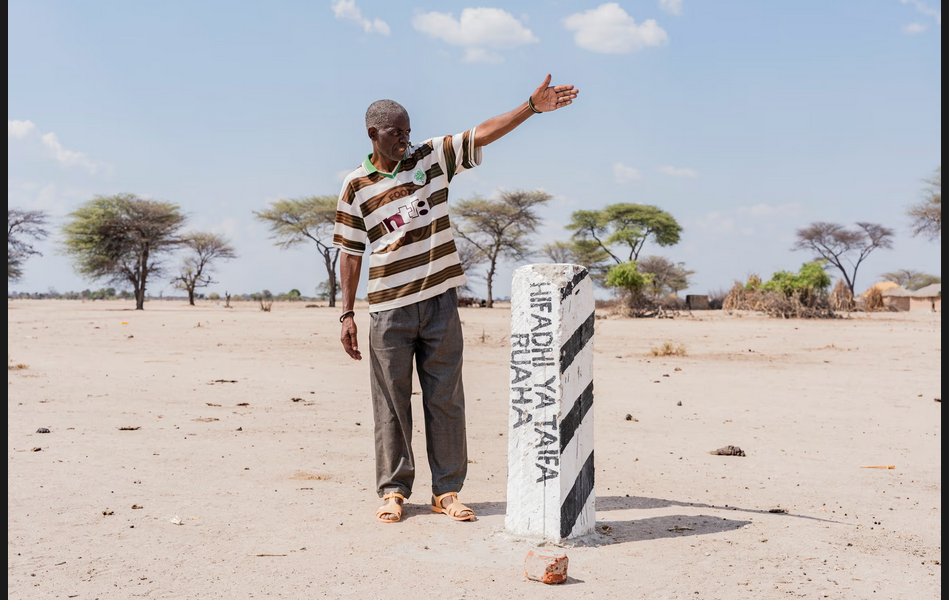
A pastoralist indicates the border of Ruaha national park after the expansion. People allege they have faced violent evictions, disappearances and had cattle seized. Photograph: Michael Goima/The Guardian
Communities in Ruaha national park reject response to alleged assault and evictions of herders during tourism scheme funded by the bank.
The World Bank is embarking on a multimillion-dollar programme in response to alleged human rights abuses against Tanzanian herders during a flagship tourism project it funded for seven years.
Allegations made by pastoralist communities living in and around Ruaha national park include violent evictions, sexual assaults, killings, forced disappearances and large-scale cattle seizures from herders committed by rangers working for the Tanzanian national park authority (Tanapa).
The pastoralists say most of the incidents took place after the bank approved $150m (£116m) for the Resilient Natural Resource Management for Tourism and Growth (Regrow) project September in 2017, aimed at developing tourism in four protected areas in southern Tanzania in a bid to take pressure off heavily touristed northern areas such as Ngorongoro and the Serengeti.
In 2023, two individuals wrote to the bank accusing some Tanapa employees of “extreme cruelty” during cattle seizures and having engaged in “extrajudicial killings” and the “disappearance” of community members.
The Oakland Institute, a US-based thinktank that is advising the communities, and which alerted the World Bank to abuses in April 2023, says Ruaha doubled in size from 1m to more than 2m hectares (2.5m to 5m acres) during the project’s lifetime – a claim the bank denies. It says the expansion took place a decade earlier. Oakland claims 84,000 people from at least 28 villages were affected by the expansion plan.
This week, the bank published a 70-page report following its own investigation, which found “critical failures in the planning and supervision of this project and that these have resulted in serious harm”. The report, published on 2 April, notes that “the project should have recognised that enhancing Tanapa’s capacity to manage the park could potentially increase the likelihood of conflict with communities trying to access the park.”
Anna Bjerde, World Bank managing director of operations, said, “We regret that the Regrow project preparation and supervision did not sufficiently account for project risks, resulting in inadequate mitigation measures to address adverse impacts. This oversight led to the bank overlooking critical information during implementation.”
The report includes recommendations aimed at redressing harms done and details a $2.8m project that will support alternative livelihoods for communities inside and around the park. It will also help fund a Tanzanian NGO that provides legal advice to victims of crime who want to pursue justice through the courts.
A second, much bigger project, understood to be worth $110, will fund alternative livelihoods across the entire country, including Ruaha.
The total investment, thought to be the largest amount the bank has ever allocated to addressing breaches of its policies, is a reflection of the serious nature of the allegations.

The bank had already suspended Regrow funding in April 2024 after its own investigation found the Tanzanian government had violated the bank’s resettlement policy and failed to create a system to report violent incidents or claim redress. The project was cancelled altogether in November 2024. A spokesperson said the bank “remains deeply concerned about the serious nature of the reports of incidents of violence and continues to focus on the wellbeing of affected communities”.
By the time the project was suspended the bank had already disbursed $125m of the $150m allocated to Regrow.
The Oakland Institute estimates that economic damages for farmers and pastoralists affected by livelihood restrictions, run into tens of millions of dollars.
Anuradha Mittal, executive director of the Oakland Institute, said the “scathing” investigation “confirmed the bank’s grave wrongdoing which devastated the lives of communities. Pastoralists and farms who refused to be silenced amid widespread government repression, are now vindicated.”
She added that the bank’s response was “beyond shameful”.
“Suggesting that tens of thousands of people forced out of their land can survive with ‘alternative livelihoods’ such as clean cooking and microfinance is a slap in the face of the victims.”
Inspection panel chair Ibrahim Pam said critical lessons from the Regrow case will be applied to all conservation projects that require resettlement and restrict access to parks, especially those implemented by a law enforcement agency.

Regrow was given the go ahead in 2017. The Oakland Institute described its cancellation by the government in 2024 as a landmark victory, but said communities “remain under siege – still facing evictions, crippling livelihood restrictions and human rights abuses”.
In one village near the southern border of Ruaha, the brother of a young man who was killed three years ago while herding cattle in an area adjacent to the park, said: “It feels like it was yesterday. He had a wife, a family. Now the wife has to look after the child by herself.” He did not want to give his name for fear of reprisal.
Another community member whose husband was allegedly killed by Tanapa staff said: “I feel bad whenever I remember what happened to my husband. We used to talk often. We were friends. I was pregnant with his child when he died. He never saw his daughter. Now I just live in fear of these [Tanapa-employed] people.”

The Oakland Institute said the affected communities reject the bank’s recommendations, and have delivered a list of demands that includes “reverting park boundaries to the 1998 borders they accepted, reparations for livelihood restrictions, the resumption of suspended basic services, and justice for victims of ranger abuse and violence.
“Villagers are determined to continue the struggle for their rights to land and life until the bank finally takes responsibility and remedies the harms it caused.”
The bank has said it has no authority to pay compensation directly.
Wildlife-based tourism is a major component of Tanzania’s economy, contributing more than one quarter of the country’s foreign exchange earnings in 2019. The bank has said any future community resettlement will be the government’s decision.
Source: The Guardian
Related posts:
 World Bank Project Cancelled in a Landmark Victory for Tanzanian Villagers
 Campaign Victory: World Bank Suspends Funding for REGROW, a Conservation Project Responsible for Evictions & Human Rights Abuses in Tanzania
 Profiting from misery: A case of a multimillion-dollar tree project sold off before resolving land grab and human rights violation claims with local communities.
 World Bank Fails to Remedy Harms it Caused in Tanzania, Despite a Scathing Investigation by its Inspection Panel

MEDIA FOR CHANGE NETWORK
Smallholder farmers were excluded from the consultative process for the East African Community Seed and Plant Varieties Bill, 2025: CSOs across the EAC call for a time extension and greater inclusion of smallholder farmers in shaping the bill.

Related posts:

 The EAC Seed & Plant Varieties Bill, 2025, is a potential threat to smallholder farmers, as it aims to disengage them from the agriculture business, according to experts.
 Civil society organizations across East Africa have revived their campaign against the EAC Seed and Plant Varieties Bill 2025, just as the regional parliament opens the floor to public consultations.
 East African Community member states launched public hearings this week for the Seed and Plant Variety Bill 2025, marking a significant step in shaping the region’s agricultural future.
 The EAC Seed and Plant Varieties Bill 2025 targets organic seeds, aiming to replace them with modified seeds, say smallholder farmers.
MEDIA FOR CHANGE NETWORK
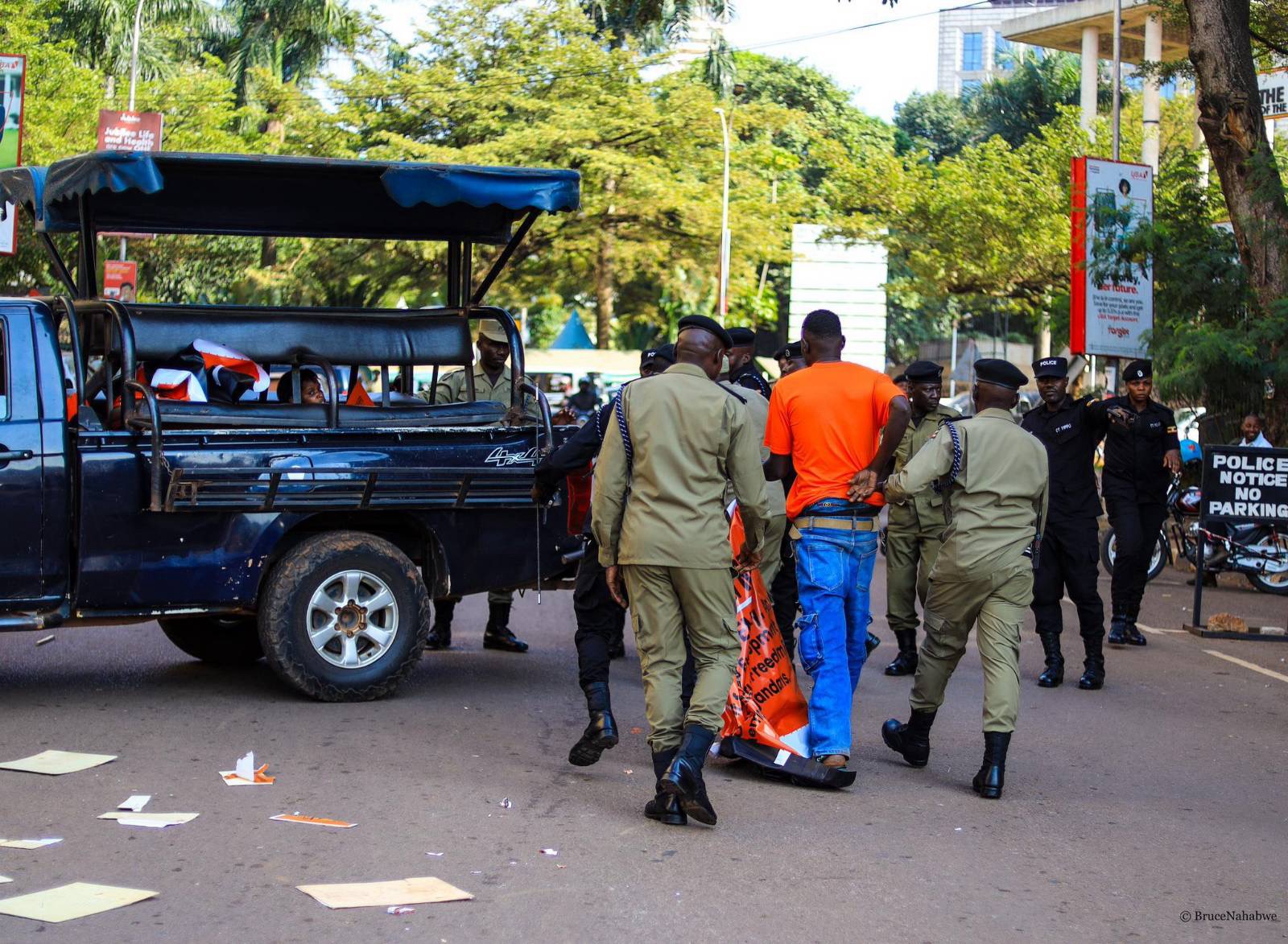
Six other Anti-EACOP Activists remanded to Luzira over alleged unlawful assembly.
Related posts:

 Ten out of sixteen Rooted in Resistance activists now face charges and have been sent to Luzira Prison after standing up against Uganda’s oil development.
 Another group of eleven environmental activists have been charged with common nuisance and remanded to Luzira Prison for opposing the EACOP project.
 Hon. Dr. Lulume Bayiga Remanded to Luzira Prison in Critical Condition, Accuses Minister Kibule of his Condition
 12 anti-Eacop activists decry delayed justice after spending 100 days on remand
MEDIA FOR CHANGE NETWORK
Wakiso LCs warned against using official stamps to facilitate land grabbing
Related posts:

 Campaigning LC I Chairpersons Barred from Land Transactions Until Polls End.
 A community in Yumbe district has raised serious concerns about allegations of land-grabbing involving an aspirant for Uganda’s Parliamentary Speakership, affecting over 50 families.
 Police disperse Amolatar protest over land dispute
 394,000 Land Titles Affected By Closure Of Ministry Of Lands Offices In Wakiso

Smallholder farmers were excluded from the consultative process for the East African Community Seed and Plant Varieties Bill, 2025: CSOs across the EAC call for a time extension and greater inclusion of smallholder farmers in shaping the bill.

Six other Anti-EACOP Activists remanded to Luzira over alleged unlawful assembly.

Wakiso LCs warned against using official stamps to facilitate land grabbing

Ten out of sixteen Rooted in Resistance activists now face charges and have been sent to Luzira Prison after standing up against Uganda’s oil development.

Breaking: Sixteen Rooted in Resistance activists arrested and detained as they boldly protested Uganda’s oil ambitions.

Minister Nabakooba wants special land title issuance halted

Thirteen years after the Karuma Hydropower Project broke ground, countless people forced from their homes are still waiting for the compensation and resettlement they were promised.

Civil society organizations across East Africa have revived their campaign against the EAC Seed and Plant Varieties Bill 2025, just as the regional parliament opens the floor to public consultations.

Innovative Finance from Canada projects positive impact on local communities.

Over 5000 Indigenous Communities evicted in Kiryandongo District

Petition To Land Inquiry Commission Over Human Rights In Kiryandongo District

Invisible victims of Uganda Land Grabs
-
 MEDIA FOR CHANGE NETWORK1 week ago
Breaking: Sixteen Rooted in Resistance activists arrested and detained as they boldly protested Uganda’s oil ambitions.
-
 MEDIA FOR CHANGE NETWORK2 weeks ago
Thirteen years after the Karuma Hydropower Project broke ground, countless people forced from their homes are still waiting for the compensation and resettlement they were promised.
-
 MEDIA FOR CHANGE NETWORK1 week ago
Tanzania’s surge in conservation investments is under the UN spotlight, as allegations of indigenous land rights violations prompt an urgent call for the government to stop the evictions at once.
-

 MEDIA FOR CHANGE NETWORK2 weeks ago
East African Community member states launched public hearings this week for the Seed and Plant Variety Bill 2025, marking a significant step in shaping the region’s agricultural future.
-
 MEDIA FOR CHANGE NETWORK2 weeks ago
AGRA at 20: New report reignites debate over Africa’s farm model
-

 WITNESS RADIO MILESTONES2 weeks ago
MPs recover hundreds of land files hidden near Mukono land office
-
 MEDIA FOR CHANGE NETWORK7 days ago
Ten out of sixteen Rooted in Resistance activists now face charges and have been sent to Luzira Prison after standing up against Uganda’s oil development.
-
 FARM NEWS2 weeks ago
Govt moves to set up food and agriculture regulatory authority