Connect with us

MEDIA FOR CHANGE NETWORK

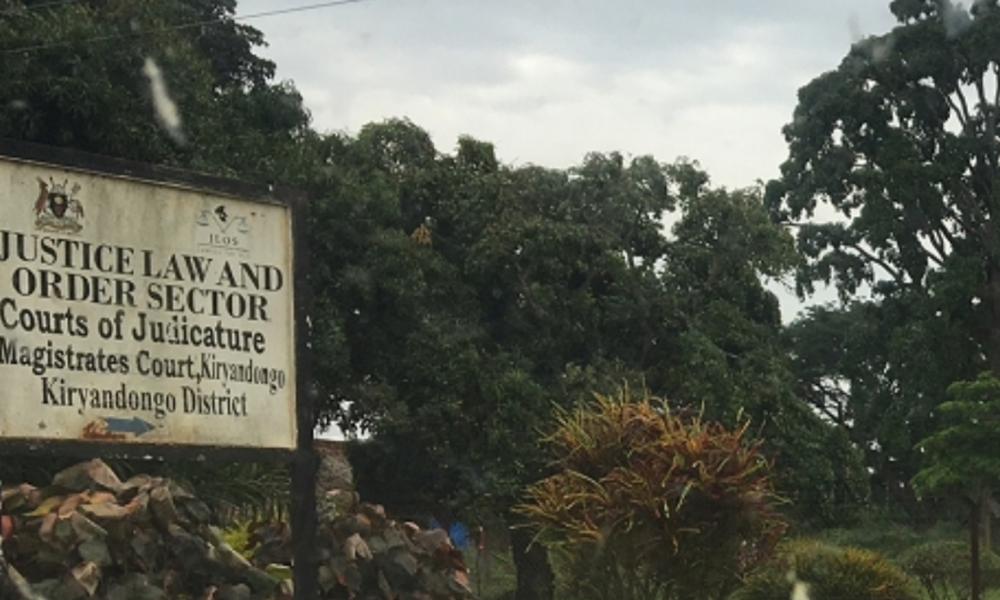
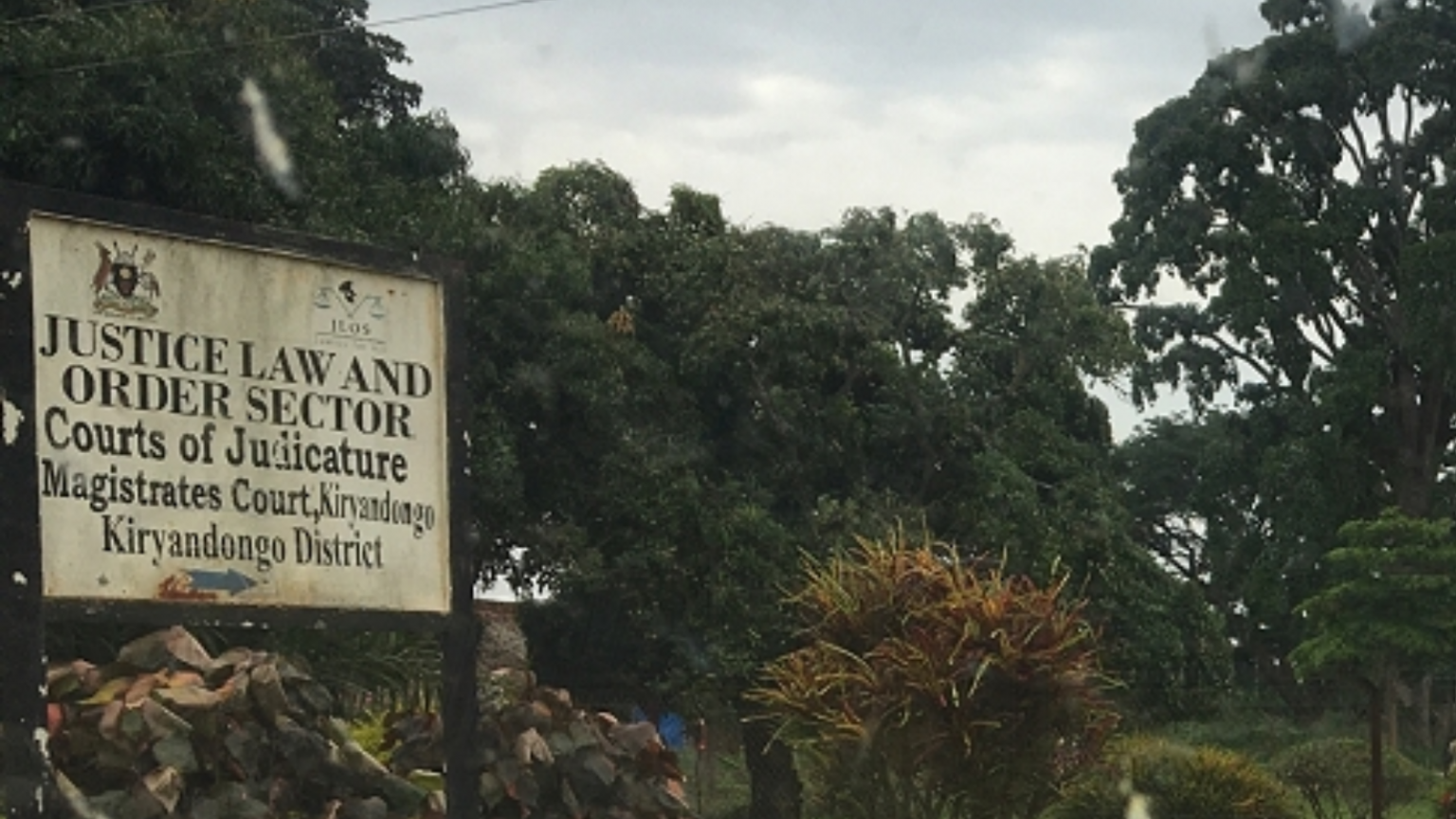
Kiryandongo Chief Magistrate asked to recuse herself from hearing any matters involving Ranch 22 local community.

Published

on

By Witness Radio team,

Lawyers representing a local community facing illegal land eviction from Ranch 22 in Kiryandongo district have written to the Kiryandongo chief magistrate, urging her to recuse herself from presiding over any criminal or civil cases involving their clients over impartiality issues.

In a two-paged letter received by the Kiryandongo chief Magistrate court from Arinaitwe Peter and Company Advocates, the legal representatives of the affected communities documented instances where the trial magistrate exhibited bias during the legal proceedings. The lawyers firmly believe that the behavior of a trial magistrate throughout the proceedings demonstrated bias, posing a potential threat to the fairness of the judicial process and impeding the path to justice.

One of the incidents revolves around a criminal case, Uganda versus Kanunu Innocent & 9 Others, where the accused are charged with three counts of threatening violence. During the cross-examination, the evictees’ lawyer reportedly faced hostility from the trial magistrate whose behavior is alleged to have created an atmosphere that was detrimental to the accused individuals’ right to a fair trial, fundamental right that hinges on the assurance of a neutral and unbiased judicial environment.

In Uganda, commercial ranches were established during the 1960s and early 1970s in areas that had been cleared of tsetse-fly infestation, however, due to civil strifes, these investments collapsed. At that time, many people were fleeing war tone areas, entered and started occupying ranch lands. Later in 1990s, government allowed settlers to legalize their interests on the land. A local community that was occupying ranch 22 in Bunyoro sub region is among those that benefitted from the scheme and granted a certificate of land ownership by government of Uganda. In a short period, these locals were conned, and their land title was allegedly transferred to individual names before selling to Somdiam Limited, company owned by India nationals.

According to Witness Radio – Uganda researches, Somdiam Company Limited was incorporated in Uganda in 2011, deals in imports of assorted food commodities including rice, sugar, vegetable cooking oil, biscuits, salt, tomato paste, powdered milk, pasta & spaghetti.

The 809.3713 hectares lawfully occupied by over 3000 residents on Nyamuntende, Ndoi, and Kikukungulu villages are being grabbed for large-scale sugar plantation.

For some time now, Somdiam and its agents have been involved in forced land eviction activities without a court order or offering alternative settlement. The same company has hired Kiryandongo district police to carryout arbitrary arrests and detention, and several outspoken community land rights defenders have been aligned before court on trumped-up charges and sent to jail.

The letter further mentions another matter of an application for an interim order of injunction vide Misc. Application No, 08 of 2023; Kalisa Joseph & 7 Others versus Somdiam Ltd & 3 others where they (lawyers) were surprised when the trial magistrate allowed them to submit orally and present evidence, but she (magistrate) chose to deliver the ruling on another date.

“Consequently, we prayed that our submissions for an application for temporary injunction vide KDGO 00 — LD-MA-007 of 2023; Kalisa Joseph & 7 Ors versus Somdiam Ltd & 3 Ors be adopted and subsequently filed 05/ submissions in rejoinder to strengthen our case.” The letter reads in part.

In her ruling delivered in the absence of lawyers for the community, the letter states that the trial magistrate seemingly favored the respondent’s submissions without properly considering their (advocates) evidence on the matter and failed to conduct a locus visit to verify facts from both parties contradicted Paragraph 3 of Practice Direction No. 1 of 2007.

According to the lawyers, the ruling of her Worship, Lucy Kabahuma has resulted in extensive devastation to communities’ gardens and homes, increased arrests, threats, and increased pressure on communities to vacate their land.

“In light of the aforementioned instances of apparent and actual bias, we believe it is essential to uphold the principles of justice and maintain public trust in the judiciary. For this reason, we respectfully request that you recuse yourself from all matters involving our clients to ensure a fair and impartial judicial process.” The letter ended.

Continue Reading

MEDIA FOR CHANGE NETWORK

Civil society groups scoff at AfDB’s New African Financial Architecture Initiative, saying it’s here to worsen challenges facing African food systems.

Published

on

By the Witness Radio team.

Civil society organizations warn that the African Development Bank’s (AfDB) newly launched New African Financial Architecture for Development (NAFAD) may reinforce existing challenges in African food systems and investment priorities.

The concerns follow the AfDB Annual Meetings in Brazzaville, Republic of Congo, from 25–29 May 2026, during which the Bank and its partners endorsed NAFAD as a framework for mobilizing large-scale development financing across Africa.

The meetings produced three outcomes: AfDB Board of Governors’ endorsement of NAFAD and its Four Cardinal Points; the launch of the African Economic Outlook 2026, estimating a $400 billion annual financing gap; and the Brazzaville Appeal, inviting civil society, diaspora, and philanthropists to support the initiative’s vision and objectives.

Meanwhile, civil society organizations such as the Alliance for Food Sovereignty in Africa (AFSA) and Stop Financing Factory Farming (S3F) have issued a joint statement expressing reservations about the initiative’s direction, particularly its implications for African food systems. The groups argue that Africa’s problem is not capital shortage but governance and investment decisions.

“Africa does not have a capital shortage. It lacks democratic control over capital allocation. NAFAD addresses capital, but not governance,” the statement says.

The statement notes that Africa holds about $4 trillion in domestic savings—much of it invested outside the continent—including pension, sovereign wealth, and insurance funds. It also highlights the decline in global aid levels. These factors underscore the need to mobilize African capital for development.

However, the organizations caution that, without safeguards, the initiative may replicate existing industrial, input-intensive investment models in agriculture.

They state NAFAD lacks a clear definition of “productive investment” and specific commitments to agroecology, smallholder systems, or land rights.

It further argues that without a binding investment framework, the initiative may simply follow AfDB’s agricultural priorities.

NAFAD does not propose a new architecture. It aims to capitalize on the existing one by leveraging African savings, possibly shifting power centers while retaining the extractivist structure.

The statement also references a 2025 AFSA assessment of 20 AfDB agricultural projects using an agroecology evaluation tool, which reportedly found low alignment with agroecological principles across all projects reviewed, including flagship programs such as the Technologies for African Agricultural Transformation (TAAT) and Special Agro-Industrial Processing Zones (SAPZ).

Civil society groups also voice concern about rising private-sector agribusiness investments in African agriculture by firms such as ETG, Zambeef, and DAL Group.

Another concern is what organizations call “natural capital financialization,” including carbon markets and biodiversity financing. They argue that such methods could risk land dispossession unless strong community protections are in place.

“All NAFAD-funded carbon, biodiversity, and ecosystem service programs must require binding FPIC, protect land rights, and have independent oversight with community-defined benefit sharing.”

Furthermore, the statement questions NAFAD’s governance, arguing that key stakeholder groups, such as farmer organizations and land rights movements, were not adequately represented in its design.

African pension funds, sovereign wealth, and diaspora capital could finance a large-scale agroecological transition—supporting farmer-managed seeds, territorial markets, community land tenure, and biodiverse food systems. This is the financial architecture Africa’s producers need. It requires political will to define African financial sovereignty by including the people whose labor secures Africa’s food supply, the organizations add.

The groups note that, while the Brazzaville Appeal invites civil society to “embrace the vision” of NAFAD, this should also mean greater participation in shaping its design, not just its implementation.

Despite concerns, AFSA and S3F remain open to engaging with AfDB and partners. They will independently monitor NAFAD’s impact on communities, land, and biodiversity.

They also called for reforms: a binding investment mandate with agroecological requirements, independent audits of AfDB agricultural programs, stronger protections for community land rights, and greater transparency across all NAFAD investments.

AfDB has not yet publicly responded to the specific concerns in the statement.


Continue Reading

MEDIA FOR CHANGE NETWORK

Africa’s responsible business agenda is facing challenges as more land is taken from local communities for investment, and landowners struggle to secure justice.

Published

on

By the Witness Radio team.

In Kyankwanzi District, central region of Uganda, tens of thousands of people displaced to make way for the Kikonda Forest Plantation say they are still waiting for justice more than two decades after losing their land to Global Woods Limited in 2002 to plant trees for carbon offsetting.

Recently, Witness Radio journalists visited the project-affected families. The families described the ordeal as a deep frustration and lasting pain. They said their forceful removal from their land by government authorities paved the way for the tree-planting project. This removal was never subjected to any consultation. Former landowners never consented. To date, they have no idea how the project will improve their livelihoods.

Some families living on the plantation’s edge report ongoing tensions, intimidation, and occasional violence involving workers, along with severe weather changes that have harmed food security in the area.

The project claimed to combat climate change while contributing to local development. However, it caused a drought due to monoculture trees planted by the project implementers. For many who lost their homes and livelihoods, this tells a different story. To them, Kikonda is a painful reminder of dispossession, broken promises, and a justice process that has remained out of reach for more than twenty years.

“We were removed forcefully. We have never been compensated. We have never been heard,” said Mrs. Nalubega Zulaikah, one of the leaders of the affected families, recalling years of uncertainty and marginalization and having no hope for remedies.

Their story is not the only one. In Africa, efforts to attract investment often hurt local people’s rights. Big projects in forestry, mining, farming, and construction still help the economy, but they also raise complaints about land grabbing, forced relocation, environmental harm, poor working conditions, and limited access to justice.

At the same time, governments across the continent are embracing Business and Human Rights (BHR) frameworks designed to ensure that economic development does not come at the expense of people and the environment.

National Action Plans (NAPs), multi-stakeholder consultations, human rights due diligence, and regulatory reforms are emerging across East and the Horn of Africa. These initiatives aim to ensure businesses respect human rights and provide remedies when harm occurs. Despite this progress, sectors driving economic growth remain linked to serious human rights concerns.

These contradictions dominated discussions at a regional forum on Business and Human Rights in East and the Horn of Africa, where government officials, national human rights institutions, civil society organizations, and development partners reflected on both achievements and persistent challenges.

The two-day dialogue was concluded on Thursday, the 11th. Convened by DCA and partners, the event’s theme was “Beyond Compliance: Strengthening Accountable and Rights-Centered Supply Chains in East and Horn of Africa.” The forum brought together governments (policy and regulation), businesses (implementation), civil society (advocacy and monitoring), development partners (support and funding), and human rights defenders (case reporting and advocacy).

“We still see that people continue to suffer from business-related harms, often on a large scale, with irreversible damage done to communities and the environment,” Professor Damilola Olawuyi, a member of the United Nations Working Group on Business and Human Rights, told participants, adding that, “We still also see that speaking up against business-related risks and impacts remains a very risky undertaking in many parts of Africa, particularly for human rights and environmental defenders who raise concerns about agribusiness and other investments.”

Several countries in the region have taken significant steps toward institutionalizing the principles of Business and Human Rights.

Uganda adopted its National Action Plan on Business and Human Rights in 2021 and is already undergoing a review process. Kenya was the first African country to develop such a plan and continues to review and strengthen implementation. Tanzania has completed drafting its own NAP and awaits government approval. Ethiopia is finalizing its first plan, and Djibouti has entered the implementation phase.

Officials attending the two-day forum pointed to a growing range of initiatives aimed at improving corporate accountability. These include public awareness campaigns, training government agencies and businesses on human rights obligations, developing digital complaint-reporting systems, and introducing tools to assess the human rights impacts of investment projects.

“We have created public awareness on human rights and businesses because most times we thought businesses were only for profit and had nothing to do with human rights,” said Harriet Asibazuyo, Uganda’s National Coordinator for Business and Human Rights at the Ministry of Gender, Labor, and Social Development.

But participants at the forum said these new policies are not really improving life for many local and indigenous groups who are harmed by investment projects.

Delegates from Uganda, Kenya, Tanzania, Ethiopia, and Djibouti listed mining, resource extraction, farming, and large building projects as industries most often linked to human rights abuses.

In Tanzania, officials highlighted extractive industries, agriculture, and infrastructure development as major drivers of displacement and other related impacts, noting that tensions continue to emerge around these sectors, particularly as growing populations place increasing pressure on land and natural resources.

“This is where we see more violations related to land dispossession, environmental degradation, and pollution. Communities are often not adequately engaged in the development of these projects. This lack of engagement results in increased human rights violations,” Jovina Muchunguzi of Tanzania’s Commission for Human Rights and Good Governance explained.

Uganda officials also reported similar concerns. According to Asibazuyo, mining communities continue to grapple with child labor, gender-based violence, environmental pollution, economic exploitation, and land-related conflicts.

“The local communities put in a lot, but the return they get is so little,” she said.

While these National Action Plans focus on Protect, Respect, and Remedy, securing justice remains very difficult in the region.

In Ethiopia, participants pointed to under-resourced institutions and weak enforcement mechanisms. There is also widespread fear among workers who seek accountability for abuses.

“More than 80 percent of workers in fields like farming, factories, and mining are women. Sexual harassment is very common. Workers are not allowed to form groups, and some lose their jobs illegally. Many are afraid that if they go to court, they will be fired,” said Hawi Asfaw, Director of the Socio-Economic Rights Department at the Ethiopian Human Rights Commission.

Kenya reported an increase in litigation related to land rights, environmental harm, and business-related human rights abuses, with courts increasingly serving as arenas where affected communities seek accountability.

In Uganda, communities affected by land-based investment projects often struggle to challenge companies through legal channels. They cite financial barriers, lengthy court processes, and power imbalances.

Experts at the forum called for stronger complaint procedures and easy ways to report problems. They also urged the creation of better-funded groups to investigate complaints and ensure protections are enforced.

Participants at the meeting also said it is important to stop human rights abuses before they happen, not just react to them afterward.

Human rights due diligence is a process through which businesses identify, prevent, mitigate, and address adverse human rights impacts. This emerged as a central theme throughout the discussions.

“We must identify risks before they materialize,” said Oumalkaire Atteye Wais, highlighting the importance of early intervention and prevention.

More than two decades after eviction, families affected by the Kikonda plantation are still waiting for compensation, accountability, and recognition of harm.

For many participants at the forum, this gap between policy and reality remains the defining challenge of the Business and Human Rights agenda in the region.

As governments continue to develop National Action Plans. Businesses are encouraged to conduct human rights due diligence while institutions are pledging stronger oversight. But for communities facing displacement, progress is not measured by policies or conference statements.

They measure progress by whether justice comes to pass or whether the promise of responsible business remains out of reach for those who most need it.

Continue Reading

MEDIA FOR CHANGE NETWORK

Land surveyors escape mob action in Mubende over alleged illegal demarcation.

Published

on

By Witness Radio Team.

Mubende: Residents of Kisagazi Village, Kiteera Parish, Butoloogo Sub-county, Mubende District, drove away land surveyors accused of trying to illegally demarcate land boundaries without consultation or authorization.

The situation briefly turned chaotic as over 50 residents mobilized to stop the exercise, which they say lacked their consent and clear instructions. Tensions escalated when residents noticed unknown people with surveying equipment moving through the land.

Residents allege the surveyors, led by a man named Lutalo, entered the area with “questionable land documents.” These documents were reportedly from the Mubende District land office, but had not been shared with local occupants.

Emmanuel Katende, 52, of Kisagazi Village, said he has lived on the land since the 1980s and that it has sustained his family for decades.

“I have been on this land since the 1980s. I bought these five acres and have depended on them ever since,” Katende said.

He said people were surprised when the surveyors suddenly showed up and only took action after they noticed the land boundaries being marked.

“When boundary opening began unexpectedly, we stopped them because we weren’t informed,” he added.

The land in question is about 948.8 hectares. It is located on Block 48, Plot 2, and is reportedly managed by Kakulo Alpathic Kisamula Estate. It covers Kisagazi and Kawoloro villages.

Fred Mwesigwa, another resident, said villagers acted when they realized the surveyors were unknown to them.

“I saw three men moving with a measuring tape and a theodolite. When I asked what they were measuring, they said they were acting on instructions from their bosses but refused to name them,” Mwesigwa said.

He added that residents alerted local leaders as soon as concerns about transparency grew. Another resident, Kenneth Byakatonda, said a lack of clear communication heightened tensions.

“After the surveyors gave unclear answers, I called our local leaders,” he said.

Witness Radio found the surveyors were from Surve Tech Solution Ltd and were reportedly working under instructions from an individual identified as Lutalo.

A letter reportedly signed by District Staff Surveyor Mr. Birungi Albert on April 17, 2026, authorized Surve Tech Solution Ltd to demarcate boundaries in Kisagazi Village, Kiteera Parish, Butoloogo Sub-county. Despite this, residents say they were not informed beforehand.

Residents further reported that after being ordered to leave by local leaders, who serve as the community’s primary mediators in land affairs, the survey team returned later that day with Lutalo. This second attempt triggered renewed tension. Residents again angrily mobilized and chased them away.

“Despite the leaders’ earlier decision, these people seemed ready to continue. The leaders arrived and ordered them to leave, but they returned later, angering residents,” Mwesigwa added.

Police intervened and escorted the surveyors away after the standoff escalated.

Sandra Nalwanga, Chairperson of the Butoloogo Sub-county Local Council III, said she was unaware of the surveying exercise until residents phoned her. As chairperson, she oversees local governance, community issues, and land matters. She urged authorities to consult communities before starting any land-related activities.

“Early communication can help prevent misunderstandings that may lead to violence or mob action,” she said. She warned that incidents like this could endanger lives if not managed well.

When Witness Radio spoke to Lutalo Richard, the accused survey leader, he said he was acting on behalf of his friend, whom he refused to mention.

Continue Reading

Resource Center

Legal Framework

READ BY CATEGORY

Facebook

Newsletter

Subscribe to Witness Radio's newsletter


Trending

Subscribe to Witness Radio's newsletter