MEDIA FOR CHANGE NETWORK
82 Days After Hoima Court Fire, No police report.
Published
2 years agoon

By Witness Radio team
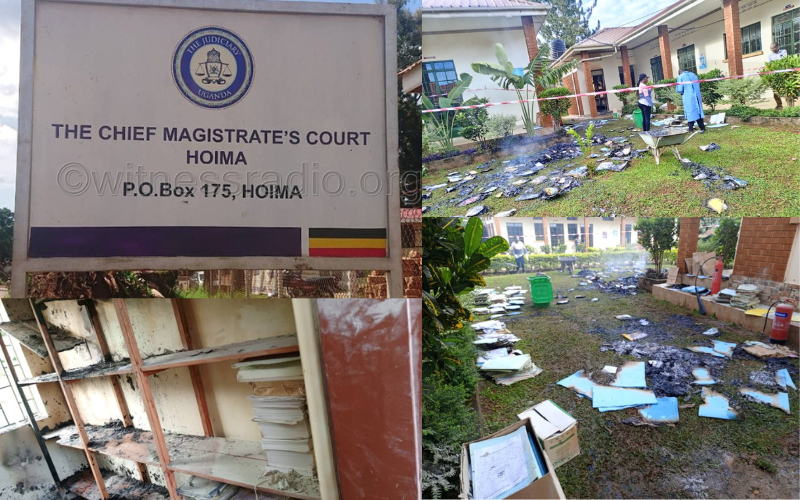
A police report on the cause of the fire that engulfed the Hoima High Court and resulted in the destruction of numerous court files is not yet out, 82 days after the fire incident.
According to witness Radio sources, on the 21st of October, 2023, a fire gutted the Hoima Chief Magistrates Court premises in Hoima City. Preliminary investigations revealed that the fire, which started at around 6 a.m. from within the court registry, destroyed several court files.
The Hoima High Court, which houses the Hoima Chief Magistrate Court, is a neighbor to Albertine regional police headquarters in Hoima City.
According to sources, investigations have neither concluded their inquiry nor provided any updates to the public regarding their findings.
Witness Radio’s efforts to obtain an update on the progress of the investigation into the incident hit a roadblock as the Albertine police spokesperson Mr. Julius Hakiza, was unreachable by press time.
But the Judiciary spokesperson Mr. Eremye James Mawanda in an interview with Witness Radio Uganda disclosed that the Police authorities have not yet furnished them with a report concerning the cause of the fire incident at Hoima Court.
According to Mawanda, when the incident happened on October 21st, 2023, judiciary requested the police to initiate investigations on the same.
“We are eager to understand the cause of the fire that burnt files at the Hoima High Court. It will help us to understand the volume of the files affected by the fire. Also, the report will inform us what went wrong and who did not do their part since the place had guards. And many mistakes will be corrected at the end.” He added.
Furthermore, Mawanda emphasized that once the police provide the Judiciary with the report, they will promptly inform the public of the findings regarding the incident.
Related posts:

Hoima Court fire: Witness Radio is dreaded as evidence in lawsuits filed against high-profile individuals could have been destroyed.
Breaking: The army general, police chief, presidential representative, and others are appearing before the Hoima Chief Magistrate court today.
Hoima Court allows government to deposit rejected compensation by Tilenga oil project affected persons (PAPs) in court.
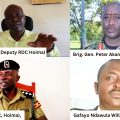
EACOP PAPs have started a private criminal proceeding against Army General, Hoima Police Commander and others over their criminal acts during illegal land evictions.
You may like
MEDIA FOR CHANGE NETWORK
Global Peasant Movement calls for action against escalating land grabs and repression.
Published
1 week agoon
April 1, 2026
By the Witness Radio team.
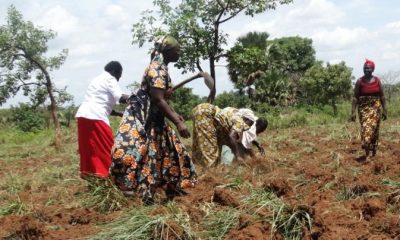
For more than eight years, the landscape of Kiryandongo district in western Uganda has undergone significant changes, shifting from being occupied by local farmers to a violent takeover by multinational companies.
What used to be small farms, homesteads, and community life is now dominated by endless stretches of sugarcane and grain plantations, disrupting local economies and social bonds. Families who once cultivated food and built futures now face displacement, dispossession, and uncertainty about their livelihoods and community cohesion.
“They found us living in peace. Now everything is broken: families, dreams, livelihoods. investors forcibly took away our land.” Benon Beryaija told Witness Radio, recalling the past.
Despite displacement, criminalization, and fear, some land defenders remain steadfast, inspiring the audience to value resilience and collective resistance.
Benon Beryaija, the chairperson of the Kiryandongo land eviction victims, is at the center of the resistance and continues to organize locals despite threats, arrests, and violence.
“The bigger group left, but we remain resolute. “We are defending what belongs to us; our land that was grabbed by multinationals. It is a very hard fight, and it is threatening my life. I have been arrested and tortured for defending my people.”
His experience reflects a broader pattern across Uganda and beyond, where land and environmental defenders increasingly face intimidation, legal harassment, and violence.
The situation in Kiryandongo mirrors a growing global crisis. A global coalition of small-scale farmers and rural movements has issued a strong call for international mobilization against land dispossession, state repression, and what it describes as a growing “neocolonial offensive” targeting rural communities worldwide.
In a statement released ahead of the International Day of Peasant Struggles on April 17, La Via Campesina warned that agribusiness expansion, militarisation, and restrictive trade policies are accelerating land grabs and undermining food sovereignty across continents.
Founded in 1993, La Via Campesina brings together millions of peasants, landless workers, Indigenous peoples, pastoralists, fishers, migrant farmworkers, and rural women and youth, all of whom advocate for food sovereignty and peasant agriculture.
The annual commemoration marks 30 years since the Eldorado do Carajás Massacre in Brazil, where military police killed 21 landless workers during a protest for agrarian reform. The movement says the anniversary is a reminder of “ongoing violence in our territories” and the continued impunity for crimes against land defenders.
Peasant movements warn that land grabbing is being accelerated by agribusiness expansion, extractive industries, and global financial interests often backed by foreign capital and state support.
“They do not come to restore democracy,” the statement reads. “They come to steal the land we cultivate,” accusing multinational corporations and governments of turning land and ecosystems into “speculative assets.”
Recent findings from the Food and Agriculture Organization, in collaboration with the International Land Coalition and CIRAD, reinforce these concerns. Their “Status of Land Tenure and Governance” report estimates that more than 1.1 billion people, about 23 percent of the global adult population, live under constant fear of losing their land or homes within the next five years.
The report identifies commercial pressures as a major driver of land insecurity, echoing concerns raised by peasant movements.
The statement also criticizes global trade systems, particularly agreements negotiated under the World Trade Organization, arguing that they favor multinational corporations at the expense of smallholder farmers.
La Via Campesina has called for agriculture to be removed entirely from WTO frameworks, saying free trade agreements undermine national sovereignty and expose local producers to unfair competition.
“We WARN that the capitalist and neocolonial offensive is not limited to direct violence: neoliberal trade policies are also deadly for rural life. Free Trade Agreements (FTAs), such as Mercosur’s with the European Union and others, are instruments of submission that dismantle national sovereignty to favor transnationals. We reject treating food as a commodity and trade as a weapon; we demand that tariffs be legitimate tools to protect small producers from dumping, not levers of geopolitical coercion wielded by empire.” The statement adds.
Beyond economic pressure, the group reveals what it calls the systematic criminalization of those defending land, water, and natural resources. Across Latin America, Africa, and Asia, activists are increasingly labeled as “terrorists,” arrested, or subjected to prolonged legal battles.
“The capitalist and colonial system that represses and dispossesses our peoples continues unabated to this day, enabling land grabbing, protecting the elites, and criminalizing those who fight for the land through laws and selective judicial processes and other forms of persecution.” The statement from the group mentioned
This trend is evident in many countries, including Uganda, where communities resisting land-based investments, including infrastructure, oil, and plantation projects, have faced arrests, intimidation, and shrinking civic space.
As April 17 approaches, La Via Campesina is calling for coordinated global action from protests and community dialogues to solidarity campaigns.
It is also urging governments to implement international frameworks such as the United Nations Declaration on the Rights of Peasants and the United Nations Declaration on the Rights of Indigenous Peoples to protect land rights and food sovereignty.
“There is no peace without justice. And no justice without resistance and collective action,” the movement sa
Related posts:

Faced with global crises, we demand concrete actions from governments to ensure Food Sovereignty for our Peoples and our Peasant Rights
StopEACOP Movement calls for an end to harmful oil projects and demands a just transition.
Land grabs victims in Uganda form a movement to fight their rights
La Via Campesina calls on States to exit the WTO and to create a new framework based on food sovereignty
MEDIA FOR CHANGE NETWORK
U.S. Peace Efforts in the DRC: Protecting Communities or Minerals?
Published
1 week agoon
March 31, 2026
By the Witness Radio team.
A three-decade conflict in the Democratic Republic of the Congo (DRC) has affected millions of people. Some have been violently shot at and killed, while others have been dispossessed from what they called their homes, with many currently placed in Internally Displaced Camps (IDPs).
A 2025 report by the United Nations Special Rapporteur on the human rights of internally displaced persons to the DRC revealed that Armed conflict, accompanied by natural resource governance challenges, has collectively driven over 7 million internally displaced people from their homes, placing the DRC among the top five countries globally in terms of the number of internally displaced persons.
The conflict in the DRC dates back to the aftermath of the Rwandan Genocide, when nearly two million Hutu refugees fled into eastern Congo. Some extremist groups formed armed militias there, often driven by control over mineral-rich areas, leading to escalating tensions with Tutsi groups and drawing neighboring countries into the conflict. This triggered the First Congo War (1996-1997) and subsequent wars that have devastated the region. Since 1996, reports estimate that the conflicts in eastern Congo, fueled by competition over resources like coltan and cobalt, have contributed to the deaths of roughly six million people.
Authorities in the DRC, along with numerous United Nations reports, have for so long accused Rwanda of backing the M23 rebel group, allegations that Rwanda has denied for decades. However, according to a January 24 article by The Rwandan, an online news platform, a high-ranking Rwandan official later acknowledged security coordination with M23/AFC rebels.
Different reports and analysts attribute the unending conflict to mineral resources and, perhaps, land grabbing. In an effort to end the conflict that had lasted over 30 years, the US brokered agreements between the DRC and Rwanda in June 2025, later reinforced by the Washington Accords. These agreements are intended to promote peace, security, and economic growth in the Great Lakes region.
However, beyond the language of peace and cooperation, civil society groups and observers have raised concerns about who truly benefits from these agreements-whether local communities, foreign corporations, or political elites-and how these benefits impact human rights and resource control.
They argue that much of the content reflects ‘peace for minerals,’ underscoring the need for the audience to recognize the importance of human rights protections in resource exploitation and conflict resolution.
“There’s nothing in the deal about accountability, about justice, about holding the perpetrators of the violence and the conflict accountable. It’s all about business and money. This looks like awarding players like Rwanda, who have been accused of supporting M23 in committing atrocities in the DRC,” Oakland Institute’s Policy Director Frederic Mousseau told Witness Radio journalist, in an exclusive interview.
The Washington Accords consist of three separate agreements. The first is a peace agreement signed by both Congo and Rwanda, calling for a ceasefire and improved relations. The second establishes the Regional Economic Integration Framework, which promotes joint economic cooperation and enables collaboration on regional resources. The third agreement, the Strategic Partnership Agreement, was signed by the Congolese government and the US to strengthen cooperation on economic development and resource security.
While Washington frames its role as a mediator, critics argue that the structure of these deals reveals a deeper pattern: US geopolitical and economic interests, especially access to strategic minerals like cobalt and coltan, often take precedence over genuine peacebuilding efforts, reflecting broader regional and international power plays that prioritize resource control over local stability.
A familiar pattern in US foreign policy.
In 2003, the US, under President George W. Bush, led the 2003 Iraq War, citing the threat of weapons of mass destruction (WMD) and the need to promote democracy in Iraq. These claims were never substantiated.
But war Critics maintained that there were other motives behind the decision of the US government to invade Iraq aside from promoting peace and democracy, claiming the invasion was motivated largely by oil-related benefits to the US, including its interest in gaining control of the oil reserves in Iraq. This was confirmed by some US officials.
In a 2013 article by CNN, some military officials attested that oil was the central goal of the US-Iraq invasion. “Of course, it’s about oil; we can’t really deny that,” Gen. John Abizaid, former head of US Central Command and Military Operations in Iraq, was quoted in an article, which also quotes several other officials.
Today, Iraq remains deeply affected by the consequences of that intervention, even as global powers continue to benefit from its vast oil reserves. In contrast, many of its citizens continue to endure the resulting hardships.
The DRC: a global mineral powerhouse.
The DRC possesses some of the world’s most important minerals for contemporary industry, yet these resources have not translated into development or improved livelihoods for its citizens. Instead, ongoing conflict and resource exploitation have often marginalized local communities, exacerbating human rights abuses and economic disparities.
According to the International Trade Administration, DRC holds some of the World’s largest reserves of cobalt (about 50–70 percent of global supply), copper, coltan, lithium, and gold, which makes it a strategic epicenter in the global race for critical minerals. These resources are indispensable for electric vehicles, renewable energy technologies, and defense and aerospace industries.
The Washington Accords are a reward for an aggressor.
Questions remain about the intentions behind the US-brokered deal, particularly given its history of resource interests, its failure to ensure parties adhere to previous agreements, and ongoing concerns over Rwanda’s continued impunity.
“The peace agreement signed in June 2025 between Rwanda and the DRC under the auspices of the Trump administration raises serious concerns about whom it truly serves.” Oakland Institute’s featured report mentions, adding that the deal, “Rather than securing lasting peace for the Congolese people, it appears poised to benefit corporate and financial interests eager to access the country’s vast mineral wealth.”
Most mineral-rich areas are currently under the control of the M23 rebel group, including Rubaya, home to the largest coltan mine in the Great Lakes region. A 2024 report by a UN group of experts on the DRC stated that the AFC/M23 established a parallel administration that controlled mining activities, trade, transport, and the fraudulent taxation of minerals, which were then exported to Rwanda.
Rwanda has been a major exporter of tantalum (metallic ore derived from coltan) to the US over the last ten years, accounting for over 54% of US ore imports in certain years. A significant portion of this coltan, according to reports, was trafficked from the eastern DRC, and the problem has worsened since the M23 seized control of the Rubaya coltan mines in April 2024.
“Rwanda’s role as a refinery and export hub is of particular strategic interest to the United States, especially for securing reliable supplies of 3T minerals—tin, tantalum, and tungsten— critical to the US military-industrial complex.” Adds Mousseau.
Additionally, between 2017 and 2024, Rwanda’s mineral exports increased by nearly 500 percent –from US$373 million to US$1.75 billion – with gold the main export commodity, representing US$1.5 billion in 2024.
“The deal granted Rwanda privileged access to Congolese resources and a key role in their refining and reexport, especially for coltan and tungsten – a reward for an aggressor who has made hundreds of millions of dollars from the plundering of Congolese minerals. This impunity and injustice can’t bring peace to Congo,” added Mousseau.
In late 2025, Trinity Metals, Rwanda’s largest producer of “conflict-free” tungsten, initiated a historic direct supply chain of tungsten concentrate (WO3) to the United States with support from the US Development Finance Corporation (DFC) funds through its UK holding.
“DFC has financed Trinity Metals, and it started exporting tungsten to the US last year. And in October, there was a first shipment from this company to the US of tungsten, a critical mineral for the defense industry. Interestingly, the DFC doesn’t finance Trinity Metals directly, but through its holding company, the UK-based TechMEX, for a tune of $105 million.” Mousseau reveals.
Missing accountability for harm
With this evidence of mineral collaboration, and Rwanda being accused of exploiting minerals in the DRC, critics argue that the deal may actually create more room for exploitation rather than contribute to ending the war.
According to the MOSSAC International outreach coordinator, Dr. Deborah S Rogers, what the Rwandan Army is perpetrating in the DRC amounts to a crime against humanity and deserves to be held accountable rather than being rewarded to take control of DRC resources. “It’s not a normal war, of one army against another. It’s a terrorist campaign by those who invaded the DRC and took over the government. They are attempting to make people too scared to fight back.”
She further added, “They are being rewarded with exactly what they tried to seize through armed conflict. They took it by force, and now there is an agreement that effectively legalizes and normalizes the ongoing theft and the pillaging of the minerals from the DRC into Rwanda,” Dr. Deborah S Rogers told Witness Radio.
She explains that Rwanda has extended its control over lands that formerly belonged to DRC citizens, many of whom have been killed by armed groups. In contrast, others were forced into hiding, resulting in widespread dispossession.
“Rwanda seeks land because it is a small country with a growing population in need of more space. In the areas under their control, terror tactics are used to force people out. Residents face torture, killings, and sexual violence, making it impossible to live there safely. Many are internally displaced, while others flee to neighboring countries as refugees,” Dr. Deborah highlighted.
As Congolese seek safety, Rwandan settlers, according to Dr. Deborah, are moving into these farms and homes. “When people do return after violence has decreased temporarily in their home regions, they discover that Rwandese have taken over their lands and homes.”
Instead of addressing these serious concerns, civil society groups and experts allege that the Trump-brokered agreements focus primarily on Congolese minerals.
“The main agreements brokered by President Trump and his administration do not provide any reparations or compensation,” Frederic Mousseau revealed.
The United Nations Office of the High Commissioner for Human Rights has recorded some 600 summary executions, claiming more than 1,300 lives in the Democratic Republic of the Congo since October 2025.
“Nearly 1,500 people were abducted during the same period, and 1,200 others were subjected to physical violence, including torture, rape, and other inhumane treatment. The persistent use of sexual violence as a weapon of war inflicts unspeakable suffering on Congolese women and girls. Since October, our office has documented some 450 victims of sexual and gender-based violence,” said Nada Al-Nashif, Deputy High Commissioner for Human Rights, on Wednesday, March 25.
Amid rising violent tensions, the Congolese population is being hit hardest, while the peace deals are showing no effort to provide redress. Beyond the continued violence, hunger is also spreading.
“The conflict is expanding beyond North and South Kivu into Tshopo Province, which lies far from the epicenter of the fighting,” revealed Vivian van de Perre, interim head of MONUSCO, adding that approximately 26.6 million people, about a quarter of the country’s population, face hunger as a direct result of the conflict.
While the Washington Accords are presented as a pathway to peace, they risk entrenching exploitation and rewarding those who have profited from violence. Lasting stability in the DRC will only be possible when justice, accountability, and the protection of local communities are prioritized over geopolitical and corporate interests.
Related posts:

Failed US-Brokered “Peace” Deal Was Never About Peace in DRC
Profit off Peace? Meet the Corporations Poised to Benefit from the DRC Peace Deal
Peace in DRC Requires More than Symbolic US Sanctions on Rwanda
Discover How Foreign Interests and Resource Extraction Continue to Drive Congo’s Crisis
MEDIA FOR CHANGE NETWORK
Breaking: Land-related cases increase by 67% in Uganda – Police report reveals.
Published
1 week agoon
March 31, 2026
By the Witness Radio team.
Kampala, Uganda; Land fraud cases in Uganda rose sharply in 2025, highlighting growing concerns over land governance and access to justice.
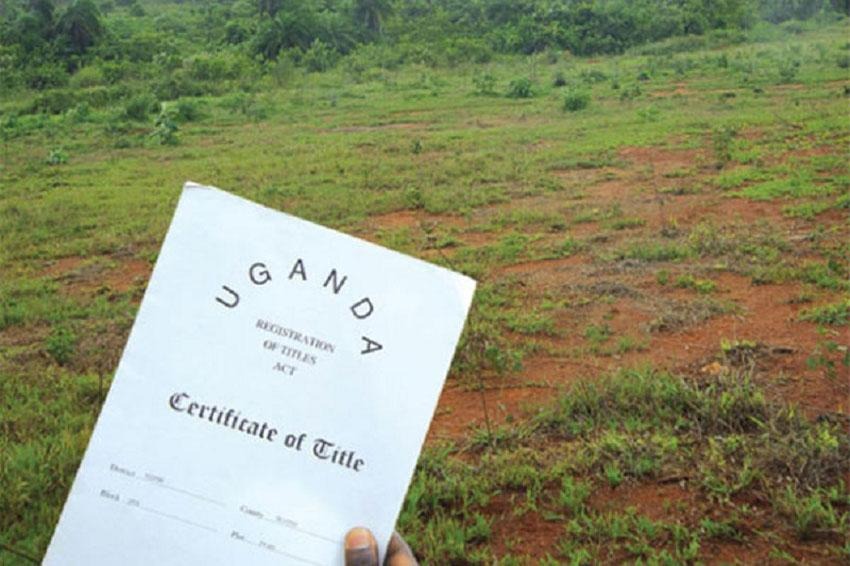
According to the 2025 Annual Crime Report (ACR), 663 land fraud cases were reported, underscoring systemic issues like weak enforcement and corruption that hinder land governance and access to justice.
The report further reveals significant gaps in the handling of these cases. Of the 663 reported incidents, 398 remain under investigation, raising concerns about delays in the process. Police submitted 333 cases to the Directorate of Public Prosecutions (DPP) for legal guidance.
However, 145 complainants were advised to seek civil redress, while only 74 cases have been taken to court so far.
The police report states that the most common offences related to land fraud in Uganda include fraudulent procurement of certificates of title, obtaining registration by false pretenses, criminal trespass, forgery, and obtaining money by false pretenses.
The rise in land fraud cases comes amid increasing pressure on land across Uganda for development, as disputes over ownership, documentation, and access continue to intensify.
The Annual Crime Report also shows that police recorded 196,405 criminal cases across the country in 2025, with land-related offences rising sharply.
Experts have long identified systemic challenges in land administration systems, such as weak enforcement, corruption, and power imbalances, which should concern land officials and policymakers as they hinder justice and fuel land conflicts.
The low number of cases reaching court, compared to those reported, highlights significant barriers to justice, raising concerns about whether land victims can effectively seek redress and the overall effectiveness of criminal investigations into land-related offences. This situation underscores the need to protect vulnerable landowners and communities.
Commenting on the report, Jeff Wokulira Ssebaggala, Witness Radio’s Team Leader, said the findings on land-related cases are a stark reminder of the urgency to strengthen and facilitate justice systems that investigate and prosecute land-related criminal cases to protect poor communities’ land from forced land evictions.
“The rising number of land fraud cases calls for urgent initiatives, including strengthening land registration systems, improving investigations, and promoting equitable land ownership, access, and use for the poor, and most importantly, promoting access to justice for local communities.
Related posts:

Mubende High Court overwhelmed by land cases
New report reveals most disputed land
Criminalization of planet, land, and environmental defenders in Uganda is on the increase as 2023 recorded the soaring number of attacks.
Expedite land related matters in our courts to tame escalating forced land evictions – Buganda King.
Two dead as Siaya protests against gold mining firm turn tragic
Global Peasant Movement calls for action against escalating land grabs and repression.
U.S. Peace Efforts in the DRC: Protecting Communities or Minerals?
Breaking: Land-related cases increase by 67% in Uganda – Police report reveals.
Oil-affected residents and civil society organizations reject TotalEnergies’ Tilenga Progress Report, citing unfairness in their operations.
Peace in DRC Requires More than Symbolic US Sanctions on Rwanda
The South African High Court concludes hearing a landmark case challenging TotalEnergies’ Deep-Water Drilling project and offers to deliver its ruling on notice.
DR Congo crisis: Washington’s brokered peace agreement is rendered useless as fighting, forced land displacement, and mineral exploitation persist…
Innovative Finance from Canada projects positive impact on local communities.
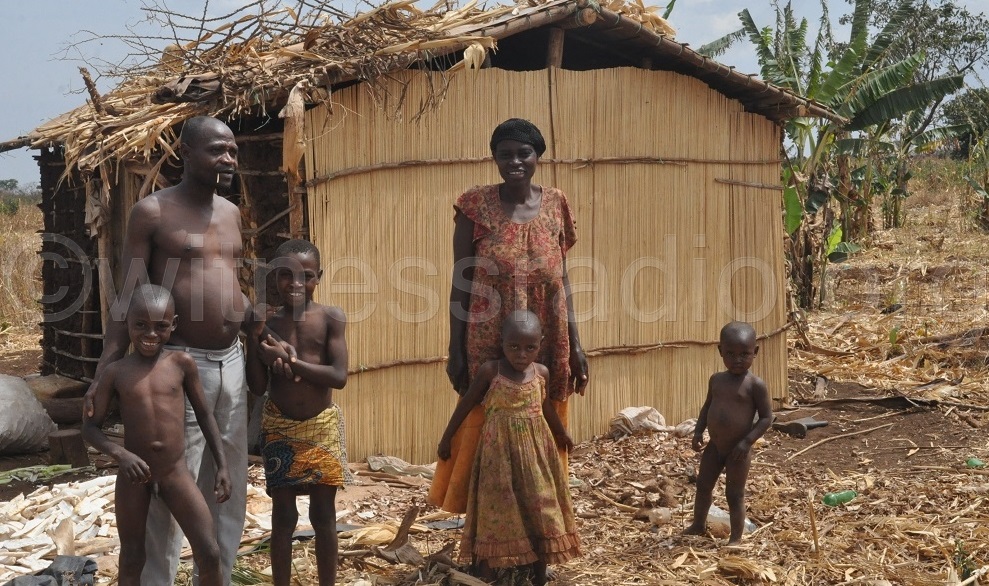
Over 5000 Indigenous Communities evicted in Kiryandongo District
Petition To Land Inquiry Commission Over Human Rights In Kiryandongo District

Invisible victims of Uganda Land Grabs
Resource Center
- Land And Environment Rights In Uganda Experiences From Karamoja And Mid Western Sub Regions
- REPARATORY AND CLIMATE JUSTICE MUST BE AT THE CORE OF COP30, SAY GLOBAL LEADERS AND MOVEMENTS
- LAND GRABS AT GUNPOINT REPORT IN KIRYANDONGO DISTRICT
- THOSE OIL LIARS! THEY DESTROYED MY BUSINESS!
- RESEARCH BRIEF -TOURISM POTENTIAL OF GREATER MASAKA -MARCH 2025
- The Mouila Declaration of the Informal Alliance against the Expansion of Industrial Monocultures
- FORCED LAND EVICTIONS IN UGANDA TRENDS RIGHTS OF DEFENDERS IMPACT AND CALL FOR ACTION
- 12 KEY DEMANDS FROM CSOS TO WORLD LEADERS AT THE OPENING OF COP16 IN SAUDI ARABIA
Legal Framework
READ BY CATEGORY
Newsletter
Trending
-
MEDIA FOR CHANGE NETWORK2 weeks agoThe South African High Court concludes hearing a landmark case challenging TotalEnergies’ Deep-Water Drilling project and offers to deliver its ruling on notice.
-
MEDIA FOR CHANGE NETWORK1 week agoU.S. Peace Efforts in the DRC: Protecting Communities or Minerals?
-
MEDIA FOR CHANGE NETWORK1 week agoBreaking: Land-related cases increase by 67% in Uganda – Police report reveals.
-
MEDIA FOR CHANGE NETWORK2 weeks agoCommunities file second complaint against World Bank-funded project over failed redress in Tanzania.
-
MEDIA FOR CHANGE NETWORK1 week agoGlobal Peasant Movement calls for action against escalating land grabs and repression.
-
MEDIA FOR CHANGE NETWORK2 weeks agoLand grabbing threatens schools, health centres nationwide
-
NGO WORK2 days agoTwo dead as Siaya protests against gold mining firm turn tragic