Connect with us

NGO WORK

The Roundtable on Sustainable Palm Oil explained: a primer for community organisations

Published

on

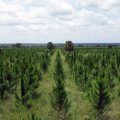
Palm oil is the world’s most common vegetable oil and an essential, cheap raw material for the unhealthy processed foods sold by multinational food companies. Palm oil production has nearly doubled over the past decade, mostly through the expansion of large-scale monoculture plantations, owned by corporations. These oil palm plantations are associated with deforestation, habitat destruction, greenhouse gas emissions and other problems such as water pollution. Oil palm plantation companies have been accused of theft of land from indigenous and other communities, criminalisation of human rights defenders and labour and human rights abuses.

Twenty years ago, the Roundtable on Sustainable Palm Oil (RSPO) was set up to address these concerns by bringing together ‘stakeholders’ from various parts of the industry, as well as environmental and social organisations. Its founders said this would prevent the destruction of valuable forests and ensure respect for the rights of plantation workers, smallholder farmers and indigenous people. But experience with the RSPO over the past two decades shows that it has failed to live up to its objectives. It has arguably become more of an industry ‘front’ organisation, principally concerned with helping to protect companies, market palm oil and expand the model of industrial monocultures, rather than a means of ensuring higher standards.

Worse, there is much confusion and a lack of awareness about what the RSPO is and what it means for local communities, workers and even the companies occupying their lands. Grassroots organisations and international allies, including GRAIN, recently agreed to develop information and education tools to help workers and communities better understand the RSPO. This primer, “The Roundtable on Sustainable Palm Oil explained”, is one such tool – a collective document, published by GRAIN but produced with inputs from many organisations.

Source: Grain

Continue Reading

NGO WORK

Rush: Global Scramble for Minerals Wages War on People and Planet

Published

on

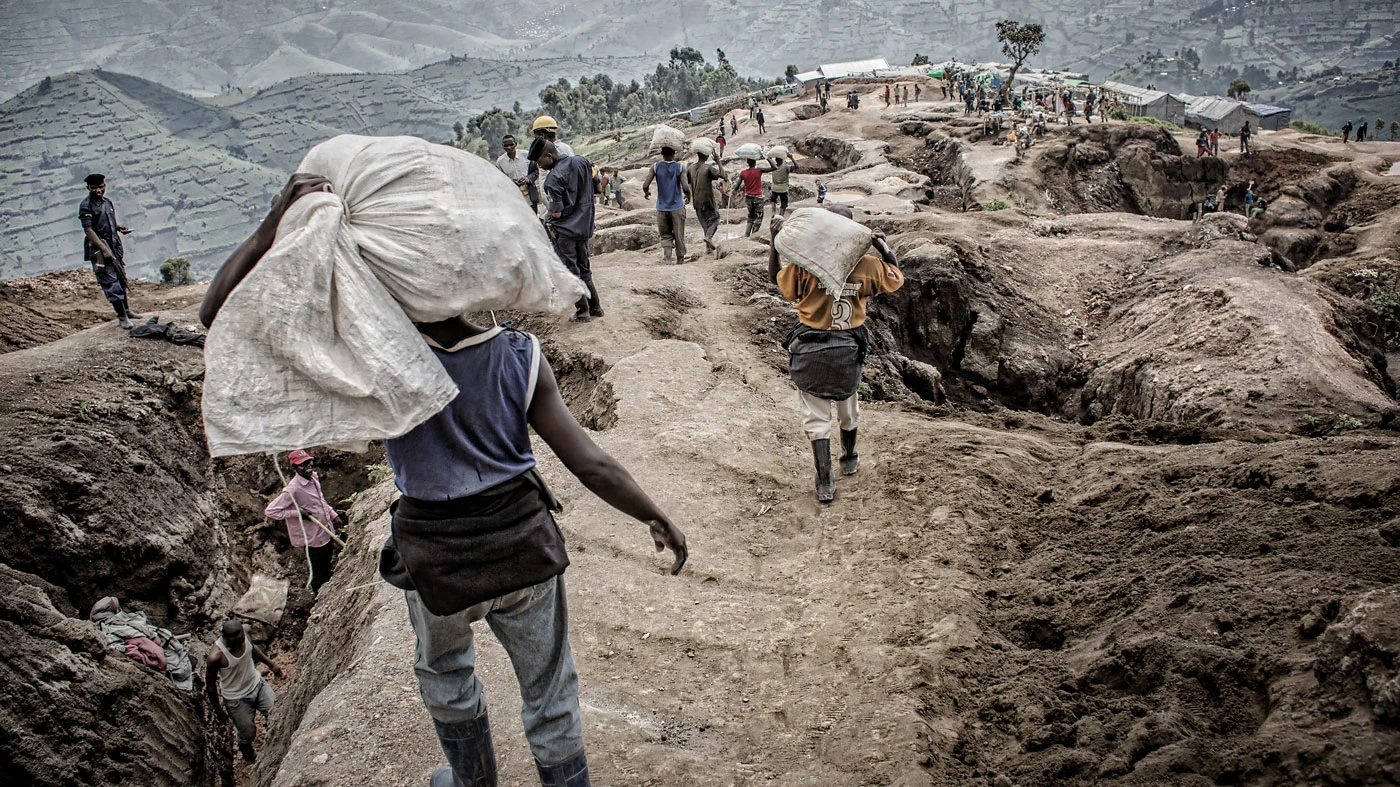
As governments and corporations scramble to secure critical minerals, a new Oakland Institute report exposes the forces fueling today’s unprecedented mining boom. RUSH: Global Scramble for Minerals Wages War on People and Planet dismantles the dominant narrative that massive amounts of minerals are needed for the energy transition, revealing instead a potent convergence of political, military, and corporate interests racing to control the resources that underpin modern warfare and artificial intelligence.

“Securing access to critical minerals is reshaping international relations and foreign aid as competition between the US and China becomes a new geopolitical battleground,” said Anuradha Mittal, Executive Director of the Oakland Institute. “The costs are being borne by communities around the world as this global race drives wars and violence, results in land grabs, forced displacement, devastating pollution, and the irreversible destruction of lands and livelihoods,” Mittal continued.

With the Pentagon shifting towards an “AI-first” warfighting stance, the US military-industrial complex is rapidly integrating tech and AI firms with a mutual interest in locking down critical mineral supplies. The report exposes key players positioned to profit from a resource boom already drawing trillions in investment. These include ventures tied to the Trump family, billionaire-backed outfits such as KoBold Metals, an AI-driven mining firm supported by Bill Gates, and defense-tech companies like Palantir and Anduril, among others.

To justify a massive scale up of mineral extraction, governments, corporations, and international financial institutions like the World Bank, frame critical minerals as indispensable to the green transition and as a pathway to prosperity for the Global South. However, RUSH documents that more than 70 percent of critical mineral demand today comes from industries unrelated to the energy transition, including the automotive, aerospace, military, communications, and technology sectors. Rapid growth in artificial intelligence, data centers, surveillance technologies, and military spending is expected to increase this demand massively.

“Renewable energy deployment, such as wind and solar, requires only a fraction of the minerals that corporations plan to extract in the coming decades,” said Andy Currier, Oakland Institute Policy Analyst and report co-author. “But growing military demand and stockpiling of materials like copper, lithium, nickel, and cobalt will undermine the energy transition, diverting critical resources away from urgently needed climate solutions,” Currier continued.

RUSH warns that the acceleration of resource extraction poses a catastrophic threat to both ecosystems and human survival. In response, Indigenous groups and frontline communities are leading a vital, global resistance to defend their territories. It is, however, undermined by a dangerous myth that expanding extraction is necessary to fix the climate crisis.

“The report issues a resounding call to challenge this false narrative to stop the untenable rush for minerals before it becomes an irreversible global catastrophe,” warned Oakland Institute Policy Director and report co-author, Frederic Mousseau. “The stakes could not be higher. If left unchecked, the global mining rush will trigger hundreds of new mines in a short period. The resulting human and planetary devastation will be at a scale never seen before – livelihoods will be destroyed, millions will be displaced, and environmental destruction will become irreversible,” concluded Mousseau.

Read the report

Source: oaklandinstitute.org

Continue Reading

NGO WORK

Acholi land dispute threatens Shs3bn govt-backed Cassava Factory in Pader

Published

on

Affected residents demonstrate at acholibur town council offices over a disputed 179-acre piece of land earmarked for a government and gulu archdiocese-backed cassava processing factory in pader district.

Pader, Uganda: A protracted land dispute in Acholibur Sub-county, Pader District, is threatening to stall a Shs3 billion cassava processing factory project jointly backed by the Government of Uganda and the Gulu Archdiocese, raising fears over the future of one of northern Uganda’s most significant agro-industrial investments.

The proposed cassava factory, which is being spearheaded by the Gulu Archdiocese with support from the Uganda Development Corporation (UDC), is expected to boost value addition, create employment opportunities and improve household incomes for thousands of cassava farmers across the Acholi sub-region.

At the centre of the dispute is a 179-acre piece of land claimed by two families, the estate of the late Ignatius Lakere Latigo and that of the late Odwong Joseph Lagoro, both of which maintain ownership rights over the property earmarked for the project.

The dispute escalated following a court-directed boundary opening exercise conducted by a joint security team led by Pader Resident District Commissioner Amos Banyizi. Several affected families have since protested the exercise, claiming it was carried out without their knowledge or participation.

Families question boundary exercise

Mr. Latigo Morris, administrator of the estate of the late Ignatius Lakere Latigo, said his family was never notified about the recent boundary demarcation despite earlier agreements that required all stakeholders to be involved.

He recalled that a stakeholders’ meeting held last year, attended by Archbishop Emeritus John Baptist Odama of the Gulu Archdiocese and other parties, had resolved that any future activities on the disputed land would involve all affected families.

According to Morris, his family was shocked to find the RDC accompanied by armed security personnel carrying out activities on land they claim belongs to them.

“We expected dialogue and participation of all stakeholders before any action was taken,” Morris said.

Local leaders have also questioned how the exercise was conducted.

The LCIII Chairperson of Acholibur Town Council, Okumu Robert, said his office was neither informed nor requested to mobilise residents before the boundary opening exercise.

Mr. Ocen Paul, one of the affected stakeholders, appealed to government to intervene, warning that nearly 150 families could lose land if the matter is not handled transparently.

He further alleged that influential individuals could be influencing the ongoing demarcation despite what he described as valid documentation showing that the affected families still hold an active 49-year lease over the land.

Source: dailyexpress.co.ug

Continue Reading

NGO WORK

Oil about to flow but 2010 evicted Balaalo wait for compensation

Published

on

As Uganda races toward first oil production, promises of economic transformation are colliding with unresolved grievances from the country’s oil frontier.

In Buliisa, hundreds of Balaalo pastoralists forcibly evicted in 2010 remain uncompensated, excluded from the prosperity built on the land they once bought. Enos Mubangizi remembers being woken at 5 am in December 2010, hearing hundreds of gun-wielding soldiers and police outside, rounding up cows from his family kraals and those of his neighbours.

Local pastor Stephen Mugisha, a respected pillar of his community, received a call just a day before from then-coordinator of Uganda’s national intelligence Gen David Sejusa. Sejusa informed the pastoralists that the Ugandan army was evicting all the families and their cows from their land.

“We were the only family in the area that had a bungalow, and it was demolished,” Mubangizi says, a member of the Balaalo pastoralists who also lost cows and land.

Code-named Justice, an estimated 640 families were forced out, and 20,000 head of cattle were taken. For the Balaalo people, a nomadic pastoralist group spread out in the South, Western, and Northern parts of Uganda, cows make up most of the family wealth.

The 20,000 cows were mixed, and their owners could no longer identify them. A few managed to rescue their livestock but no longer had land to graze them. The cows who were mixed in the big herd died from a lack of pasture and water. Others were sold off cheaply, sometimes for less than Shs 50,000 ($14).

Mugisha had set up a primary school and laid the foundation for what he envisioned as a mega church. He lost all of it. Another pastor, Sam Tumwine, built a house that is now occupied by police.

“I wonder who the police are paying rent to,” he says.

When contacted, the police refused our request for comment. The parcels of land in Buliisa district targeted for eviction had become nationally significant – the site of oil discovery in 2006, and where much of the production infrastructure was installed – in a race to start extracting the country’s “black gold” by the end of 2026.

The new oil frontier turned neighbours into enemies – and the question remains whether anyone was held accountable for the devastating evictions. Almost 15 years later, Mubangizi and the hundreds of other violently evicted herdsmen say they are still counting their losses and waiting for compensation.

Conflict over land and oil-era property claims

When oil was being surveyed by Tullow Oil, a multinational UK-headquartered oil and gas exploration company, Mugisha says they asked the geologists if their cows would be allowed to continue grazing, and they were reassured this was fine.

The conflict between pastoralists and the local community started in 2007, less than a year later. Oil discovery had an immediate impact on the community: suddenly, people saw value in land and raced to transform it from a communal to an individual land tenure system.

As land values rose, disputes emerged over whether some sales of customary land were valid under local tenure arrangements. At the time, Buliisa was an extremely rural community, whose life was still communal, including land ownership.

Land possessed little value, costing about Shs 50,000 per acre at the time of Uganda’s confirmation of commercial oil discovery in 2006. District chair Fred Lukumu said he regarded some transactions as invalid because, in his view, sellers lacked exclusive title.

“It was an illegal transaction because people were selling what did not exclusively belong to them,” Lukumu said. “They were never verifying… just paying whoever told them land was theirs,” he adds.

Buliisa subcounty chairperson Kabagambe Kamanda doesn’t dispute the claim that pastoralists had bought land; rather, how the acquisitions were documented and understood locally.

By 2003, the numerous pastoralists who had come to graze cattle had started buying land. Pastoralists said they had consulted community members who informed them that they had the right to purchase and own property. Kamanda claimed that some buyers took advantage of weak land documentation and low public awareness of land law; pastoralists dispute that account.

He claims that, in some cases, acreage recorded in sale paperwork did not match what sellers believed they had agreed to. Frederick Watume, who was vice chairperson of Buliisa sub-county at the time, said some agreements brought to him lacked details he considered necessary, including acreage.

Though the herdsmen were trying to follow the law by ensuring that their land purchase agreements were stamped by local council leaders, the land purchase agreements brought to him for signing were defective.

“They would say, mukongolo (natives) sold land to such mulaalo (herdsmen), no acreage. Nothing,” he said in an interview.

“I warned them that in future, you’re going to lose this land.”

The local community says the herdsmen, who did not fence their cattle, were destroying crops. Lukumu says people were facing food shortages and the pastoralists would even beat natives trying to chase cows from their gardens.

COMING TO BULIISA IN THE 1980S

The Balaalo herder families’ ordeal began in December 2010, but the story started 30 years before. The herders thought they found a happy ending in the Buliisa area after being evicted from government property that was later sold to Indian sugarcane growers.

Balaalo people who were looking for jobs in the 1980s had come to the Buliisa community to take care of cows, and would pay them with milk, says Bernard Barugahare, an elder from the village and former district community development officer.

“They [herdsmen] kept coming, increasing, and in the process, they sold milk and started buying cows,” Barugahare said.

He says it was these herdsmen who invited their fellow tribesmen to come to Buliisa at the beginning of the 2000s. Pastor Mugisha reiterates that the invitation was extended by natives in the area.

EMPTY-HANDED, EVEN AFTER FILING CLAIMS

From interviews with more than 40 people, including the pastoralists, residents, local leaders, and civil society members, oil was the main factor in the eviction of the Balaalo.

Local leaders in the area remember the names of evicted herders well, but when asked directly about properties left behind, they give vague answers. They insist the pastoralists were compensated by the government and should not make any claims.

“Anybody who did not come back to claim property up to now has no moral authority to make a claim,” says Kamanda Kabagambe, the chairperson for Buliisa sub-county, whose office is less than two kilometres from Tumwine’s former home.

“Since 2011, I don’t think anyone would have failed to claim if there was any destruction that was not legal.”

A local journalist who covered the pastoralist-native conflicts between 2007 and 2010 describes it as “a terrible eviction,” adding that “people lost everything”.

The journalist Stephen Kabindi followed up with those he had interviewed in subsequent years, who were living with relatives for over a decade. “They will never be the same,” he says.

On X, Gen Sejusa indicated that this evacuation was carried out under orders from the Ugandan cabinet. He headed the security arm, while then-prime minister Apolo Nsibambi headed the overall task force. “No property or life was lost,” he wrote.

TURNING A BLIND EYE?

The Tilenga project is operated by French petroleum giant TotalEnergies EP Uganda on behalf of a joint venture that includes the government of Uganda and state-owned China National Offshore Oil Company. TotalEnergies is the majority shareholder with 56.67% of the project.

The French oil company acquired a stake in Uganda’s oil project 14 months after the eviction. Since then, legal battles in Uganda have ensued as pastoralists seek justice that still evades them to today. TotalEnergies maintains that the government’s responsibility is in the hands of the Ugandan authorities.

“Land acquisition has been implemented on behalf of the Government of Uganda under an approved framework aligned with national law and international standards,” François Sinecan, a press officer at TotalEnergies, said.

“Challenges – such as absentee owners or overlapping claims – have been addressed through formal grievance channels and, if unresolved, referred to competent authorities,” he adds.

Juliette Renaud, senior campaigner at Friends of the Earth France, which sued TotalEnergies over rights violations in Uganda, said that Total should have assessed more fully the human-rights risks associated with oil development in the region.

“You can see these evictions in the oil region started before TotalEnergies came to Uganda and they didn’t do a proper risk assessment of the human rights violations that could be linked to the oil development,” she says.

Sinecan says all land acquisition for Tilenga follows rigorous due diligence under The Land Acquisition Resettlement Framework (LARF) and Resettlement Action Plans (RAPs).

‘NOT INTERESTED IN OIL’

Politics too played a role in the eviction as local politicians warned the ruling party, including President Museveni, of their waning popularity if they failed to evict the Balaalo pastoralists, who share a close connection to Museveni’s pastoralist Bahima community.

After the oil discovery, a suspicion ran through local crop farming communities – who made up a large majority of the residents – that the second wave of pastoralists, who arrived in the area at the turn of the century, had come to steal their oil.

“The politicians started spreading false information that we had occupied local people’s land that had oil,” Mugisha says, adding, “as [cattle] herders, we were not interested in oil.”

Stephen Biraahwa Mukitale, a former member of parliament of Buliisa county who played a central role in pushing the government to evict the pastoralists, says he has never had a doubt that these pastoralists migrated to the area because they had prior knowledge about oil. He describes them as being fronts of powerful people who wanted to grab local people’s land.

“The locations where they went to in 2003, 2004 and 2005… the oil prospecting had started only to find out that all the oil wells and the pipeline as confirmed today are the very areas where these people had chosen to be,” Mukitale says, referring to the pastoralists. In interviews, other politicians in the Buliisa community who rallied for the eviction used terminologies like, “maybe”, “we suspect,” “we believe” in arguing that the herdsmen had prior knowledge.

HIGH COURT JUDGEMENT, BUT STILL NO RELIEF

Although there was a push for the pastoralists to be evicted after oil was discovered in 2006, the Balaalo fought it in court for four years, halting the process. In a 2013 high court judgment in a land case filed by the evicted pastoralists, Judge Ralph Ochan described their eviction as an “unlawful and a gross violation of rights” as provided for in Uganda’s constitution and other international instruments.

“The Balaalo were, on the evidence on record, violently and brutally evicted without any lawful orders of this or any other court,” wrote Judge Ochan. In the judgment, he took note of public rhetoric and demagoguery by political leaders in Buliisa district that stoked up anti-Balaalo sentiments.

Ordering the return of the pastoralists to “land they acquired through lawful purchase would in all probability lead to grave social unrest”, according to Ochan.

These reporters were shown a land purchase agreement that the herdsmen had signed with the locals, showing clear details of the land they had purchased and duly signed by all parties.

It is part of the evidence that had been presented in court and that their lawyers continue to assert while seeking compensation. The pastoralists reject the accusations of bad blood between them and the local communities, arguing that they had forged a good relationship.

“The locals loved us a lot; they never fought us. We were a united community. It’s politics that killed the good relationship and led to the eviction,” says pastoralist Mubangizi.

FORGOTTEN IN OIL COMPENSATION

The process of assessing, valuing, and acquiring land for oil projects began around 2015, and compensation for pastoralists was left out of the equation. While government officials interviewed acknowledge the “pastoralists question”, they argue that their case happened long before the land acquisition and compensation process. They further claim that a rigorous, multi-layered process ensured that compensation money was given to the rightful owners.

“For us, this process didn’t look at the particularity of the Balaalo. It looked at ownership. The Balaalo issue was 2010; the compensation was for 2019/20,” Ali Ssekatawa, director of Legal and Corporate Affairs at the Petroleum Authority of Uganda (PAU), said in an interview.

“If someone had been removed in 2010, is no longer on the ground, and there is no evidence, then there was no legal basis to be paid. If that person had a title that hadn’t been cancelled and was genuine, then that person was one of those who were paid,” he adds.

The ministry of Energy and Mineral Development, in a written response, said the 2010 eviction of the Balaalo pastoralists was a complex issue rooted in long-standing land disputes between the pastoralists and indigenous communities.

The ministry says it remains focused on its role in facilitating oil exploration and development within the broader government framework.

While the energy ministry described the eviction as a government decision based on court orders and efforts to address illegal occupation and escalating ethnic tensions, it acknowledges that it played a role in the process.

“The ministry supported the overarching government effort to enforce existing land laws and create an enabling environment for oil activities, while working with other relevant ministries to address the underlying land tenure issues. Our focus was on ensuring that any land acquired for oil development was done legally and with due process, within the context of these pre-existing disputes,” the ministry says.

DISPUTE OVER BLAME FOR ABUSES

Nicholas Opiyo, a human rights lawyer who documented the 2010 eviction, says oil companies, under the UN Guiding Principles on Business and Human Rights, have an obligation to ensure their investments do not lead to the abuse of affected communities’ rights.

Opiyo says oil companies benefiting from the project should bear a share of responsibility for harms suffered by affected communities.

“It’s clear that Total, Tullow and other companies hid behind the government to avoid responsibility, in some cases subcontracting their roles to private companies,” he said.

“They owe a duty of reparation and restitution to those communities. They can’t run away from those obligations.” A spokesperson for Tullow said the company “operates in strict accordance with all applicable international laws and regulations” and always seeks to “uphold the highest standards of ethical conduct and respect for human rights” in all its operations.

At a May 2025 conference that brought together civil society organisations, oil companies and government officials to discuss social and human rights issues in Uganda’s oil and gas sector, TotalEnergies EP Uganda General Manager Philippe Groueix said the Uganda project has become the most scrutinised project in the world.

“I would like to hear from the people themselves. To express that they have been positively impacted is not for us to decide; it’s up to them to share that their life today is better than before, and better than it would have been without the project,” Groueix said.

In a 2020 study, the World Bank estimated that Uganda could earn $800m per year, becoming a linchpin for economic transformation. But for the forgotten pastoralists, they believe that their future is doomed because of the oil.

When we arrived at the home of Mugisha on a sweltering afternoon, he was reluctant to revisit the ordeal his community had endured over the past 15 years as they sought justice. He thought speaking to strangers was pointless, as it would not bring a resolution.

Eventually, he spoke. For nearly an hour, he recounted what the eviction had meant for them, their immense losses and the suffering they had endured since.

“We are now very poor. We didn’t know that until now a person could find himself with nothing,” he said.

Source: observer.ug

Continue Reading

Resource Center

Legal Framework

READ BY CATEGORY

Facebook

Newsletter

Subscribe to Witness Radio's news and report updates


Trending

Subscribe to Witness Radio's news and report updates