FARM NEWS
Rising demand for cow dung pushes prices up
Several years ago, cow dung was seen as simply animal excreta among cattle keepers, who did not value it as an organic source of manure. Some farmers could give it away as they heavily relied on chemical fertilisers to improve yields. Only a few livestock farmers who integrate cattle rearing with growing bananas were using it in their plantations as organic fertiliser.
However, today, this durable natural fertiliser has become a valuable resource with more Ugandans venturing into coffee farming where it (cow dung) complements artificial fertilisers to achieve better yields.
Today, many coffee farmers use cow dung, especially for soil preparation and fertility enhancement, alongside other organic materials.
This practice, which is gaining traction, helps to create a nutrient-rich environment that supports the growth of coffee plants. In Mpigi District, one coffee farmer, Mr Moses Ssendiwala is among a growing number of farmers who have embraced the use of animal manure as a cornerstone of their farming system.
From pig and goat dung to cattle manure, he believes organic fertilisers are helping farmers build healthier soils while reducing dependence on costly chemical inputs.

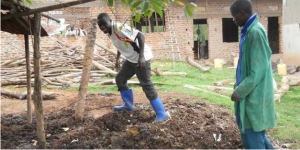
Standing in his coffee plantation in Bulerejje Parish, Muduuma Sub-county, Mr Ssendiwala points to the dark, fertile soil beneath his coffee trees as evidence of years of organic soil management.
“The strength and performance of a coffee plantation begins with the soil. When the soil is healthy, the coffee trees become stronger and more productive,” he told Monitor on Wednesday.
For Mr Ssendiwala, the journey towards organic farming was driven by concerns about declining soil quality and increasing production costs. Like many farmers, he once depended heavily on inorganic fertilisers.
However, over time, he noticed that maintaining soil fertility required increasingly higher quantities of chemical inputs. “I realised that chemicals alone could not sustain the soil for many years. Organic manure improves the soil structure and continues benefiting the crops for a long time,” he added.
Today, his coffee plantation depends largely on manure collected from pigs, goats and other livestock raised on the farm. According to him, goat manure is particularly valuable because of its long-lasting impact on soil fertility.
“Goat manure remains active in the soil for many years and continues nourishing plants. It is one of the best organic fertilisers a coffee farmer can use,” he said.
He added that pig manure is equally beneficial because it decomposes quickly and releases nutrients needed by crops. However, he cautions that farmers must apply it carefully. “If too much pig manure is applied in one area, it can damage crops. Farmers should use the correct quantities and ensure proper decomposition before application,” he explained.
One of the key lessons from Mr Ssendiwala’s farming model is the importance of integrating livestock and crop enterprises. His farm combines coffee, bananas and livestock production, creating a cycle in which waste from one enterprise becomes an input for another. Animal manure collected from pigsties and livestock shelters is processed and applied to coffee and banana gardens, reducing expenditure on purchased fertilisers.
Mr Ssendiwala estimates that manure from 10 pigs can adequately support one acre of farmland, while larger piggery enterprises can generate enough manure for extensive coffee plantations.
“If someone keeps 100 pigs on a 10-acre farm, there may be little need to buy manure from outside,” he said. The integrated approach is becoming increasingly popular among farmers seeking to lower production costs while improving environmental sustainability.
Agricultural experts say combining livestock and crop farming helps recycle nutrients, minimise waste and improve overall farm productivity. But in addition to manure, Mr Ssendiwala applies mulch around coffee trees to conserve soil moisture and suppress weed growth.
The combination of manure and mulching has helped his plantation remain productive even during periods of prolonged dry weather.
“When moisture is retained in the soil, coffee trees continue growing well even when rainfall reduces,” he said. Farmers in several coffee-growing districts report similar experiences. Many say trees grown in soils enriched with organic manure develop stronger root systems and maintain healthier foliage than those grown in depleted soils.

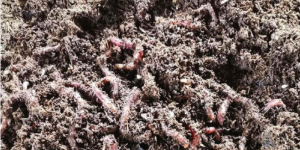
Agronomists explain that organic manure supports beneficial microorganisms that improve nutrient availability and overall soil biological activity. These organisms play a critical role in maintaining healthy ecosystems that support crop growth. Over the past few years, high coffee prices have encouraged thousands of farmers to establish new plantations or expand existing gardens.
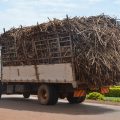
As a result, manure has become an increasingly valuable commodity. In livestock-keeping areas, traders now purchase truckloads of cow dung and transport them to coffee-growing districts where demand remains high throughout the year. What was once considered waste is now generating additional income for livestock farmers.
Many cattle keepers say manure sales have become an important supplementary enterprise.
“People used to collect manure for free. Today, buyers come looking for it and are willing to pay cash,” Mr Moses Kafeero, a livestock farmer at Kasubikamu Cell, Bongole Ward in Buwama Town Council, said.
The demand typically rises during planting seasons and periods of prolonged dry spells when farmers seek to improve moisture retention in their gardens. But while organic manure offers numerous benefits, increasing demand has also pushed prices upwards.

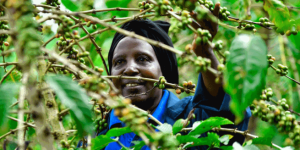
Coffee farmers who do not own livestock are often forced to purchase manure from external suppliers, adding to production costs. Mr John Ssekindi, a coffee farmer at Wassozi Cell, Nabusanke Ward in Kayabwe Town Council, said acquiring sufficient manure is exceedingly expensive.
“Buying the cow dung is one thing, but transporting it to the farm and paying labourers to apply it adds significant costs,” he said.
According to him, a two-acre coffee plantation may require several truckloads of well-decomposed manure depending on soil conditions and the age of the coffee trees. Despite these costs, many farmers continue investing in organic fertilisers because of the long-term benefits. They argue that healthier soils ultimately lead to improved yields and higher profits.
Mad rush for cow dung in Ankole
Cow dung is becoming an unusual item that has recently attracted a lot of demand in the sub-region. In September 2024, Kiruhura District instructed its sub-county chiefs and town clerks to start collecting cow dung loading fees. The then chief administrative officer, Mr Charles Kiberu, argued that the move was intended to enhance local revenue.
“It is good that the Kiruhura leadership has identified this source of revenue, there are many lorries that are taking cow dung from the district. There is nothing special with taxing cow dung, we are doing this like we are doing with other identified sources of revenue like cattle loading,” Mr Kiberu said then.
In Mbarara City, Mr Vincent Mugabe, the city’s agricultural officer, said farmers are rushing for cow dung because it’s organic and convenient in application.
“Farmers are using cow dung, even goats and sheep droppings because they see it as purely organic. There are no chemicals, which at times they doubt of its possible negative effects to the soils. But it is also more convenient to apply than fertilisers that require lots of precautions like measurements and safety,” added Mr Mugabe.
But he warned that as farmers rush for cow dung they have to be cautious because the application of it randomly has negative effects on soils.
“With the increasing demand, extension workers need to come in and offer guidance because cow dung may affect the soil PH, also some cow dung has no nutrients required because it is mishandled at the source. For example, it should be covered as it decomposes to stop it from losing some nutrients like nitrogen,” advised Mr Mugabe.
Mr Suleiman Muhoozi , a farmer in Ibanda District, said animal droppings do not have the same prices, indicating that goat’s droppings are more expensive than for cows. He said a Forward truck of cow dung goes for Shs270,000, while an Elf tipper costs Shs170,000. For goat/sheep dung, it is Shs290,000(a Forward truck) and Shs200,000 for a (Elf tipper), he said.
Mr Muhoozi explained that these costs do not cover transportation, a farmer has to meet those costs separately. According to our findings, to have a truckload of cow dung delivered at your farm, one has to part with between Shs500,000 to Shs700,000 in Isingiro District, while in Mbarara, it costs Shs400, 000.
Agricultural experts such as Mr Valentine Ssekivuuvu, the Mpigi District senior agriculture officer, and Mr Emmanuel Mutebi Jjuuko, the Mpigi District agriculture officer, support this integrated approach. They say organic manure enhances soil structure, water retention and microbial activity, while inorganic fertilisers supply readily available nutrients required for rapid plant growth.
Goat dung versus cow dung
Among coffee farmers, discussions frequently arise about which type of manure offers the greatest benefits. Agronomists note that different manures possess varying nutrient compositions. Goat manure is generally regarded as nutrient-rich because of its relatively high concentrations of nitrogen and potassium. It is also less bulky and decomposes relatively quickly.
Cow dung, however, remains the most widely available organic fertiliser in Uganda. Its abundance makes it easier to obtain in large quantities, particularly in livestock-keeping areas. Agricultural extension officers say cow dung contributes substantial amounts of organic matter that improve soil texture and water-holding capacity.
“Each type of manure has strengths. The most important factor is ensuring that the manure is properly decomposed before application,” Mr Ssekivuuvu said.
With Uganda’s coffee industry continuing to expand, demand for sustainable soil fertility management practices is expected to grow. Government agencies, researchers and agricultural extension workers continue encouraging farmers to adopt methods such as composting, mulching and manure application. These practices are seen as critical for maintaining long-term productivity in coffee-growing regions.
For livestock farmers, the growing demand has created a new income stream. For coffee growers, it has become an important tool in the quest for sustainable productivity.

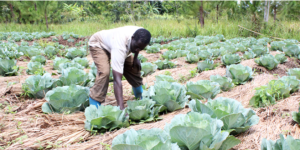
While agriculture is the backbone of Uganda’s economy and employs more than 65 percent of Ugandans and feeds more than 80 percent of the country’s industries with raw materials, most farmers practice it without any training, something that has limited their opportunities of transiting from subsistence farming to large scale merchandised commercial agriculture.
Compiled by Al Mahdi Ssenkabirwa, Sadat Mbogo, Rajab Mukombozi & Jovita Kyarisiima
Source: monitor.co.ug
Related posts: