NGO WORK
Oil about to flow but 2010 evicted Balaalo wait for compensation
Published
4 months agoon

As Uganda races toward first oil production, promises of economic transformation are colliding with unresolved grievances from the country’s oil frontier.
In Buliisa, hundreds of Balaalo pastoralists forcibly evicted in 2010 remain uncompensated, excluded from the prosperity built on the land they once bought. Enos Mubangizi remembers being woken at 5 am in December 2010, hearing hundreds of gun-wielding soldiers and police outside, rounding up cows from his family kraals and those of his neighbours.
Local pastor Stephen Mugisha, a respected pillar of his community, received a call just a day before from then-coordinator of Uganda’s national intelligence Gen David Sejusa. Sejusa informed the pastoralists that the Ugandan army was evicting all the families and their cows from their land.
“We were the only family in the area that had a bungalow, and it was demolished,” Mubangizi says, a member of the Balaalo pastoralists who also lost cows and land.
Code-named Justice, an estimated 640 families were forced out, and 20,000 head of cattle were taken. For the Balaalo people, a nomadic pastoralist group spread out in the South, Western, and Northern parts of Uganda, cows make up most of the family wealth.
The 20,000 cows were mixed, and their owners could no longer identify them. A few managed to rescue their livestock but no longer had land to graze them. The cows who were mixed in the big herd died from a lack of pasture and water. Others were sold off cheaply, sometimes for less than Shs 50,000 ($14).
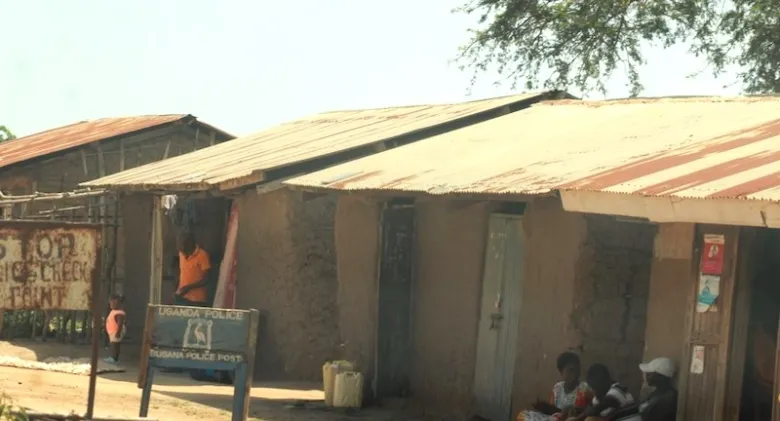
Mugisha had set up a primary school and laid the foundation for what he envisioned as a mega church. He lost all of it. Another pastor, Sam Tumwine, built a house that is now occupied by police.
“I wonder who the police are paying rent to,” he says.
When contacted, the police refused our request for comment. The parcels of land in Buliisa district targeted for eviction had become nationally significant – the site of oil discovery in 2006, and where much of the production infrastructure was installed – in a race to start extracting the country’s “black gold” by the end of 2026.
The new oil frontier turned neighbours into enemies – and the question remains whether anyone was held accountable for the devastating evictions. Almost 15 years later, Mubangizi and the hundreds of other violently evicted herdsmen say they are still counting their losses and waiting for compensation.
Conflict over land and oil-era property claims
When oil was being surveyed by Tullow Oil, a multinational UK-headquartered oil and gas exploration company, Mugisha says they asked the geologists if their cows would be allowed to continue grazing, and they were reassured this was fine.
The conflict between pastoralists and the local community started in 2007, less than a year later. Oil discovery had an immediate impact on the community: suddenly, people saw value in land and raced to transform it from a communal to an individual land tenure system.
As land values rose, disputes emerged over whether some sales of customary land were valid under local tenure arrangements. At the time, Buliisa was an extremely rural community, whose life was still communal, including land ownership.
Land possessed little value, costing about Shs 50,000 per acre at the time of Uganda’s confirmation of commercial oil discovery in 2006. District chair Fred Lukumu said he regarded some transactions as invalid because, in his view, sellers lacked exclusive title.
“It was an illegal transaction because people were selling what did not exclusively belong to them,” Lukumu said. “They were never verifying… just paying whoever told them land was theirs,” he adds.
Buliisa subcounty chairperson Kabagambe Kamanda doesn’t dispute the claim that pastoralists had bought land; rather, how the acquisitions were documented and understood locally.
By 2003, the numerous pastoralists who had come to graze cattle had started buying land. Pastoralists said they had consulted community members who informed them that they had the right to purchase and own property. Kamanda claimed that some buyers took advantage of weak land documentation and low public awareness of land law; pastoralists dispute that account.
He claims that, in some cases, acreage recorded in sale paperwork did not match what sellers believed they had agreed to. Frederick Watume, who was vice chairperson of Buliisa sub-county at the time, said some agreements brought to him lacked details he considered necessary, including acreage.
Though the herdsmen were trying to follow the law by ensuring that their land purchase agreements were stamped by local council leaders, the land purchase agreements brought to him for signing were defective.
“They would say, mukongolo (natives) sold land to such mulaalo (herdsmen), no acreage. Nothing,” he said in an interview.
“I warned them that in future, you’re going to lose this land.”
The local community says the herdsmen, who did not fence their cattle, were destroying crops. Lukumu says people were facing food shortages and the pastoralists would even beat natives trying to chase cows from their gardens.
COMING TO BULIISA IN THE 1980S
The Balaalo herder families’ ordeal began in December 2010, but the story started 30 years before. The herders thought they found a happy ending in the Buliisa area after being evicted from government property that was later sold to Indian sugarcane growers.
Balaalo people who were looking for jobs in the 1980s had come to the Buliisa community to take care of cows, and would pay them with milk, says Bernard Barugahare, an elder from the village and former district community development officer.
“They [herdsmen] kept coming, increasing, and in the process, they sold milk and started buying cows,” Barugahare said.
He says it was these herdsmen who invited their fellow tribesmen to come to Buliisa at the beginning of the 2000s. Pastor Mugisha reiterates that the invitation was extended by natives in the area.
EMPTY-HANDED, EVEN AFTER FILING CLAIMS
From interviews with more than 40 people, including the pastoralists, residents, local leaders, and civil society members, oil was the main factor in the eviction of the Balaalo.
Local leaders in the area remember the names of evicted herders well, but when asked directly about properties left behind, they give vague answers. They insist the pastoralists were compensated by the government and should not make any claims.
“Anybody who did not come back to claim property up to now has no moral authority to make a claim,” says Kamanda Kabagambe, the chairperson for Buliisa sub-county, whose office is less than two kilometres from Tumwine’s former home.
“Since 2011, I don’t think anyone would have failed to claim if there was any destruction that was not legal.”
A local journalist who covered the pastoralist-native conflicts between 2007 and 2010 describes it as “a terrible eviction,” adding that “people lost everything”.
The journalist Stephen Kabindi followed up with those he had interviewed in subsequent years, who were living with relatives for over a decade. “They will never be the same,” he says.
On X, Gen Sejusa indicated that this evacuation was carried out under orders from the Ugandan cabinet. He headed the security arm, while then-prime minister Apolo Nsibambi headed the overall task force. “No property or life was lost,” he wrote.
TURNING A BLIND EYE?
The Tilenga project is operated by French petroleum giant TotalEnergies EP Uganda on behalf of a joint venture that includes the government of Uganda and state-owned China National Offshore Oil Company. TotalEnergies is the majority shareholder with 56.67% of the project.
The French oil company acquired a stake in Uganda’s oil project 14 months after the eviction. Since then, legal battles in Uganda have ensued as pastoralists seek justice that still evades them to today. TotalEnergies maintains that the government’s responsibility is in the hands of the Ugandan authorities.
“Land acquisition has been implemented on behalf of the Government of Uganda under an approved framework aligned with national law and international standards,” François Sinecan, a press officer at TotalEnergies, said.
“Challenges – such as absentee owners or overlapping claims – have been addressed through formal grievance channels and, if unresolved, referred to competent authorities,” he adds.
Juliette Renaud, senior campaigner at Friends of the Earth France, which sued TotalEnergies over rights violations in Uganda, said that Total should have assessed more fully the human-rights risks associated with oil development in the region.
“You can see these evictions in the oil region started before TotalEnergies came to Uganda and they didn’t do a proper risk assessment of the human rights violations that could be linked to the oil development,” she says.
Sinecan says all land acquisition for Tilenga follows rigorous due diligence under The Land Acquisition Resettlement Framework (LARF) and Resettlement Action Plans (RAPs).
‘NOT INTERESTED IN OIL’
Politics too played a role in the eviction as local politicians warned the ruling party, including President Museveni, of their waning popularity if they failed to evict the Balaalo pastoralists, who share a close connection to Museveni’s pastoralist Bahima community.
After the oil discovery, a suspicion ran through local crop farming communities – who made up a large majority of the residents – that the second wave of pastoralists, who arrived in the area at the turn of the century, had come to steal their oil.
“The politicians started spreading false information that we had occupied local people’s land that had oil,” Mugisha says, adding, “as [cattle] herders, we were not interested in oil.”
Stephen Biraahwa Mukitale, a former member of parliament of Buliisa county who played a central role in pushing the government to evict the pastoralists, says he has never had a doubt that these pastoralists migrated to the area because they had prior knowledge about oil. He describes them as being fronts of powerful people who wanted to grab local people’s land.
“The locations where they went to in 2003, 2004 and 2005… the oil prospecting had started only to find out that all the oil wells and the pipeline as confirmed today are the very areas where these people had chosen to be,” Mukitale says, referring to the pastoralists. In interviews, other politicians in the Buliisa community who rallied for the eviction used terminologies like, “maybe”, “we suspect,” “we believe” in arguing that the herdsmen had prior knowledge.
HIGH COURT JUDGEMENT, BUT STILL NO RELIEF
Although there was a push for the pastoralists to be evicted after oil was discovered in 2006, the Balaalo fought it in court for four years, halting the process. In a 2013 high court judgment in a land case filed by the evicted pastoralists, Judge Ralph Ochan described their eviction as an “unlawful and a gross violation of rights” as provided for in Uganda’s constitution and other international instruments.
“The Balaalo were, on the evidence on record, violently and brutally evicted without any lawful orders of this or any other court,” wrote Judge Ochan. In the judgment, he took note of public rhetoric and demagoguery by political leaders in Buliisa district that stoked up anti-Balaalo sentiments.
Ordering the return of the pastoralists to “land they acquired through lawful purchase would in all probability lead to grave social unrest”, according to Ochan.
These reporters were shown a land purchase agreement that the herdsmen had signed with the locals, showing clear details of the land they had purchased and duly signed by all parties.
It is part of the evidence that had been presented in court and that their lawyers continue to assert while seeking compensation. The pastoralists reject the accusations of bad blood between them and the local communities, arguing that they had forged a good relationship.
“The locals loved us a lot; they never fought us. We were a united community. It’s politics that killed the good relationship and led to the eviction,” says pastoralist Mubangizi.
FORGOTTEN IN OIL COMPENSATION
The process of assessing, valuing, and acquiring land for oil projects began around 2015, and compensation for pastoralists was left out of the equation. While government officials interviewed acknowledge the “pastoralists question”, they argue that their case happened long before the land acquisition and compensation process. They further claim that a rigorous, multi-layered process ensured that compensation money was given to the rightful owners.
“For us, this process didn’t look at the particularity of the Balaalo. It looked at ownership. The Balaalo issue was 2010; the compensation was for 2019/20,” Ali Ssekatawa, director of Legal and Corporate Affairs at the Petroleum Authority of Uganda (PAU), said in an interview.
“If someone had been removed in 2010, is no longer on the ground, and there is no evidence, then there was no legal basis to be paid. If that person had a title that hadn’t been cancelled and was genuine, then that person was one of those who were paid,” he adds.
The ministry of Energy and Mineral Development, in a written response, said the 2010 eviction of the Balaalo pastoralists was a complex issue rooted in long-standing land disputes between the pastoralists and indigenous communities.
The ministry says it remains focused on its role in facilitating oil exploration and development within the broader government framework.
While the energy ministry described the eviction as a government decision based on court orders and efforts to address illegal occupation and escalating ethnic tensions, it acknowledges that it played a role in the process.
“The ministry supported the overarching government effort to enforce existing land laws and create an enabling environment for oil activities, while working with other relevant ministries to address the underlying land tenure issues. Our focus was on ensuring that any land acquired for oil development was done legally and with due process, within the context of these pre-existing disputes,” the ministry says.
DISPUTE OVER BLAME FOR ABUSES
Nicholas Opiyo, a human rights lawyer who documented the 2010 eviction, says oil companies, under the UN Guiding Principles on Business and Human Rights, have an obligation to ensure their investments do not lead to the abuse of affected communities’ rights.
Opiyo says oil companies benefiting from the project should bear a share of responsibility for harms suffered by affected communities.
“It’s clear that Total, Tullow and other companies hid behind the government to avoid responsibility, in some cases subcontracting their roles to private companies,” he said.
“They owe a duty of reparation and restitution to those communities. They can’t run away from those obligations.” A spokesperson for Tullow said the company “operates in strict accordance with all applicable international laws and regulations” and always seeks to “uphold the highest standards of ethical conduct and respect for human rights” in all its operations.
At a May 2025 conference that brought together civil society organisations, oil companies and government officials to discuss social and human rights issues in Uganda’s oil and gas sector, TotalEnergies EP Uganda General Manager Philippe Groueix said the Uganda project has become the most scrutinised project in the world.
“I would like to hear from the people themselves. To express that they have been positively impacted is not for us to decide; it’s up to them to share that their life today is better than before, and better than it would have been without the project,” Groueix said.
In a 2020 study, the World Bank estimated that Uganda could earn $800m per year, becoming a linchpin for economic transformation. But for the forgotten pastoralists, they believe that their future is doomed because of the oil.
When we arrived at the home of Mugisha on a sweltering afternoon, he was reluctant to revisit the ordeal his community had endured over the past 15 years as they sought justice. He thought speaking to strangers was pointless, as it would not bring a resolution.
Eventually, he spoke. For nearly an hour, he recounted what the eviction had meant for them, their immense losses and the suffering they had endured since.
“We are now very poor. We didn’t know that until now a person could find himself with nothing,” he said.
Source: observer.ug
Related posts:

‘Oil is a curse’: villages in Uganda face land ownership uncertainty
Tears Flow As Residents’ Livelihoods Are Forcefully Taken By Rich Man
Pushing back: The EACOP victim community rushes to court seeking reinstatement onto their land and compensation.

Former Benin PM to assess oil land compensation in Uganda

You may like
NGO WORK
As World Bank Holds Annual Meetings, 84,000 Tanzanians Call for Justice
Published
1 week agoon
October 15, 2026
Oakland, CA – As the World Bank convenes its Annual Meetings in Thailand this week, the accountability of the institution is entirely omitted from the agenda. Yet, its lack of accountability to the millions of people displaced or harmed by its programs around the world has never been more appalling.
The Bank claims that recent 2026 reforms would strengthen its accountability mechanism, but the facts show a total disregard for the devastation it has caused. In Tanzania, it has failed to act on damning findings from its own Inspection Panel – whose investigation detailed systemic violations of its own Operating Procedures and a “critical failure” in project planning and supervision, leaving local villagers to continue bearing the brunt of harsh, unmitigated serious harms.
Between 2017-2024, the World Bank poured over US$100 million into REGROW, doubling the size of Ruaha National Park in Southern Tanzania and funding the paramilitary park rangers (TANAPA) implicated in egregious human rights abuses – including killings and forced disappearances. Following an independent investigation, the project was officially cancelled.
“The park expansion effectively criminalized over 84,000 people on their own land, stripping them of their livelihoods by barring essential farming and grazing. The Bank’s REGROW initiative turned poor villagers into targets for park rangers. Despite clear evidence that the devastation it unleashed continues today, the Bank has completely failed to provide redress, compensate or support the communities whose lives it upended,” said Anuradha Mittal, Executive Director of the Oakland Institute, who represented villagers in their complaint to the Inspection panel.

In April 2025, ignoring community demands for reparations and the return of land, the Board approved a largely insufficient and inadequate Management Action Plan (MAP). On September 4, 2026, the Bank officially “closed” the REGROW case after deeming all actions in the MAP had been completed.
“The World Bank has destroyed our lives. Since the project started, rangers have killed or disappeared 18 of us. We are banned from farming our lands and grazing our livestock. Thousands of our cattle were confiscated. We are still waiting for justice and reparations for our losses. How can the World Bank walk away after being found responsible for this catastrophe?” said a local villager who filed the initial complaint.
Today, despite the Bank’s assertions that livelihoods could resume, many farmers remain barred from their fields, and pastoralists face continuous threats and fines for grazing cattle. The international spotlight that the Institute put on the dire situation has brought a halt to fatal shootings by TANAPA rangers since May 2025 – a grim baseline for “progress” from a paramilitary force that has terrorized communities since the Bank bolstered their capacity. The families of those murdered by TANAPA, including 27-year-old Hamprey Mhaki and 20-year-old Kulwa Igembe, continue to be denied justice.
“The Inspection Panel presented undeniable evidence of the Bank’s wrongdoings, yet the Bank’s Board and senior management refused to take responsibility. Affected communities took monumental personal and collective risks to expose these abuses, offering the Bank every opportunity to correct course. Instead, management turned its back on the very people it harmed – leaving a permanent stain on the institution’s credibility. The Oakland Institute will continue to stand with communities in their fight for justice,” concluded Mittal.
The World Bank’s expanding accountability crisis is further deepened by its decision to join the Trump-established Board of Peace (BoP) for Gaza, proactively enabling impunity for crimes against humanity and genocide. By joining the BoP, the Bank directly violates its own mandate and policies, international humanitarian law and decades of UN General Assembly Resolutions. Furthermore, the move defies provisional orders and advisory opinions from the International Court of Justice (ICJ) and rulings from the International Criminal Court (ICC).
Source: oaklandinstitute.org
Related posts:
Communities Under Siege: New Report Reveals World Bank Failures in Safeguard Compliance and Human Rights Oversight in Tanzania
The World Bank Must Be Held Accountable for Harm Inflicted on Tanzanian Communities by Tourism Project
Campaign Victory: World Bank Suspends Funding for REGROW, a Conservation Project Responsible for Evictions & Human Rights Abuses in Tanzania
NGO WORK
Tanzanian Government Abducts Maasai Villagers in an Unconscionable Attack on Indigenous Land Defenders
Published
2 weeks agoon
October 13, 2026
- Human rights conditions in northern Tanzania have deteriorated sharply since August, as the Tanzanian government carries out a coordinated campaign of violence and arrests against the Indigenous Maasai.
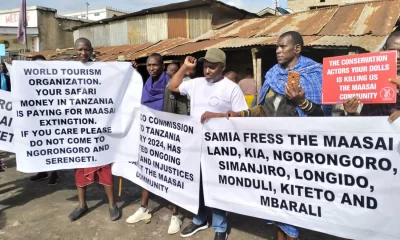
- In Ngorongoro, five Maasai were arrested last week; Over 30 community members have been arrested over the last two months; In neighboring Loliondo, thousands of livestock have been confiscated.
- The government is pressuring Maasai to leave the area to reach its goal of expanding the number of safari tourists and trophy hunters to eight million by 2030.
- The last arbitrary arrests unfolded in Arusha as Tanzania hosted the 153rd Assembly of the Inter-Parliamentary Union, centered on the theme of “enhancing good governance and empowering communities through inclusivity, trust and opportunities for all.”
Oakland, CA – On the night of October 6, the Tanzanian government forcefully abducted five Maasai men, Nangei Meitaya, Salangat Makko, Ezekiel Kishau, Dickson and Thadeus Clamian, holding them under arbitrary detention at the Arusha Central Police Station. While the individuals were released the following night, these targeted arrests are a dangerous escalation in the government’s systemic oppression of the Indigenous Maasai people.
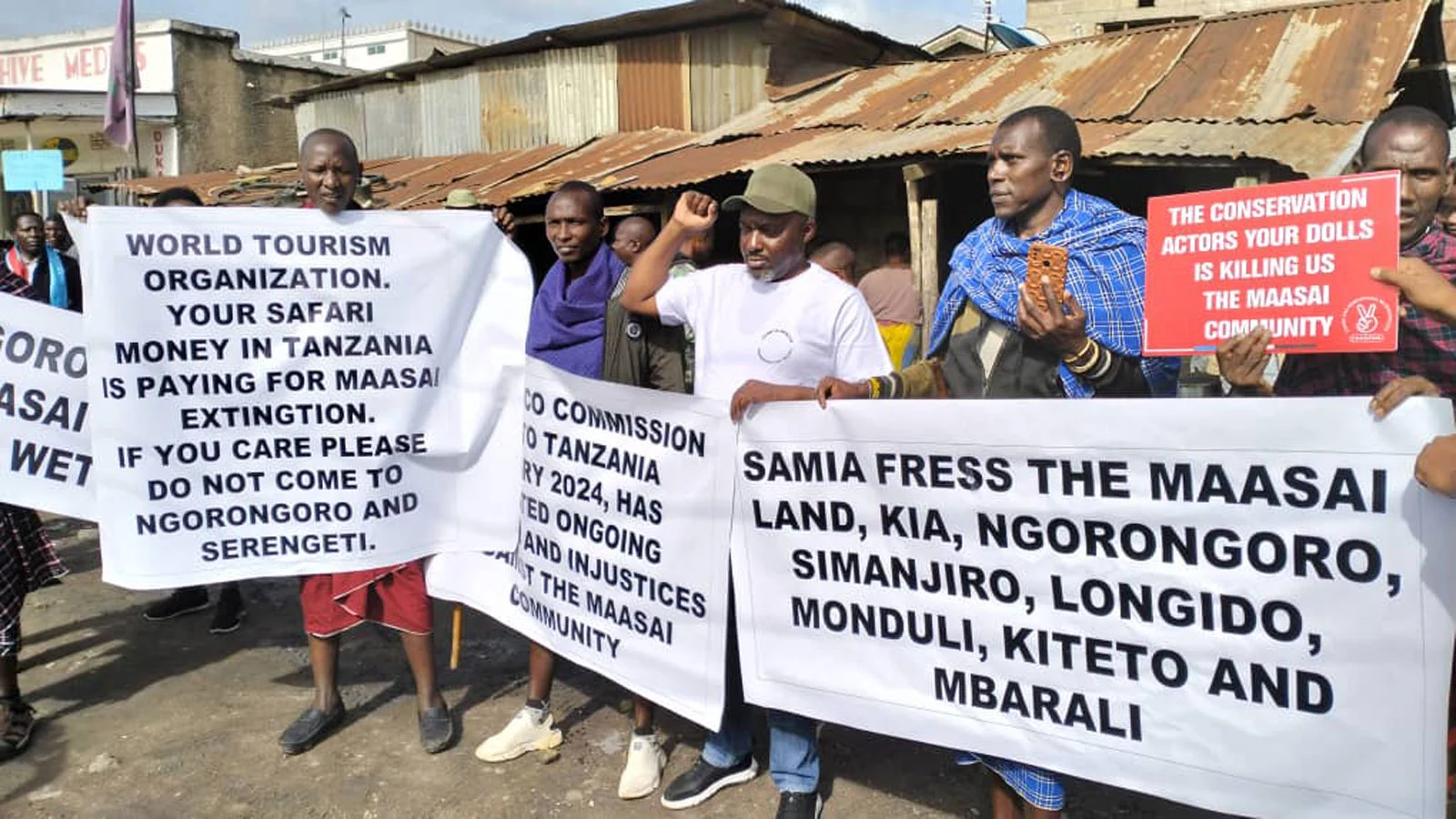
Since August, human rights conditions in northern Tanzania have worsened sharply as the state carries out a wave of coordinated violence and arrests against the Maasai. In the Ngorongoro Division, authorities have detained more than 30 community members, while confiscations of livestock have intensified in neighboring Loliondo. Local advocates state these actions are part of a systemic campaign to suppress peaceful dissent and dismantle civil society, through economic restrictions, intimidation, and unlawful incarceration of Maasai pastoralists.
“Far from being an isolated incident, this is a calculated campaign of intimidation. Driven by its goal to attract eight million safari tourists by 2030, the Tanzanian government is escalating pressure to evict the Maasai from their ancestral lands. As a result, community leaders have been driven into hiding once again, describing a rapidly deteriorating situation across the region,” said Anuradha Mittal, Executive Director of the Oakland Institute.
While detained, the victims were deprived access to their families or legal counsel. Four of those arrested are employees of the Pastoral Women’s Council (PWC), a local NGO dedicated to the “sustainable empowerment of Indigenous pastoralist women and girls in northern Tanzania.” Furthermore, authorities searched the homes of other staff members without due process.
“The abduction and subsequent detention of our community members is one of the many incidents of lawless targeting of the Maasai people in Ngorongoro – a deliberate campaign to instill fear and censorship, designed to make state dispossession and displacement easy. When a regime normalizes abductions and uses public hospitals as hunting grounds, it reveals a complete breakdown of common sense and basic humanity,” said Joseph Moses Oleshangay, a prominent Maasai human rights lawyer and activist from the Ngorongoro District in Tanzania.

The arbitrary arrests unfolded in Arusha as Tanzania hosted the 153rd Assembly of the Inter-Parliamentary Union, centered on the theme of “enhancing good governance and empowering communities through inclusivity, trust and opportunities for all.” This international gathering of parliamentarians from around the world comes a year after the rigged October 2025 national elections, during which the security forces violently suppressed pro-democracy demonstrations and killed thousands of civilians. Meanwhile, in March 2026, President Hassan accepted recommendations from sham land commissions advocating for the widespread eviction of Maasai communities from their ancestral lands in the Ngorongoro Conservation Area (NCA) and Loliondo.
The government plans to drastically reduce Maasai presence in the NCA to expand safari tourism and trophy hunting. To pressure residents to leave, the government has stopped basic medical, education, and water services while restricting access to grazing land for pastoralists. Massive mobilizations by the Maasai against this forced resettlement have exposed the government’s lie that people are leaving willingly.
“As international visitors plan safari tours to Tanzania, they must recognize that tourism revenues are inadvertently financing the government’s violent attack on Maasai communities whose ancestral lands are being stolen in plain sight,” concluded Mittal.
Source: oaklandinstitute.org
Related posts:

Justice Denied: East African Court of Justice Grants Tanzanian Government Impunity to Trample Human Rights of the Maasai
Tanzanian Government’s Sustained Campaign Against the Maasai in Loliondo and the Ngorongoro Conservation Area

Call to Sever Ties with Tanzanian Government Over Latest Human Rights Abuses Against the Maasai

NGO WORK
Global Scramble for Minerals Wages War on People and Planet
Published
2 months agoon
August 28, 2026
Last week, 54 members of Congress called for transparency and stronger protections for labor rights, human rights, and the environment in the Trump administration’s critical minerals deals. The Oakland Institute had been advocating towards Congressional representatives, urging them to sign the letter to the administration.
But what is really driving the global race for minerals?
Our new report, RUSH: Global Scramble for Minerals Wages War on People and Planet, has debunked the claim that massive new mining is necessary to address the climate crisis. More than 70% of current mineral demand comes from industries outside of the energy transition, including the military, automotive, aerospace, and technology sectors. The report, instead, exposes the prevailing cronyism of the US administration, with companies linked to the families of Donald Trump and Commerce Secretary Howard Lutnick profiteering from US mineral deals.
What is driving the global mining boom? What is at stake?
| Read the report |
Source: oaklandinstitute.org
Related posts:

The Great “Green” Heist: When Artificial Intelligence and Arms Dealers Seize the Minerals of the South
Human rights defenders & business in 2022: People challenging corporate power to protect our planet.
U.S. Peace Efforts in the DRC: Protecting Communities or Minerals?

Peruvian communities have launched a global petition to halt a mining project they say threatens the water supply of over 10 million people.
Environmental and human rights advocates are urging the world to hold global investors accountable for their actions.
Why are secure land rights key to Africa’s climate resilience and the protection of its natural treasures?
Biodiversity Goals: The world has no time to meet its 2030 goals.
Lands Ministry tightens rules for replacing lost titles, gives landowners 30 days to object
Lango ex-combatants count losses after dry spell destroys maize harvest
Five years after Uganda’s National Action Plan on Business and Human Rights, are local communities hosting land-based investment projects seeing change?
Tanzanian Government Abducts Maasai Villagers in an Unconscionable Attack on Indigenous Land Defenders
The global race for clean energy minerals is leaving communities grappling with conflicts and human rights abuses, a new report reveals.
Innovative Finance from Canada projects positive impact on local communities.
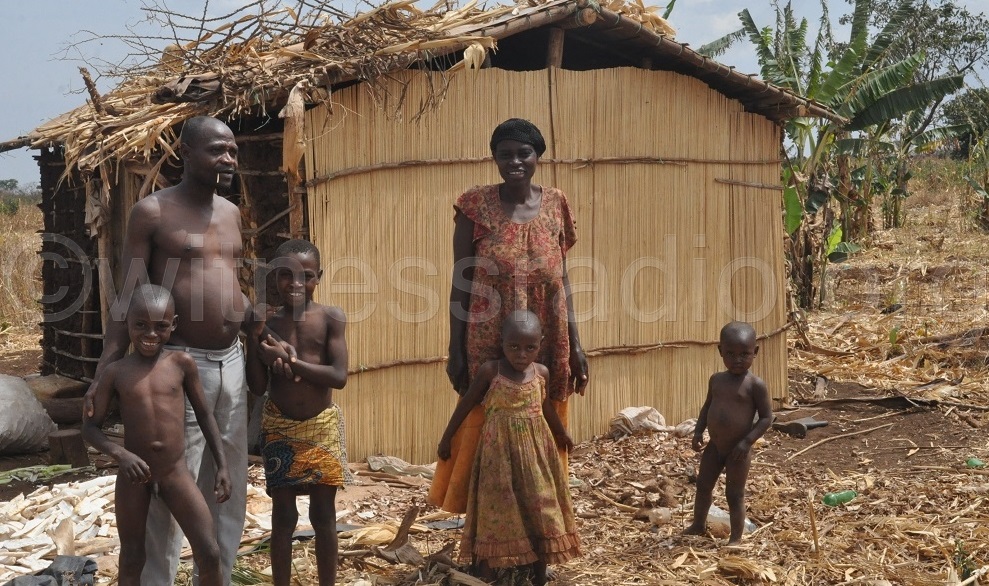
Over 5000 Indigenous Communities evicted in Kiryandongo District

Petition To Land Inquiry Commission Over Human Rights In Kiryandongo District

Invisible victims of Uganda Land Grabs
Resource Center
- CAN AFRICAN FOOD SYSTEMS THRIVE WITHOUT CHEMICAL FERTILISERS
- Land And Environment Rights In Uganda Experiences From Karamoja And Mid Western Sub Regions
- REPARATORY AND CLIMATE JUSTICE MUST BE AT THE CORE OF COP30, SAY GLOBAL LEADERS AND MOVEMENTS
- LAND GRABS AT GUNPOINT REPORT IN KIRYANDONGO DISTRICT
- THOSE OIL LIARS! THEY DESTROYED MY BUSINESS!
- RESEARCH BRIEF -TOURISM POTENTIAL OF GREATER MASAKA -MARCH 2025
- The Mouila Declaration of the Informal Alliance against the Expansion of Industrial Monocultures
- FORCED LAND EVICTIONS IN UGANDA TRENDS RIGHTS OF DEFENDERS IMPACT AND CALL FOR ACTION
Legal Framework
READ BY CATEGORY
Newsletter
Trending
-
NGO WORK2 weeks agoTanzanian Government Abducts Maasai Villagers in an Unconscionable Attack on Indigenous Land Defenders
-
MEDIA FOR CHANGE NETWORK1 week agoWorld Food Day 2026: Building healthy diets means reimagining how we grow, share, and enjoy our food.
-

MEDIA FOR CHANGE NETWORK2 weeks agoCourt remands 10 anti-oil activists as suspect collapses in dock
-
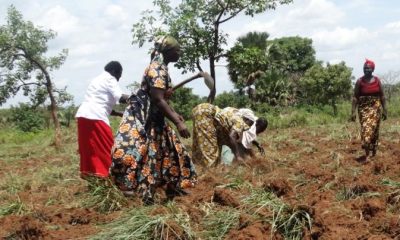
MEDIA FOR CHANGE NETWORK1 week agoInternational Day of Rural Women : Rural women farmers deserve not only equal rights and access to resources, but also the strength and voice to safeguard Mother Nature.
-
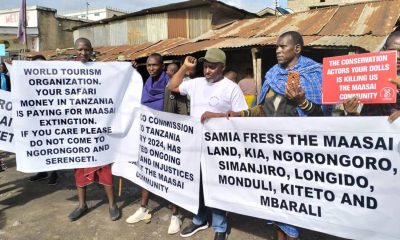
MEDIA FOR CHANGE NETWORK1 week agoDefending ancestral land comes at a steep price as Maasai communities in Tanzania face relentless, mounting pressure.
-

MEDIA FOR CHANGE NETWORK1 week agoAs waves of investment sweep across Uganda, countless women rise to defend their land, safeguard their traditions, and claim their right to be heard.
-
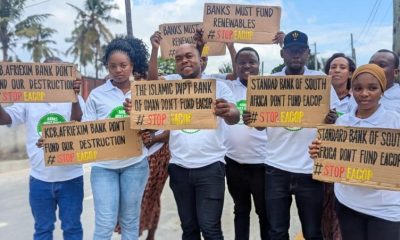
MEDIA FOR CHANGE NETWORK2 days agoEnvironmental and human rights advocates are urging the world to hold global investors accountable for their actions.
-

NGO WORK1 week agoAs World Bank Holds Annual Meetings, 84,000 Tanzanians Call for Justice