MEDIA FOR CHANGE NETWORK
EACOP: Uganda sues to evict landowners standing in way of regional pipeline
Published
2 years agoon

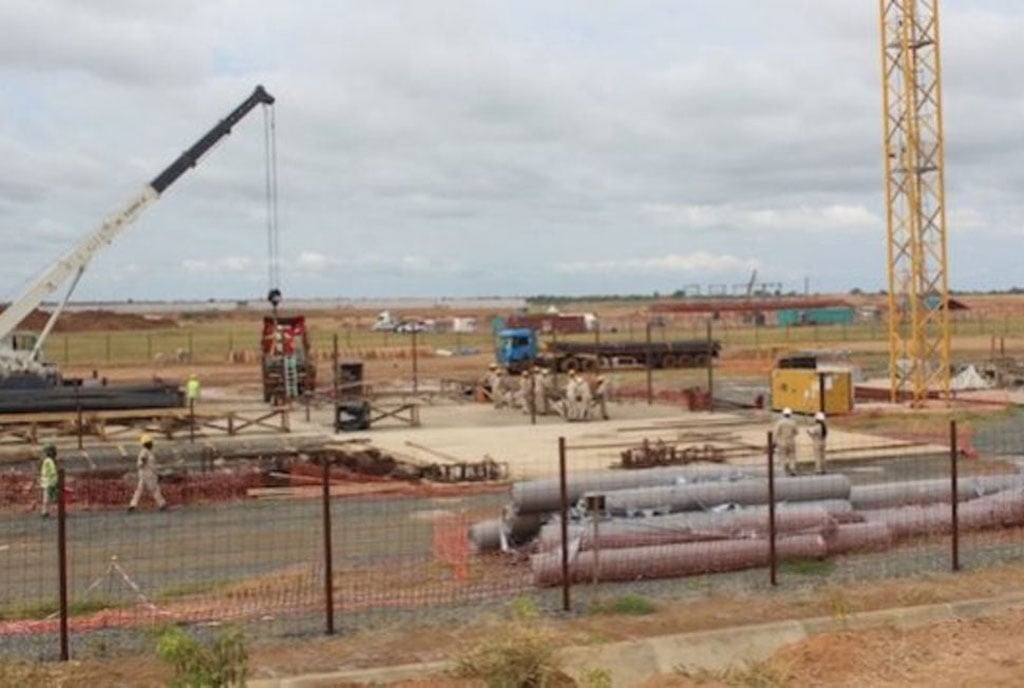
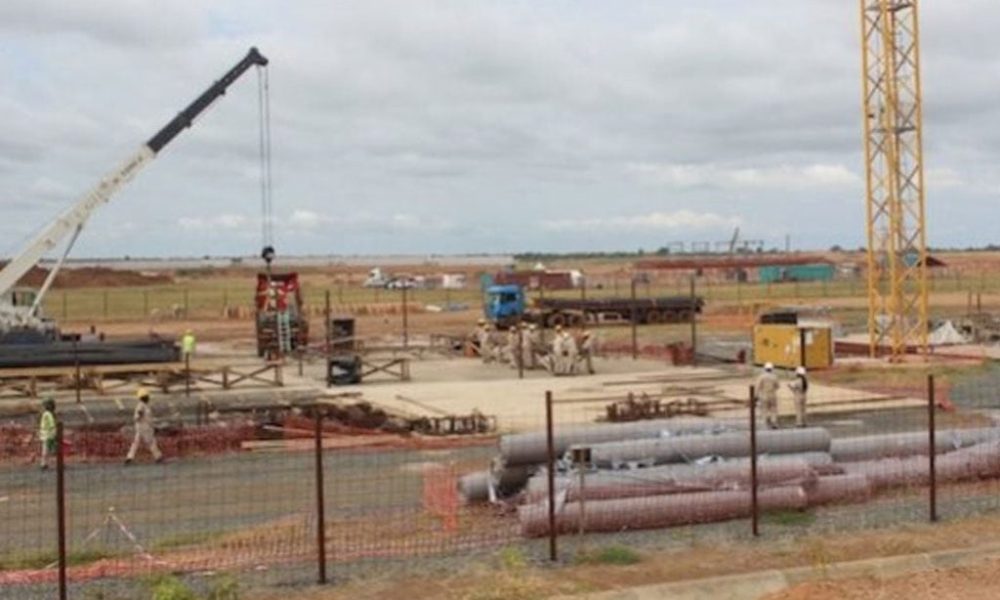
Works at the Tilenga Development Project operated by TotalEnergies. Some landowners object to what they consider forced evictions with inadequate compensation. PHOTO | IPS
Uganda’s government is in a legal tussle with 112 landowners who are set to be displaced by the East African Crude Oil Pipeline (Eacop) as low-value payment, absentee landlords and a complex landownership system in some parts of the country delay compensation, causing a headache to the project developers.
Because of this, a Ugandan court will on September 16, 2024, hear a case in which the government has sued 80 people, seeking to evict them from their land in three districts within the Greater Masaka region on the route of the Eacop, whose developers are racing against time to meet the timelines set for the country’s first oil exports next year.
This week, two similar cases were also heard featuring landowners in Hoima and Kyankwanzi districts, which are part of the 296km Eacop stretch in Uganda, where at least 32 absentee landowners and others who rejected low-value compensation pose significant delays.
Energy Minister Ruth Nankabirwa, while addressing the media in Kampala last month, acknowledged the 112 cases “under consideration for compulsory land acquisition due to issues such as untraceable individuals, landowner disputes, refusal of compensation offers, and lack of legal title.”
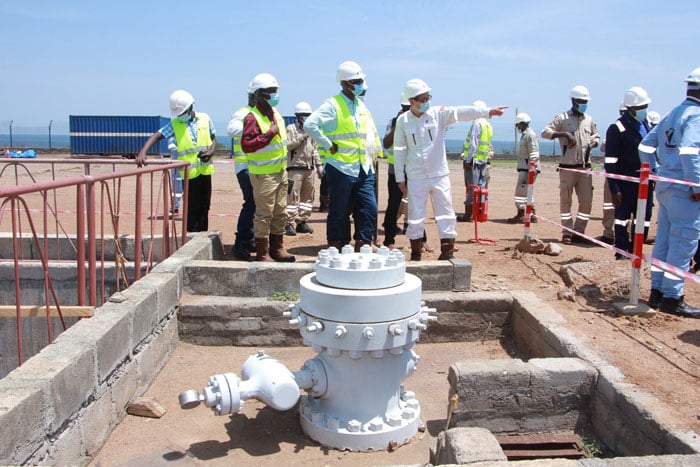
Eacop officials told The EastAfrican that the project is entering a critical stage to start laying the pipeline, with early civil works almost complete.
Works on the 12 main camp persons yards (MCPYs) and six pump stations are ongoing, while the coating plant in Tanzania was commissioned in March, and 700km of line pipe has already delivered in Tanzania.
“Early civil works are ongoing in both Uganda and Tanzania,” Ms Nankabirwa said.
“In Uganda, work has been completed at three of the five MCPYs located in Hoima, Kakumiro, and Sembabule districts, while work continues at the MCPYs in Mubende and Kyotera districts.”
Stella Amony, communication lead at Eacop Ltd, the special purpose vehicle that is managing operations of the $5 billion project, said the first consignment of coated pipe “is to arrive in Uganda this month.”
But the pace of clearing the 1,443km Eacop route has been slower and dispute-ridden on the Uganda side, which is the shorter strict of the corridor, with only 96 percent of project-affected persons (PAPs) in the country having received compensation, compared with 99 percent in Tanzania.
The pipeline corridor spans 2,740 acres across 296km in Uganda, with 3,660 PAPs, while in Tanzania, it covers 10,081 acres across a distance of 1,147km, with 9904 persons eligible for compensation.
As the hearing of these lawsuits seeking to evict the landowners kicks off, some of the affected people who were sued for lacking a legal standing or a representative to process their families’ compensation have blamed their woes on NewPlan, the firm that was hired to implement the Eacop resettlement action plan.

Sarah Namatovu, for instance, says her family was sued for lacking a legal representative or letters of administration to the estate after the rightful landowner died, and this required processing of a death certificate, which the resettlement action plan contractor promised to pursue.
“NewPlan came to our home in 2018 and informed us that the death certificate we have was not fit for purpose. This is because the certificate was not issued by the National Identification and Registration Authority,” she explained.
“NewPlan promised to support us to acquire the right death certificate so that we could process letters of administration and get compensation, but they never did. The next thing we heard is that we had been sued because we rejected compensation, yet we did not.”
Activists say the majority of the landowners are women, the elderly, and persons with disabilities, who could become homeless if the courts grant the government’s prayers to evict the PAPs, with the government to blame for their failure to receive compensation arising from a complex land tenure system in parts of Uganda.
For instance, Peter Arinaitwe, a lawyer who represents some of the affected people in court, explained that government years ago directed the Administrator-General to stop issuing certificates of no objection and letters of administration for estates under Buganda Kingdom.
“The affected estates are those under the Succession Register in Buganda Kingdom. Matters relating to those estates are supposed to be administered by the kingdom,” he said, adding that because of that directive, it has been difficult for some people in Buganda to obtain certificates of no objection from the office of the Administrator-General to process letters of administration.
According to minister Nankabirwa, the government proposes to deposit the landowners’ compensation in court, pending the processing of legal documents that would facilitate access to their money.

It is understood that most of the people affected by the Eacop lawsuits fall under this category, and their lawyer argues that even if their compensation is deposited with the court, the families will not access it without letters of administration.
“If affected people cannot access their compensation, yet the Uganda Constitution of 1995 says that government cannot take possession of citizens’ property before compensation, then the government will legally and morally have no right to use the land taken from the families without compensation,” said Dickens Kamugisha, CEO of the Africa Institute for Energy Governance.
Related posts:


A reference filed by CSOs against the planned construction of the East African Crude Oil Pipeline (EACOP) is set for hearing.

The East Africa regional court dismisses a case challenging the construction of the EACOP project.

EACOP Partners With Surveyors Body as Pipeline Land Acquisition Nears Completion.
Anti-oil pipeline activist in Uganda detained, pressure group says
You may like
MEDIA FOR CHANGE NETWORK
ODPP Staff Equipped With New Skills on Land Crimes, Witness Protection and Victims Rights

Published
15 hours agoon
October 15, 2026
Mpigi – The Office of the Director of Public Prosecutions (ODPP), through the Department of Land Crimes and the Department of Witness Protection and Victim Empowerment, early this week, held a stakeholders’ engagement at the Mpigi Regional Office to enhance the capacity of prosecutors and investigators in the management of land crimes, witness protection and victims’ rights and empowerment.
The engagement brought together prosecutors and investigators from the region to share knowledge, exchange experiences and explore practical solutions to challenges affecting the effective investigation and prosecution of land-related offences, while strengthening the protection of witnesses and the empowerment of victims within the criminal justice system.
In her welcome remarks, the Regional Officer, Assistant Director of Public Prosecutions (DPP) Ms. Rachel Bikhole, welcomed the participants and facilitators to the Mpigi Regional Office. She appreciated the Departments of Land Crimes and Witness Protection and Victim Empowerment for collaborating with the Regional Office to equip prosecutors and investigators with the knowledge and skills necessary to improve service delivery.
The Head of the Department of Land Crimes, Mr. Andrew Odiit, noted that the engagement was timely, given that the region has the highest number of registered land cases in Central Uganda. He expressed optimism that the engagement would provide a valuable platform for sharing experiences, addressing existing challenges and identifying practical solutions to improve the management of land crimes.
Participants received presentations from Mr. Atuhaire Godwin, the Registrar of Titles at Mpigi Zonal Office, who took them through land transfers and registration in Uganda. He explained the procedures and requirements for effective land registration, equipping participants with a better understanding of the processes involved in land transactions and documentation.
Assistant Director of Public Prosecutions Dr. Daisy Nabasitu and Deputy Assistant Superintendent of Police (D/ASP) Bernice Aine respectively made presentations on the prosecution and investigation of land crimes. They highlighted the challenges encountered in handling land-related offences and shared best practices to strengthen investigations and prosecutions.
The Head of the Department of Witness Protection and Victim Empowerment, Mr. Charles Kaamuli, sensitised participants on the legal framework governing witness protection, including the circumstances under which a person may qualify for protection under the law. He also emphasised the importance of empowering victims by guiding them through court processes, explaining what is expected of them and keeping them informed about developments in their cases.
Mr. Kaamuli urged prosecutors to make greater use of the Department of Witness Protection and Victim Empowerment, particularly in cases involving vulnerable witnesses who may require protection and support throughout the criminal justice process.
The engagement underscored the importance of collaboration among prosecutors, investigators and other stakeholders in addressing land crimes, protecting vulnerable witnesses and upholding victims’ rights.
Source: ugstandard.com
Related posts:

Witness Radio Petitions ODPP urgently to review and withdraw criminal charges against Buvuma Community Land Defenders.

Witness Radio petitions chief prosecutor: Want 34 community land rights defenders and activists released from prison.
Mubende district police are aiding land grabbing and committing crimes against locals they are obliged to protect.

Uganda: the number of community environmental and land rights defenders targeted for challenging irresponsible business practices has reached more than 1500 victims as of June 31st, 2023.
MEDIA FOR CHANGE NETWORK
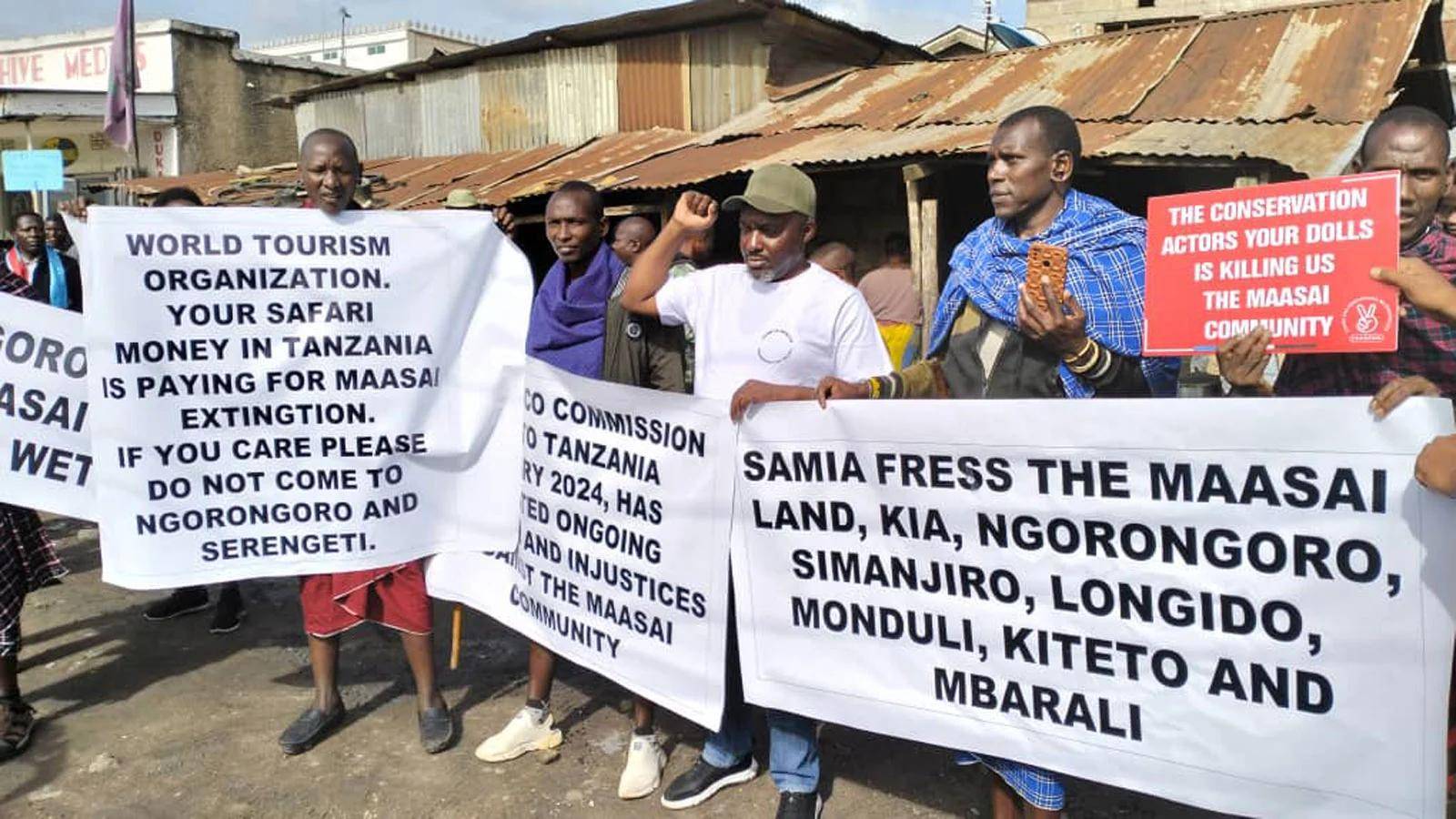
Defending ancestral land comes at a steep price as Maasai communities in Tanzania face relentless, mounting pressure.
Published
2 days agoon
October 14, 2026
By the Witness Radio team.
Safeguarding ancestral land often comes at the cost of heartbreak and loss. Across continents, those who stand against land grabbing and environmental destruction are met with violence, threats, and endless legal battles. In 2025, at least 124 land and environmental defenders were killed, with land disputes fueling more than half of these tragedies, Global Witness reports. Indigenous Peoples and small-scale farmers remain at the epicenter of this ongoing crisis.
The dangers reach far beyond physical harm. At times, the law itself becomes a weapon, recasting defenders of land and livelihoods as criminals in the eyes of the state.
Global Witness, a UK-based organization that investigates links between environmental destruction, conflict, corruption, and human rights abuses, describes criminalization as creating, amending, or reinterpreting laws to make previously legitimate activities illegal, or to increase the severity of penalties and sentences.
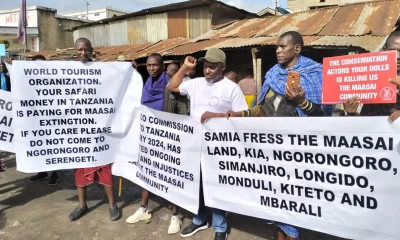
In northern Tanzania, these fears reignited when five Maasai men were arrested and detained in Ngorongoro. Indigenous communities now feel the pressure on their ancestral lands intensifying.
Nangei Meitaya, Salangat Makko, Ezekiel Kishau, Dickson, and Thadeus Clamian were taken into custody on the night of October 6 and held at Arusha Central Police Station before release the following night. According to the Oakland Institute, four of the men work for the Pastoral Women’s Council (PWC), a local organization empowering Indigenous pastoralist women and girls in northern Tanzania.
Although the five men have been released, their ordeal shines a harsh light on the wider crisis confronting Maasai communities. Human rights groups point to a troubling pattern of arrests, intimidation, and restrictions that threaten access to land and essential services.
Joseph Moses Oleshangay, a Maasai human rights lawyer and activist from Ngorongoro District, described the detention as part of what he sees as a broader effort to intimidate community members.
“The abduction and subsequent detention of our community members is one of the many incidents of lawless targeting of the Maasai people in Ngorongoro – a deliberate campaign to instill fear and censorship, designed to make state dispossession and displacement easy,” Oleshangay said.
He added that when abductions become routine, it signals a complete breakdown of reason and compassion.
These arrests unfold against a backdrop of rising tension in northern Tanzania. The Oakland Institute notes that more than 30 community members have been detained in just two months, with thousands of livestock seized in nearby Loliondo.
The organization also reported that authorities barred the five men from seeing their families or legal counsel during detention. Meanwhile, officials allegedly searched the homes of other Pastoral Women’s Council staff without consent.
These incidents raise urgent questions about whether community organizations, human rights defenders, and local leaders can keep working safely as land and conservation disputes escalate.
The Oakland Institute argues that the mounting pressure on Maasai communities is part of a broader effort to diminish their presence in the Ngorongoro Conservation Area and pave the way for expanded tourism and conservation projects.
Anuradha Mittal, the organization’s executive director, said the arrests should not be viewed as an isolated incident.
“Far from an isolated incident, this is a calculated campaign of intimidation. Driven by its goal to attract eight million safari tourists by 2030, the Tanzanian government is escalating pressure to evict the Maasai from their ancestral lands,” Mittal said.
She added that as conditions worsen across the region, some community leaders have once again been driven into hiding.
The Ngorongoro Conservation Area is celebrated as one of Tanzania’s crown jewels for conservation and tourism. Yet it remains the ancestral heartland of Maasai communities, whose traditions, way of life, and social bonds are woven into the very fabric of this land.
The region is celebrated worldwide for its ecological significance and is a UNESCO World Heritage Site.
Mittal warned that international tourism is inseparable from the realities faced by the communities whose lands draw visitors. She urged those planning safari tours to Tanzania to recognize that tourism revenues are inadvertently fueling the government’s violent campaign against Maasai communities, whose ancestral lands are being taken in plain sight.
In August 2026, the United Nations Committee on the Elimination of Racial Discrimination (CERD), an independent expert body that monitors the implementation of the International Convention on the Elimination of All Forms of Racial Discrimination, called on Tanzania to immediately halt the forced evictions of Maasai Indigenous Peoples from their ancestral lands in Ngorongoro and Loliondo.
The committee cited allegations of displacement, restrictions on access to land and natural resources, arbitrary arrests, intimidation and excessive use of force.
CERD also expressed alarm over reports that significant numbers of Maasai had been uprooted from their ancestral lands in the two areas in the name of conservation and tourism, without adequate and meaningful consultation or obtaining the communities’ free, prior and informed consent.
Related posts:

Maasai protest evictions from Ngorongoro as UN experts warn conservation must respect rights
Tanzania: Commissions call for mass eviction of Indigenous Maasai from world-famous tourist destinations.

More than 17,000 people in the Philippines face eviction from their ancestral land for a multimillion-dollar energy project.

Tanzanian Government Abducts Maasai Villagers in an Unconscionable Attack on Indigenous Land Defenders
MEDIA FOR CHANGE NETWORK
As waves of investment sweep across Uganda, countless women rise to defend their land, safeguard their traditions, and claim their right to be heard.

Published
2 days agoon
October 14, 2026
By the Witness Radio team.
“At times, I feel our oil is a curse. We blessed it, saying it is our oil. But today, they are not cooperating with us?” Gladys Birungi says.
Birungi, a community leader from Kasenyi village in Uganda’s oil-rich Albertine region, is challenging the grand promises that once drew the world’s gaze. For her, oil was meant to spark progress. Instead, she sees her community fighting to hold on to their land and future.
On a Witness Radio broadcast, Birungi likened land negotiations to marriage to show why communities deserve a voice in valuing their land before development takes it.
“If you admire my daughter, even if my family is poor, you have to bring the dowry I decide. Even if I am poor, I have prepared my daughter well. If you want to marry her, you should bring what I ask for. It is the same with land. If you want my land, you must pay an amount I consider fair,” she said.
She insisted that poverty must never diminish the worth of land or strip away the rights of those who depend on it.
“When government agencies came, they said the amount we asked for was too high because we were in a village. But this is my land. If it is too expensive, let them leave it,” she added.
For Birungi, the fight goes far beyond compensation. It is about whether those living in the shadow of major investments truly have a say in decisions that could transform their lives forever.
“We are not included in consultations, but when the consequences of oil production come, we will suffer. We could lose our lives, along with our children. Why is the government not thinking about us? We live near the industrial area and cannot sleep because of the noise.
Why are they silent about our suffering? Are they not thinking about us? Are we not Ugandans? Why are they leaving us to suffer?” she questioned.
Her questions echo a broader unease about Uganda’s investment boom across oil and gas, mining, infrastructure, forestry, and agribusiness. While these ventures promise jobs and growth, women from Kasenyi, Kassanda, and Makuutu urge us to count the true cost: land lost, livelihoods shattered, families strained, and futures clouded by uncertainty.
For women, the stakes are even higher. Land is more than wealth; it is the bedrock of food security and the survival of their families.
“If land is taken, we women shall be the ones to suffer tomorrow, not the men who are often invited to meetings,” Birungi said.
Birungi says she first learned in 2016 that her family’s land in Kasenyi village fell within an area earmarked for oil development. During a community meeting, she heard that aerial assessments had been conducted and that the area under consideration included her village.
As compensation talks began, she says community members proposed Shs20 million per acre. She recalls becoming angry when someone questioned whether land in a remote village could be worth that much.
She stood her ground, defending the land’s worth through the eyes of those whose lives are rooted in its soil.
“If you think my land looks bad on your side, leave it. If you admire my daughter and want to marry her, even though I am poor, I have prepared her well with what I have. You admired her, so you should bring what I want,” she recalls.
At another meeting, Birungi challenged a minister who said they would acquire their land at Shs1.5 million per acre. “I raised my hand before she finished speaking. I said, ‘No,’” Birungi recalls.
She recalls the mood turning tense when the defense minister warned the village could be wiped out in two minutes. With soldiers in the room, Birungi felt the words as a chilling threat.
“I was afraid,” she says, remembering how some residents slipped out of the meeting before it was over.
The next day, valuers arrived to assess land and crops. Residents questioned why the exercise was proceeding without their consent.
“They said, ‘This is a government project.’ We said it is a government project, but on our land, we need consent,” she adds.
Her story raises questions about how authorities communicate land takeovers, how they set compensation, and whether people feel safe pushing back against decisions that could alter their lives forever. Witness Radio has documented many cases where companies seize land by force, pushing aside the voices of those who call it home.
In Makuutu Sub-county, Bugweri District, community defender Josephine Mpindi describes a different investment that has left residents anxious about their land’s future.
Mpindi identifies the company involved as Rwenzori Rare Metals Limited, which is developing the Makuutu Rare Earth Project. She says physical mapping and sampling on community land began in 2021, with company representatives, sometimes accompanied by local leaders, visiting homes to seek access to land for sample collection.
According to Mpindi, many discussions involved men, leaving women with limited information about what was proposed and what the arrangements could mean for their land.
“They went to homes and met the men. Even community association meetings were held with men,” she said.
The Makuutu Rare Earth Project, which spans parts of Bugweri, Bugiri, Iganga and Mayuge districts, is being developed to extract rare earth elements from ionic adsorption clay deposits. These minerals are used in a range of modern technologies and industrial applications, making the project part of Uganda’s efforts to develop its mineral resources and participate in emerging critical-mineral supply chains. Rwenzori Rare Metals Limited is developing the project, with the Uganda National Mining Company participating as a state commercial partner.
The project has also attracted government support. When the government awarded a 21-year large-scale mining license to Rwenzori Rare Metals Limited, then Minister of Energy and Mineral Development Ruth Nankabirwa described the development as an opportunity to generate economic benefits for the country and the Busoga region.
“This large-scale mining license award represents the first step in developing one of the world’s heavy rare earth element assets,” Nankabirwa said.
She further argued that the project should be supported because its anticipated benefits would extend to local communities.
“This project should be supported all through because the outcome is going to support the country. It is going to benefit the people of Busoga because they will receive royalties, and they will be able to change their lives,” she said.
Yet Mpindi says beneath the promises of prosperity, many residents are left in the dark, unsure what the project will mean for their land, livelihoods, and future on the soil they depend on.
She notes that while payments were made for land access and sampling, residents often had little understanding of the long-term consequences hidden in these deals.
“People fear evictions because they don’t know what the company plans. There is a lot of tension. People have lost hope. They don’t know what will happen tomorrow,” she said.
On Witness Radio, Mpindi voiced worries about scars left after sampling. She claims open pits were abandoned across the land, endangering livestock and turning fertile fields into obstacles for farmers. ” If you go to Kigulamo, those pits are still there uncovered,” she said.
Mpindi says villagers have seen animals tumble into pits and families now struggle to grow crops on damaged earth. She believes the harm runs deeper than the land, adding burdens on those who rely on farming to survive.
In Kassanda District, community defender Olivia Nakasumba says a tree-growing investment by UK-domiciled New Forests Company continues to haunt families evicted from their land sixteen years ago. According to Nakasumba, hundreds of families have struggled to rebuild their lives since the evictions, with some still seeking compensation for the losses they say they suffered.
“Over 10,000 people were forcefully evicted without compensation. More than a decade later, people are still suffering. Others have died without receiving compensation,” she said. A curse for those who once owned the land, insisting that no promised benefit can erase the pain and hardship families have endured.
For the women defenders on the radio program, justice means more than just compensation. It demands recognition of the harm done, real solutions for those affected, and a promise that others will not suffer the same fate.
Despite hardships, these women refuse to stay silent. They organize, raise their voices, and demand accountability. In Kassanda, Nakasumba says the fight for justice is far from over. ” We were not able to resist the evictions because the government deployed in full force, but we are still alive to demand accountability for what belonged to us, the damage they caused, and the suffering we have gone through,” she said.
In Bugweri, Mpindi describes how women are taking matters into their own hands, banding together to share knowledge about land rights before decisions are made behind closed doors. Through meetings, savings groups, loudspeakers, and radio, they ensure everyone knows their rights and what is at stake.
Mpindi says their group, Makuutu Advocates Women’s Group, is also registered at the district level, giving women a platform to organize and raise their concerns collectively.
“We have held community meetings at different levels, in various parishes and villages, moving together as a team,” she said.
One of their greatest fears is signing away their rights without understanding the fine print. Mpindi says some documents are in unfamiliar languages, leaving people unable to understand what they agree to fully. Don’t sign anything without an interpreter. You should get a trustee you trust yourself to interpret for you and your husband what the agreement is saying,” she said. “
Mpindi’s message is not to reject all investment but to insist people understand what is offered, weigh the consequences, and have a real seat at the table regarding the land that feeds their families. ” To say no,” she added.
For Birungi, true investment starts with honest dialogue and respect for those whose land is at stake. She believes communities should not just be told what will happen, but given a real chance to understand, question, and shape their land’s future.
“The first thing they should have done is consult the community and obtain its consent. The affected person, or the person whose land they want to use, should first agree with what they are coming to do,” she said.
Birungi also calls on the government to help communities get independent legal advice before signing any deals. She points out that investors come armed with lawyers and experts, while ordinary landowners often lack the tools to understand or negotiate fair terms.
“Let the government give people lawyers to help us interpret documents before they start anything,” she said.
As Uganda advances with investments in oil, minerals, forestry, and more, these women insist their stories must be heard. They demand fairness, clear information, a real voice in decisions, and accountability when harm is done.
Related posts:

In memory of land and investment women victims in Uganda on the International Women’s Day 2021

Women’s Climate Assembly, 2024: African women vow to protect human and environmental rights amidst an influx of destructive land-based investments on the continent.

Thirteen years after the Karuma Hydropower Project broke ground, countless people forced from their homes are still waiting for the compensation and resettlement they were promised.

Land as a security issue: endless forced land evictions and impunity threaten Uganda’s peace, lawlessness on the rise.
ODPP Staff Equipped With New Skills on Land Crimes, Witness Protection and Victims Rights
As World Bank Holds Annual Meetings, 84,000 Tanzanians Call for Justice
Teso farmers revamp grapefruit growing
Defending ancestral land comes at a steep price as Maasai communities in Tanzania face relentless, mounting pressure.
While hunger continues to grip the world, a new report highlights forests and forest foods as a hidden treasure trove of nourishment.
Five years after Uganda’s National Action Plan on Business and Human Rights, are local communities hosting land-based investment projects seeing change?
Lango ex-combatants count losses after dry spell destroys maize harvest
Alert: Land degradation is emerging as a pressing threat to global security.
Innovative Finance from Canada projects positive impact on local communities.
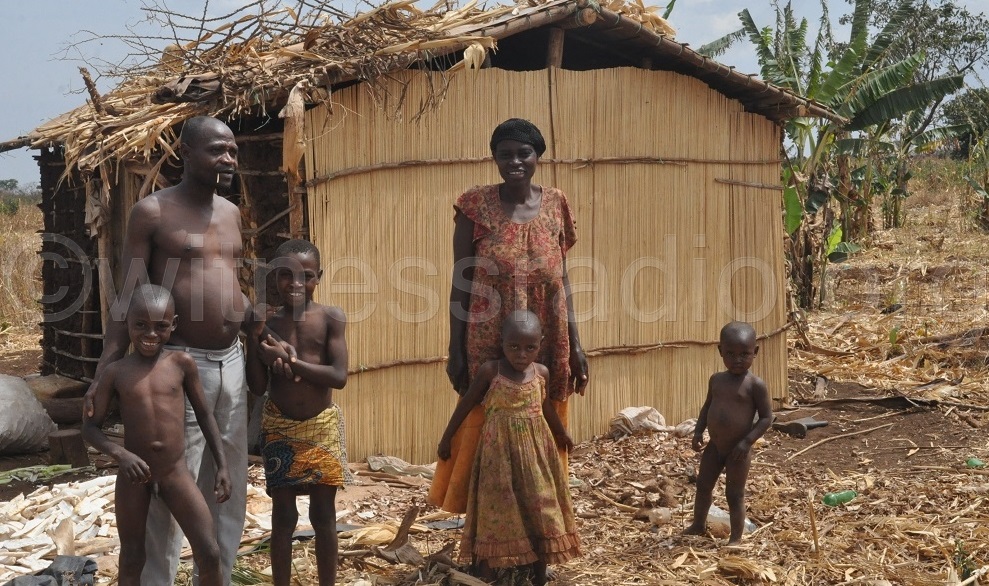
Over 5000 Indigenous Communities evicted in Kiryandongo District

Petition To Land Inquiry Commission Over Human Rights In Kiryandongo District

Invisible victims of Uganda Land Grabs
Resource Center
- CAN AFRICAN FOOD SYSTEMS THRIVE WITHOUT CHEMICAL FERTILISERS
- Land And Environment Rights In Uganda Experiences From Karamoja And Mid Western Sub Regions
- REPARATORY AND CLIMATE JUSTICE MUST BE AT THE CORE OF COP30, SAY GLOBAL LEADERS AND MOVEMENTS
- LAND GRABS AT GUNPOINT REPORT IN KIRYANDONGO DISTRICT
- THOSE OIL LIARS! THEY DESTROYED MY BUSINESS!
- RESEARCH BRIEF -TOURISM POTENTIAL OF GREATER MASAKA -MARCH 2025
- The Mouila Declaration of the Informal Alliance against the Expansion of Industrial Monocultures
- FORCED LAND EVICTIONS IN UGANDA TRENDS RIGHTS OF DEFENDERS IMPACT AND CALL FOR ACTION
Legal Framework
READ BY CATEGORY
Newsletter
Trending
-
MEDIA FOR CHANGE NETWORK2 weeks agoThe global race for clean energy minerals is leaving communities grappling with conflicts and human rights abuses, a new report reveals.
-

MEDIA FOR CHANGE NETWORK2 weeks agoAcross Africa, the push for a greener future is putting new pressure on local communities, as recent ILC case studies highlight.
-

MEDIA FOR CHANGE NETWORK2 weeks agoSweeping investments are fueling widespread land grabbing and deepening rights violations across Uganda – Report.
-

MEDIA FOR CHANGE NETWORK2 weeks agoWho will shape the future of East Africa’s seeds? Youth and civil society are sounding the alarm over a proposed regional law.
-

MEDIA FOR CHANGE NETWORK3 days agoCourt remands 10 anti-oil activists as suspect collapses in dock
-
FARM NEWS2 weeks agoGovt pushes natural regeneration to restore 8.4 million hectares
-
NGO WORK3 days agoTanzanian Government Abducts Maasai Villagers in an Unconscionable Attack on Indigenous Land Defenders
-

FARM NEWS1 week agoCan Agroecology Improve the Resilience of African Smallholder Farmers?