By the Witness Radio team.
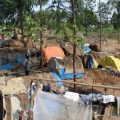
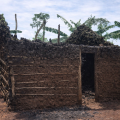
For more than ten years, hundreds of families in Kikuube District have fought to piece their lives back together after losing their land to the ever-expanding Kyangwali Refugee Settlement.
One such person is Mr. Ahumuza Busingye, a community leader who recalls how, in 2013, many families were uprooted when the government seized their land to make room for more refugees.
“We have been suffering since 2013 when we were evicted from our land to expand Kyangwali camp. “The problem is we are often displaced from fertile land which is given to refugees. That hurts us. Our families have grown, but we have no place to settle them. We now live in an informal settlement with no land to farm and sustain ourselves,” said Mr. Busingye.
Mr. Busingye’s experience mirrors a rising dilemma in Uganda, a nation celebrated worldwide for its welcoming approach to refugees. Unlike countries that restrict refugees to camps, Uganda offers land for settlement, freedom to move, opportunities to work and start businesses, and access to schools, healthcare, and public services. These progressive policies have transformed Uganda into Africa’s largest haven for refugees and one of the most significant hosts on the planet.
Yet, even as Uganda’s refugee policy draws global praise, tough questions linger about how the country can keep protecting refugees without sacrificing the land rights, livelihoods, and futures of its own people.
This challenge formed the central theme of an X Spaces discussion organized by UCOBAC (Uganda Community Based Association for Women and Children Welfare) in partnership with AWO International and co-hosted by NBS TV under the theme, “Understanding Land Governance: Issues Affecting Refugee and Host Communities in Uganda.”
The event brought together voices from government, academia, humanitarian groups, and the legal sector to tackle rising land governance issues in refugee-hosting districts and to seek ways for refugees and host communities to live together in harmony.
Uganda now shelters almost 1.9 million refugees and asylum seekers, most of them women and children escaping violence in South Sudan, the Democratic Republic of Congo, and nearby nations. As new arrivals pour in and families grow, the hunger for land intensifies, sparking fresh challenges for both refugees and the communities that welcome them.
Dr. Brian Makabayi, a lecturer in the Department of Geomatics and Land Management at Makerere University, argued that refugee settlements should no longer be viewed as temporary humanitarian interventions.
“The issue is not only humanitarian assistance where we are trying to solve the problem temporarily. These communities have stayed for long periods, and if these issues are not properly managed, they can become violent,” he said.
Citing research from districts like Adjumani, Makabayi pointed out that refugees now make up nearly half the population in some places. As families expand but land stays the same, the struggle for space grows ever more intense.
“Many refugees lease farmland from host communities to supplement the small plots allocated to them. However, conflicts often emerge when landowners decide to reclaim their land for personal use, sale, or lease to other people before previous agreements expire.” He further added.
Ms. Claire Birungi Agaba, the Information, Counseling and Legal Assistance Specialist at the Norwegian Refugee Council, said many of the land disputes her organization handles arise from informal and undocumented land agreements.
She explained that land transactions between refugees and host communities are frequently based on verbal agreements without written records specifying land size, duration of use, payment arrangements or responsibilities of each party. As a result, disputes over boundaries, crop destruction, unexpected evictions and changing rental terms have become increasingly common.
“Many host families themselves occupy customary land that has never been formally documented, making it difficult to prove ownership whenever disagreements arise.” She said.
Responding to concerns about land acquisition, Agnes Baseera, Protection Officer (Legal) in the Office of the Prime Minister’s Department of Refugees, said the government does not allocate land for refugee settlements arbitrarily.
According to Baseera, establishing refugee settlements involves close collaboration between the Office of the Prime Minister, district local governments, line ministries, development partners and host communities.
She explained that before any land is designated, the government verifies ownership, assesses the suitability of the land and considers factors such as security, access to water, food availability and the capacity of social services.
“The host communities are always part of this process,” Baseera said, adding that consultation remains central to the government’s refugee settlement policy.
Eunice Nabakwa, Principal Land Officer at the Ministry of Lands, Housing and Urban Development, argued that securing customary land rights is essential to reducing future conflicts.
She noted that more than 75 percent of Uganda’s land is held under customary tenure, much of it without formal documentation. Since many refugee settlements are located on customary land, uncertainty over ownership and boundaries often fuels disputes.
To address this, the Ministry is implementing systematic land adjudication, demarcation, mapping and certification programs, including the issuance of Certificates of Customary
Ownership (CCOs).
These initiatives are intended to formally recognize customary land rights, strengthen tenure security, clarify boundaries and improve local land administration.