By Witness Radio Team
In southern Tanzania, a conservation project supported by one of the world’s most powerful financial institutions has caused violence, fear, and ruined livelihoods. The project, intended to boost tourism, protect biodiversity, and increase access to alternative work for specific communities, has become a clear example of how development financing can lead to human rights abuses and evade accountability.
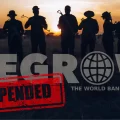
Tanzania’s Resilient Natural Resource Management for Tourism and Growth project (REGROW), funded by a $150 million credit from the International Development Association (IDA) of the World Bank, was approved in September 2017. Its goal was to develop Ruaha National Park (RUNAPA). With the Bank’s financing, the government doubled the park’s size to turn it into a premier safari destination and boost economic growth. However, for tens of thousands of people living on that land, the outcome has been quite different.
From the beginning, communities say they were left out of decisions that would drastically change their lives. Villages that had long been legally recognized suddenly found themselves within a conservation zone they had no role in creating.
“The community living on that land was not consulted, and neither did it give prior informed consent to the decision to expand the park from one million to two million hectares. To enable this expansion, TANAPA rangers carried out violent campaigns, including killings of villagers, forced disappearances, and the destruction of livelihoods,” Anuradha Mittal, Executive Director of the Oakland Institute, told a Witness Radio journalist. This US think tank has been helping the affected communities to access justice.
According to testimonies from affected residents and subsequent findings confirmed by the World Bank’s own Inspection Panel, the park expansion was enforced through violence.
“People living here are suffering greatly at the hands of the national park authority, TANAPA, and armed rangers. They treat us cruelly, including killings, and we have no proper reason for this. The rangers have taken the land from farmers and pastoralists, seized cattle, and forced us off our ancestral land. The government and project financiers have done nothing to address this harm,” an affected resident revealed.
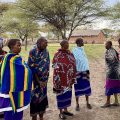
More than 84,000 people from over 28 villages have reportedly been affected by the project.
“Apart from other violations, including violent beatings and assaults, over a dozen villagers have been killed by rangers funded by the Bank. There are newspaper reports documenting these killings and the violence,” Mittal added.
Acknowledged Harm, No Justice.
On behalf of the affected communities, the Oakland Institute filed a complaint with the World Bank’s Inspection Panel regarding human rights violations associated with the multi-million-dollar project.
“We first approached the World Bank on behalf of the communities in 2023 to explain the harms caused by its financing. When the Bank did nothing, we filed a complaint at the Inspection Panel about how devastating this financing has been for communities living on legally recognized land, who are now facing forced resettlement,” Mittal explained.
“The World Bank’s Inspection Panel confirmed that the project violated its own policies and international human rights standards, underscoring the need for accountability and justice.”
“The Bank announced a plan for redress, including a multi-million-dollar fund and specific measures such as community consultations, land restitution, and independent monitoring to address the harms.” However, little has changed in practice.
In its investigation report, the Bank acknowledged issues in the project’s planning and oversight that led to serious harm. The report included suggestions to address the harm and proposed a $2.8 million initiative to support alternative livelihoods for communities inside and around the park.
“Despite promises, the Oakland Institute reports that similar initiatives in other projects have led to tangible improvements, yet here, restrictions persist, and communities remain in hardship, highlighting the need for more effective accountability.”
“The two new projects meant to support communities affected by REGROW have both failed to provide enough redress. The $110 million ‘Scaling-up Locally Led Climate Action Program’ (SCALE)—national in scope and focused on building government capacity—does not specifically target impacted communities. The separate $2.8 million ‘Promoting Community-Led Nature-Based Solutions to Climate Change Adaptation in the Usangu Catchment’ project reaches only a small fraction of those affected,” a statement reads.
A Second complaint and a warning.
With concerns growing about the World Bank Group’s failure to implement recommendations from its own Inspection Panel, affected communities backed by the Oakland Institute have now
filed a second complaint through the Bank’s internal grievance system.
This step shows mounting frustration among residents and advocates, who believe the Bank has not acted on its own findings or ensured that real remedies are implemented on the ground.
“The communities are using every available option to hold the Bank’s accountable,” Mittal said in an interview with Witness Radio.
The new complaint comes amid ongoing reports of restricted livelihoods, insecurity, and pressure on communities to leave their land, despite the cancellation of the REGROW project.
“Despite the cancellation and a plan to address the damage caused by the World Bank, affected villagers still cannot live on their land, farm, or graze their cattle without risking death at the hands of park rangers. The plan, at best, undermines the Bank’s so-called commitment to remedy the harms caused by its financing. Communities deserve justice, and the Bank must be held accountable,” Mittal added.
Through this new complaint, Mittal points out that the communities have exhausted every avenue within the Bank’s accountability system in their quest for justice. “It is time for the Bank to meet its obligations, fulfill its legal responsibilities under international law, and uphold its own promises regarding accountability. As Tanzania’s largest donor, it has both the means and the influence to stop this harm and fix the damage it has caused. As an institution meant to fight poverty, it cannot remain idle while it has driven tens of thousands into hardship,” she concluded.