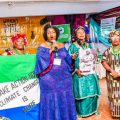
By the Witness Radio team
As Uganda faces mounting environmental pressures, environmental advocates warn that the country’s rapid surge in land-based investments is driving ecological destruction and increasing rural communities’ vulnerability.
Among the most controversial of these investments is the East African Crude Oil Pipeline (EACOP), which environmentalists, human rights defenders, and affected communities say is intensifying ecological risks while triggering a wave of repression against those who oppose it.
The $5 billion EACOP project, led by TotalEnergies and partners, spans 1,444 kilometers from Hoima to Tanga. It passes through diverse ecosystems and has affected thousands through land acquisition. Experts warn that the pipeline threatens sensitive environments and may increase carbon emissions.
There has been a price to pay for opposing the project. More than 150 environmental and human rights activists have reportedly been arrested and charged in Uganda for protesting EACOP and related oil developments for their negative impacts. Michel Forst, the United Nations Special Rapporteur on Environmental Defenders, last year criticizedcriticized TotalEnergies for “continually failing to protect environmental defenders adequately” and expressed concern about the project.
For many advocates, EACOP is more than just a controversial oil pipeline. This represents a new development model in Uganda in which large-scale land investments are being prioritized over environmental protection, community rights, and long-term climate resilience.
As Uganda joins the rest of the world to mark World Environment Day 2026, organizations such as Witness Radio Uganda warn that poorly planned and poorly regulated land-based investments threaten to worsen the country’s ongoing ecological crisis.
From commercial agriculture and industrial tree plantations to carbon offset projects, mining operations, and large-scale infrastructure developments, forests, wetlands, and customary lands are being transformed into investment zones at unprecedented rates. While these projects are often promoted as engines of economic growth or climate solutions, environmental defenders argue that they are accelerating deforestation, biodiversity loss, land dispossession, and climate vulnerability.
According to the Land Matrix Initiative, more than 370,000 hectares of land in Uganda have been acquired through large-scale land deals in recent years, reflecting a broader trend of intensifying pressure on land and natural resources. Although these investments are often framed as pathways to modernization, critics argue that they are reshaping land use in ways that undermine ecological stability and local food systems.
The organization cited several examples of investments whose activities raise environmental concerns. In districts such as Mubende, the Namwasa Forest Reserve has been converted into industrial tree plantations dominated by eucalyptus and pine species. Communities and environmental researchers warn that such monoculture plantations reduce biodiversity, alter water cycles, and degrade soil quality over time.
Similar patterns are emerging in other parts of the country. In Kiryandongo District, for instance, commercial agriculture has expanded into previously forested and communal lands, accelerating land degradation and restricting community access to resources on which many households depend for survival.
At the same time, carbon offset and so-called “climate-smart” agriculture projects have proliferated in Uganda in recent years. They are often promoted as the solution to climate change. However, critics say they are changing land use from food production to monoculture plantations or to carbon markets controlled from outside. Smallholder farmers often sign contracts without understanding the long-term implications, sparking concerns about land control, benefit sharing, and food sovereignty.
Witness Radio Uganda warns that unless urgent action is taken, the country risks locking itself into a development pathway that deepens both ecological breakdown and social inequality.
“Uganda is facing a silent but accelerating ecological emergency,” says Jeff Wokulira Ssebaggala, Executive Director of Witness Radio Uganda, adding that “What is being promoted as development is too often the systematic conversion of forests, wetlands, and community lands into investment zones that weaken both people and nature. If we continue on this path, we are not just losing biodiversity but also undermining the very foundation of rural survival and climate resilience.”
On World Environment Day 2026, Witness Radio is calling for urgent structural reforms, including an immediate halt to the allocation of forests, wetlands, and ecologically sensitive ecosystems to private investors; stronger independent environmental governance; recognition and enforcement of customary land rights; full implementation of Free, Prior and Informed Consent (FPIC); and an end to the criminalization of environmental and land rights defenders.