By Witness Radio Team
East Africa is warming more quickly than the rest of the world. Farmers no longer depend on the same seasons, droughts are lasting longer, floods are more destructive, and soils are losing fertility at startling rates. As the climate crisis deepens, smallholder farmers, who produce nearly 70% of the region’s food, are struggling to survive.
Across Uganda, agroecology is emerging as a powerful climate adaptation strategy that revives indigenous knowledge, regenerates soils, and helps farmers build resilience against extreme weather, demonstrating that positive change is achievable and worth supporting.
In Nakisunga Village, about 40 kilometers from Kampala, retired teacher Nansubuga Jane has built a model that embodies this shift. On a sloping hill once termed dry, rocky, and infertile, crops now flourish.
“When I came here, everyone laughed at me. They said this plain, stony land could never produce anything,” she recalls. But armed with knowledge of organic farming, she set out to heal the soil, not to fight it.
Today, her 10-acre farm is a testament to resilience in a changing climate: fruit trees, bananas, vegetables, and agroforestry systems thrive alongside poultry, pigs, and cattle.
“I am an agroecology farmer. I don’t use chemicals. I apply only organic practices,” she says confidently while walking the fields with East African Legislative Assembly (EALA) delegates and civil society representatives.
As the region faces more frequent droughts, intense heatwaves, and unpredictable rainfall, highlighting how agroecology directly empowers smallholder farmers to adapt can inspire confidence in these climate solutions.
The Intergovernmental Panel on Climate Change (IPCC) Sixth Assessment Report confirms this: climate extremes have significantly reduced agricultural productivity across Africa. Droughts, floods, wildfires, and heatwaves are now major drivers of food insecurity, driving millions into vulnerability.
Industrial agriculture, long promoted as the path to food security, has struggled to withstand these climatic shocks. Its monocultures are fragile, chemical fertilizers degrade the soil, and dependence on external inputs pushes farmers into debt during climate-related crop failures.
“So, if you want to do agriculture, make sure that you have animals, because you need the fertilizers, such that you don’t bring chemical fertilizers that will be killing you, killing your people, and killing the soil. This is one way I am maintaining soil health and ensuring the soil will never be depleted. The soil is just happy, and it is giving me everything.” She highlighted.
Dr. Million Baley, General Coordinator of the Alliance for Food Sovereignty Africa (AFSA), sees agroecology not only as a farming method, but as a form of resistance against ecological destruction and economic dependency.
“One of the legacies of colonialism is pushing us to export food instead of feeding our people. Chemicals, GMOs, and land grabs are increasing. Global actors now control our food systems. Bending to Western corporations is self-colonization; it’s leading the continent into a corner that will be difficult to escape,” he notes.
He argues that industrial agriculture is dangerously vulnerable to climate shocks, while agroecology is inherently adaptive.
“If we support farmers’ knowledge and fund it, they can produce more and healthier food. Nansubuga is proving that even on a rocky hillside, agroecology can turn degraded soil into a fertile, productive area,” he adds.
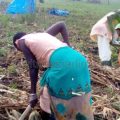
Nansubuga, who started her farm five years ago, has transformed her land through compost manure and intercropping. These practices have enabled her to produce enough food for her family while selling the surplus in local markets, without relying on costly external inputs. The diversity on her farm ensures a steady stream of income throughout the year, preventing her earnings from ever running dry.
“I get over 50 trays of eggs a day, sell more than 40 liters of milk daily, and market a variety of crops, including plantain, bananas, cinnamon, and leafy greens. In the coming months, I’ll also be selling mangoes. I earn a substantial income from my farm. The birds and pigs are here, and I decide what to sell and when. At the same time, my family enjoys a nutritious, well-balanced diet while I protect my environment from the dangerous chemicals.” Nansubuga added.
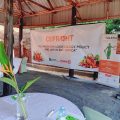
Her story shows how agroecology equips households to withstand climate shocks by diversifying income and improving soil health. Dr. David Kabanda heads the Center for Food and Adequate Living Rights (CEFROHT), an organization that trained Nansubuga, who considers her farm a model of climate resilience.
“This is a game-changer. Chemicals are killing people, animals, and the planet. But agroecology helps us harvest healthier food while restoring ecosystems,” he says, adding that promoting these practices can foster pride in protecting health and the environment for future generations.
He warns that hazardous pesticides worsen climate vulnerability by destroying soil organisms, contaminating water sources, and exposing farmers to health risks.
“If we keep feeding the soil, the environment will be steadfast, trees will grow, and I will protect the planet from destruction,” he adds.
Inspired by Nansubuga’s success, EALA delegates called for a regional agroecology bill that includes policies for training, input access, and market support, which are vital for scaling climate-resilient practices.
“We are all impressed. East Africa has shown the world that agroecology is the way forward. This experience will help us build a framework that protects smallholder farmers. If we support them, we can transform agriculture in East Africa and Africa.” Said Hon. Gideon Gatpan Thoar, Chair of the EALA Committee on Agriculture, Tourism and Natural Resources.
The proposed law aims to protect smallholder farmers by safeguarding indigenous seeds, reducing reliance on chemical inputs, preventing land grabs, and strengthening resilience against climate shocks.
Hon. Fatuma Ndangiza, EALA representative from Rwanda, revealed that the agroecology bill could be ready within a year, offering hope to smallholder farmers.