By the Witness Radio team.
Envisioned as a cornerstone of Uganda’s energy future, the Karuma Hydropower Project aimed to boost the nation’s power supply, lower electricity costs, and secure lasting energy stability.
In 2013, work began on the 600-megawatt Karuma Hydropower Station, nestled along the River Nile in Kiryandongo District. Led by China’s Sinohydro Corporation, the project transformed over 465 hectares with an underground power station and sprawling infrastructure.
China largely financed the project, with the Ugandan government contributing alongside the Export-Import Bank of China.
Karuma was heralded as a game-changer for Uganda’s electricity landscape, set to light up more homes and fuel the nation’s ambitions for industrial and economic growth.
Yet as the power station finally became reality in 2024, many who gave up their land and homes say they are still waiting for the government’s decade-old promises of compensation and resettlement.
Over 400 households remain caught in the heart of an unresolved compensation battle, urging the government to honor its responsibility and ensure those who lost everything are finally compensated or resettled.
According to the Parliamentary Committee on Environment and Natural Resources’ report on the Ministerial Policy Statements for the financial year 2026/27, the government owes approximately UGX 70 billion to Project Affected Persons (PAPs) under the Karuma Hydropower Project.
For many victims, these delays have meant years without the land and livelihoods that once sustained them.
“I am growing old and don’t have a permanent job. It is becoming hard to survive after losing my land that was my family’s source of livelihood,” Owelo told the Witness Radio team.
Owelo Patrick, now 53, is still waiting for compensation. When the project claimed his eucalyptus plantation in Ayuda Village, he lost not just land, but the lifeline that once supported his family.
Thirteen years on, he finds himself renting a modest house and scraping by on odd jobs to survive.
“At this age, I work for anyone who calls me because I want to survive with my family,” Owelo adds.
He says the wait has grown more painful as some fellow claimants have died before seeing justice.
“The government should keep its promise because most of our colleagues promised compensation are dying, and for those of us alive, our patience has run out,” he says.
Apaco Suprianto Adyeeri is another whose life the project upended.
Now renting a small house along Obote Road in Karuma Town, Apaco recalls losing two acres of fertile land where she once grew cassava and other crops.
“Life is difficult because I have no money and struggle to care for my grandchildren. I don’t have a permanent house and survive on a small bar business that raises minimal income, which cannot support my family,” she says.
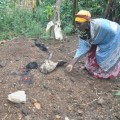
To make ends meet, Apaco now hires small plots of land to grow cassava, maize, and beans, hoping to earn just enough to get by.
“If the government can’t compensate us, let them give us land elsewhere to live. We expected help to rebuild our livelihood after losing our land. But 13 years later, we continue to suffer,” she reveals.
The $1.7 billion Karuma project swept through Kiryandongo District, displacing residents from villages like Nora, Akuridia, Karuma, Bedmot, and Awo.
Residents recResidents say they were forced to leave their homes and fields before any compensation arrived, destroying their farms, businesses, and means of living. Affected residents interviewed by Witness Radio said that after the eviction, the government also promised to resettle some of the affected families in Nwoya District, with each family expected to receive two acres of land and a constructed house.
Yet residents say the promised resettlement remains little more than words and has never fully materialized.
For farming families, losing land meant scrambling to rent plots elsewhere to grow food or earn a living. Others have been pushed into rented homes and still struggle to survive.
The long wait has come at a steep human cost, with some affected residents dying before receiving the compensation promised.
Seeking justice, affected families have sent repeated petitions to the President and government bodies, pleading for action on their long-overdue compensation and resettlement.
Some of their concerns are also documented in a written complaint dated 14 August 2024, signed by William Ogik and other Project Affected Persons from Karuma.
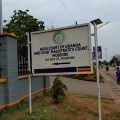
The letter, addressed to relevant authorities and copied to the Permanent Secretary in the Ministry of Energy and Mineral Development, Kiryandongo District leadership, the Chief Government Valuer, the Speaker of Parliament, Sinohydro and the Chinese Embassy in Uganda, formally outlines the communities’ grievances and calls for government intervention.
The communities voiced grievances over delayed compensation, claims of undervalued property, and the devastating loss of their farmland.
Ochaya Washington, former District Councilor and chief petitioner for the vulnerable, warns that the situation is now dire for elderly and at-risk residents who have waited years for the government to keep its word.
“People are all dying. I call upon the government and the Ministry to intervene and help these people before they perish,” he says.
Uganda’s drive for progress comes with a lesson from Karuma: true development must include timely compensation, real resettlement, and safeguarding livelihoods. Thirteen years later, many families are still waiting to piece their lives back together.