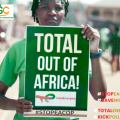
An elderly PAP in front of the Resettlement house in Buliisa (Inset: the house that was affected by the Tilenga project). Image credit: PAU
Civil society organisations under the StopEACOP Campaign have criticised an assessment commissioned by TotalEnergies on its land acquisition programme for the Tilenga oil project in Uganda, describing the report as lacking independence and credibility.
The Tilenga development will supply crude to the East African Crude Oil Pipeline which is designed to transport oil from western Uganda to international markets. The project has been widely contested by environmental groups and community advocates.
TotalEnergies commissioned Canadian consultancy Land and People Planning Ltd to conduct the assessment in the districts of Buliisa, Hoima and Kikuube. The report concluded that the company had addressed the core elements of the land acquisition programme and demonstrated commitment to transparency and continuous improvement.
However, the StopEACOP Campaign argues that the independence of the study is questionable. The coalition noted that TotalEnergies stated that an original assessor withdrew due to health reasons and that the Canadian firm was appointed as a replacement, without publicly explaining how key stakeholders were involved in the selection process.
Campaign coordinator Zaki Mamdoo said the report appeared to be designed to improve the company’s public image rather than provide a rigorous independent review. He added that the company’s suggestion that the Tilenga land process was ready for closure was difficult to reconcile with ongoing court cases filed by project affected people disputing compensation.
Activists also argue that the assessment does not address allegations of coercion, intimidation and pressure faced by communities asked to release land for the Tilenga project. Civil society groups have cited documented cases including the eviction of 42 families in Buliisa district following a court order issued before compensation payments were completed.
Diana Nabiruma of the Africa Institute for Energy Governance said communities have reported being warned that refusal to accept compensation offers could lead to court cases where they have little chance of success. She added that organisations supporting affected residents often observe bias and limited willingness by courts to address land disputes linked to oil developments.
In February 2026, the institute published research examining compliance with livelihood restoration commitments linked to the East African Crude Oil Pipeline. The report identified significant gaps in implementation and warned that many affected households risk failing to return to their pre displacement socio economic conditions if corrective action is not taken.
Campaigners also questioned the timing of the TotalEnergies assessment as the company faces an ongoing case in a civil court in Paris. The court recently ordered the company to release documents that had previously been withheld, including market studies on compensation rates prepared by subcontractors, minutes from a human rights steering committee and a report examining flooding linked to the Tilenga project.
According to Camille Grandperrin, legal officer at the Friends of the Earth France, analysis of the disclosed documents suggests multiple areas where the project may not comply with international standards, including the IFC Performance Standard 5.
The StopEACOP Campaign also highlighted discrepancies in the number of people included in the assessment. The action plan referenced 4954 project affected people, while civil society estimates suggest that more than 100000 people could be impacted across both the Tilenga project and the wider pipeline development.
Critics argue that evaluating Tilenga in isolation from the broader pipeline infrastructure creates a misleading picture of the scale of social impacts. They also note that the report does not address flooding allegedly linked to the construction of the Tilenga Central Processing Facility.
Campaign groups say the testimonies of affected communities, including claims of restricted land use prior to compensation and pressure faced by activists and land defenders, raise serious concerns that require independent scrutiny. They argue that a broader and fully independent review of Uganda’s oil sector impacts is needed to provide credible information to investors, lenders and insurers.
Author: Bryan Groenendaal
Source: greenbuildingafrica.co.za