He was speaking in Kampala on Wednesday during the opening of the two-day Annual National FMNR Conference held under the theme: “Scaling up Community-led Landscape Restoration using FMNR.”
“Not all restoration interventions require procurement of seed, seedlings and vegetative planting materials. We could also use existing materials, the roots that require farmers to excite a little to be able to re-sprout,” he said.
FMNR allows communities to identify, protect and manage trees that naturally emerge on degraded farmland and grazing areas. It is recognised in Uganda’s forestry standards as a technically simple and inexpensive restoration method.
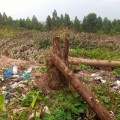
Despite recent gains, Uganda’s forest cover remains well below the 24 percent recorded in 1990. Cover has increased from about 10 percent in 2015 to 12.7 percent in 2024, but officials warn loss still outpaces restoration.
Mr Kazungu attributed continued loss to expansion of agriculture, demand for firewood and charcoal, illegal logging, population growth, settlement and weaknesses in governance.
He said the recent increase has been driven largely by monoculture plantations, particularly eucalyptus and pine.
While such plantations have raised overall tree cover, Mr Kazungu said the government wants better balance between exotic and indigenous species.
“We have to create a balance between our indigenous tree species and our exotics that we also promote,” he said.
The Restoration Opportunities Assessment Methodology (ROAM) assessment identified about 8.4 million hectares of land with restoration potential.
FMNR Network Uganda chairperson Ms Gusta Kiyingi said the movement has grown considerably since the first national FMNR conference was convened by World Vision Uganda in 2014.
She described FMNR as low-cost, with potential benefits including improved soil fertility, biodiversity, food security and climate resilience. However, she acknowledged challenges including limited resources, coordination difficulties, competing land uses, climate variability and gaps in data.
World Vision Uganda’s Programme Development and Impact Director, Mr Richard Ramsey, said the organisation is working towards restoring 2.3 million hectares in Uganda, including a direct target of 570,000 hectares.
He said natural regeneration had shown potential globally and should be expanded as Uganda works towards 2030 ecosystem restoration targets.
“This is not a new practice. This is the simplest practice on the earth in many ways. And yet these things happen out in communities quietly. But I think what we need to do now is accelerate that progress,” Mr Ramsey said.
He said taking the approach from individual projects to national scale would be important to ensure restoration continues after projects end.
Source: monitor.co.ug