By the Witness Radio Team.
As the world races to abandon fossil fuels and embrace renewable energy to avert climate catastrophe, development banks, governments, and corporations promote this transition as a global priority. In Asia, this transition, presented as a path to a clean-energy future, is shadowed by serious concerns about who bears its costs.
However, for many Indigenous peoples, farmers, fisherfolk, and urban poor living on lands targeted by these projects, the energy transition has led to displacement, repression, and the loss of livelihoods.
This alternative reality is documented in a new regional report, Financing the Transition, Silencing Defenders. The report details how communities raising concerns about renewable energy projects across seven Asian countries have faced reprisals ranging from harassment and arrests to military occupation and killings.
The report challenges the region’s energy transition. It argues that renewable energy projects use vast resources, burdening Indigenous and local communities who have contributed little to the climate crisis. The report documents how these projects cause displacement, loss of cultural identity, ecological disruption, health risks, and increased debt.
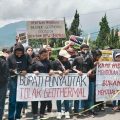
Security forces were often reported to have carried out reprisals. Police and the military were frequently deployed to sites. Communities described beatings, arrests, and intimidation during consultations, compensation, and construction.
Rather than providing security, the report concludes that “in most contexts, their presence does not make communities feel secure, but rather threatened and silenced.”
The report goes on to describe how, in several documented cases, security personnel forcibly entered villages, dismantled community barricades, demolished homes, and stopped peaceful protests. According to the report, these confrontations often escalated tensions and contributed to the criminalization of local resistance.
The report underscores a central argument: when communities raise concerns, their voices are systematically silenced through SLAPPs, attacks, criminalization, intimidation, and discrimination—primarily by local authorities and security forces. These practices form a system of control involving governments, security forces, corporations, and development banks to repress dissent and maintain project momentum.
The 44-page report examined 12 renewable energy and energy-transition projects across seven Asian countries—India, Indonesia, Pakistan, the Philippines, Tajikistan, Thailand, and the Maldives. It was produced by the Coalition for Rights in Development, a global network representing over 100 social movements, civil society organizations, grassroots groups, and partners.
Despite variations in scale and technology among these projects, affected communities across these countries consistently reported being excluded from decision-making processes.
Many projects moved forward without real consultation or Free, Prior, and Informed Consent (FPIC) of Indigenous Peoples. Communities said they were told about decisions after the fact, kept from key project details, or pressured to accept compensation.
As the report notes, when projects exclude rights holders from decision-making, it often leads to protests, legal challenges, and revoked permits. These outcomes raise costs and cause delays. More importantly, leaving out affected communities creates mistrust toward specific projects and the broader energy transition narrative that justifies them.
In Assam, India, Indigenous Karbi, Naga, and Adivasi communities oppose a solar project projected to affect more than 20,000 people. Community representatives report that consultations were held in only 9 of the 23 impacted villages, leaving thousands excluded from the process. They claim the project threatens livelihoods, land rights, biodiversity, bamboo forests, and elephant habitats.
“The project was approved without ensuring the communities’ Free, Prior, and Informed Consent (FPIC). Consultations were held in only 9 out of 23 impacted villages, thus excluding thousands from the process,” the report states.
Researchers found that when communities attempt to challenge the harmful impacts of these projects, they are often labeled anti-development, extremists, or threats to national interests. In response, authorities, corporations, and local officials have reportedly targeted outspoken community leaders and sought to isolate them.
According to the report, “government authorities, private companies, and other actors who have a vested interest in the projects identify the most vocal community members and human rights defenders who are raising concerns and stigmatize them.”
In another case, in Pakistan, activists opposing hydropower projects reported receiving threats from authorities. They have also been accused of working against national development goals. The Madyan Hydropower Project is funded by the World Bank. The Torwali Indigenous community worries about their land, culture, and future.
Similarly, in the Philippines, environmental defenders and Indigenous leaders who oppose dam projects have faced “red-tagging.” This is a tactic that labels activists as communist sympathizers or security threats. The report says these tactics have created fear and deterred people from participating in public consultations.
Poorly planned projects imposed without meaningful consent harm communities, and those voicing concerns face intimidation and reprisals.
Many projects are led by major public development finance institutions. These include the Asian Development Bank, the World Bank, and the Asian Infrastructure Investment Bank. These institutions are directly implicated in reported abuses and the silencing of communities.
The findings directly challenge development banks: they must choose either to fund actors implicated in human rights violations or to actively leverage their influence to uphold community rights and genuine participation in Asia’s energy transition.
“Banks can either look the other way and continue funding government and corporate entities that have historically disregarded human rights and environmental sustainability, or they can use their influence to ensure that the highest standards and safeguards are upheld. The report states that development banks have responsibilities regarding both the prevention of and response to reprisals,” the report states.
The report calls on development banks to improve environmental and social safeguards. Banks should conduct thorough risk assessments and implement measures to ensure safe, meaningful engagement with affected communities. This should happen throughout the energy transition.
Development banks invoke the push to abandon fossil fuels to underscore urgency, but the report warns that this urgency is sometimes misused to accelerate approvals, rush assessments, and limit community consultation—thereby undermining both human rights and the legitimacy of the transition.