By Witness Radio team.
Women’s struggle for land rights is now a critical global issue that has garnered attention from civil society organisations, policymakers, and human rights activists. Many argue that women are often excluded from land governance, hindering economic growth.
Statistics reveal that women produce a massive amount of the world’s food, especially in developing nations, with estimates often citing 60-80% of food in developing countries and roughly half globally. Recognizing this can inspire policymakers and activists to believe in women’s vital role in food security.
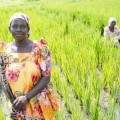
Edith Nalwende, a small-scale farmer from Bugiri district, is one of the many affected by the exclusion of women from land ownership and governance.
“Somebody called me, he was desperate and needed some quick money in his land. He told me I should buy this land, and I can pay by instalments. I informed my husband that there is a good deal here. I want to pay part of that money since the person is ready to receive the instalment. The response was obvious. Why do you want to buy land? Leave that land and don’t buy it,” she revealed in an interview with a Witness Radio journalist.
Many women like Nalwende face significant barriers to land ownership and recognition. Gender stereotypes in many Ugandan and African communities often bar women from owning land.
“Because of being a woman, I was stopped by my husband from buying land. I gave up. I didn’t buy the land. So, I called the seller. But he also didn’t appreciate why I told my husband, he asked me why I had told him,” said Nalwende.
ESAFF gathered rural women to share their stories. Edith was one of them, and women farmers were empowered to secure their land rights, thereby increasing productivity and promoting economic development.
While women are pivotal to small-scale agriculture, farm labour, and daily family subsistence, they face greater difficulty than men in accessing land and productivity-enhancing inputs and services. They claim they have been sidelined in issues of land governance, land ownership, and economic development.
According to research by the Food and Agriculture Organisation (FAO), less than 15 per cent of agricultural landholders worldwide are women, and 85 per cent are men. The most significant gender inequalities in access to land are found in North Africa and the Near East, where only around 5 per cent of all landholders are women.
Organised by the Eastern and Southern Africa Small-Scale Farmers Forum in Uganda (ESSAFF Uganda) and partners, the conference, attended by more than 40 small-scale women farmers and officials from various ministries, highlighted the critical role of women small-scale farmers in Uganda’s agriculture.
“Statistics show that women contribute the majority of agricultural labour in Uganda. Yet their contributions often remain undervalued and unsupported. Despite their central role, women continue to face systematic barriers to land ownership and control. Insecure land tenure undermines their productivity, limits their access to credit, and erodes their dignity.” Said Ms Christine Okumu, a representative from the Ministry of Gender, Labour and Social Development
She adds that, “Without secure land rights, women cannot fully invest in sustainable farming practice. Nor can they pass assets to their children. This is a fact based on all the testimonies given before us here. Unless women have that right to land, they cannot fully invest in sustainable farming practice.”
It is estimated that if women small-scale farmers had the same resources as men, their yields could increase by 20–30%, significantly boosting food security.
“Closing this gender gap could add nearly $1 trillion to global GDP and lift 45 million people from hunger. Investing in women isn’t just about fairness – it’s key to Africa’s economic and agricultural future.” According to research by FAO.
Women’s land insecurity not only affects food sovereignty but also escalates gender-based violence, exposing women to rights violations and increased vulnerability.
“Insecure land tenure exposes women to heightened risk of gender-based violence. Dispossession, forced eviction, and land grabbing often come hand in hand with intimidation, harassment, and abuse. Such acts appear on social media platforms, accompanied by hurtful messages and embarrassing pictures. I’ve seen pictures of women being chased out of their homes. And I’ve seen also pictures of women who have invested in lands, and at the end of it all, because behind them, somebody took the land from them.” Added Ms Okumu.
Unlike other years, when the conference focused on topics like women in business and leadership, this year the focus has shifted to empowering women to own land, offering a hopeful path toward stronger agricultural independence.
“We are focusing on land so that we can support as many women as possible. And also, we would want to work together with the government, which has already rolled out a program of registration of land, and we think that this is something that women can take advantage of, so that they secure their land rights, and grow healthy food, and then also increase their income.” Says Ms Nancy Mugimba, the National Coordinator for ESSAFF Uganda.
She adds, “If you don’t have your own land, your ability to grow crops, generate income, and access financial services is limited. Securing land rights enables women to produce healthy food and invest in their communities.”
Ms Christine Okumu calls for the engagement of men and cultural and religious institutions in the fight for Women’s land rights, emphasizing that collective effort can lead to meaningful progress and social cohesion.
“The Ministry has also developed a strategy for male involvement. You know, this fight, we cannot do it alone. If we can get allies, it can help us. If we get a few men who can advocate for some of these issues and open the minds of other men to see that whatever they are doing is affecting their wives in a very negative way,” she said.