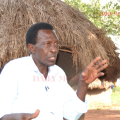
Local leaders say more than 12,000 households are affected by the dispute. Residents are against Nakapiripirit District Council speaker Richard Lochoto, who is alleged to have claimed ownership of part of the land and subsequently obtained a freehold title.
The dispute escalated after residents accused Mr Lochoto of working with members of the area land committee to process the land without consulting the community.
The minister, who visited the area to hear their grievances on September 7, handed the matter to the district security committee, headed by Resident District Commissioner Bessie Modesta Ajirong for investigation.
She directed the security team to collect all relevant information and submit a report within two weeks.
Ms Nabakooba said those found to have participated in the alleged conversion of the customary land into freehold should be arrested. She also ordered investigations into claims that signatures of local leaders were forged during the transactions.
“If there are people whose signatures were forged, we shall get a handwriting expert to establish whether they actually signed the transfer documents,” she said.
Ms Nabakooba said if investigations establish that the title was obtained fraudulently, the title will be cancelled and the land will be returned to the community.
She further directed the Ministry of Lands officials to assist residents in forming a Communal Land Association (CLA), to enable them to collectively register and manage the land.
“This will keep your land safe from grabbers. You will be in a position to decide on different land uses,” Ms Nabakooba said.
According to documents accessed by the Monitor, an approved land file for registration of a freehold title was forwarded to the commissioner land registration on November 4, 2021.
Another document of a freehold offer dated October 25, 2021, showed that the district land board had approved a grant of freehold to Mr Lochoto, following an application dated October 2, 2018.
The offer indicated that the land was intended for farming and required the applicant to meet costs related to surveying, registration and issuance of the certificate of title, as well as compensation of any sitting tenants.
The documents further show that Mr Lochoto stated that the land was vacant. The form also contained names and signatures of members of the Area Land Committee, who recommended the applicant to the District Land Board.
However, residents disputed the claim that the land was vacant, saying the community had been using and laying plans for the land before the freehold application was processed.
Mr Paul Longok Lochio, the Okudud Village chairperson, said the land was important to the community because residents had increasingly turned to farming, following improvements in security in Karamoja.
He said many residents previously depended largely on cattle and guns for their livelihoods, but the restoration of peace had enabled communities to embrace agriculture.
“Farming is a source of food for many families here. That is why land is very important to us,” Mr Longok said.
He accused land grabbers of taking advantage of illiteracy among residents to process land documents.
The Kawach Sub-county chairperson, Ms Angella Gabriel Aroor, who served as the chairperson of the area land committee at the time of the transaction, said the local leadership was not informed when the land was being surveyed.
“How can you survey land without our signatures? How can you go behind our backs and approve things which we were not informed about?” he asked.
The community now seeks a fresh survey by the Ministry of Lands to establish the actual size and boundaries of the disputed land.
Residents say they want to use part of the land to establish a community market, specifically for cattle traders.
Ms Esther Anyakun, the Nakapiripirit Woman MP and State minister for Karamoja Affairs, said government should protect this land because it was intended to benefit communities that had previously been displaced from other areas.
She said residents had petitioned the government over lack of land after people were evicted from areas occupied by government institutions, including prison land and other protected areas.
“This particular land was given to communities by government because many people were found to be squatters on prison land and had no where to go,” Ms Anyakun said.
Ms Anyakun warned that the land dispute had become tense, with rival groups allegedly threatening one another.
She urged the District Land Board to conduct physical verification before approving applications involving large chunks of land.
She advised the board to conduct ground checks whenever applications for 10 or more acres are submitted, to establish whether the land exists, whether it is occupied and whether there are competing claims.
The Nakapiripirit District Land Board secretary, Mr Jobs Ilukol, said the board had followed procedures required in processing Mr Lochoto’s application.
He said the board relied on records and minutes submitted by the Area Land Committee before considering the application.
Mr Ilukol said the District Land Board does not own or sell land and only processes applications based on documents submitted to it.
“The board’s job ends after approving or rejecting an application. The applicant is responsible for pursuing registration and obtaining a certificate of title,” he said.
Source: monitor.co.ug