By the Witness Radio Team.
For many women, securing land rights is not just about having a law that recognizes their ownership. Even after participating in land registration programs, some lack the documents to prove their claims because they cannot afford the fees, travel long distances to government offices, or navigate complicated procedures.
Experiences from Tanzania, Uganda, and Zambia show how these barriers keep women from completing the final stages of land documentation, leaving their claims vulnerable even after the registration process has begun.
Land rights practitioners discussed these challenges during an online webinar organized by TenureSecurity.org with LandBridge International on the recent International Day of Rural Women. The event commemorated the day and examined why women with recognized land claims can remain without legal documentation and what must change to help them secure and exercise their rights.
Ms. Rania Ahmed, a co-founder of LandBridge International, said the organization began focusing on these barriers after noticing a gap between men’s and women’s access to land titles in Zambia. She says data from land-titling work showed that women-headed households participated in the process but did not receive their titles.
“We started to wonder how many other women have a recognized claim to land and have even begun the documentation process but couldn’t complete the final steps needed to secure legal ownership,” Ms. Ahmed said.
The organization initially suspected that the upfront payment to complete registration prevented women from obtaining their documents. This concern led to the creation of LandBridge, which works through local partners to help women overcome practical obstacles to obtaining documentation in their own names.
According to Ahmed, the problem extends beyond the absence of legal rights. In many places, she said, women have recognized claims to land and government documentation programs are already in place, yet they remain unable to complete the process.
“Without documentation in their names, their homes and land remain vulnerable, especially after divorce or the death of a spouse,” she added.
Ms. Ailey Kaiser-Hughes, a land tenure and women’s land rights specialist and co-founder of LandBridge, said the barriers often go beyond the cost of obtaining a title.
“We see common barriers across countries, and a fee is rarely the whole story. Women may lack clear information, money for transportation, or the documents needed to enter the registration process. Some also lack the confidence or support to navigate government bureaucracy and unfamiliar offices,” she added.
“I saw this firsthand during land titling work in Monrovia “I saw this firsthand during land titling work in Monrovia, Liberia. To participate, landholders needed an official ID costing about US$5, plus travel expenses to a government office. As a result, few community members had the required ID, and even fewer were women. This prevented many women from participating from the start. We negotiated with the government to bring identification services directly to the community, significantly increasing participation,” she added.
Identification remains a significant obstacle, particularly for widows and older women who may have limited financial resources.
Mr. Mustafa Issa, CEO of Tanzania Land Tenure Assistance, said the organization has worked for about 20 years to help women obtain Certificates of Customary Right of Occupancy (CCROs). He added that about 60 percent of women in the villages they worked with could not afford the payment.
He explained that awareness of land rights had improved through government initiatives and the work of implementing partners. However, paying for documentation remained a serious challenge.
“Most of the women we’ve been working with face challenges in getting financial support to contribute to their land registration and receive certification,” Mustafa said. explained that the cost of obtaining a certificate had risen from about US$10 per parcel to about US$20, making it unaffordable for many rural women.
“Those with husbands can manage, but widows and older women struggle to pay for their CCROs,” he added. He called for targeted financial support to help disadvantaged women complete land registration and suggested incorporating such assistance into local government financing systems.
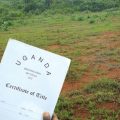
In Uganda’s Oyam District, some women have land titles already produced under a government project but remain uncollected because of the costs and administrative procedures required to release them.
Ms. Christine Kajumba, research manager at Associates Research Trust, explained that the government had completed the technical work and delivered the titles to the district. However, applicants still needed to pay outstanding government fees and have caveats removed before receiving their documents. She added that the required payments amounted to approximately US$28 to US$30 per title.
Kajumba described how the process can stall even after people pay and submit titles to the relevant offices.
“When we paid for those 100 titles, we spent six months without getting the land titles,” she said, attributing the delays to administrative procedures involving the national land information system, which requires titles to pass through a digital process before they can be released.
Ms. Kajumba adds that distance is another obstacle, as offices are located far away.
“Even when a woman can afford the US$30, she must navigate a lengthy process involving separate government offices. She first goes to the district land office to collect the title, then travels about 70 kilometers to the regional Ministry of Lands, Housing and Urban Development office in Lira. For women from sub-counties or villages 80 to 100 kilometers away, the journey is even more challenging. This creates an opportunity cost. A woman may ask why she should spend time and money traveling to collect a document when she can continue using her land without it. Even when the title is ready, she may decide the cost and effort are not worth it,” she added.
In Zambia, the financial burden becomes particularly evident at the final stage of land registration, when applicants receive an offer letter specifying the payment required to obtain a certificate of title.
Ms. Kamiji Malasha, a gender specialist with LandBridge International in Zambia, explained that the government’s land formalization program takes households through sensitization, enumeration, verification, and the offer-letter stage, adding that, although women may complete the earlier steps, the required payment can prevent them from receiving their certificates.
“Many women want to secure their title deeds, but the upfront cost is simply out of reach for them,” Kamiji said.
“The initial payment required by the Ministry of Lands was about 1,000 Zambian Kwachas, roughly US$50 at the time. The total cost to obtain a title was about US$150. For a woman-headed household in an informal settlement, that’s less than $2 a day. That’s nearly a month’s household income. As a result, women may have to choose between paying for land documents and meeting immediate family needs like food, rent, and other basic expenses,” she said.
Kamiji said targeted support could help women overcome this final barrier, while community outreach and sensitization could ensure they understand the registration process and the importance of obtaining their documents.
She also called for services to be brought closer to women, rather than requiring them to travel repeatedly to government offices.
“Services must come to the women, rather than requiring the women to come to the system,” she said.