By the Witness Radio Team
On Thursday, 29th October 2026, faith leaders representing more than 20 African nations will release an open letter to the Bill & Melinda Gates Foundation. In it, they urge the Foundation to acknowledge and address the harm they say two decades of industrial agricultural funding in Africa has caused—their call for reparations centers on redirecting resources toward agroecology and food systems led by Africans themselves.
Signed by 625 faith leaders, the letter directly challenges the Foundation’s backing of the Alliance for a Green Revolution in Africa (AGRA), an organization established in 2006 by the Gates and Rockefeller Foundations. Their demands gain urgency from research published in August 2026 by Tufts University’s Timothy Wise and the Alliance for Food Sovereignty in Africa (AFSA), which found a 58% surge in undernourished people across AGRA’s 13 focus countries between 2004–2006 and 2022–2024.
AGRA says its mission is to transform African agriculture by helping smallholder farmers increase production, improve their livelihoods and access growing agricultural markets.
On its website, the organization states: “AGRA, headquartered in Nairobi, is a proudly African-led institution focused on scaling agricultural innovations that help smallholder farmers towards increased incomes, better livelihoods, and improved food security. We understand that African farmers need uniquely African solutions to the environmental and agricultural challenges they face, enabling them to sustainably boost production and gain access to rapidly growing agricultural markets.”
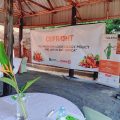
Marking its 20th anniversary, AGRA frames this milestone as a moment for reflection and a renewed pledge to transform Africa’s food systems.
“In 2026, AGRA celebrates 20 years since Kofi Annan ignited a bold vision: a continent where agriculture fuels prosperity, opportunity, and resilience for millions of smallholder farmers. Over two decades, we have partnered with governments, farmers, research institutions, the private sector, and development partners to strengthen the foundations of Africa’s food systems. AGRA@20 is a milestone of reflection and renewal. It honors two decades of advancing Africa’s food systems, while charting a bolder path for the future of food systems transformation across the continent.”
Yet, civil society groups, agricultural experts, and independent researchers have sharply criticized AGRA’s approach, questioning whether its focus on commercial seeds, synthetic fertilizers, and industrial inputs has truly delivered on its promises of improved food security.
The August 2026 research by Wise and AFSA found that the number of undernourished people across AGRA’s 13 focus countries rose from 94.6 million in 2004–2006 to 149.6 million in 2022–2024. It also found that annual staple-crop yield growth averaged 1.2% after AGRA’s introduction, slightly below the 1.3% recorded annually during the preceding 12 years.
According to the report, fertilizer use more than doubled, while the share of cultivated land planted with millet and sorghum, both drought-tolerant crops, declined from 26% to 16%.
The researchers also cited Senegal, not one of AGRA’s 13 focus countries, as a contrast. The country halved its number of undernourished people while using approximately half as much fertilizer per hectare as the AGRA countries.
These findings have only deepened the worries of faith leaders and food-sovereignty advocates, who insist that agricultural development funding must put ecological sustainability, farmers’ rights, and locally driven solutions at the forefront.
The delegation delivering the letter will feature voices from South Africa, Liberia, Kenya, and Botswana. These leaders plan to urge the Gates Foundation to meet with them before its 2026 funding decisions and to respond directly to independent research scrutinizing the impact of its agricultural investments.
The faith leaders have raised similar concerns with the Foundation in previous years. In 2020, they called on it to stop funding Green Revolution programs. In November 2025, they sent another letter through the Southern African Faith Communities’ Environment Institute (SAFCEI), urging the Foundation to acknowledge what they described as the failure of its interventions in African food and farming systems.
In the 2025 letter, the leaders questioned the Foundation’s continued support for AGRA, arguing that its agricultural development approach raised concerns about environmental sustainability, community rights and the well-being of vulnerable populations.
“As faith leaders, we have a responsibility as custodians of the Earth and of our faith communities to call out injustice and ensure the equitable sharing of resources for all, particularly the most vulnerable. While we note that the Gates Foundation has committed itself to ending food insecurity and poverty in Africa, we are gravely concerned about the approach it continues to take, through its support of AGRA (until recently known as the Alliance for a Green Revolution in Africa).”
The leaders urge the Foundation to halt funding for AGRA and similar initiatives and redirect investment toward agroecology and food systems shaped by Africans. Their demands encompass support for farmer-led research, community seed banks, and local knowledge, along with policies that safeguard African communities’ rights and empower them to control their own food production.
The virtual press conference on 29 October will bring together Francesca de Gasparis, Executive Director of SAFCEI; Rev. Dr Tolbert Thomas Jallah Jr., Board Chair of AFSA; Ulfat Hussein Masibo from the Africa Muslims Women’s Action Network; Gorata Ramokgothwane of the Botswana Council of Churches; Dr Hassan Omari Kinyua from the Africa Faith Actors Network for Climate Justice and the Muslim Council in Kenya; and Gabriel Manyangadze, Food and Climate Justice Manager at SAFCEI, who will deliver the letter and issue the call to action.
At the heart of their appeal is a call for international funders to pivot their support toward agroecology and food production strategies defined by local communities.
“It’s time for international funders to transition towards agroecology through respecting and supporting locally defined holistic approaches in Africa, by Africa. As faith leaders, we must advocate for the restoration of our relationship with the Earth and the community of life on which we all depend,” the faith leaders stated.
AGRA, however, rejects claims that its agricultural model has failed, arguing that any progress over the past twenty years should be weighed against the broader challenges facing African food systems.
In its August 2026 Impact, Learning and Foresight Report, the organization says agricultural output across Africa has roughly doubled in real terms since 2005, while cereal yields have increased by about 40%. It also points to the growth of local seed companies, agricultural input distribution networks, and community extension services as evidence of progress.