By the Witness Radio Team.
Across Africa, women are the backbone of food systems, households, and rural economies. Yet the land, water, and natural resources they rely on face growing threats from climate change and relentless development.
According to the Food and Agriculture Organization (FAO), 76 percent of working women in sub-Saharan Africa are employed in agrifood systems, the largest share of any region in the world. In rural areas, women are four times more likely than men to engage in off-farm work. Their contribution goes beyond paid employment to unpaid activities like fetching water, caring for children and older people, and supporting household food security.
As development projects multiply and droughts, floods, land degradation, rising temperatures, and shifting rainfall patterns worsen, the foundations of these livelihoods are becoming alarmingly fragile.
For millions across Africa, climate change is not just an environmental concern. It is a daily struggle for food, land, water, income, health, and survival.
Yet women are not simply bearing the brunt of these impacts. Across the continent, they are mobilizing, crafting their own solutions, and demanding a seat at the table where decisions are made.
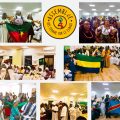
From 5–8 October 2026, more than 75 women community leaders, activists, civil society organizations and allies from across West and Central Africa will gather in Yaoundé, Cameroon, for the fourth regional Women’s Climate Assembly (WCA).
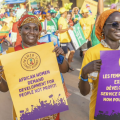
Co-hosted by Green Development Advocates, WoMin African Alliance, and partners, the event will unite women in their fight against exploitative industries and misleading climate solutions. Under the banner “Our lands, our voices: African women united for climate justice and reparations,” the Assembly aims to connect struggles over land, forests, water, seeds, food, and natural resources into a powerful movement for climate justice.
This gathering seeks to fortify a Pan-African ecofeminist movement, nurture women’s leadership, forge collective strategies for climate justice, defend food sovereignty and sustainable resource management, and amplify demands for climate reparations.
It will also open space for women to share grassroots solutions, from seed conservation and mangrove stewardship to processing natural products and safeguarding traditional ecological wisdom.
Bela Marie Victorine, a participant from Cameroon, says the Assembly offers women from different countries an opportunity to learn from the experiences of communities affected by major development projects.
“The Women’s Climate Assembly taking place in Cameroon will allow women from other countries to experience firsthand the realities of Cameroonian women’s lives impacted by major projects and how they overcome these challenges.”
The Assembly takes place in Cameroon, where communities have long faced the pressures of large-scale land grabs and sprawling industrial oil palm plantations.
Since the late 2000s, the Cameroonian government has supported the expansion of industrial oil palm cultivation as part of efforts to promote investment, employment and economic growth.
For rural communities where most arable land has been handed over to agricultural industries, these developments bring profound consequences. The loss of land threatens livelihoods and the cultural, social, and political bonds tied to their territories, while raising serious environmental concerns.
Several petitions to the Cameroonian government have reported concerns about the effects of industrial oil palm expansion on women, including abuse, sexual harassment, persecution, and destruction of livelihoods. These effects reach far beyond plantations. Across Africa, communities are grappling with large-scale mining, oil and gas projects, and other forms of resource extraction. For those whose lives depend on land, forests, and water, these projects add new burdens to communities already struggling with climate upheaval.
In Africa, climate impacts are already being felt. The World Meteorological Organization’s State of the Climate in Africa 2025 reported that climate- and weather-related hazards affected at least 13 million people. It caused more than 3,000 reported deaths across Africa in 2025.
The Assembly’s organizers challenge who should bear the financial and social burdens of the climate crisis. They insist African communities must not pay for a disaster they did little to cause. They call for climate finance that delivers real resources for loss and damage, adaptation, ecosystem restoration, and community-driven alternatives. This builds on the legacy of previous gatherings in Nigeria and Senegal. Organizers now envision transforming this platform into a lasting space for action at local, national, subregional, and Pan-African levels.
The goal is to ensure women on the front lines of climate and environmental struggles have a lasting space to organize, share experiences, and shape the climate conversation. The Assembly will feature discussions on the climate crisis and women’s resistance, food sovereignty and seed protection, defending the Congo Basin forests, feminist advocacy, climate debt and reparations, and the expansion of oil and gas.
The Assembly will also feature hands-on education and practical exchanges on seed conservation, mangrove management, processing natural products, and preserving traditional ecological wisdom.
According to Abbie Freeman from Liberia, bringing these lived experiences into climate decision-making is central to the Assembly.
“Participating in the Women’s Climate Assembly gives me a platform to share my community’s experiences and learn from other African women. I believe our voices and lived experiences must be part of climate decisions.” She added.
The Yaoundé gathering is not just about recording the impacts of climate change. It is about building connections among women facing diverse environmental and economic pressures and creating collective strategies for land, livelihoods, and natural resources.